
 Nila Kartika Wati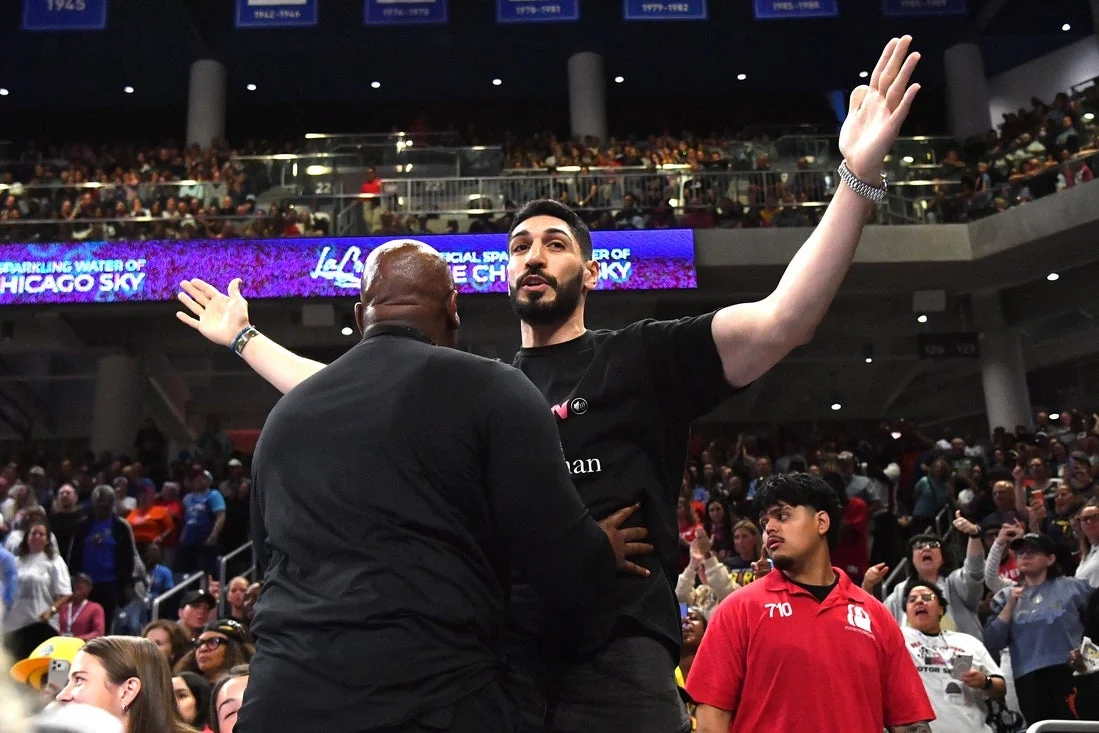
The tension that has been simmering around the inclusion of transgender athletes in women’s sports boiled over into a dramatic courtside confrontation Sunday, leading to the ejection of former NBA player Enes Kanter Freedom from a WNBA game between the Chicago Sky and the Indiana Fever at Wintrust Arena. Kanter Freedom, a vocal critic of transgender women competing in women’s sports, was removed from his seat after a verbal altercation with Sky guard Natasha Cloud. The incident, which occurred in the third quarter of the Fever’s decisive 113-90 victory, has amplified the ongoing debate and highlighted the deeply divided sentiments within the sports community and beyond.
The Confrontation Unfolds
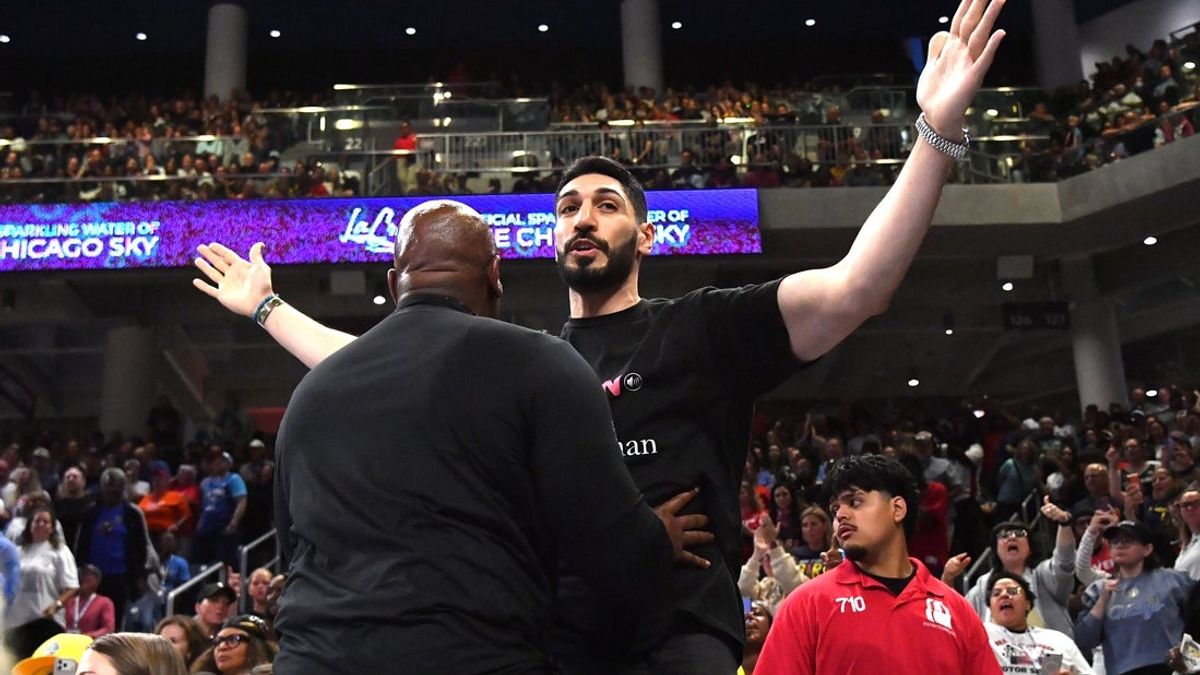
The incident began when Natasha Cloud, a prominent player for the Chicago Sky, reportedly began pointing and yelling towards Kanter Freedom, who was seated courtside. Eyewitness accounts and video footage indicate that Kanter Freedom, dressed in a black T-shirt bearing the slogan "WOMAN noun. Adult human female.", stood up and took a few steps towards the court with his arms extended. This reaction prompted an immediate response from game officials and arena security, who quickly intervened to de-escalate the situation. Cloud was pulled away by her teammates, while a game official gestured for Kanter Freedom to be removed from the venue. He was subsequently escorted from his seat by team and arena security personnel, having engaged in a brief conversation with police officers before his departure.
Kanter Freedom, 34, later took to his X account (formerly Twitter) to express his outrage, stating, "I just got kicked out of a @WNBA game for supporting WOMEN! Let that sink in, America." His statement directly links his ejection to his public stance on women’s sports and the definition of womanhood, framing the event as a suppression of his views.
Natasha Cloud’s Stance and Support
Following the game, Natasha Cloud, also 34, opted not to speak with the media but issued a powerful statement on social media, which was later reported by CBS Sports. Her message was unequivocal in its support for the transgender community. "To every trans kid/person, You are apart of MY community & tribe. You belong. You’re loved. You’re seen. You’re perfect as you are. & you will always be protected by me," Cloud wrote. This statement positions her as an ally to transgender individuals and implicitly contrasts with Kanter Freedom’s expressed beliefs.
Chicago Sky coach Tyler Marsh echoed Cloud’s sentiments in his postgame press conference, emphasizing the team’s solidarity with their player. "I told her she wasn’t [a distraction]," Marsh stated. "I told her we all embrace her as someone who protects our team and people who need to be protected. Tash is always gonna stand on that and we stand for Tash." Marsh also delivered a pointed message to spectators, seemingly directed at individuals like Kanter Freedom, urging them to focus on appreciating the athleticism and the game itself. "There’s so many good things about this league and so many good things about the play of these players, that if you come to a game, you should probably come to enjoy the basketball," Marsh said. "That seems pretty simple to me. I think these players deserve that and have earned that. Being a former basketball player, you should probably understand and feel that, too."
Background of the Debate
The WNBA, while having never had a publicly known transgender player, has found itself at the center of the broader societal discussion surrounding transgender athletes’ participation in sports. This debate has been particularly intensified by players like Indiana Fever’s Chloe Bibby, who has been a vocal proponent of maintaining women’s sports exclusively for biological females. In a profile with ESPN last month, Bibby stated, "girls should never have to compete with biological men." While she later clarified her stance on July 22, emphasizing that she "doesn’t dislike anyone" and believes "there’s room to love everyone," she reiterated her commitment to protecting the rights of biological women, stating, "I’ll never falter in my beliefs in that. But I have never once stated that I hated the trans community."
These differing viewpoints have not only fueled online discourse but have also manifested in real-world actions, including rallies held outside WNBA arenas by individuals supporting and opposing Bibby’s position. This backdrop provides crucial context for the heated exchange between Kanter Freedom and Cloud, underscoring the deeply entrenched and often polarized opinions on the matter.
Kanter Freedom’s Activism and NBA Career
Enes Kanter Freedom, formerly known as Enes Kanter, is no stranger to controversy or activism. The 34-year-old Turkish-American played 11 seasons in the NBA, from 2011-12 to 2021-22, averaging 11.2 points, 7.8 rebounds, and 21.5 minutes per game over 748 regular-season contests for five different teams. Throughout his career, he has been an outspoken advocate for human rights, often criticizing the Turkish government and other authoritarian regimes. His pivot to activism concerning transgender rights aligns with his broader commitment to his convictions, even when they place him at odds with mainstream sports narratives or popular opinion.
His recent public statements, alongside those of former NBA player Royce White, about their potential eligibility for the 2027 WNBA Draft—both claiming to now identify as women—have further injected his perspective into the ongoing dialogue. These claims, though met with skepticism by many, highlight the evolving and often contentious landscape of gender identity and athletic participation.
WNBA’s Policy and Future Considerations
The WNBA’s official policy on transgender participation remains a point of discussion. While the league does not currently have a publicly detailed policy specifically addressing transgender athletes, the collective bargaining agreement signed in March states that "only players who are women are eligible to play in the WNBA." This clause leaves room for interpretation and potential future policy development as the conversation around transgender inclusion continues to evolve. The league’s approach will undoubtedly be closely watched as it navigates the complex intersection of sports, identity, and inclusivity.
Natasha Cloud’s Career and Impact
Natasha Cloud is currently in her 11th WNBA season and her first with the Chicago Sky. A consistently strong performer, she entered Sunday’s game averaging 11.4 points, 5.0 assists, 3.6 rebounds, and 29.1 minutes per game across 36 contests (23 starts). Her career has also seen her play for the Washington Mystics (2015-19, 2021-23), the Phoenix Mercury (2024), and the New York Liberty (2025). Cloud’s status as a respected veteran and advocate within the league amplifies the significance of her public support for the transgender community. Her actions and statements on Sunday resonated not only within the WNBA but also within the broader LGBTQ+ advocacy circles.
Broader Implications and Analysis
The ejection of Enes Kanter Freedom from the WNBA game serves as a stark illustration of the escalating tensions surrounding the inclusion of transgender athletes in professional sports. It brings into sharp focus the divergent views on gender identity, biological differences, and the fundamental principles of fair competition. Kanter Freedom’s stance, while framed by him as a defense of "women," is perceived by many as exclusionary and harmful to the transgender community. Conversely, Cloud’s unwavering support for transgender individuals positions her as a champion for inclusivity, aligning with a growing movement advocating for broader acceptance and recognition.
The incident also raises questions about the role of public figures in sports and their influence on societal discourse. Kanter Freedom, leveraging his platform as a former NBA player, actively engages in debates that extend far beyond the basketball court. His presence at a WNBA game, seemingly to make a statement, underscores the strategic use of sports events as venues for political and social commentary.
The WNBA’s situation, characterized by its existing collective bargaining agreement language and the absence of a specific transgender participation policy, suggests a league that is likely preparing for potential future policy adjustments or clarifications. As more athletes and public figures weigh in on the issue, and as societal understanding of gender identity continues to evolve, the WNBA, like many other sports organizations, will face increasing pressure to define its position and establish clear guidelines for inclusion.
The events of Sunday’s game are not isolated but rather a symptom of a larger cultural conversation. The interaction between Kanter Freedom and Cloud highlights the emotional intensity and deeply held beliefs that characterize this debate. The future of transgender participation in sports remains a complex and evolving issue, with significant implications for athletes, leagues, and society as a whole. The WNBA, with its diverse player base and growing public profile, is poised to play a significant role in shaping these future discussions and policies. The continued engagement from prominent figures, both in support of and opposition to inclusion, ensures that this debate will remain at the forefront of sports and social commentary for the foreseeable future.




 Yuyun Lusiyani
 Joko Widodo
 Jia Lissa
 Pevita Pearce
 admin
admin
