
 Yuyun Lusiyani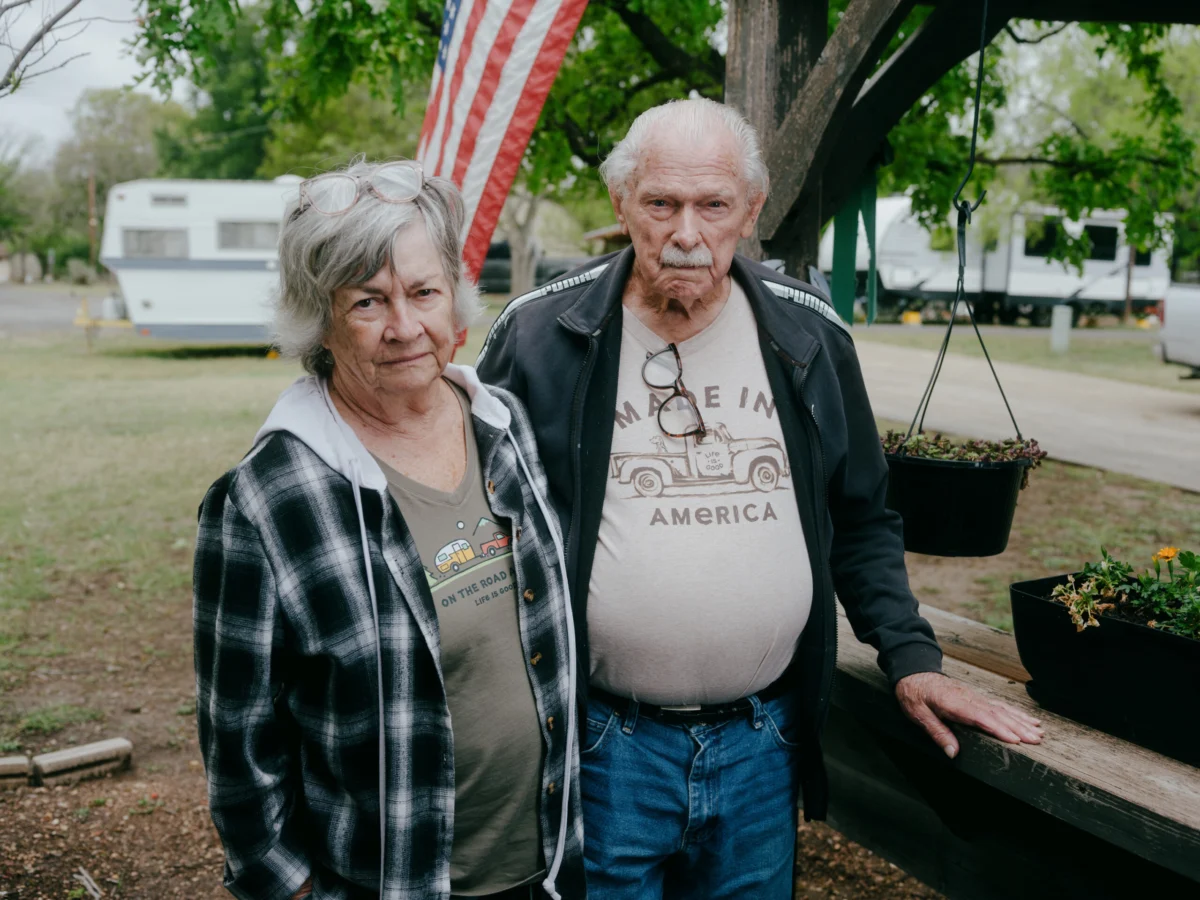
When devastating floods ravaged the Texas Hill Country in July 2025, leaving a trail of destruction and death, Joan Connor and her then 98-year-old husband, David Stearns, narrowly escaped their home, surviving only by clinging to a pergola in their front yard as the Guadalupe River surged around them. The deluge, which claimed at least 119 lives in Kerr County alone—a region approximately 100 miles west of Austin—decimated their possessions and reshaped the landscape. Despite the profound loss and trauma, the Connors, then 81 and 98 respectively, demonstrated remarkable resilience, moving back into their refurbished house by Christmas 2025, aided by donated furniture and volunteer decorators. Their resolve was underscored by a belief articulated by Joan Connor earlier this year: "We don’t think a thing like that will happen again in our lifetime." Tragically, almost exactly one year after the initial catastrophe, in July 2026, their house flooded again, echoing a broader, troubling pattern of recurrent disaster and persistent vulnerability across the state.
The Relentless Grip of the Guadalupe: A Chronology of Catastrophe
The Texas Hill Country, renowned for its picturesque rivers, limestone bluffs, and majestic cypress trees, is also a region inherently susceptible to flash flooding. Its unique topography, characterized by shallow soils and steep slopes, means that heavy rainfall rapidly translates into surging waterways, transforming tranquil rivers like the Guadalupe into torrents of destruction.
July 2025: The Initial Devastation
The summer of 2025 witnessed an unprecedented rainfall event that triggered widespread, deadly flooding across Central Texas. The Guadalupe River, a lifeline for many communities in Kerr County, overflowed its banks with a violence that shocked even seasoned observers. The sheer force of the water was capable of washing away entire homes, ripping structures from their foundations, and leaving a landscape scarred by debris and human loss. The human toll was staggering, with 119 fatalities recorded in Kerr County alone, making it one of the deadliest inland flood events in recent Texas history. Many victims were caught unprepared, fighting for their lives by clutching trees or scrambling onto rooftops. The incident profoundly impacted the social fabric of the affected communities, leaving behind intense grief and a collective trauma that lingered for months. Beyond the immediate fatalities, thousands were displaced, and property damage ran into the hundreds of millions of dollars, necessitating a massive, prolonged recovery effort involving federal, state, and local agencies, alongside countless volunteers.
July 2026: The Unthinkable Return
Less than a year later, in July 2026, history repeated itself with chilling precision. Unusually intense rainfall once again pounded the Kerr County area, leading to another wave of severe flooding. For residents like Joan Connor and David Stearns, who had just painstakingly rebuilt their lives and homes, the recurrence was a cruel blow. The Connors, who had returned to their rehabilitated home by Christmas 2025 with the aid of volunteers and donated furniture, found themselves once more battling rising waters. This second flood, while claiming one life in the region compared to the 2025 disaster, compounded the emotional, physical, and economic toll on a community still reeling from the previous year. The familiar sight of ruined possessions piled on curbs, waterlogged interiors, and the pervasive smell of damp and mold returned, symbolizing the community’s ongoing struggle against an unrelenting natural force.
A Legacy of Missed Opportunities: Legislative Failures and Persistent Vulnerability
The recurrence of severe flooding in the Texas Hill Country underscores a critical and often-overlooked aspect of the state’s flood crisis: a systemic failure by lawmakers to implement robust protective measures. A comprehensive investigation by The Texas Tribune, in collaboration with ProPublica, published in May 2026, meticulously detailed how Texas legislators had, over nearly six decades, "missed dozens of opportunities" to safeguard residents in flood-prone areas.
The investigative report highlighted pivotal moments when legislative action could have significantly mitigated the risk of loss of life and property. Experts consulted for the report pointed to specific policy interventions that could have saved lives, such as prohibiting construction in the most hazardous spots along rivers, relocating youth camp buildings from known floodplains, and establishing more stringent elevation rules for structures at risk of inundation. Instead, the investigation revealed that Texas lags behind more than half of other U.S. states in adopting advanced, more protective building standards. This legislative inertia is particularly alarming given that Texas experiences more flood-related deaths than any other state and, according to a nationwide structure analysis, has more buildings situated in flood-prone areas than any state except Florida. A significant majority of the 119 fatalities in the 2025 Central Texas flood occurred in areas explicitly identified by the federal government as flood-prone, directly correlating legislative inaction with tragic outcomes.
One glaring example of this policy vacuum is the regulation of RV parks. Despite more than 40 individuals losing their lives in two Kerr County RV campgrounds during the 2025 flood—campgrounds that had not even reopened before the July 2026 deluge—lawmakers failed to enact any changes regarding where these parks could be built. Similarly, building codes for homes largely remained unaltered. This means that, without more stringent local city or county ordinances, properties damaged by flooding can be repaired without being brought up to contemporary safety standards, provided the repair costs do not exceed half of the structure’s value. Even complete rebuilding in many flood-prone areas is permissible, requiring only elevation to the anticipated height of a 100-year flood—a metric increasingly viewed by hydrologists as insufficient in the face of changing climate patterns.
While the legislative session saw some limited progress, it was often reactive and narrowly focused. Lawmakers did manage to pass legislation mandating the relocation of youth camp cabins away from riverside, flood-prone locations. This measure, strikingly similar to a bill that failed in 1989, only succeeded this time after impassioned, gut-wrenching testimony and persistent advocacy from the parents of the 27 campers and counselors who perished at Camp Mystic during the devastating summer 2025 floods. This specific legislative victory, while significant for camp safety, starkly highlighted the broader reluctance to address systemic development issues across the state.
Official Responses and the Mitigation vs. Regulation Debate
The Texas Tribune’s inquiry into the state’s top leaders regarding the necessity of stricter statewide building rules in the wake of the 2025 disaster yielded little response. Texas Governor Greg Abbott’s office, while not directly addressing the call for tougher regulations, maintained that his administration has tackled flooding issues by allocating funds for mitigation projects aimed at lessening the impact of future storms. This approach, which focuses on post-event recovery and infrastructure reinforcement rather than pre-emptive land-use planning and stringent building codes, represents a fundamental philosophical divide in disaster preparedness.
The focus on mitigation projects, such as improved drainage, levees, and floodwalls, can certainly reduce the impact of some floods. However, experts argue that these measures alone are insufficient without parallel efforts to restrict unwise development in high-risk zones. By allowing continued construction and reconstruction in floodplains without adequate elevation and resilience standards, the state effectively subsidizes repeated losses, placing residents and taxpayers in a perpetual cycle of disaster and recovery. The lack of engagement on broader development issues in interim legislative hearings, which instead concentrated on aspects like the "personal responsibility" of Camp Mystic owners, further underscores the political challenges in enacting comprehensive, proactive flood protection.
The Human and Economic Cost of Inaction
The repeated flooding carries an immense human and economic burden. For individuals like Laura Cane, 65, who had just reopened her vacation rental house in Center Point three weeks before the July 2026 flood, and was putting finishing touches on two long-term rental homes, the financial impact is devastating. This year’s water caused even more damage than the last, yet she plans to repair them again, citing it as the most pragmatic financial decision given her investments and the local real estate market. This sentiment is widespread, reflecting a deep, generational connection to the land and a reluctance to abandon established jobs, relationships, and property values. Selling at a loss or uprooting an entire life is often not a viable option for many residents.
The psychological toll is equally profound. As the climate reporter for The Texas Tribune noted, arriving in Kerr County after the July 2026 flood meant encountering the "familiar sights and smells of peoples’ possessions piled up by the curb, their flooring and walls ripped out," a stark reminder of the trauma and exhaustion that permeate the community. Joan Connor, exhausted from dealing with another flood, desperately tried to save her new piano—a replacement for the one lost in the 2025 flood—and worried about mold, making the house unlivable in the short term. Despite the ordeal, the Connors, like many, remain committed to repairing their home, a decision that federal, state, and county rules will likely continue to permit.
The cycle of rebuilding, only to be flooded again, raises critical questions about the long-term sustainability of communities in vulnerable areas and the efficacy of current policies. The federal government, through programs like the National Flood Insurance Program (NFIP) and FEMA disaster aid, often bears a significant portion of the financial cost of these repeated disasters. However, these programs are designed primarily for recovery, not necessarily for incentivizing relocation or enforcing stricter land-use planning, thereby inadvertently perpetuating the cycle of risk.
Broader Implications and the Path Forward
The situation in the Texas Hill Country is a microcosm of a larger national challenge, exacerbated by climate change. Scientists predict that as global temperatures rise, extreme weather events, including intense rainfall leading to flash floods, will become more frequent and severe. For a state like Texas, which already leads in flood deaths and has extensive development in floodplains, this projection presents an existential threat.
The resistance to implementing stricter statewide building codes and land-use regulations stems from a complex interplay of factors: deeply ingrained property rights doctrines, concerns about economic impact on development, and a political culture that often favors individual liberty over collective safety mandates. Developers frequently argue that restrictive zoning or building elevation requirements increase housing costs and stifle growth. Local governments, often reliant on property taxes, may also be hesitant to impose measures that could deter development or reduce property values.
However, the recurring human tragedy and escalating economic costs demand a re-evaluation of this approach. Moving forward, Texas faces a critical juncture. The current framework, which allows for repeated rebuilding in known flood zones, essentially defers the true cost of vulnerability to future generations and federal taxpayers.
A comprehensive strategy would entail:
- Revisiting Floodplain Mapping and Definitions: Updating "100-year flood" definitions to reflect current climate science and projected rainfall intensities.
- Mandatory Statewide Building Codes: Implementing and enforcing stricter elevation requirements, flood-resistant materials, and foundational standards for all new and substantially rebuilt structures in flood-prone areas.
- Strategic Buyout Programs: Offering robust, voluntary buyout programs for properties in repeatedly flooded, high-risk areas to facilitate relocation to safer ground.
- Incentivizing Resilient Development: Providing financial incentives, grants, and technical assistance for communities and homeowners to adopt higher resilience standards.
- Investing in Green Infrastructure: Utilizing natural systems, such as wetlands restoration and permeable surfaces, to absorb floodwaters and reduce runoff.
- Public Awareness and Education: Enhancing public understanding of flood risks and the importance of flood insurance and emergency preparedness.
For residents like Joan Connor and David Stearns, who express a weary resignation mixed with resolve ("Whatever happens, we’ll put up with it"), the immediate future is about survival and adaptation. Despite a neighbor’s warning of future floods, which Connor believes, she states, "We’ll just probably be very cautious if it starts raining in the middle of the night. We’ll be hauling ass. I’m not going to live through another flood. I’m just going to get in my truck and head north." This sentiment, a blend of attachment and impending flight, encapsulates the dilemma faced by countless Texans in the path of a changing climate and seemingly unyielding legislative inaction. The ongoing saga in the Texas Hill Country serves as a powerful testament to the urgent need for a paradigm shift in how the state addresses its perennial battle with water.



 Joko Widodo
 Jia Lissa
 Pevita Pearce
 admin
admin