
 Yuyun Lusiyani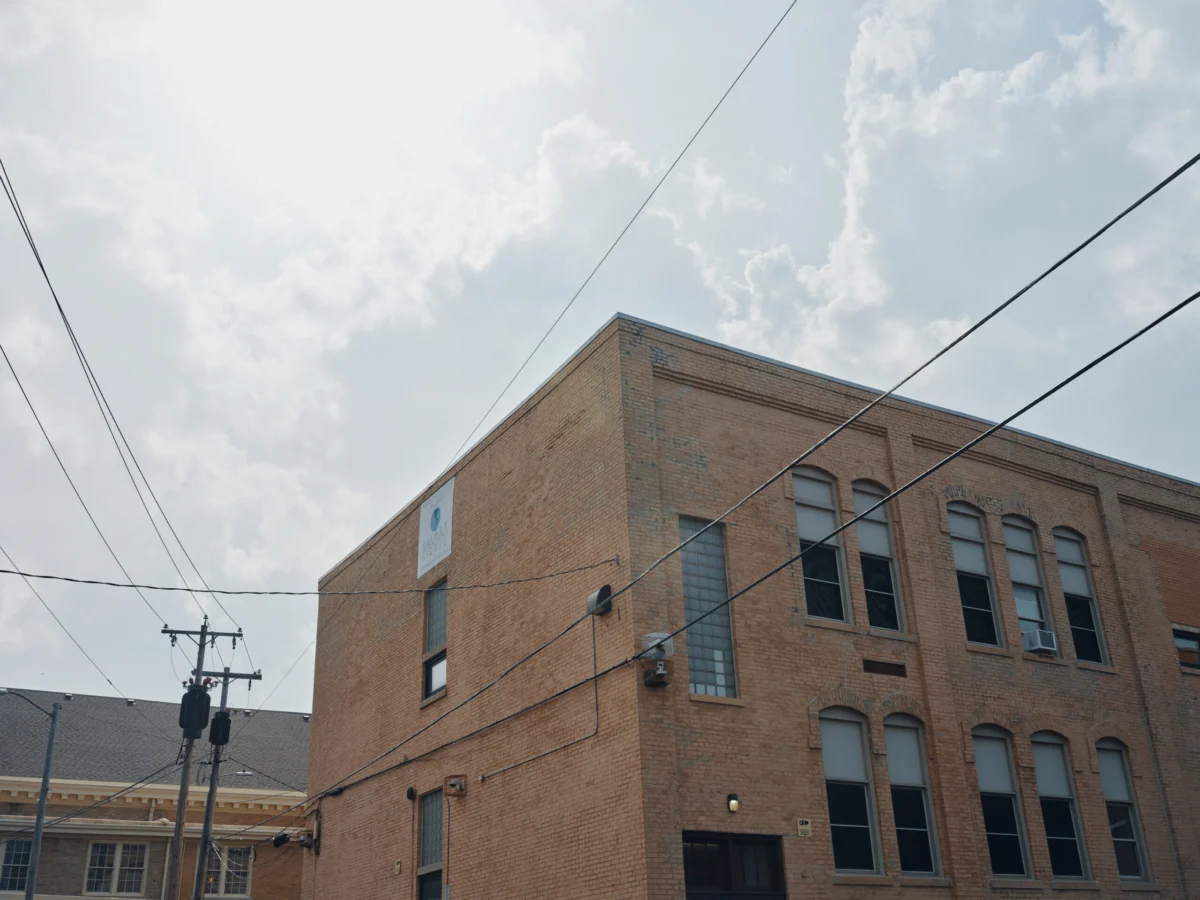
Journalists covering the flow of state public funds into private schools via voucher programs eventually coined a term for a peculiar subset: the "100% schools." These educational facilities, scattered across the nation, are distinguished by a stark reality: tax dollars cover all, or a significant portion, of the tuition for every single student enrolled. In essence, they operate as publicly funded entities yet exist beyond the established frameworks of oversight, transparency, and accountability that govern traditional public education institutions. This phenomenon raises critical questions about the stewardship of taxpayer money, educational equity, and the very definition of a "public" school in an increasingly complex educational landscape.
The Rise of Publicly Funded Private Education
The concept of school choice and voucher programs has been a cornerstone of educational reform debates for decades. Proponents argue that vouchers empower parents, particularly those in low-income areas, to choose schools that best fit their children’s needs, fostering competition and driving overall educational improvement. Critics, however, contend that these programs divert essential resources from public schools, lack adequate accountability for taxpayer dollars, and can exacerbate inequities by allowing private institutions to operate with fewer obligations regarding student admissions, curriculum, and special education services.
In Wisconsin, where this investigation is rooted, the voucher program has seen substantial growth. During the most recent school year, reporters identified 39 such "100% schools" within the state. Collectively, these institutions served 7,923 children, drawing approximately $87 million from state-issued vouchers. This substantial financial commitment underscores the critical need for robust oversight, a need that appears to be largely unmet.
Atlas Preparatory Academy: A Case Study in Unchecked Funding
One prominent example of a "100% school" highlighted in this investigation is Atlas Preparatory Academy in Milwaukee. This K-12 institution, despite receiving more than $4.3 million in voucher money for its 357 students, has consistently reported low test scores and experienced declining enrollment. The disparity between public funding and educational outcomes immediately piqued journalistic interest, prompting a deeper dive into its operational and financial structures.
The initial findings unearthed through public documents were particularly concerning. The school’s board chair, for instance, appeared to simultaneously serve as a highly compensated school administrator, earning over $150,000 in 2024. This dual role would be strictly prohibited in a traditional Wisconsin public school under the legal doctrine of "incompatible roles," which prevents individuals from supervising themselves or engaging in actions that create inherent conflicts of interest, such as hiring or disciplining oneself. However, no such regulations apply to private schools receiving public funds.
Further scrutiny revealed additional transactions that would trigger immediate alarm in a public school setting. The board chair’s accounting firm received tens of thousands of dollars from Atlas Prep for accounting and consulting services. Experts consulted during the reporting process confirmed that these operational practices were not only discordant with public school policies but also violated basic governing standards for nonprofit organizations.
The Unanswered Question: "When is a Private School Really a Public School?"
The fundamental dilemma posed by these "100% schools" is not new. More than a decade ago, in 2011, a research paper from the Wisconsin Department of Public Instruction (DPI) explicitly asked, "When is a private school really a public school?" The question remains pertinent today, yet public officials who champion voucher programs have largely failed to provide a clear and comprehensive answer or to implement measures that align the standards of private and public schools, despite the exponential growth in taxpayer funding for private education.
The discrepancies in accountability and operational standards between publicly funded private schools and traditional public schools are numerous and significant. For example, public schools are legally mandated to serve all children with disabilities, providing comprehensive services tailored to individual needs. Voucher schools, however, are not held to the same standard, potentially leaving some of the most vulnerable students without adequate support.
Transparency and Accountability: A Stark Contrast
One of the most profound differences lies in transparency. Public schools in Wisconsin and across the nation operate under rigorous open meeting laws and open records statutes. Information, whether positive, negative, or routine, is readily accessible through public meetings, district websites detailing agendas, minutes, reports, statistics on enrollment, curriculum, special education services, and more. Any member of the public can formally request reams of records, ensuring a high degree of public scrutiny.
In stark contrast, "100% schools" are largely exempt from these transparency requirements. While Wisconsin law mandates that voucher schools offer at least two annual opportunities for parents to meet with the governing board, these meetings are not required to be open to the general public. This lack of mandated public access creates an opaque environment where critical decisions, financial dealings, and operational challenges can remain shielded from public view, despite being funded by public money.
Furthermore, while Wisconsin is somewhat unique in requiring both voucher students and public school students to undergo standardized testing, parents in voucher schools retain the option to opt out, introducing a potential gap in comprehensive data collection. In many other states, private schools receiving public funds are not even required to administer standardized tests or report scores, making it nearly impossible to gauge their academic effectiveness relative to public counterparts.
Atlas Prep’s performance on state report cards illustrates this accountability gap. The school has consistently garnered the lowest rating: "fails to meet expectations," or one star out of a possible five. In comparison, Bay View High School, a public school located not far from Atlas, also received a one-star rating. However, Bay View’s website provides extensive public access to its improvement plans, strategies for reducing dropouts, school culture initiatives, local school council meeting information, and details on discipline methods and STEM programming. Atlas Prep’s website, on the other hand, features a non-functional "Build Your Own Curriculum" tab, emblematic of a broader lack of accessible information.
The Reporter’s Journey: Uncovering Hidden Realities

The investigation into "100% schools" involved meticulous data analysis and persistent outreach. While these schools are heavily reliant on tax dollars, they can supplement their budgets with additional revenue from investments, fundraising, or grants. However, their primary operational sustenance comes from public funds.
The 2011 DPI research paper had presciently suggested that "if the choice schools are really some kind of quasi-public schools, then in keeping with national efforts to turnaround struggling schools, it may be necessary to subject low-performing choice schools to financial sanctions, turnaround efforts or even closure." Thirteen years later, such accountability measures remain absent.
Accessing critical financial documents for Wisconsin voucher schools requires specific knowledge of where to look. Annual IRS information filings for many nonprofit schools are publicly available through resources like ProPublica’s Nonprofit Explorer. Independent financial audits, mandated by the state, can be obtained through the state Department of Public Instruction. The reporter specifically requested these documents for several of Wisconsin’s "100% schools" and conducted site visits to four.
Attempts to engage directly with school leadership often proved challenging. During one visit to a Milwaukee school, where an audit revealed the woman running the school was paying her own company $128,000 in rent for the building, the reporter was met with outright refusal to speak: "I’m not interested, ma’am. Please do not call us back again." Similarly, at Atlas Prep, the executive director, Michelle Lukacs, was unavailable for comment during a direct visit.
The subsequent weeks and months involved an intensive review of Atlas Prep’s finances. Through multiple email exchanges, the reporter shared findings with Lukacs, including details regarding the compensation of the board chair, Steven E. Menden. Menden, a licensed certified public accountant, had compiled the school’s IRS filings since its inception in 2001. Records indicated that Menden had, at various times, been listed as a "board advisor" and that his daughter, Kaitlyn Menden, was among the school’s most highly compensated employees in 2024, earning $127,674 in salary and benefits for "business services," a role she described as encompassing human resources, technology oversight, and "special projects."
More recently, Steven Menden assumed the role of board chairman. The fiscal year 2025 IRS form detailed Menden working a 40-hour week for Atlas, earning $132,505 in pay plus an additional $19,916 in benefits. Furthermore, his accounting firm, Menden & Associates, held an $87,250 contract with the school.
Lukacs defended the school’s compensation practices, stating, "Every person on our team, regardless of their role, earns their compensation and is not overpaid." She clarified that Menden’s compensation was for "Executive Management Services," not his board service. However, Dan Rossmiller, executive director of the Wisconsin Association of School Boards, emphasized that such a dual role would be forbidden for a public school board member due to the "incompatible roles" doctrine: "In essence, one cannot supervise oneself, which would include hiring and firing and disciplining oneself."
Wisconsin state law also prohibits public school board members from having a private interest in any contract exceeding $15,000 that they bid for, vote on, negotiate, or participate in, with violations potentially leading to felony charges. No analogous law exists for private school operators in Wisconsin. Menden, in an email, explained Atlas’s conflict of interest policy, stating that conflicted persons recuse themselves from voting or participation, and decisions are made "strictly in the best financial interest of the school."
However, experts in nonprofit governance disagree. Chelsea Cross, a vice president at City Forward Collective in Milwaukee, a nonprofit advocating for high-quality school options, stated unequivocally: "Board members are volunteers, and best practice is unambiguous that they should not simultaneously hold paid staff positions at the school they oversee — doing so collapses the separation between governance and management that gives a board its purpose in the first place."
The situation at Atlas Prep is further complicated by the fact that Lukacs, the full-time executive director, earning $175,000 in salary and benefits, also holds a board position. A third board member is listed as working only one hour a week for no pay. Cross criticized this structure, noting, "With 2/3 of its governing board also on the payroll — including the very executive the board exists to evaluate — Atlas Prep’s board cannot meaningfully hold its own leadership accountable." Lukacs refuted this assessment, asserting that board members "model strong personal leadership" and that she recuses herself from votes regarding her own salary or other conflicts of interest. She also highlighted efforts to improve curriculum and student support, acknowledging that test scores "do not yet reflect the level of achievement we aspire to."
Despite multiple requests, Atlas Prep did not provide a copy of its conflict of interest policy or the contract with Menden’s accounting firm. These documents, which would be subject to open records laws in a public school setting, remain inaccessible to the public.
Broader Implications and Calls for Reform
The case of Atlas Preparatory Academy and other "100% schools" illuminates a critical systemic issue within the broader school choice movement. When public funds are channeled into private entities without commensurate public oversight, it creates a fertile ground for conflicts of interest, potential financial impropriety, and a lack of accountability for educational outcomes. The current model effectively allows private schools to operate as quasi-public institutions, enjoying public funding benefits without bearing the same responsibilities for transparency, equity, and governance that are standard for public schools.
The implications are far-reaching. Taxpayers are funding schools whose internal operations, financial dealings, and even educational effectiveness are largely shielded from public scrutiny. This raises questions about whether public funds are being used efficiently and ethically to serve the best interests of students, or if they are instead enriching individuals associated with these institutions.
Furthermore, the disparate standards for serving students with disabilities highlight a potential equity concern. If private schools receiving public funds are not required to provide the same level of support as public schools, it could create a two-tiered system where some students, particularly those with complex needs, are underserved or effectively excluded from certain "choice" options.
The historical warning from the Wisconsin DPI in 2011, questioning the true nature of these "choice schools," underscores a persistent policy vacuum. Without clear definitions, robust accountability mechanisms, and harmonized standards, the distinction between public and private education blurs, creating a "shadow education system" that operates with significant public investment but minimal public control.
As public funding for private school choice programs continues to grow nationally, the demand for greater transparency and accountability will likely intensify. Policymakers face the challenge of reconciling the goal of parental choice with the imperative of responsible stewardship of taxpayer dollars and ensuring equitable educational opportunities for all students. The current lack of progress in aligning standards suggests a deliberate policy choice, one that prioritizes a hands-off approach to private entities even when they are entirely sustained by the public purse. Without fundamental reforms, the unanswered question of "When is a private school really a public school?" will continue to resonate, echoing the unresolved tension at the heart of publicly funded private education.



 Joko Widodo
 Jia Lissa
 Pevita Pearce
 admin
admin