
 Yuyun Lusiyani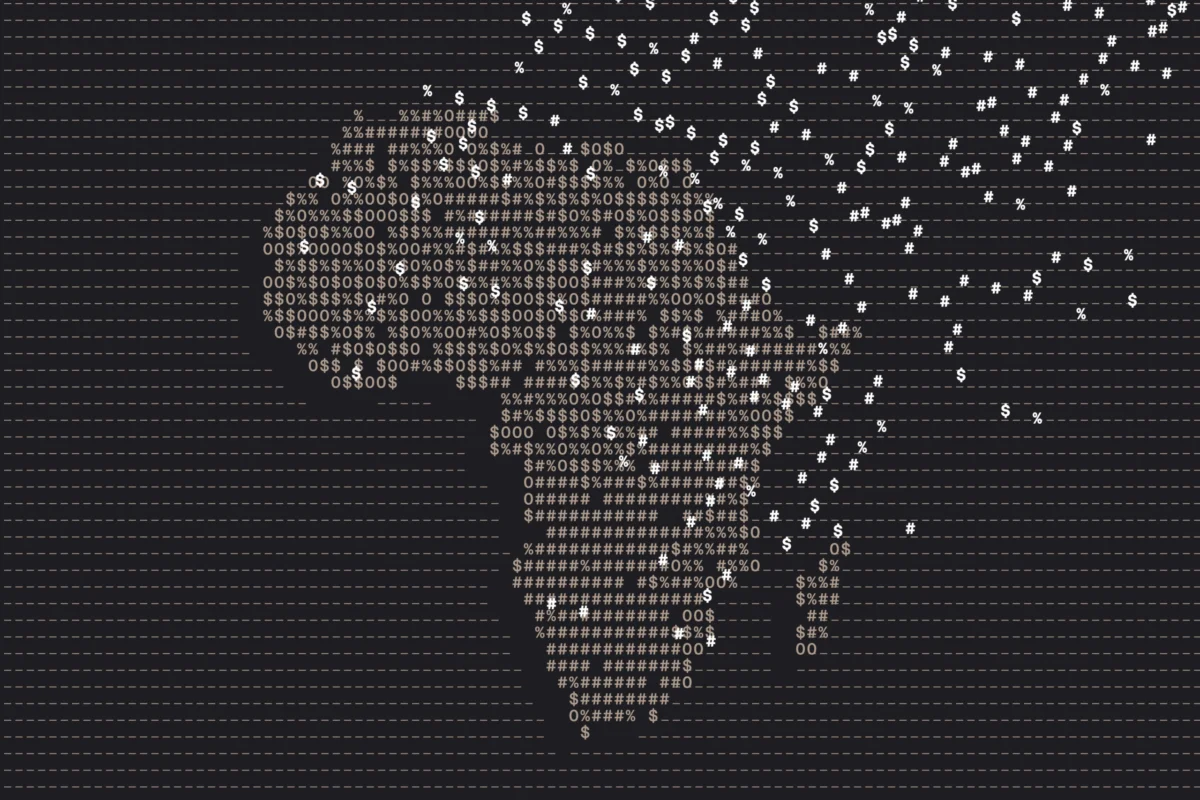
Citing extensive reporting by ProPublica, a coalition of eight Democratic U.S. senators has lodged a formal complaint against the Trump administration’s insistence on obtaining direct access to the health data of millions of individuals in other countries, particularly African nations, as a prerequisite for delivering crucial humanitarian aid. In a strongly worded letter dispatched to Secretary of State Marco Rubio last week, the senators, led by Georgia’s Raphael Warnock and including Senate Minority Leader Chuck Schumer, characterized these demands as "unprecedented and at odds with U.S. policy concerning the data of American citizens." The legislative body’s intervention underscores growing concerns over data sovereignty, privacy rights, and the ethical implications of conditioning life-saving assistance on access to sensitive personal information.
The Senate’s Concerns and Demands
The letter, signed by Senators Raphael Warnock (Georgia), Chuck Schumer (New York), Tim Kaine (Virginia), Chris Van Hollen (Maryland), Brian Schatz (Hawaii), Amy Klobuchar (Minnesota), Christopher Coons (Delaware), and Jeff Merkley (Oregon), called for an immediate briefing on the healthcare agreements’ data requirements. Furthermore, they demanded a written response from Secretary Rubio by the end of August, addressing a comprehensive list of questions regarding the State Department’s rationale and operational procedures.
The senators’ inquiry was directly informed by a June exposé from ProPublica, which meticulously detailed the U.S. government’s agreements with several African countries, highlighting the significant risks these deals posed to the privacy and security of their citizens’ health data. Experts interviewed by ProPublica had expressed alarm over the vague language within these agreements, noting a distinct lack of the robust safeguards typically found in international data-sharing protocols. This ambiguity, they warned, created an elevated risk of individuals’ personal health data being exposed, misused, or even commercialized without their explicit consent.
Central to the senators’ apprehension was the fear that these novel requirements could establish dangerous international precedents. They articulated concern that such demands might "reverberate beyond the countries where the aid agreements were struck and set international precedents that ultimately harm Americans." This sentiment was reinforced by the observation that the administration’s demands appeared to contradict its own stated policy, specifically the Trump administration’s National Cyber Strategy, which purportedly champions the right to privacy for American citizens and their data. "These new demands set an alarming precedent that is seemingly contrary to the Administration’s longstanding support for the privacy of U.S. citizens’ data," the senators asserted in their letter.
A particularly egregious example cited was the data-sharing agreement between the U.S. and Uganda. This specific deal, first brought to light by ProPublica, mandated that Uganda furnish the U.S. government and its contractors with "logins or other secure access mechanisms" to directly enter the nation’s health data systems. This stipulation marked a significant departure from historical norms. As the senators highlighted, "While global health programs have historically included data sharing components, they have never required direct access to privileged electronic systems for U.S. government representatives." The distinction between sharing anonymized, aggregated data and granting direct access to source systems is a critical point of contention, raising profound questions about data sovereignty and potential surveillance.
The letter concluded with more than a dozen pointed questions for Secretary Rubio, seeking clarification on several critical issues. These included why the State Department had not made these healthcare agreements public, a requirement under federal law, and whether any of the collected data would be shared with "U.S.-based third parties for any commercial purpose, including to train any artificial intelligence models." The senators also pressed for details on the privacy rights foreign citizens would retain over data transferred to the U.S., and the mechanisms by which these rights would be enforced in the event of a data breach or other unethical use of their personal information.
Unpacking the "America First" Data Strategy and Its Origins
The context for these contentious data demands lies within a broader recalibration of U.S. foreign aid under the Trump administration. Following significant structural changes, including the dismantling of the U.S. Agency for International Development (USAID) and drastic reductions in funding for international health initiatives managed by the Centers for Disease Control and Prevention (CDC), Congress had mandated the executive branch to continue providing foreign aid. This legislative requirement presented the State Department with the formidable challenge of devising new methodologies to disburse funding, ensure its judicious expenditure, and address potential global pandemics. The complexity of this task was exacerbated by the administration’s decision to sever ties with numerous international partners and dismiss experienced staff previously relied upon for executing such intricate global health programs.
The new approach to health data is an integral component of the "America First Global Health Strategy," a policy framework articulated to ostensibly make America "more prosperous" and "promote American health innovations." Secretary Rubio, in a September 2025 explanation of the strategy, stated that aid would henceforth be dispensed "in a way that directly benefits the American people and directly promotes our national interest." This shift suggests a more transactional and self-interested paradigm for international assistance, where aid is explicitly linked to perceived national gains, including potentially leveraging foreign health data.
A key figure in orchestrating these new aid arrangements was Brad Smith, an entrepreneur with a background in founding three healthcare companies, one of which reportedly sold for $2.7 billion. Before his tenure at the State Department, Smith played a prominent role in leading a government efficiency panel, which later evolved into the Department of Government Efficiency. He also notably oversaw approximately $67 billion in budget cuts to the Department of Health and Human Services, indicating a propensity for cost-cutting and re-evaluation of established government operations. His involvement suggests a strategic pivot towards optimizing aid delivery through new, potentially disruptive, models, with data acquisition seemingly a central feature.
Historical Context: A Shift from Established Norms
Historically, U.S. global health initiatives, such as the President’s Emergency Plan for AIDS Relief (PEPFAR) – a cornerstone program providing aid for HIV treatment and prevention worldwide – operated under a distinctly different data management philosophy. PEPFAR typically constructed its own secure systems to process anonymized data, maintaining a clear separation from the host countries’ government health records. This approach was designed to protect patient privacy while still enabling program evaluation and public health surveillance.
In stark contrast, the agreement with Uganda exemplifies the radical departure from this established practice. The deal, which allocates up to $1.7 billion in aid for critical public health initiatives targeting HIV, tuberculosis, and malaria, among other diseases, explicitly mandates direct U.S. access to the Ugandan government’s own health data systems. While the agreement stipulates that only aggregated data with personally identifiable information removed should be shared, and that this information should be used solely for delivering and auditing healthcare services, privacy experts have cautioned that "anonymized" data can often be "reverse-engineered," potentially re-identifying individuals, especially in datasets with specific demographic or health markers.
Furthermore, through separate, parallel agreements, the U.S. has also arranged for countries to provide specimens of pathogens that could trigger pandemics, along with related information. While the rationale for such access is ostensibly public health security, the combined effect of these data and biological material acquisition strategies raises a comprehensive set of questions about U.S. intentions and the long-term implications for recipient nations.
The Perils of Data Vulnerability: Expert Perspectives
Privacy experts universally agree that the mishandling of health data under such agreements could have severe and far-reaching consequences. The revelation of sensitive healthcare histories—including details about abortions, mental health conditions, substance-use treatment, or sexually transmitted diseases—carries devastating potential ramifications in any society. In many African contexts, research has demonstrably shown that such disclosures can lead to profound discrimination, social stigma, and even violence against affected individuals. The erosion of trust in healthcare systems, which is paramount for public health initiatives, is another critical risk. If individuals fear that their private health information could be exposed or misused, they may become reluctant to seek necessary medical care, undermining the very public health goals the aid is intended to support.
In the contemporary landscape, where artificial intelligence (AI) technologies are rapidly advancing, health data has become an exceptionally valuable commodity. It is a crucial input for training AI models designed for diagnostics, drug discovery, and personalized medicine. However, the agreements scrutinized by ProPublica offer no explicit guarantees that African citizens whose data is collected will have any say in how their information is ultimately used, nor do they stipulate whether these individuals would receive any potential financial benefits derived from the commercialization or innovation facilitated by their data. This raises significant ethical questions about data colonialism and equitable benefit sharing, especially when the data originates from vulnerable populations in exchange for essential aid. The potential for the U.S. or its contractors to leverage this data for commercial advantage, while providing no direct compensation or control to the data subjects, represents a contentious area of international ethics.
Geopolitical and Ethical Implications
The senators’ letter and the underlying ProPublica investigation shine a spotlight on the broader geopolitical and ethical implications of linking humanitarian aid to data extraction. This approach fundamentally alters the traditional donor-recipient relationship, introducing an element of conditional access that can be perceived as coercive. It raises questions about national sovereignty, particularly in nations where digital infrastructure and data protection laws may still be nascent or evolving.
The establishment of such precedents could reshape the global architecture of international aid, potentially encouraging other powerful nations to adopt similar strategies. If aid becomes universally conditional on data access, it could create a global "data market" where vulnerable nations are compelled to exchange sensitive national assets for essential support, further exacerbating existing power imbalances.
Moreover, the apparent contradiction between the State Department’s demands for foreign health data and the Trump administration’s own National Cyber Strategy, which purportedly champions data privacy for Americans, exposes a potential double standard. This inconsistency can undermine the U.S.’s credibility as an advocate for digital rights and privacy on the global stage, making it more challenging to promote democratic values and ethical data governance abroad. The U.S. risks being seen as applying one standard for its own citizens and another, less protective standard, for citizens of other nations, particularly those reliant on U.S. aid.
Official Response and Unanswered Questions
In response to the mounting scrutiny, the State Department declined to address specific questions concerning the senators’ letter, adhering to a policy of not commenting on congressional correspondence. However, in a statement provided to ProPublica, a State Department spokesperson defended the data requirements embedded within the health agreements.
The spokesperson asserted that "Neither the U.S. government nor any private American companies receive or review any personally identifiable information (PII) under these data sharing agreements." They further clarified that the new deals "share only the same kinds of aggregated, de-identified data that has been shared and used for years in the fight against HIV/AIDS, malaria, tuberculosis, and other diseases." The statement also maintained that "All data sharing is consistent with each country’s laws and approvals," and emphatically denied that any country had been coerced into signing these agreements with the U.S.
Despite these assurances, several critical questions posed by the senators remain officially unanswered. The lack of transparency regarding the agreements’ full text, the mechanisms for enforcing foreign citizens’ privacy rights, and the explicit prohibition against commercial exploitation of the data, especially for AI model training, continues to fuel skepticism. The distinction between "de-identified" and truly "anonymized" data, and the potential for re-identification, remains a significant point of contention for privacy advocates and technical experts alike.
Looking Ahead: The Future of Global Health Aid and Data Privacy
The ongoing debate surrounding the Trump administration’s foreign health data demands underscores a pivotal moment in international relations, global health, and digital ethics. As technology advances and data becomes an increasingly valuable resource, the terms and conditions of international aid are likely to come under even greater scrutiny. The senators’ intervention highlights the critical need for transparent, ethical, and equitable data governance frameworks in all international partnerships, particularly those involving vulnerable populations and life-saving aid.
The outcome of this congressional inquiry and the State Department’s eventual full response will likely set important precedents for future U.S. foreign policy and potentially influence how other donor nations approach data acquisition in their own aid programs. It forces a crucial conversation about balancing humanitarian objectives with data privacy rights, ensuring that the pursuit of global health security does not inadvertently compromise the fundamental dignity and autonomy of individuals in recipient countries. The long-term implications for U.S. soft power, international trust, and the global architecture of data governance will depend heavily on how these complex ethical and practical dilemmas are ultimately resolved.




 Joko Widodo
 Jia Lissa
 Pevita Pearce
 admin
admin