
 Nana Wu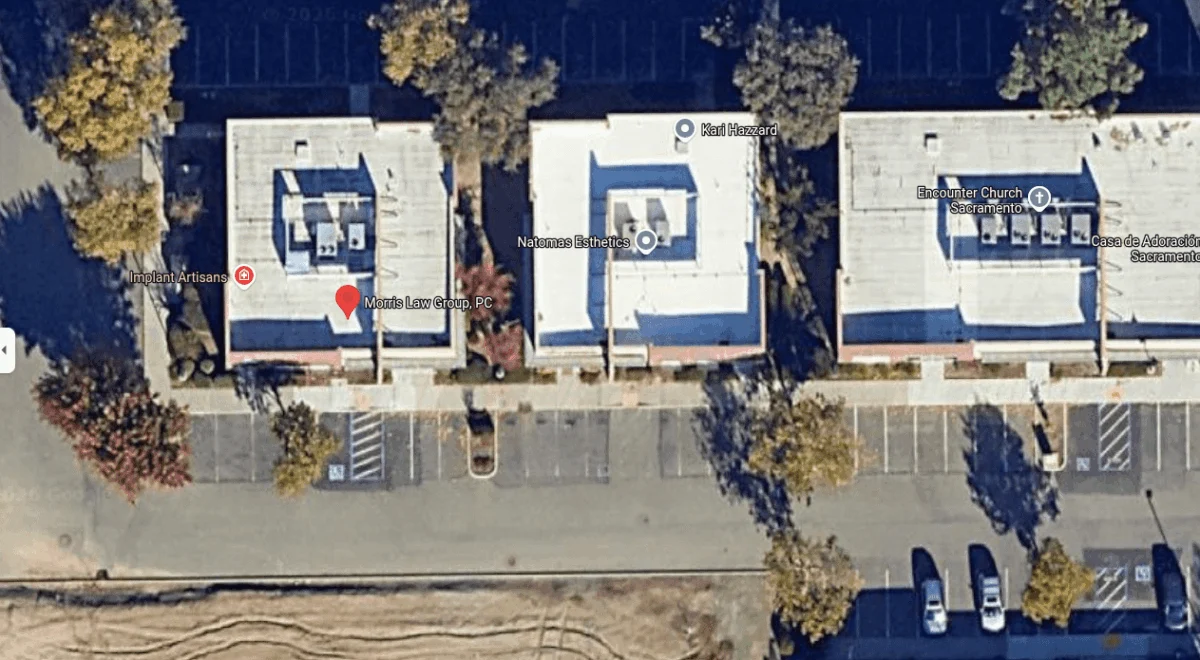
On a Friday morning in Sacramento, California, U.S. Immigration and Customs Enforcement (ICE) agents attempted to conduct what appears to have been an unconstitutional search of a local immigration law firm. The incident, which occurred at the Morris Law Group, was thwarted when attorneys within the office asserted their legal rights, demanding a warrant. The encounter highlights ongoing tensions surrounding immigration enforcement tactics and the legal protections afforded to individuals and their legal representatives.
Background of the Encounter
The events unfolded on a Friday morning when multiple ICE agents, reportedly arriving in at least four vehicles and armed, approached the Morris Law Group office, located in a strip mall. According to building employees and reports from local news outlets, the agents claimed to possess a list from Washington D.C. identifying the building’s address as a primary mailing address for numerous individuals. They proceeded to request a tour of the premises, specifically asking to inspect for "beds," a request that raised immediate red flags for the legal professionals present.
Raissa Morris, the owner of the Morris Law Group, was alerted to the presence of ICE agents by an employee via text message at approximately 9:16 a.m. The message indicated that an agent, identifiable by an ICE badge and carrying a firearm, had entered the front lobby and was requesting to speak with an office manager. Upon receiving this information, Ms. Morris swiftly instructed her staff to inform the agents that they could not conduct an inspection without a valid warrant.
The ICE agents’ response, as reported by building employees and detailed in subsequent news coverage, was particularly alarming. One agent reportedly stated that they had received a list from Washington D.C. that indicated multiple clients used the law firm’s address. He then reiterated the request to inspect the office for beds and, critically, issued a threat: if they received further orders, they could return at 3 a.m. to "break windows and enter." This assertion of authority and the subsequent threat have been widely criticized as indicative of an aggressive and potentially unlawful approach to immigration enforcement.
Legal Ramifications and Fourth Amendment Concerns
The core of the incident revolves around the Fourth Amendment of the U.S. Constitution, which protects against unreasonable searches and seizures. For a search of private property to be lawful, law enforcement officials typically require a warrant issued by a judge based on probable cause. The ICE agents’ attempt to enter and inspect the law office without presenting a warrant directly challenges these constitutional protections.

Immigration law offices often serve as mailing addresses for clients navigating complex legal processes. This is particularly common for individuals who may have unstable housing situations or who prefer to have official correspondence directed to their legal counsel for security and accuracy. The ICE agents’ interpretation of a law firm being listed as a mailing address as probable cause for an illegal housing operation appears to be a mischaracterization, demonstrating a lack of understanding of standard legal practices or a deliberate attempt to circumvent legal procedures.
The assertion that a law firm, especially one located in a commercial strip mall and sharing space with a dental clinic, could be housing a large number of migrants is factually improbable and suggests a strained pretense for the attempted search. Such an assumption, if genuinely held by the agents, would point to a significant deficit in investigative diligence. More likely, legal analysts suggest, it represents an opportunistic attempt to gain access under a fabricated premise.
The threat to return and forcibly enter the premises by breaking windows, should further orders be received, is also a serious concern. Such a threat, made in the absence of a warrant, can be construed as intimidation and an attempt to coerce compliance through fear of reprisal. It suggests a willingness on the part of some ICE agents to employ tactics that border on harassment, particularly when confronted with legal opposition.
Chronology of Events
- Friday Morning: ICE agents arrive at the Morris Law Group office in Sacramento.
- Approximately 9:16 a.m.: An employee of Morris Law Group alerts Raissa Morris, owner, via text that ICE agents are present and have entered the lobby.
- During the encounter: Agents claim to have a list from Washington D.C. and request to inspect the office for "beds."
- Upon demand for a warrant: Ms. Morris instructs her staff to inform agents that a warrant is required for inspection.
- Agents’ response: Agents reportedly cite the mailing address list and threaten to return to "break windows and enter" if further orders are received.
- Agents’ departure: ICE agents ultimately depart the premises without conducting a search, after being denied entry due to the lack of a warrant.
- Subsequent reporting: The Sacramento Bee breaks the news of the incident, followed by additional coverage from KCRA 3 and other outlets.
Official Statements and Reactions
The Department of Homeland Security (DHS), when contacted by KCRA 3 for comment, issued a brief statement that appears to downplay the nature of the encounter. A DHS spokesperson stated: "On August 14, ICE officers approached an unmarked door during a targeted enforcement operation, thinking it was the target address as it was listed as the address of the illegal aliens they were planning to arrest. Upon finding out it was a law firm; they departed the address."
This official statement has been met with skepticism and criticism by legal observers and those familiar with the details of the incident. Critics argue that the DHS statement omits crucial elements, specifically the agents’ attempt to conduct a warrantless search and the explicit threat made upon their departure. They contend that it is highly improbable that ICE agents, arriving in multiple unmarked vehicles and identifying themselves, would mistake a clearly marked law firm in a commercial area for an unmarked door or a residential address. The statement’s assertion that the agents "discovered" it was a law firm only after confrontation suggests a lack of basic due diligence, or a disingenuous attempt to retroactively justify their actions.
The attorneys at the Morris Law Group, by asserting their rights and demanding a warrant, demonstrated a commitment to upholding legal standards and protecting their clients’ interests. Their actions serve as a critical example of how legal professionals can counter what they perceive as overreach by law enforcement agencies.

Broader Implications and Analysis
This incident in Sacramento is not an isolated event but rather part of a broader pattern of intensified immigration enforcement activities in certain regions. Data has indicated that ICE deportation efforts have been notably more aggressive in "blue states," often those that have adopted more sanctuary-friendly policies and whose populations have historically leaned towards supporting Democratic presidential candidates. This has led to accusations that immigration enforcement is being weaponized for political purposes, targeting states that do not align with the political priorities of the current administration.
The attempts by ICE to conduct searches without warrants or to use questionable pretenses for entry raise significant concerns about the agency’s adherence to constitutional norms and legal due process. Such actions, if unchecked, can erode public trust in law enforcement and create a chilling effect on the ability of individuals, particularly immigrants, to seek legal counsel without fear of intimidation or reprisal.
The threat of returning to break windows, even if an empty threat, speaks to a culture of aggression that some critics argue is becoming increasingly prevalent within certain branches of federal law enforcement. This type of rhetoric, particularly when directed at legal professionals who are integral to the functioning of the justice system, is deeply problematic.
Furthermore, the reliance on lists of addresses provided by clients to law firms as a basis for potential searches, without further corroboration or a judicial warrant, could set a dangerous precedent. It could be interpreted as a fishing expedition, aimed at generating arrests based on tenuous connections rather than concrete evidence of wrongdoing.
The long-term implications of such tactics extend beyond individual cases. They can impact the perception of the United States as a nation that upholds the rule of law and respects fundamental rights. For immigration advocates and legal scholars, incidents like this underscore the urgent need for oversight and accountability within immigration enforcement agencies, ensuring that their operations are conducted within the bounds of the law and with respect for civil liberties. The administration’s response, or lack thereof, to such allegations often reflects its broader stance on immigration policy and the methods employed to achieve its objectives. The ongoing debate surrounding the balance between national security, immigration enforcement, and individual rights remains a critical issue in the current political climate.



 Yuyun Lusiyani
 Joko Widodo
 Jia Lissa
 Pevita Pearce
 admin
admin
