
 Pevita Pearce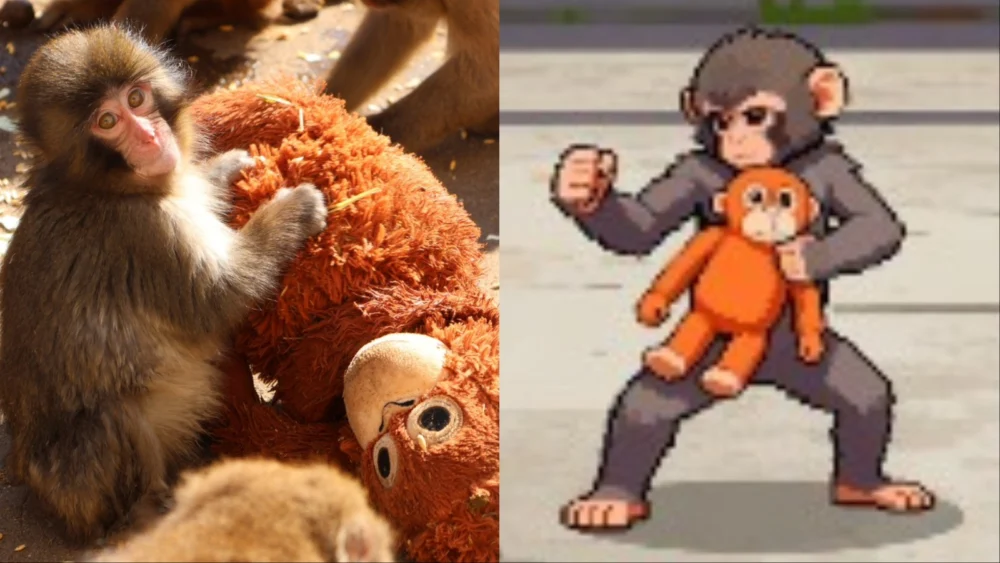
The digital landscape and animal welfare advocacy have converged in an unexpected medium following the viral rise of Punch, a baby Japanese macaque residing at Ichikawa Zoo. What began as a series of heart-wrenching video clips of a lonely infant monkey clinging to a plush toy has evolved into a broader cultural conversation, culminating in the release of a dedicated video game titled Zoo Fighter. Developed by Richie Branson, a former developer for the global gaming phenomenon Fortnite, the game serves as both a playable experience and a pointed critique of the conditions faced by primates in traditional zoological settings.
The story of Punch first gained international traction through social media platforms, where footage of the infant macaque sparked an immediate emotional response. In the videos, Punch is seen carrying an IKEA orangutan plush toy as a surrogate for maternal comfort. While the imagery was initially perceived by some as endearing, the underlying reality revealed a distressing situation within the primate enclosure. Reports confirmed that Punch had been rejected by his biological mother, a phenomenon that occurs in captive environments due to various stressors. Deprived of the essential tactile comfort and grooming typically provided by a mother, Punch turned to the stuffed animal as a primary source of security.
The Rise of Zoo Fighter and Digital Activism
The transition of Punch’s story from viral news to interactive media represents a new frontier in animal rights advocacy. Richie Branson, leveraging his background in high-profile game development, created Zoo Fighter as a free, web-based title designed to empower the infant monkey within a digital framework. In the game, players take control of Punch, who is depicted holding his signature orangutan plush. The gameplay mechanics are straightforward but symbolic: players must fend off "bully" monkeys that approach the infant.
The game’s primary objective is to knock away 100 hostile macaques, at which point the character is "released" to a sanctuary. This mechanic serves as a narrative metaphor for the struggles Punch faces in his real-world environment. According to the developer, the project is a "love letter to all animals doing a bid at the zoo," utilizing the "Free Punch" slogan that has gained momentum across social media platforms like X (formerly Twitter) and TikTok. By gamifying the struggle of an abandoned animal, the project seeks to maintain public pressure on zoological institutions regarding the long-term placement and safety of vulnerable residents.
Understanding the Biological and Social Context of Japanese Macaques
To understand the gravity of Punch’s situation, it is necessary to examine the social structure of Japanese macaques (Macaca fuscata), also known as snow monkeys. These primates are highly social animals with a complex matrilineal hierarchy. In a healthy troop, infants are protected not only by their mothers but also by other female relatives. However, maternal rejection can be a death sentence or a precursor to lifelong social maladjustment in the wild.
In captivity, the dynamics are further complicated. When a mother rejects her offspring, the infant loses its social standing and protection. The aggression witnessed by visitors at Ichikawa Zoo—where adult monkeys were seen attacking and dragging Punch—is a manifestation of troop hierarchy. Without a mother to defend him, Punch became a target for dominant individuals seeking to reinforce their status.
The psychological impact of this rejection is well-documented in primatology. Similar to the famous 1950s experiments by Harry Harlow on rhesus macaques, Punch’s reliance on a "cloth mother" (the IKEA plush) highlights the biological necessity of "contact comfort." Harlow’s research proved that infant primates prioritize tactile warmth and security over even food, and the lack of such interaction leads to profound developmental trauma. The public outcry surrounding Punch is rooted in a collective recognition of this fundamental need for safety.
Chronology of Events: From Abandonment to Global Recognition
The timeline of Punch’s journey illustrates how quickly digital sentiment can translate into institutional action.

- Late 2024 – Early 2025: Initial footage of Punch clinging to his plush toy at Ichikawa Zoo begins to circulate on Japanese social media, eventually crossing over to international audiences.
- January 2025: Reports surface detailing maternal rejection and physical bullying by adult members of the macaque troop. Concerns regarding the zoo’s management of the situation lead to viral hashtags and petitions.
- February 2025: Global furniture retailer IKEA becomes aware of the situation. In a move of corporate social responsibility, the company donates a large supply of plush toys to the zoo to ensure Punch and potentially other animals have access to comfort objects.
- Late February 2025: Ichikawa Zoo responds to the pressure by implementing new safety measures. This includes the assignment of a "bodyguard"—a dedicated zookeeper or security presence—to monitor Punch’s interactions with the troop and intervene during instances of aggression.
- March 2025: Richie Branson launches Zoo Fighter. The game goes viral within the gaming and animal advocacy communities, further amplifying the call for Punch to be moved to a specialized sanctuary.
The Zoo vs. Sanctuary Debate
The release of Zoo Fighter has reignited a long-standing debate regarding the ethical differences between zoos and sanctuaries. The "Learn More" section of the game explicitly argues that sanctuaries are superior for primates because they prioritize individual animal well-being over public exhibition.
From a professional standpoint, the distinction is significant. Most accredited zoos (such as those recognized by the Association of Zoos and Aquariums, or AZA) focus on conservation, education, and breeding programs. While many provide excellent care, the necessity of public display can create environments that are inherently stressful for animals with social or psychological trauma.
In contrast, sanctuaries—particularly those accredited by the Global Federation of Animal Sanctuaries (GFAS)—generally do not breed animals and often limit public interaction. Their primary mission is "lifelong care," providing rescued or rejected animals with naturalistic environments where social groups are carefully managed to prevent the kind of bullying Punch experienced. The advocacy surrounding Punch suggests a growing public preference for the sanctuary model for animals that cannot be successfully integrated into standard zoo populations.
Institutional Response and Welfare Improvements
Ichikawa Zoo has found itself in a difficult position, balancing the biological realities of macaque social structures with the intense scrutiny of a global audience. Following the viral incidents of aggression, the zoo’s administration has taken steps to mitigate the risks to Punch’s physical health. The introduction of a human "bodyguard" is an unusual step in primate management, typically reserved for high-stakes socialization efforts.
Zoo officials have noted that while the goal is to eventually integrate Punch into a social group, his safety is the current priority. The donation from IKEA was also accepted, providing a surplus of surrogate comfort objects. These steps, while welcomed by the public, are seen by some activists as temporary solutions to a structural problem. The narrative of Zoo Fighter suggests that the only "win" for Punch is a total exit from the zoo system, a sentiment that continues to drive engagement with the game and its associated social media campaigns.
Broader Implications for Wildlife Management in the Digital Age
The case of Punch and the subsequent creation of Zoo Fighter highlight the increasing power of "viral animal celebrities" to influence institutional policy. In the past, the internal management of a local zoo in Japan would rarely reach an audience in North America or Europe. Today, a single video can mobilize millions, leading to corporate donations, the creation of software, and a shift in how institutions handle animal welfare.
This phenomenon presents both opportunities and challenges for wildlife professionals. On one hand, the increased visibility brings much-needed funding and attention to animal welfare issues. On the other hand, the "anthropomorphizing" of animals through social media can sometimes lead to public demands that conflict with the complex biological needs of a species. In Punch’s case, however, the public’s concern aligns with established primatological understanding regarding the dangers of social isolation and physical trauma in infant macaques.
Future Outlook for Punch and Zoo Fighter
As of March 2025, Punch remains at Ichikawa Zoo under heightened supervision. The success of Zoo Fighter has ensured that the spotlight remains on the young macaque, making it difficult for the zoo to revert to previous management styles without public notice. The developer, Richie Branson, has indicated that the game will remain free to play, serving as a persistent digital billboard for the "Free Punch" movement.
The ultimate fate of the viral monkey remains uncertain. Whether he will be successfully integrated into a stable troop at the zoo or eventually relocated to a sanctuary depends on his developmental progress and the zoo’s willingness to navigate the logistical hurdles of a transfer. What is clear, however, is that Punch has become a symbol for a new generation of animal advocates who view digital media and gaming as essential tools in the fight for animal rights. Through the lens of a simple web-based game, the plight of one small monkey has been transformed into a global call for more compassionate and sanctuary-focused approaches to primate care.




 Yuyun Lusiyani
 Joko Widodo
 Eva Lovia
 admin
admin
 Lina Irawan