
 Jia Lissa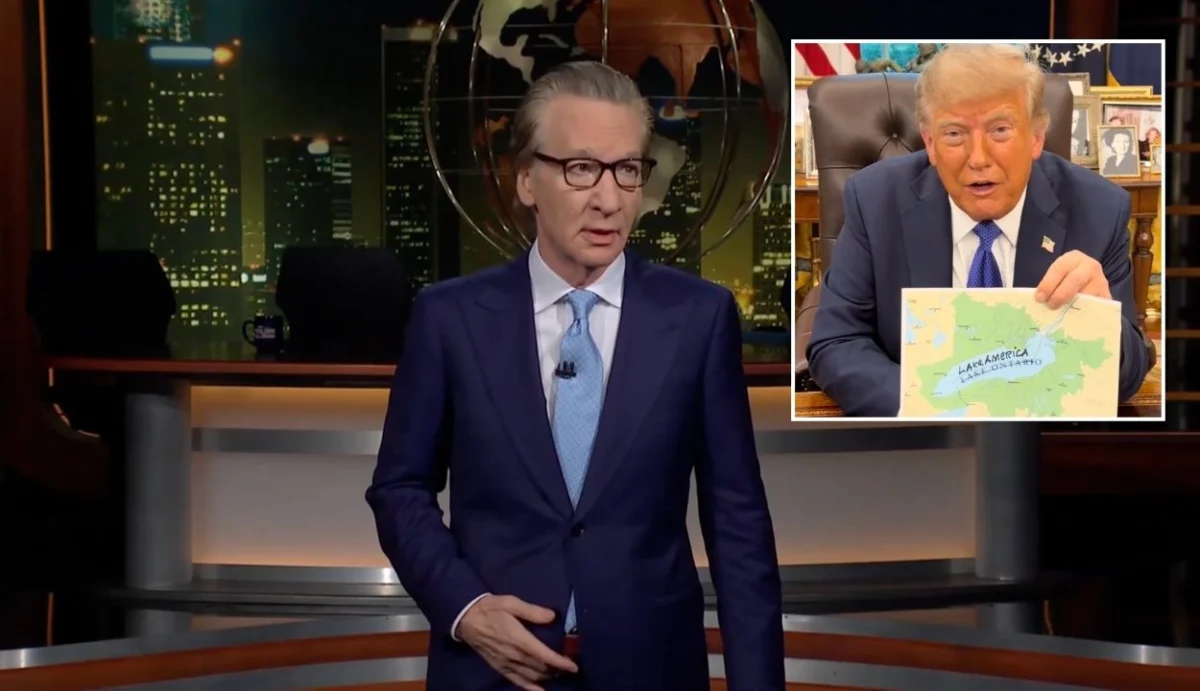
In a segment that has quickly ignited a firestorm of digital discourse, comedian and political commentator Bill Maher utilized the opening monologue of HBO’s Real Time to address the latest escalation in the ongoing diplomatic and economic conflict between the United States and Canada. The focal point of Maher’s critique was President Donald Trump’s recent executive order officially renaming Lake Ontario to Lake America, a move the president characterized as a necessary assertion of national identity. Maher’s commentary did not merely target the absurdity of the renaming but specifically pivoted to skewer the reaction from liberal circles, drawing a provocative parallel between the president’s cartographic rebranding and the left’s internal debates over inclusive language.
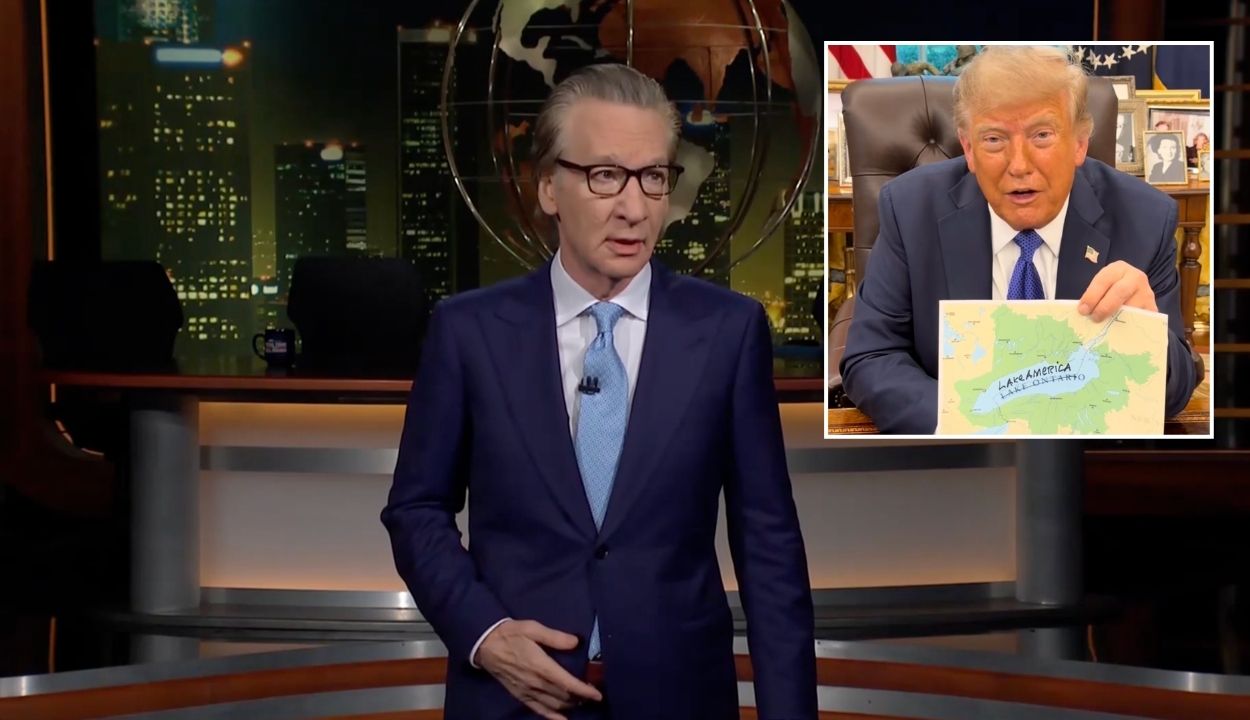
The controversy began on Thursday when President Trump, speaking from the Oval Office, signed the executive order that effectively attempts to erase the name Ontario—a word of Iroquoian origin—from official federal maps. The president told reporters he had been contemplating the change for a long time, framing it as a response to what he described as unfair trade practices by the Canadian government. This move follows a precedent set in January 2025, during the early days of his current term, when the administration successfully rebranded the Gulf of Mexico as the Gulf of America.
The Maher Monologue and the Cultural Counter-Critique
Maher, known for his "New Rule" style of centrism that often targets the perceived excesses of both the Republican and Democratic parties, opened his program by noting the logistical headache caused by the president’s penchant for renaming geographic landmarks. "Trump is so mad at Canada he renamed Lake Ontario Lake America," Maher told his audience. "Now I gotta buy a new globe again. It’s like the fifth time it’s happened."
The audience’s laughter underscored the satirical nature of the comment, yet Maher quickly shifted the focus toward the outrage emanating from his own side of the political aisle. He noted that while liberals have decried the renaming as a violation of historical accuracy and an abuse of executive power, their arguments often mirror the very linguistic shifts they promote in other spheres.
"The liberals are very pissed at this," Maher said, adopting a mocking tone. "They say you can’t just go around changing things to fit your political agenda. Just ask any Latinx birthing person."
This specific jab refers to the ongoing debate within the Democratic party regarding the use of gender-neutral terms like "Latinx" and "birthing person." Maher’s argument suggests a hypocrisy in the liberal outcry: if language and titles can be fluid to accommodate social progress, he posits, then the left finds itself on shaky ground when arguing that geographic names must remain static. The comment highlights a deepening rift within the American electorate regarding the purpose and power of nomenclature in the public square.
Chronology of the Rebranding Campaign
The renaming of Lake Ontario is not an isolated incident but rather the latest chapter in a broader administrative effort to "Americanize" shared or adjacent bodies of water. To understand the current climate, one must look back at the timeline of the administration’s cartographic shifts:
- January 2025: Shortly after his second inauguration, President Trump signed an executive order renaming the Gulf of Mexico to the Gulf of America. Despite initial resistance from international maritime organizations and the Mexican government, the name has been adopted by all U.S. federal agencies and several domestic airline and shipping companies.
- March 2026: Tensions with Canada began to simmer over the Great Lakes Water Quality Agreement, with the U.S. claiming that Canadian industrial runoff was disproportionately affecting American shores.
- August 24, 2026: Trade negotiations in Washington D.C. collapsed after Canadian Prime Minister Mark Carney refused to accept a 50% tariff on Canadian softwood lumber and automotive parts.
- August 27, 2026: President Trump officially signed the executive order renaming Lake Ontario to Lake America, effective immediately for all federal purposes.
During the signing ceremony, the president hinted that this was not the end of his geographic ambitions. "As you know, we took something called the Gulf of Mexico, we changed it. And now it’s very routinely the Gulf of America," Trump stated. "So if you think about it, we have a gulf and we have a lake. Now all we need is an ocean. So maybe we’ll have to change the name of the Atlantic and/or the Pacific, or maybe we will change them both."
Economic Context: The 50% Tariff and Trade Breakdown
The renaming of Lake Ontario serves as a symbolic exclamation point on a week of devastating economic news for North American trade. The breakdown of talks between the U.S. and Canada has led to the implementation of a 50% tariff on a wide array of Canadian goods. This "trade war" is the most severe since the early 20th century, threatening the integrated supply chains that define the Great Lakes region.
Data from the Department of Commerce suggests that the 50% tariff could impact over $300 billion in annual trade. Prime Minister Mark Carney, a former Governor of the Bank of England known for his pragmatic economic approach, has vowed to match the U.S. tariffs "dollar-for-dollar."
The Great Lakes region itself is an economic powerhouse. If the region were a country, it would have the third-largest GDP in the world. By renaming Lake Ontario—the smallest of the Great Lakes by surface area but a vital conduit for shipping via the St. Lawrence Seaway—the Trump administration is signaling a willingness to disrupt the "Blue Economy" to achieve political leverage.
Official Responses and International Reaction
The reaction to the executive order has been swift and divided. Within the United States, several Democratic leaders have condemned the move as a "distraction" and a "diplomatic disaster." Representative Alexandria Ocasio-Cortez (D-NY) took to social media to blast the administration, though her previous advocacy for linguistic shifts provided the ammunition for Maher’s critique on Real Time.
In Canada, the response has been a mixture of bewilderment and defiance. Prime Minister Carney addressed the Canadian Parliament, stating, "A name on a map does not change the sovereignty of our waters or the depth of our friendship with the American people, even if their current leadership chooses to prioritize nomenclature over negotiation."
International bodies, including the International Hydrographic Organization (IHO) and the United Nations, have stated they will continue to recognize "Lake Ontario" in all international maritime charts and diplomatic communications. However, domestic American companies are already feeling the pressure to adapt. MapQuest and other digital navigation services have reportedly begun developing "name generators" that allow users to toggle between "Traditional" and "Patriotic" geographic labels to avoid alienating users on either side of the political spectrum.
Analysis of Implications: Cartography as a Political Weapon
The renaming of Lake Ontario to Lake America represents a significant shift in how executive power is utilized in the 21st century. While historically, renaming landmarks was a practice reserved for post-colonial transitions or total regime changes, its use as a tactical tool in a trade war is a relatively new phenomenon.
From a factual standpoint, the renaming faces significant legal and logistical hurdles:
- The Boundary Waters Treaty of 1909: This treaty governs the shared use of the Great Lakes between the U.S. and Canada. Legal experts argue that a unilateral name change violates the spirit, if not the letter, of this long-standing agreement.
- Logistical Costs: The cost of updating federal signage, textbooks, GPS databases, and legal documents is estimated to run into the hundreds of millions of dollars.
- Environmental Cooperation: The Great Lakes are a single ecosystem. Diplomatic rifts over names can hinder essential cooperation on invasive species management and pollution control.
Maher’s monologue, while comedic, touched on a deeper truth regarding the current state of American political discourse. By framing the renaming as a "tit-for-tat" in the culture war, Maher highlighted how even the most basic facts—such as the name of a Great Lake—have become subject to partisan identity.
Future Outlook for U.S.-Canada Relations
As the 50% tariffs take effect and the rebranding of Lake Ontario enters the federal register, the relationship between the two closest allies in North America remains at an all-time low. Analysts suggest that the "Lake America" order may be a bargaining chip intended to be traded away in future negotiations. However, the precedent set by the "Gulf of America" suggests that once these changes are codified in the federal bureaucracy, they tend to persist.
For now, the residents of the Great Lakes region find themselves living on the shores of a body of water with two names. Whether the world follows the U.S. lead or maintains the historical designation remains to be seen. What is certain is that the intersection of trade, language, and national identity has created a new and unpredictable front in American politics—one where even the map under our feet is no longer a given. Maher’s "Real Time" commentary serves as a reminder that in 2026, the battle for the "correct" word is being fought on every front, from the halls of academia to the middle of the Great Lakes.



 Joko Widodo
 admin
admin
 Nila Kartika Wati
 Lina Irawan
 Yuyun Lusiyani