Pevita Pearce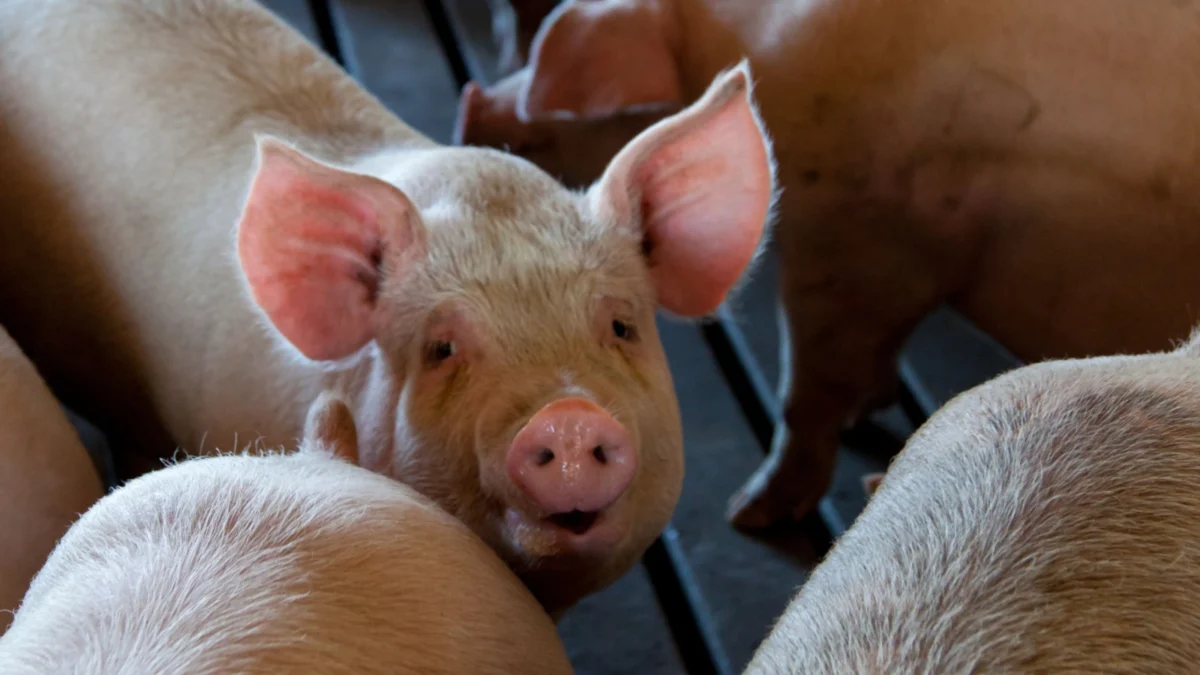
The tranquil rural landscape of Madison County, Indiana, became the center of an intensive multi-agency law enforcement operation on August 27, as authorities launched a high-stakes search for what was reported to be a pair of predatory big cats. For four hours, deputies, state troopers, and wildlife experts scoured the terrain near the Hancock County line, following a credible 911 report of a 300-pound lioness and a smaller cub roaming the area. The operation, which utilized advanced thermal-imaging technology and ground units, ultimately concluded not with the capture of exotic felines, but with the discovery of several large pigs grazing in the vicinity.
The incident began at approximately 10:00 a.m. when a resident in the southern portion of Madison County contacted emergency services. The caller provided specific and alarming details, describing a massive tan-colored feline, estimated to weigh 300 pounds, accompanied by a smaller cub weighing between 100 and 150 pounds. Most notably, the caller reported that the larger animal appeared to be wearing a blue harness, a detail that suggested the animal might be an escaped pet or a captive creature rather than a wild transient. This specific detail significantly escalated the perceived threat level, as a harnessed lion implies a history of human proximity and the potential for unpredictable behavior in a residential environment.
The Mobilization of Law Enforcement and Public Safety Protocols
Upon receiving the report, the Madison County Sheriff’s Department immediately initiated public safety protocols. Recognizing the potential danger to residents and livestock, authorities issued a formal warning to the local community. Residents were advised to stay indoors, secure their homes, and bring all domestic pets and small livestock into enclosed structures. The urgency of the situation was compounded by the geographical location of the sighting, which sat near the border of Madison and Hancock counties, necessitating a cross-jurisdictional response.
The search force quickly expanded to include deputies from the Hancock County Sheriff’s Office and troopers from the Indiana State Police. The primary objective was to establish a perimeter and confirm the presence of the animals before they could migrate toward more densely populated areas. Because big cats are notoriously elusive and capable of covering significant ground in a short period, the use of traditional ground tracking was supplemented by aerial surveillance.
Advanced Surveillance and the Role of Thermal Technology
As ground units navigated the dense brush and agricultural fields of the search area, the Indiana State Police deployed drones equipped with thermal-imaging cameras. These devices are designed to detect heat signatures, making them invaluable for locating large mammals hidden by thick foliage or standing crops. In a rural Indiana August, where cornfields can reach heights of eight to ten feet, aerial thermal imaging is often the only effective way to scan large swaths of land quickly.
During the course of the flight operations, the drones detected several large heat signatures in the brush. These readings initially appeared to corroborate the 911 caller’s report, suggesting that substantial animals were indeed moving through the area. It was this technological "hit" that led the Sheriff’s Department to reach out to professional wildlife handlers for assistance in a potential capture or containment operation.
The Involvement of the Exotic Feline Rescue Center
With the search intensifying, the Madison County Sheriff’s Department contacted the Exotic Feline Rescue Center (EFRC) based in Center Point, Indiana. The EFRC is one of the largest facilities in the United States dedicated to the care of abused, unwanted, or neglected exotic cats. Their staff is trained in the tranquilization and safe transport of large predators, making them the primary resource for Indiana law enforcement in cases involving escaped big cats.
Rebecca Rizzo, the Head Keeper at the EFRC, confirmed that her team received the call shortly after the thermal-imaging drones picked up the heat signatures. Rizzo noted that the EFRC takes such reports with the utmost seriousness, as the presence of a harnessed lion suggests an illegal or unregulated ownership situation that could end in tragedy for both the animal and the public.
"Our crew mobilized within 15 minutes of the call," Rizzo stated in a later interview. "We were preparing the necessary equipment, including transport crates and chemical immobilization tools, to head to Madison County." However, just as the team was ready to depart, they received a second call from the sheriff’s office providing an update that would abruptly stand down the rescue mission.
The Discovery: From Apex Predators to Farm Animals
The four-hour tension reached a sudden resolution when Indiana State Police troopers, guided by the drone’s coordinates, moved in on the location of the heat signatures. Upon reaching the site, officers did not find a lioness in a harness or a prowling cub. Instead, they discovered a group of pigs.
Madison County Sheriff John Beeman later confirmed to the media that the animals identified by the search teams were indeed swine. While it remains unclear if the pigs were the exact animals the original caller had seen, no evidence of exotic felines—such as tracks, scat, or hair—was found during the extensive four-hour sweep of the area.
"At this point, we only have the original caller having reported the lions," Sheriff Beeman told the IndyStar. He noted that while the search did not yield a lion, the discovery of the pigs provided a logical explanation for the large heat signatures detected by the drones. The search was officially called off shortly after the identification of the pigs, and the stay-at-home advisory for residents was lifted.
Analysis of Mistaken Identity in Wildlife Sightings
The phenomenon of "mystery cat" sightings is a recurring challenge for law enforcement across the United States. While it may seem difficult to mistake a pig for a lion, experts in animal behavior and human perception suggest several factors can contribute to such errors. Distance, lighting, and "expectancy bias"—where a witness’s brain fills in details based on a perceived threat—can play significant roles.
In rural environments, a large hog viewed from a distance through tall grass or shifting shadows can mimic the low-slung profile and tan coloration of a cougar or a lioness. Furthermore, the report of a "blue harness" may have been a misidentification of a shadow, a collar, or even a marking on a specific breed of pig. Despite the outcome, authorities emphasized that the caller acted appropriately by reporting the sighting, as the potential risk of an actual escaped lion outweighs the inconvenience of a false alarm.
Indiana’s Exotic Animal Regulations and Historical Context
The seriousness with which the Madison County authorities treated the report is rooted in Indiana’s specific history and legal framework regarding exotic pets. Indiana has historically had relatively lenient laws concerning the ownership of "Class III" animals, which include large felids like lions, tigers, and leopards. While the Indiana Department of Natural Resources (DNR) requires permits for such animals, the state has seen numerous instances of private citizens keeping large predators in residential or rural settings.
The Exotic Feline Rescue Center itself was founded partly in response to the high number of captive big cats in the region. According to DNR data, there are several dozen active permits for large carnivores across the state, and an unknown number of animals may be kept illegally. Given this context, the report of a harnessed lion was viewed as a plausible, albeit rare, emergency.
The Logistics and Costs of the Search
The four-hour operation represents a significant expenditure of public resources. The deployment of multiple sheriff’s deputies, state troopers, and high-tech equipment like thermal drones involves substantial man-hours and operational costs. However, Sheriff Beeman defended the scale of the response, noting that the primary responsibility of his department is the preservation of life.
"When you get a report of a 300-pound predator in a residential area, you cannot afford to be skeptical," a spokesperson for the department indicated. The coordination between Madison and Hancock counties, along with the state police, demonstrated the efficacy of the region’s mutual aid agreements, even if the result was ultimately benign.
Conclusion and Final Status
The Madison County "lion hunt" of August 27 serves as a case study in the complexities of rural law enforcement and public safety. While the search ended without the discovery of any exotic cats, the incident highlighted the readiness of local and state agencies to respond to unconventional threats.
As of the latest updates, the Madison County Sheriff’s Department considers the case closed. No further sightings of the harnessed lion have been reported, and no local exotic animal owners have reported missing livestock or pets. The pigs discovered during the search were determined to be local livestock that had simply been in the wrong place at a time of heightened alert. For the residents of Madison County, the day ended with a sigh of relief and a reminder of the unpredictable nature of life in Indiana’s rural heartland.




 Joko Widodo
 admin
admin
 Nila Kartika Wati
 Amara Maple