
 Lina Irawan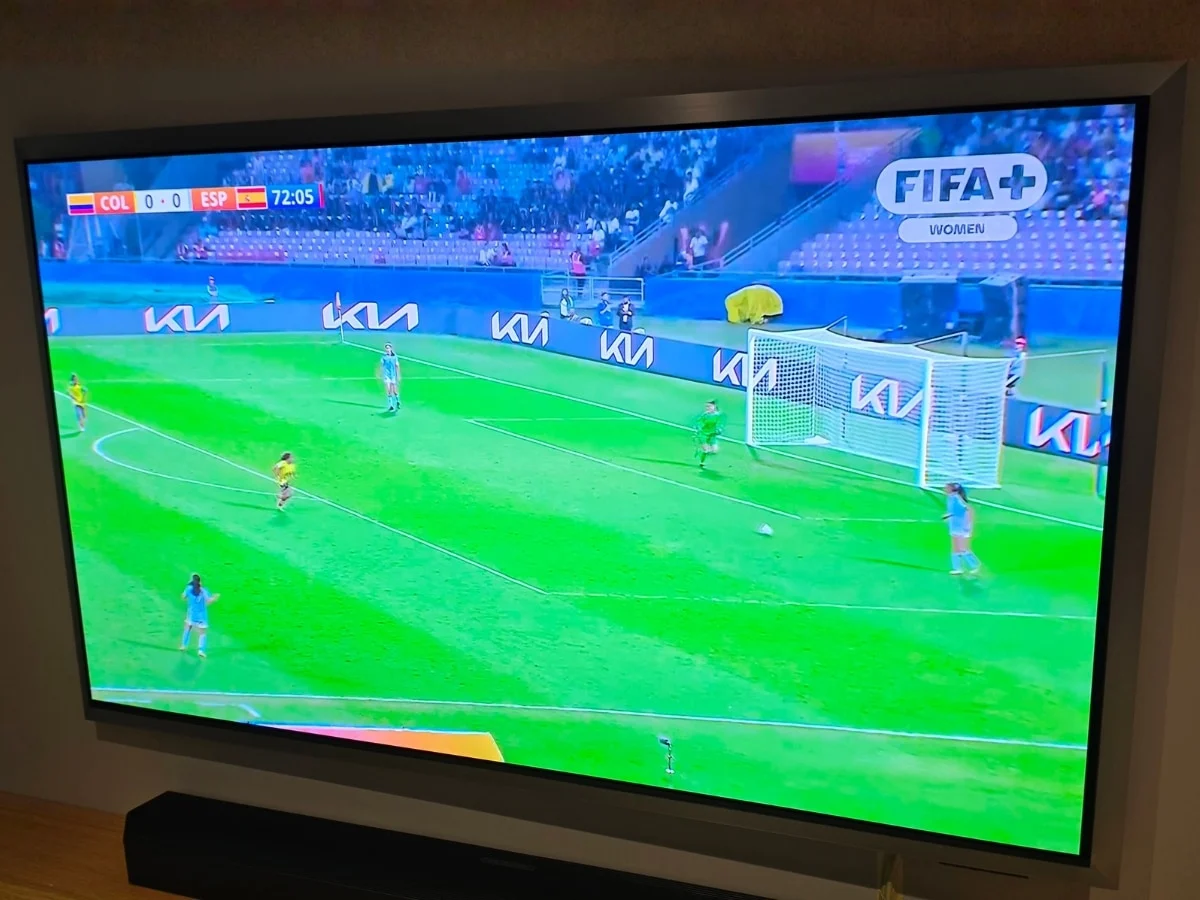
Samsung Electronics has officially expanded its premium television lineup with the introduction of the S95H OLED series, a flagship range designed to bridge the gap between traditional organic light-emitting diode (OLED) performance and the high-brightness capabilities of next-generation Micro RGB technology. This launch follows the recent debut of the company’s massive 115-inch MR95F Micro RGB TV, signaling a dual-track strategy where Samsung continues to refine OLED technology for the mainstream enthusiast market while pushing the boundaries of ultra-large format displays. The S95H is positioned as the pinnacle of Samsung’s current OLED engineering, featuring a radical new aesthetic dubbed the "FloatLayer" design and a suite of artificial intelligence features intended to redefine the home cinema experience.
The S95H series is available in four distinct sizes: 55-inch, 65-inch, 77-inch, and 83-inch models. Pricing for the Australian market begins at AUD$3,999 for the 55-inch variant, scaling up to AUD$5,299 for the 65-inch model, with the larger 77 and 83-inch panels commanding significant premiums. This pricing structure places the S95H in direct competition with other high-end OLED offerings from LG and Sony, though Samsung’s inclusion of proprietary Quantum Dot (QD) enhancements aims to differentiate its output through superior color volume and peak luminance.
Technical Specifications and the Evolution of FloatLayer Design
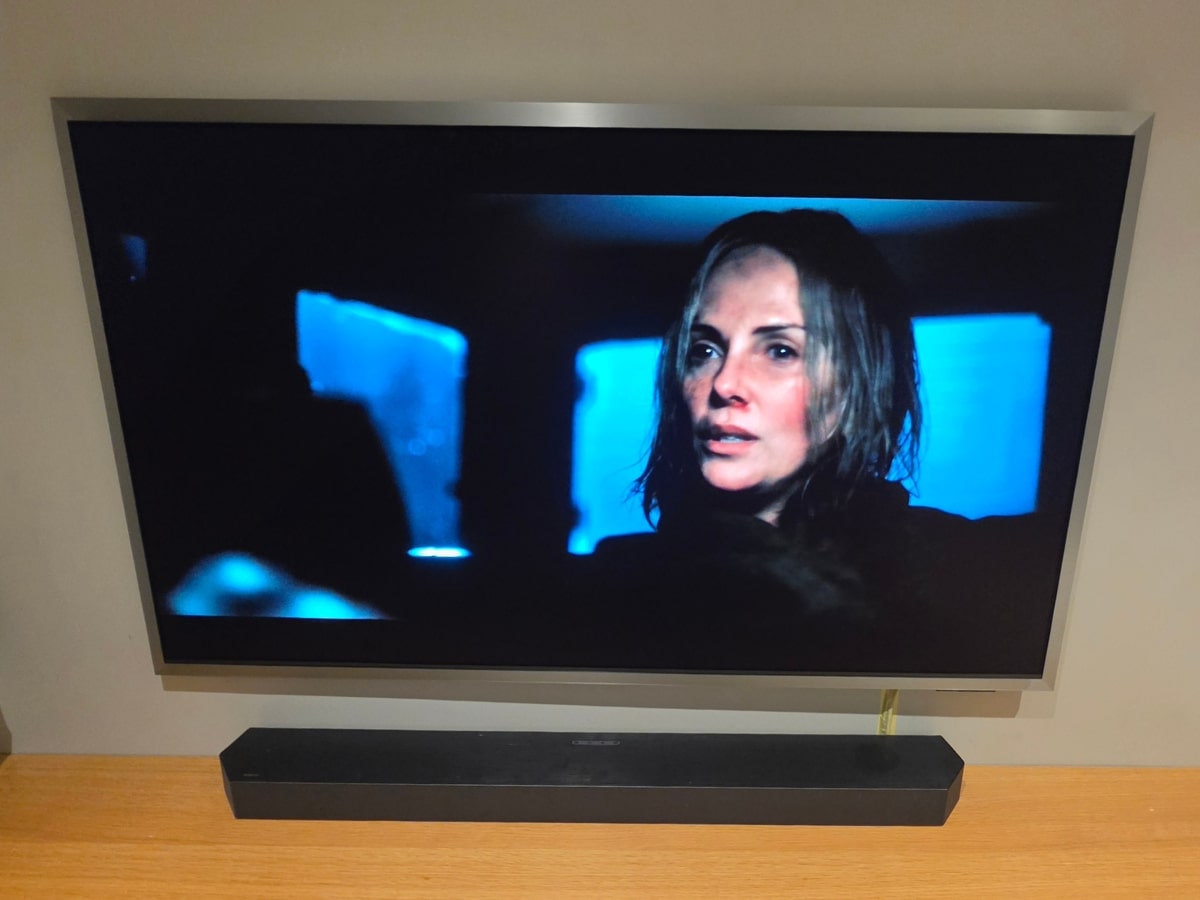
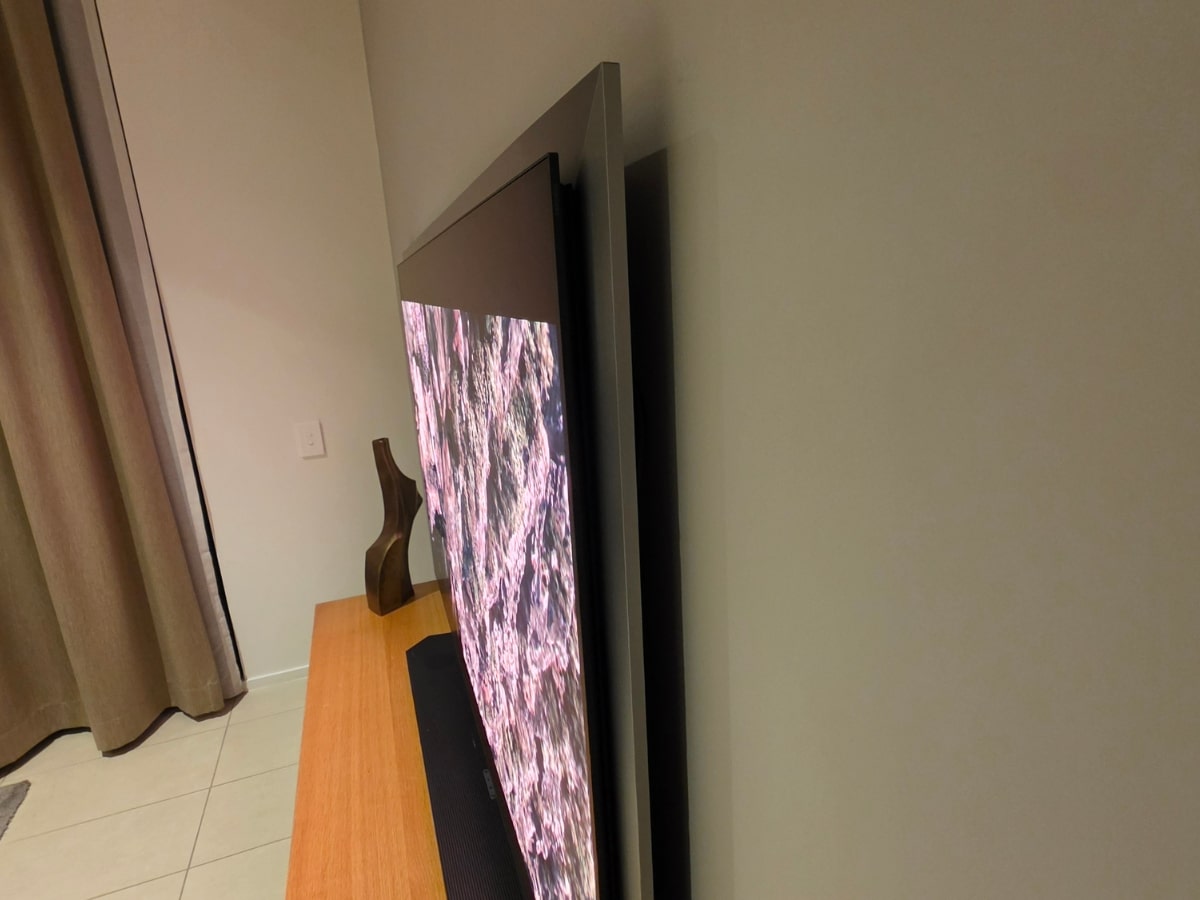
Central to the S95H’s identity is the "FloatLayer" design, a structural departure from the "Infinity One" design language seen in previous generations. The FloatLayer concept involves a metallic edging that frames the panel, creating a sculptural silhouette that separates the razor-thin glass display from the integrated hardware housing. By shifting the bulk of the processing components and connectivity ports into a slim metal sheet behind the panel, Samsung has achieved a profile that appears to hover when wall-mounted.
Industry analysts note that while the FloatLayer design provides a premium, art-like quality, its aesthetic impact varies significantly based on installation. On a wall mount, the frame acts as a minimalist border that complements modern interior architecture. However, when placed on a standard media unit, the metallic frame becomes a more prominent visual element that may polarize consumers accustomed to "bezel-less" designs. The design is most effective on the larger 77 and 83-inch models, where the scale of the frame matches the cinematic proportions of the screen.
Advances in Picture Quality and Anti-Reflective Technology
The S95H utilizes the latest iteration of Samsung’s QD-OLED technology. By combining a blue OLED self-emissive layer with a Quantum Dot color converter, the panel achieves a level of brightness that has historically been a weakness for OLED TVs. Benchmarking tests indicate that the S95H offers a substantial increase in peak nits compared to the 2025 S95D model, allowing for more impactful High Dynamic Range (HDR) highlights.

A critical advancement in the S95H is the refined anti-reflective coating. High-end OLEDs have often struggled in bright living room environments due to the reflective nature of the glass panels. Samsung has addressed this with a specialized matte finish that dissipates ambient light across the surface rather than reflecting it back to the viewer. This "Glare-Free" technology ensures that deep black levels—the hallmark of OLED—are maintained even in rooms with significant natural light or overhead fixtures.
In cinematic testing, the S95H demonstrated exceptional contrast. During sequences featuring high-contrast environments, such as the space battles in The Empire Strikes Back, the TV managed to maintain the absolute black of the vacuum while simultaneously rendering the intense white of planetary surfaces without "blooming" or light bleed. This precision is facilitated by the NQ8 AI Gen3 processor, which manages pixel-level dimming with increased efficiency.
Integration of Vision AI and Smart Features
The 2026 lineup sees Samsung leaning heavily into artificial intelligence to enhance both picture and sound. The S95H is equipped with "Vision AI," a suite of algorithms designed to analyze content in real-time. This system can identify the genre of the content—such as sports, movies, or gaming—and adjust the refresh rate, color temperature, and audio profile accordingly.

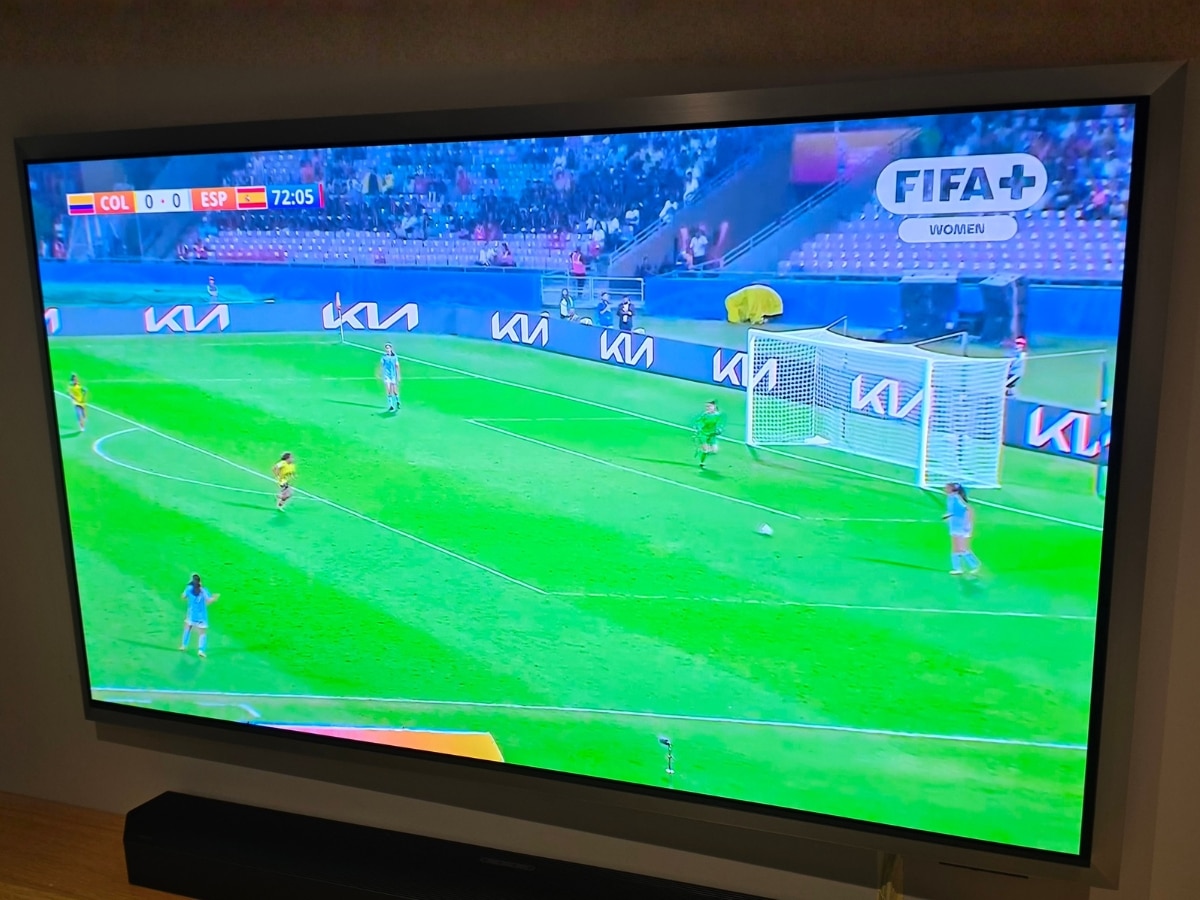
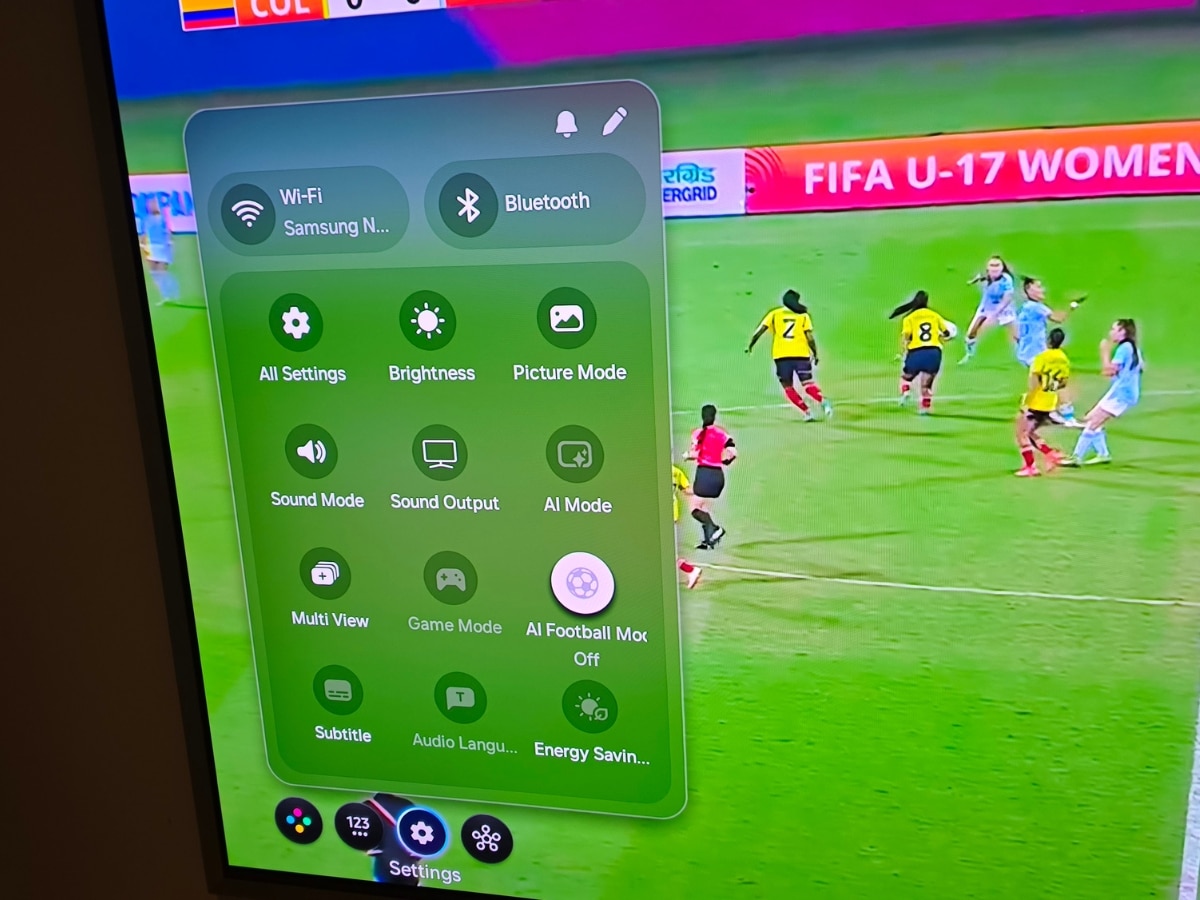
One of the more specialized features is "AI Football Mode." This audio-processing tool utilizes machine learning to isolate different layers of a broadcast. Users can choose to boost the stadium atmosphere while lowering commentary, or conversely, enhance the clarity of the commentators while muting the crowd. Currently, this feature is optimized for live sports on free-to-air television and the Samsung TV Plus app, with plans to expand compatibility to third-party streaming services in future firmware updates.
Furthermore, the Vision AI integrates into the operating system to provide an interactive search experience. Users can query the AI regarding actors on screen, historical context of a documentary, or recommendations for similar content. While designed to streamline the user experience, industry critics suggest that the success of these features will depend on the speed and unobtrusiveness of the AI interface during active viewing.
The OLED Art Store: Overcoming Technical Hurdles
For the first time in Samsung’s OLED history, the S95H includes full access to the Samsung Art Store. Previously, the Art Store—which offers over 5,000 digital reproductions of famous artworks—was largely reserved for "The Frame" series, which uses QLED (LCD) technology. The primary barrier for OLED was the risk of "burn-in" or image retention caused by displaying static images for extended periods at high brightness.
Samsung’s engineers have mitigated this risk through a combination of hardware and software solutions. The S95H utilizes a pixel-shifting algorithm and a sophisticated thermal management system that allows the TV to display artwork at reduced brightness levels, mimicking the appearance of a physical canvas. When in Art Mode, the TV uses its ambient light sensors to match the color temperature of the room, ensuring the digital art does not look like a glowing screen. This feature transforms the TV from a "black rectangle" into a decorative element, a move intended to appeal to the lifestyle-conscious segment of the market.
Market Context and Chronology of Development
The release of the S95H marks a significant milestone in Samsung’s complicated relationship with OLED technology. After a decade of focusing almost exclusively on QLED (Quantum Dot LCD), Samsung returned to the OLED market in 2022 with the S95B.
- 2022: Launch of the S95B, Samsung’s first QD-OLED, which focused on color vibrancy.
- 2023: The S95C introduced the One Connect Box to the OLED line, simplifying cable management.
- 2024: The S95D debuted the first iteration of the Glare-Free matte finish.
- 2026: The S95H arrives with FloatLayer design, advanced Vision AI, and the first OLED-compatible Art Store.
This chronology demonstrates a rapid iteration cycle where Samsung has moved from a newcomer in the modern OLED space to a technological leader, particularly in the realm of brightness and AI integration.
Industry Implications and Future Outlook
The launch of the S95H suggests that Samsung sees OLED as its primary volume driver for the premium market for the foreseeable future, even as it develops Micro RGB for the ultra-premium "halo" segment. While Micro RGB offers theoretically infinite lifespan and even higher brightness, the S95H remains significantly more accessible. For comparison, the 115-inch MR95F retails for approximately AUD$42,995, making the S95H’s AUD$5,299 price tag for the 65-inch model appear highly competitive for the average high-end consumer.
Official statements from Samsung Australia indicate a focus on "purposeful innovation." A company spokesperson noted during the launch event that the S95H was designed to address "the specific environmental challenges of the modern home," referring to the trend toward open-plan living with high levels of natural light.
The broader impact of the S95H on the industry will likely be felt in the ongoing "brightness wars" between manufacturers. As OLED technology approaches the limits of its organic materials, the integration of AI to manage heat and power distribution becomes the new frontier. Samsung’s success with the S95H will depend on whether consumers value the combination of the new FloatLayer aesthetic and AI-driven audio-visual enhancements enough to choose it over more traditional, and often cheaper, OLED alternatives.
As the S95H hits retail shelves globally, it stands as a testament to the maturation of QD-OLED technology. It offers a comprehensive package that addresses historical OLED flaws—such as reflections and burn-in concerns—while introducing a design language that attempts to turn the television into a piece of furniture. For the home cinema enthusiast, the S95H represents a refusal to compromise, delivering a picture that is as technically accurate as it is visually striking.



 Yuyun Lusiyani
 Pevita Pearce
 Eva Lovia
 Amara Maple
 Joko Widodo