
 admin
admin
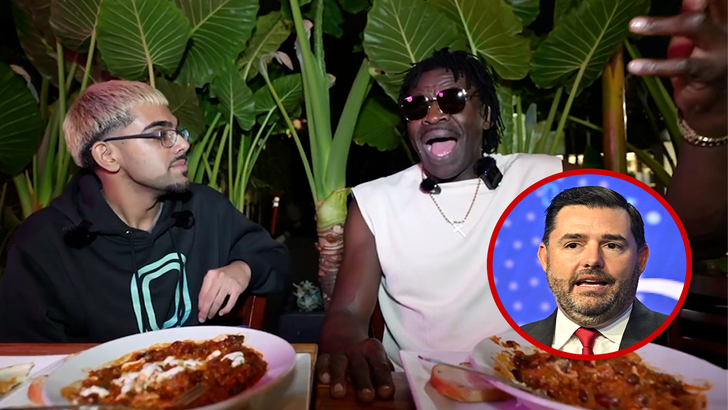
Former NFL wide receiver Michael Irvin has ignited a significant debate within sports and popular culture by publicly defending San Francisco 49ers owner Jed York’s recent legal troubles, asserting that the act of paying for sex is not fundamentally different from the transactional nature inherent in many conventional relationships. Irvin’s provocative statements, made during a recent livestream with internet personality N3on, suggest that societal judgment against York for allegedly engaging a sex worker is hypocritical, given that, in his view, individuals frequently "pay" for companionship and intimacy through various means, such as dinners or gifts. This defense comes in the wake of York’s arrest and subsequent plea to misdemeanor charges in Ohio, an incident that has drawn considerable scrutiny to the billionaire NFL executive and prompted an ongoing investigation by the league.
The Incident: Jed York’s Ohio Arrest and Legal Fallout
The controversy surrounding Jed York stems from an arrest that occurred on August 24, 2026, in Ohio. According to law enforcement reports, York was apprehended as part of a sting operation targeting individuals soliciting sex workers. Prosecutors allege that York repeatedly contacted a fake online advertisement set up by police, culminating in an arranged rendezvous at a trailer park. Upon his arrival to meet what he believed to be a sex worker, York was met by officers and arrested.
He subsequently faced charges of disorderly conduct and possession of criminal tools, the latter referring to the cell phone allegedly used to arrange the illicit encounter. In a legal proceeding that followed, York entered a plea of no contest to both misdemeanor charges. A no contest plea, while not an admission of guilt, is treated as such for sentencing purposes, often resulting in convictions for misdemeanor offenses without the defendant explicitly acknowledging wrongdoing. This legal maneuver typically aims to avoid the complications of a full trial and potentially limit civil liability.
The arrest quickly became a national headline, particularly given York’s prominent position as the CEO of the San Francisco 49ers, one of the NFL’s most storied franchises. Body camera footage of the arrest, released by authorities, further amplified public interest and scrutiny, providing a stark visual record of the incident. This development marked a significant personal and professional challenge for York, occurring shortly after he had reportedly filed for divorce, a detail Irvin later cited in his defense.
A Billionaire’s Predicament: Legal Ramifications and Public Image
Jed York’s legal predicament, though resulting in misdemeanor convictions, carries substantial weight due to his public profile. As the head of a major NFL team, his actions are constantly under the microscope, and any perceived lapse in judgment can have far-reaching implications for the team’s brand, fan base, and the league as a whole. The charge of disorderly conduct, while seemingly minor, reflects behavior deemed disruptive to public order, while possession of criminal tools underscores the premeditated nature of the alleged solicitation.
For a figure like York, the legal penalties—which typically involve fines and potentially community service for misdemeanors—are often overshadowed by the damage to reputation and the potential for a tarnished public image. The details of the arrest, particularly the location and the nature of the sting operation, added an element of public embarrassment that resonated widely across media platforms. The incident immediately raised questions about the standards of conduct expected from NFL owners and executives, prompting a swift response from the league itself.

Michael Irvin’s Controversial Commentary and the "Transactional" Argument
Michael Irvin, known for his outspoken personality both during his Hall of Fame playing career and as a media analyst, offered a staunch and somewhat unconventional defense of Jed York. Speaking on N3on’s popular livestream, Irvin posited that the act of paying a woman for sex is not an anomaly in human relationships but rather an explicit form of a dynamic that often exists implicitly. "We all pay for it," Irvin declared, elaborating that conventional dating and relationships frequently involve financial outlays, such as buying dinners, expensive gifts, or contributing to shared lifestyles. He argued that these actions constitute a form of "payment" for companionship, affection, or sexual intimacy, thereby rendering the distinction between a consensual, paid sexual encounter and other relationship dynamics merely one of degree or directness.
Irvin further suggested that scrutinizing York for a paid encounter was hypocritical, as many individuals, particularly men, engage in behaviors intended to "win over" a partner, which he framed as a form of transactional exchange. He contended that all relationships possess an "inherently transactional component," challenging the societal taboo associated with sex work by drawing parallels to socially accepted courtship rituals.
Moreover, Irvin introduced a sympathetic angle, urging viewers to consider York’s recent personal circumstances. He pointed out that York had reportedly filed for divorce prior to the arrest, suggesting that this personal upheaval could have contributed to a vulnerable state. Irvin implied that in such difficult times, an individual might seek solace or intimacy through means that, while unconventional, should not be judged harshly, especially if they are consenting adults.
Another facet of Irvin’s defense touched upon the specifics of York’s alleged rendezvous at a trailer park versus seeking out high-end escort services. Irvin argued that for wealthy and famous individuals, opting for a "low-key" or discreet arrangement, even in an unexpected location, might be a calculated choice to avoid the heightened risks of exposure and extortion often associated with more visible or high-priced establishments. This perspective framed York’s actions, within Irvin’s controversial framework, as a pragmatic attempt to manage privacy and risk, rather than an act of poor judgment.
The NFL’s Response: Upholding Integrity and the Personal Conduct Policy
The National Football League quickly acknowledged Jed York’s arrest and the subsequent legal proceedings, initiating an internal investigation into the matter. The NFL operates under a comprehensive Personal Conduct Policy, which applies not only to players but also to coaches, executives, and owners. This policy aims to uphold the integrity and public image of the league, requiring all associated personnel to maintain a high standard of conduct both on and off the field.
While the specifics of how the Personal Conduct Policy is applied to owners can differ from its application to players, the league takes incidents involving team leadership very seriously. Commissioner Roger Goodell and the league office have a vested interest in ensuring that the actions of its owners do not detract from the NFL’s reputation or alienate its fan base and corporate partners.
Historically, the NFL has demonstrated a willingness to sanction owners for various offenses. For instance, Robert Kraft, owner of the New England Patriots, faced charges related to soliciting prostitution in 2019, though those charges were later dropped. While Kraft was not formally disciplined by the league due to the dismissal of charges, the incident itself underscored the NFL’s concern with such matters. The league’s investigation into York’s case will likely review all available evidence, including court documents, police reports, and any statements from York himself, to determine if his actions violated the Personal Conduct Policy and if any disciplinary action, such as a fine or suspension, is warranted. The duration and outcome of such investigations are often not immediate, reflecting the thoroughness required to navigate complex legal and ethical considerations.
Public and Organizational Repercussions for the San Francisco 49ers
The incident involving Jed York and Michael Irvin’s subsequent defense have created a challenging public relations scenario for the San Francisco 49ers. As the team’s CEO, York is the public face of the ownership, and his personal conduct inevitably reflects on the entire organization. While the 49ers have not made extensive public statements beyond acknowledging the ongoing legal process and the NFL’s investigation, the situation undoubtedly presents a distraction for the team.
Fan perception is a critical factor. NFL team owners are often seen as custodians of a cherished public trust, and incidents involving legal troubles can erode fan loyalty and create discomfort. The specific nature of the charges, coupled with the details of the trailer park rendezvous, adds a layer of sensationalism that can be particularly damaging to a team’s brand image. Sponsors and corporate partners also monitor such developments closely, as they rely on the league and its teams to maintain a positive public image.
Michael Irvin’s defense, while perhaps intended to support York, has also drawn its own set of criticisms. His argument about the transactional nature of relationships has been perceived by some as minimizing the complexities of sex work, gender dynamics, and the ethical implications of soliciting such services. This has broadened the conversation beyond York’s individual actions to include a debate on societal values and the role of public figures in shaping discourse. The incident forces the 49ers to navigate not only the legal and league-level implications but also the broader cultural conversation it has sparked.
Societal Discourse and the Intersection of Wealth and Privacy
Jed York’s arrest and Michael Irvin’s commentary have illuminated several broader societal issues, including the legal and ethical landscape surrounding prostitution, the efficacy and morality of sting operations, and the perennial tension between celebrity wealth and personal privacy.
In the United States, laws concerning prostitution vary significantly by state, with most jurisdictions, including Ohio where York was arrested, prohibiting it. Sting operations, like the one that led to York’s apprehension, are common law enforcement tactics aimed at disrupting illegal sex trade activities, often under the premise of combating human trafficking, though such operations also frequently target solicitations. These tactics raise ongoing debates about police resources, entrapment, and the effectiveness of criminalizing consensual adult activities.

Irvin’s argument about the "transactional" nature of all relationships, while controversial, taps into a long-standing philosophical discussion about the economic underpinnings of social interactions. While critics might argue that his comparison trivializes the unique dynamics and potential exploitation inherent in sex work, it undeniably sparks conversation about societal expectations, gender roles, and the often unspoken "costs" associated with maintaining various forms of relationships.
For wealthy and influential individuals like Jed York, the incident underscores the intense scrutiny that comes with public life. The desire for privacy, even for illicit activities, often clashes with the pervasive nature of digital information and the relentless gaze of media and law enforcement. The choice of a "low-key" location, as Irvin suggested, highlights the paradoxical challenge that public figures face in attempting to compartmentalize their private lives from their public personas, especially when those private actions intersect with legal boundaries.
Conclusion: An Ongoing Narrative
As of September 5, 2026, the narrative surrounding Jed York’s legal troubles and Michael Irvin’s defense remains active and evolving. While York has addressed the immediate legal charges, the NFL’s investigation is still underway, meaning potential league sanctions could still be forthcoming. The broader implications for the San Francisco 49ers and York’s standing within the league will depend heavily on the outcome of this internal review and how the organization manages the ongoing public perception.
Michael Irvin’s vocal support has added a layer of complexity, shifting the conversation from a singular legal transgression to a wider societal critique of intimacy, payment, and judgment. This incident serves as a potent reminder of the intricate relationship between sports, celebrity, and the ever-present moral and legal frameworks that govern public figures, ensuring that the discussion around Jed York’s actions and the implications of Irvin’s defense will continue to resonate across various spheres.


 Joko Widodo
 Nila Kartika Wati
 Lina Irawan
 Jia Lissa
 Yuyun Lusiyani