
 Pevita Pearce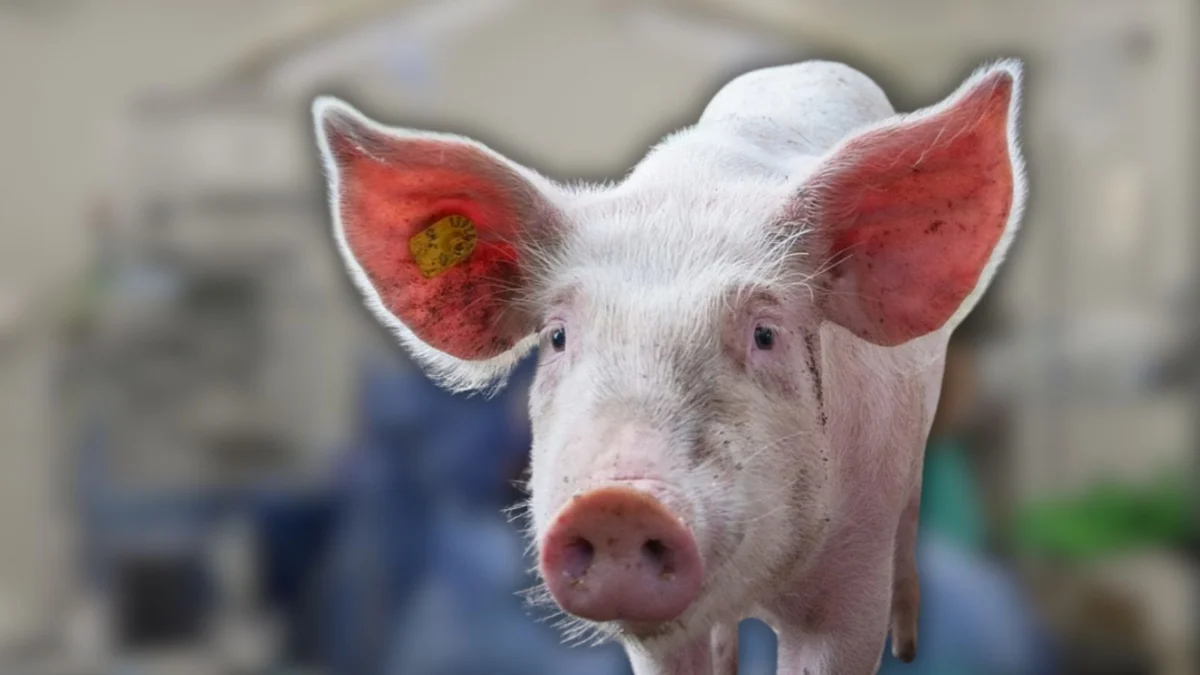
The field of regenerative medicine and xenotransplantation has reached a historic milestone following the announcement that 66-year-old Tim Andrews successfully lived for 271 days with a genetically modified pig kidney before transitioning to a human donor organ. This achievement, facilitated by surgeons and researchers at Massachusetts General Hospital (MGH), represents the longest duration a non-human organ has functioned within a living human recipient to date. The case provides robust clinical evidence that cross-species transplantation can serve as a viable "bridge," sustaining patients with end-stage organ failure until a compatible human organ becomes available.
The Clinical Journey of Tim Andrews
Tim Andrews, a resident of the United States, had been battling end-stage kidney disease secondary to type 2 diabetes. Like hundreds of thousands of others globally, his prognosis was precarious. Before entering the experimental trial, medical assessments indicated that Andrews faced a mere 9% statistical probability of receiving a deceased donor human kidney within a five-year window. This shortage of available organs is a chronic crisis in modern medicine, often leaving patients on exhausting long-term dialysis treatments that significantly diminish quality of life and long-term survival rates.
On January 25, 2025, Andrews became a pioneer in the field when he underwent a transplant surgery at MGH to receive a kidney from a Yucatan miniature pig. The procedure was conducted under the "compassionate use" pathway, often granted by the U.S. Food and Drug Administration (FDA) for patients with life-threatening conditions who have no other viable treatment options.
Genetic Engineering and the eGenesis Protocol
The success of the 271-day period was not merely a result of surgical precision but was rooted in sophisticated genomic engineering. The organ was provided by eGenesis, a biotechnology firm specializing in the development of human-compatible organs through gene-editing technology.
Using CRISPR-Cas9, a molecular tool that allows for precise alterations to DNA, scientists performed 69 separate genomic edits on the donor pig’s DNA. These edits were categorized into three primary functional objectives:
- Elimination of Xenoantigens: Three specific genes responsible for producing sugars on the surface of pig cells were "knocked out." These sugars are immediately recognized by the human immune system as foreign, typically triggering hyperacute rejection within minutes of blood flow restoration.
- Insertion of Human Transgenes: Seven human genes were integrated into the pig genome. These genes help regulate blood clotting, prevent inflammation, and shield the organ from the human complement system, essentially "masking" the pig kidney to make it appear more biologically compatible with the recipient’s immune system.
- Inactivation of Endogenous Retroviruses: One of the primary historical concerns regarding xenotransplantation is the risk of cross-species viral transmission. Scientists inactivated 59 instances of Porcine Endogenous Retroviruses (PERVs) within the pig genome to ensure the safety of the recipient and the broader public.
Immediate Post-Operative Outcomes and Recovery
Following the transplant in early 2025, the porcine organ, which Andrews affectionately named "Wilma," demonstrated immediate functionality. In a standard transplant, the "gold standard" of success is the immediate production of urine and the filtering of creatinine from the blood. The eGenesis-modified kidney achieved these metrics while the patient was still on the operating table.
Andrews’ recovery was initially rapid, and he was discharged from the hospital within seven days. His return to health was so significant that he was able to participate in public life, including throwing the ceremonial first pitch at a Boston Red Sox game. This period of his life served as a practical demonstration of the potential for xenotransplantation to restore not just biological function, but a high standard of living.
Challenges in Immunological Management
Despite the initial success, the clinical course was not without complications, highlighting the complexities of managing cross-species biology. Two weeks after the initial surgery, Andrews experienced a cellular rejection episode. This is a common occurrence even in human-to-human transplants, where the recipient’s T-cells attack the new organ. Doctors at MGH successfully managed this crisis by intensifying his immunosuppressive medication regimen.
Approximately six months into the trial, a new challenge emerged. Andrews contracted an infection, a frequent risk for transplant patients whose immune systems are suppressed to prevent organ rejection. To allow his body to fight the infection, medical teams were forced to reduce his immunosuppressant dosage. This reduction, while necessary for his survival, left the porcine kidney vulnerable. The resulting immunological activity caused vascular damage to the organ, leading to a decline in its filtration efficiency.
By October 2025, after 271 days of service, the pig kidney was no longer viable. Andrews underwent surgery to remove the organ and returned to traditional hemodialysis.
The Bridge to a Human Transplant
The 271 days provided by the pig kidney proved to be a critical "bridge." By sustaining Andrews’ health and keeping him off dialysis for nearly nine months, the procedure prevented the physiological wear and tear often associated with long-term renal failure. After 82 days back on the dialysis circuit, a compatible deceased human donor kidney became available.
On January 13, 2026, Andrews received a human kidney transplant. In the 231 days of follow-up reported since that surgery, the human organ has shown no signs of rejection, and Andrews remains in stable health. This sequence of events—moving from a failing native organ to a temporary bioengineered animal organ, and finally to a permanent human organ—represents a successful execution of the "bridge to transplant" theory.
Statistical Context of the Organ Shortage
To understand the weight of Andrews’ case, one must look at the current state of global organ transplantation. In the United States alone, more than 100,000 individuals are currently on the national waiting list for an organ transplant. The vast majority—roughly 80%—are waiting for a kidney.
According to data from the United Network for Organ Sharing (UNOS):
- An average of 17 people die every day while waiting for an organ transplant.
- Every 10 minutes, another person is added to the national transplant waiting list.
- In 2023, while over 46,000 transplants were performed, the gap between supply and demand continued to widen.
For patients like Tim Andrews, who had a less than 10% chance of receiving an organ through traditional channels, xenotransplantation offers a potential solution to the "death by queue" phenomenon.
Historical Evolution of Xenotransplantation
The success of the Andrews case is built upon decades of incremental scientific progress and some high-profile setbacks. In 2022, David Bennett became the first human to receive a genetically modified pig heart at the University of Maryland Medical Center. He survived for two months. In early 2024, Richard Slayman became the first living recipient of a pig kidney at MGH, surviving for nearly two months before passing away from complications unrelated to the transplant itself.
Andrews’ 271-day record nearly triples the previous survival time for a living human recipient of a porcine kidney. Each of these cases has provided researchers with invaluable data regarding the specific pathways of rejection and the long-term behavior of CRISPR-edited tissues.
Broader Scientific and Ethical Implications
The implications of this milestone extend beyond the field of nephrology. The ability to sustain a human life using a non-human organ for nearly a year suggests that the "humanization" of animal organs is reaching a level of maturity that could soon justify larger-scale clinical trials.
From an ethical standpoint, the success of the "bridge" model may alter how regulatory bodies like the FDA view xenotransplantation. If a pig kidney can reliably sustain a patient for a year, it could be used to stabilize patients who are too ill to survive the wait for a human organ, effectively "buying time" and improving their surgical candidacy when a human organ finally arrives.
Furthermore, the integration of high-tech solutions in medicine mirrors breakthroughs in other scientific disciplines. Just as researchers in Austria recently demonstrated the ability to manipulate quantum systems to effectively "rewind time" at a subatomic level, the field of genetics is learning to "rewind" or bypass the biological barriers of evolution that have historically prevented cross-species organ sharing. These advancements signal a new era where the limitations of the natural world—whether they be the scarcity of human organs or the linear flow of quantum states—are increasingly being overcome by technological intervention.
Future Outlook for Xenotransplantation
As Tim Andrews continues his recovery with his human donor kidney, the medical community is looking toward the next phase of eGenesis and MGH’s collaboration. The goal is to move from "compassionate use" individual cases to structured Phase I clinical trials. Such trials will be necessary to determine the standardized immunosuppression protocols required for porcine organs and to identify which patients are most likely to benefit from this technology.
"Hope is the biggest thing, the chance to be free from the machine and live your life," Andrews stated, reflecting on his journey. His experience suggests that for the thousands currently tethered to dialysis machines, the prospect of a readily available, "off-the-shelf" organ supply may no longer be a matter of science fiction, but a looming clinical reality.
The 271 days of "Wilma" have provided a blueprint for the future of transplant medicine, proving that while the fight against organ rejection is difficult, it is a fight that science is increasingly equipped to win.




 Joko Widodo
 admin
admin
 Eva Lovia
 Nana Wu
 Amara Maple