
 Nana Wu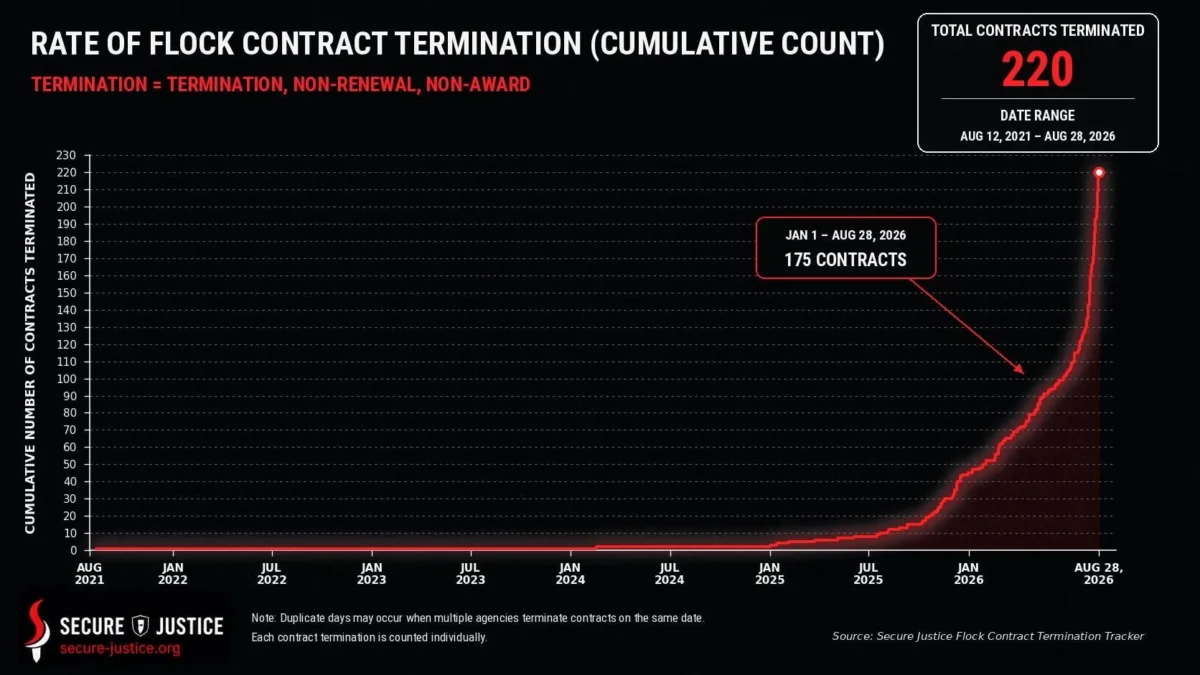
Flock Safety, a prominent manufacturer of Automated License Plate Readers (ALPRs), has begun to implement new default settings and operational guardrails for its surveillance technology. This move comes after a sustained period of intense public scrutiny and mounting criticism regarding the alleged abusive use of its systems by law enforcement agencies and, in some instances, the company’s own operational practices. The shift in Flock Safety’s approach appears to be a direct response to a significant decline in contract renewals and an accelerating rate of terminations by municipalities across the United States.
The company, which has historically defended its technology by framing criticism as opposition to public safety initiatives, now faces a critical juncture. For years, Flock Safety largely brushed aside negative press and political pressure, often asserting that reports of misuse were misleading or that detractors were hindering law enforcement’s ability to protect communities. However, the persistent allegations of ALPR systems being used for stalking, unauthorized surveillance, and data breaches have evidently reached a point where they are impacting the company’s core business.
A Shift in Default Settings: Addressing Core Criticisms
In response to months of negative press and growing concerns, Flock Safety has introduced several changes aimed at mitigating reported abuses. These include:
- Limited Data Retention Periods: New default settings are being implemented to automatically restrict how long license plate data is stored within the Flock system. This aims to reduce the potential for long-term surveillance and the creation of extensive historical databases that could be exploited.
- Enhanced Officer Search Requirements: The updated protocols reportedly demand more detailed information from law enforcement officers when they conduct searches within the ALPR database. This could include requiring justifications for searches, specifying the nature of the investigation, and logging user activity more comprehensively.
- Misuse Flagging Mechanisms: Flock Safety is introducing systems designed to flag potential instances of misuse for review by the police departments utilizing the technology. This is intended to create an internal oversight mechanism, prompting departments to investigate suspicious search patterns or data access.
While these changes are being presented as a proactive measure to address public safety concerns and ensure responsible use of surveillance technology, critics argue that they are insufficient and potentially too late. The primary concern is that these new restrictions are applied by default and can be easily overridden or disabled by law enforcement agencies. Furthermore, these changes may not retroactively affect systems already deployed and in use, leaving a significant number of existing installations outside their immediate purview.
Escalating Contract Terminations and Public Mistrust
The most compelling evidence of Flock Safety’s growing challenges lies in the rapidly increasing rate at which municipalities are severing ties with the company. Data compiled by Secure Justice, an Oakland-based advocacy group focused on digital privacy and surveillance, reveals a dramatic surge in contract terminations.
Since 2021, 214 cities and counties have reportedly dropped Flock Safety. However, the acceleration of this trend is stark: an astonishing 90 of these terminations occurred in August 2026 alone. This represents a fourfold increase compared to the previous month and indicates a significant loss of confidence in Flock Safety’s technology and practices.

This surge in terminations is not confined to a few isolated incidents but is occurring across diverse geographical regions and types of municipalities. Communities ranging from Lansing, Michigan, to Pflugerville, Texas, have publicly announced their decisions to end contracts with Flock Safety. The primary drivers behind these decisions are consistently cited as:
- Concerns over Out-of-Control Surveillance: Residents and officials are increasingly wary of the pervasive nature of ALPR technology and its potential for mass surveillance.
- Unwanted Data Sharing: Worries persist about how Flock Safety’s data is accessed, shared, and potentially used by third parties or across different jurisdictions without explicit consent.
- High Expenses: The cost associated with Flock Safety’s systems has also been a factor for some municipalities, especially when coupled with concerns about the technology’s efficacy and ethical implications.
- Reports of Police Abuse: The recurring incidents of law enforcement officers allegedly misusing ALPRs for personal reasons, stalking, or unauthorized investigations have eroded public trust and led to a strong demand for accountability.
A Timeline of Escalating Concerns
The issues surrounding Flock Safety have been brewing for some time, with a notable increase in documented problems over the past few years.
- Early Allegations of Misuse: Reports of law enforcement officers using Flock’s ALPR data for personal reasons, including tracking ex-partners or conducting unauthorized surveillance, began to surface in various media outlets. These incidents often highlighted the lack of robust oversight and the potential for ALPRs to become tools of harassment.
- Company Rebuttals and Defense: Flock Safety consistently responded to these allegations by emphasizing the public safety benefits of its technology and often questioned the accuracy or completeness of media reports. The company has also positioned itself as a leader in exposing police misuse of surveillance technology, a claim met with skepticism by many.
- Political and Public Backlash: As more reports emerged, public and political pressure mounted. Local governments began to re-evaluate their contracts, and privacy advocates intensified their calls for greater regulation and transparency.
- Key Incidents and Revelations: Specific events, such as the instance where a town council voted to shut down Flock cameras only to find the company reactivated them, further fueled public distrust and highlighted potential issues with corporate authority over public infrastructure. Another significant revelation involved the discovery of advanced AI-powered "Free Form" search capabilities within Flock cameras, which some police chiefs claimed were not adequately disclosed, leading to confusion about the system’s true scope and potential for invasive searches.
- Accelerated Contract Terminations (August 2026): The data from Secure Justice indicates a dramatic acceleration in contract terminations throughout August 2026, signaling a tipping point in municipal decision-making.
Analysis of Implications: The Erosion of Trust
The implications of this escalating situation for Flock Safety and the broader ALPR industry are significant. The company’s core strategy of relying on law enforcement as its primary customer base is being challenged by the very agencies it serves. The realization that its technology can be used in ways that undermine public trust, even by police departments themselves, appears to be a critical blow.
The "too little, too late" sentiment surrounding Flock’s recent policy changes is a common theme in discussions about the company. While the new defaults and flagging mechanisms are steps in a more responsible direction, the ability for agencies to disable these features, and the potential lack of impact on existing systems, leaves many unconvinced. This suggests that the company may be attempting to placate public opinion and retain customers without fundamentally altering its approach to data access and usage controls in a way that satisfies privacy advocates and a growing segment of the public.
The increasing number of cities terminating contracts signifies a broader trend towards greater skepticism and demand for accountability in the deployment of surveillance technologies. This trend is not unique to Flock Safety, but the company’s prominent position and the severity of the allegations against it have made it a focal point.
Broader Impact and the Future of ALPRs
The erosion of trust in Flock Safety has several broader implications for the deployment of ALPRs and other mass surveillance technologies:
- Increased Scrutiny of ALPR Vendors: As cities become more cautious, ALPR vendors will likely face more rigorous vetting processes, demanding greater transparency regarding data handling, algorithmic capabilities, and potential for misuse.
- Demand for Stricter Regulation: The ongoing controversy is likely to fuel calls for more comprehensive federal and state-level regulations governing the use of ALPRs and other pervasive surveillance technologies. This could include standardized data retention policies, independent oversight mechanisms, and clear guidelines on acceptable use.
- Potential for Market Shift: While Flock Safety experiences a downturn, other ALPR vendors, particularly smaller companies that may not have the same level of national infamy, could see opportunities to fill the void. However, these companies will likely face increased scrutiny as well, as the lessons learned from Flock’s experience may inform future purchasing decisions.
- The Role of Public Advocacy: The success of groups like Secure Justice in compiling and disseminating data on contract terminations highlights the crucial role of civil society organizations in holding technology companies and government agencies accountable for the ethical deployment of surveillance tools.
In conclusion, Flock Safety’s recent attempts to implement internal guardrails appear to be a reactive measure to a crisis of confidence. The company’s history of deflecting criticism, coupled with persistent allegations of misuse and a dramatic increase in contract terminations, suggests that regaining public trust and securing its market position will require more than just default setting adjustments. The ongoing trend of municipalities divesting from Flock Safety signals a growing public and official demand for greater accountability and privacy in the age of ubiquitous surveillance.




 Amara Maple
 Joko Widodo
 admin
admin
 Nila Kartika Wati
 Lina Irawan