
 Amara Maple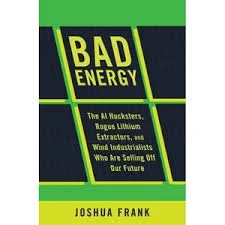
A recent appearance by prominent environmentalist Bill McKibben on Ezra Klein’s podcast has illuminated a significant — and increasingly complex — debate within the climate movement: the tension between an optimistic vision of "green energy abundance" and a critical perspective advocating for "degrowth" and a radical rethinking of capitalism. While Klein’s summary of McKibben’s insights offered a stark dichotomy of "bad news and good news," the underlying complexities of the green transition are now being challenged by voices arguing for a more cautious and fundamentally transformative approach.
The Optimistic Outlook: McKibben and Klein’s Vision of Green Abundance
The "bad news," as widely acknowledged, is the accelerating pace of climate change, with global temperatures continuing to rise, leading to more frequent and intense extreme weather events. The latest reports from the Intergovernmental Panel on Climate Change (IPCC) consistently underscore the urgency of transitioning away from fossil fuels, painting a grim picture of future scenarios if immediate and drastic action is not taken. This scientific consensus forms the backdrop against which all climate discussions unfold, lending gravity to every proposed solution.
However, the "good news" presented by Klein, echoing McKibben, offers a powerful counterpoint: "Green energy is getting better and cheaper, faster than we had ever dared hope." This assertion is supported by a growing body of evidence indicating rapid advancements and cost reductions in renewable technologies. Klein highlights a significant projection from the energy think tank Ember, which found that all of the new electricity demand around the world in 2025 was met with green power. This projection, if realized, represents a pivotal moment in the global energy transition, suggesting that renewables are not just supplementing but actively driving new capacity.
This progress, Klein suggests, opens the door to "clean energy abundance, a new form of energetic wealth," allowing for a future of "more and better — not less and worse." For many, this vision represents a crucial shift, offering a positive, aspirational narrative for climate action that moves beyond austerity and sacrifice. It posits that technological innovation and strategic investment can decouple economic growth from environmental degradation, providing a pathway to a sustainable future that is also prosperous.
A Stark Counter-Narrative: Joshua Frank’s "Bad Energy"
Yet, this optimistic narrative of abundance is not universally embraced. Joshua Frank, an editor at Counterpunch, offers a pointed critique in his new book, Bad Energy: The AI Hucksters, Rogue Lithium Extractors, and Wind Industrialists Who Are Selling Off Our Future (Haymarket Books, 2026). Frank contends that the current green energy transition, despite its veneer of environmental salvation, is fundamentally driven by profit incentives rather than genuine planetary concern.
Frank’s central argument is provocative: while the imperative to cease burning fossil fuels is undeniable, the "significant, haphazard expansion of green energy in recent years" is causing its own set of environmental and social harms. He points to large-scale solar projects, sprawling wind farms, and the intense mining required for renewable technologies as destructive forces that have "destroyed communities and ecosystems."
A critical component of Frank’s critique is the assertion that renewables, as currently implemented, "simply cannot match our ever-expanding demand for energy," a demand significantly fueled by the rapid proliferation of data centers in wealthier nations. The exponential growth of digital infrastructure, from artificial intelligence to cloud computing, creates an insatiable appetite for electricity, raising questions about whether current renewable deployment strategies can keep pace without perpetuating unsustainable consumption patterns. Projections from organizations like the International Energy Agency (IEA) indicate that data centers could account for a substantial percentage of global electricity demand in the coming years, presenting a formidable challenge to any energy transition.
The Shadowy Side of the Green Rush: Critical Minerals and Extractive Industries
Frank’s investigation takes readers on a global journey, from copper mines in Montana and Bolivia to wind farms in Wyoming, and into the geopolitical battleground of deep-sea mining in the South Pacific. His travels reveal a "stark assessment of the costs of the rush for renewables and the demand for endless growth." He argues that the unbridled pursuit of critical minerals—such as lithium, copper, nickel, and cobalt—for batteries, electric vehicles, transmission lines, and renewable infrastructure, risks replicating the destructive patterns of previous extractive industries.
The demand for these minerals is projected to skyrocket. The World Bank, for instance, estimates that the production of minerals like graphite, lithium, and cobalt could increase by nearly 500% by 2050 to meet the growing demand for clean energy technologies. This massive increase in mining operations, Frank argues, often impacts rural and indigenous communities, displacing populations, contaminating water sources, and desecrating sacred lands, all while the "externalities" of this extraction are largely ignored by many "Big Green" organizations.
Frank describes witnessing these industrial-scale developments firsthand in the Mojave Desert, a region he knows well. He notes the alarming sight of vast solar installations in biologically pristine areas, highlighting how these projects can reduce the desert’s capacity to act as a carbon sink and threaten endangered species. This direct observation fueled his conviction that the current approach is fundamentally flawed.
California’s Solar Setback: A Case Study in Corporate Influence
A key example cited by Frank is the controversial changes to California’s residential solar program under Governor Gavin Newsom. Frank alleges that the "desecration of the wilderness" through industrial-sized solar projects coincided with a "total gutting of the residential solar program," which had previously made significant strides. He claims that this policy shift, particularly the changes to Net Energy Metering (NEM) policies, was driven by the self-interest of large utilities like Pacific Gas and Electric (PG&E).
Frank asserts that PG&E and similar utilities "don’t want to decentralize the grid. They want to control the grid, they want to expand the grid — all under the guise of fighting climate change." He points to Governor Newsom’s deep ties to PG&E, citing their financial contributions to his campaigns and a "revolving door" of personnel between the utility and political offices. Critics of NEM 3.0 argue that by significantly reducing the compensation for excess solar energy fed back into the grid, the policy disincentivized rooftop solar adoption, consolidating power and profit within large, centralized utilities rather than fostering energy independence at the community level.
Rethinking Transportation and Consumption: Beyond Electric Vehicles
The debate extends beyond energy generation to consumption patterns, particularly in transportation. While Bill McKibben, in his interview with Klein, expressed support for allowing Chinese electric vehicles into the U.S. market, citing their superiority to Tesla cars, Frank offers a more fundamental critique of car culture itself. He argues that merely replacing gas-guzzling vehicles with electric ones, such as a Cybertruck, is "not an answer to the pollution that our transportation industry produces."
Instead, Frank advocates for a radical rethinking of the urban landscape. His vision prioritizes expanding public transit, fostering "bikeability, walkability," and creating cities that restrict private vehicles, mirroring models seen in certain European cities. He believes that a culture defined by cars, regardless of their propulsion system, inherently carries a host of problems that extend beyond emissions to urban sprawl, resource consumption, and social equity. McKibben, Frank acknowledges, would likely agree with the broader goal of improved public transit and walkable cities, but the core disagreement lies in whether electric vehicles offer a sufficient solution or merely a superficial one.
The Global Picture: China, Australia, and the Degrowth Imperative
Frank extends his critique to global examples often hailed as successes in renewable energy deployment. He challenges the narrative surrounding China’s solar boom, pointing out that while its solar capacity is indeed growing rapidly, it often merely keeps pace with the country’s overall economic growth and expanding energy demand, rather than substantially replacing fossil fuels. Frank highlights that China, despite its renewable efforts, remains the world’s largest emitter of fossil fuels, with its coal consumption continuing to rise. He states, "Unless that number comes down, we are not going to get out of this."
Similarly, he notes that Australia, often praised for its solar adoption, remains the second-largest exporter of fossil fuels after Russia. For Frank, the true measure of success in the green transition is the actual reduction and replacement of fossil fuels, not just the addition of new renewable capacity that runs parallel to continued high emissions.
This leads to Frank’s embrace of "degrowth," a concept central to his book. He argues, "We need to be replacing fossil fuels with renewables. I would embrace degrowth. That’s the only way we are going to navigate ourselves out of this." Degrowth, in this context, means a conscious and democratic scaling down of consumption and production in wealthier nations to achieve ecological sustainability and social equity. It stands in direct contrast to the "abundance movement" promoted by Klein and McKibben, which often assumes that technological solutions can enable continued economic growth without fundamentally altering consumption patterns.
Democratizing Energy: A Vision Beyond Capitalism
At the heart of Frank’s critique is a fundamental challenge to the capitalist system. He argues that the green energy transition, as currently envisioned, merely replaces "fossil fuel capitalism with critical mineral capitalism," an outcome that will not solve the underlying problems of environmental destruction and social inequality. "The point of the book is to get people to think beyond capitalism," he explains.
Frank is not entirely opposed to mining or technology but advocates for a "democratized mining" approach. He suggests alternatives like public power authorities, similar to the Tennessee Valley Authority (TVA), to control energy production and resource extraction, preventing the sale of public lands to multinational corporations that extract resources and leave behind ecological devastation. He also points to technological alternatives, such as sodium batteries, which may have less environmental impact than lithium mining, and emphasizes the potential for small-scale, localized mining operations.
He stresses the importance of prioritizing residential solar and deploying renewables in "already disturbed areas, on parking lots, brownfields," rather than pristine biological zones. In a city like Los Angeles, he observes, two-thirds of homes lack rooftop solar, and vast commercial spaces remain untapped for solar potential.
Philosophical Underpinnings and Political Realities
Frank’s intellectual lineage draws from thinkers like Kohei Saito (author of Slow Down: The Degrowth Manifesto) and Murray Bookchin (author of The Ecology of Freedom), as well as E.F. Schumacher’s Small is Beautiful. He sees himself not as a theorist but as a journalist observing the real-world impacts of these technologies. "It’s a tool for looking at these things, even things we believe are good — like wind and solar, which I support. But they have to be done in a way that minimizes their impacts."
He posits that the climate crisis cannot be separated from the broader issue of biodiversity loss, driven by overfishing, deforestation, and industrial agriculture. The "underlying issue is capitalism," he states, criticizing Bill McKibben for rarely addressing this fundamental economic system in his contemporary discourse. "I don’t believe there is any solution to the climate crisis without radically changing the economic system that underpins it."
Despite the urgency of his message, Frank acknowledges the current lack of mainstream political representation for these ideas. While a contingent within the Democratic Socialists of America (DSA) may be exploring such issues, he observes that "it’s not a conversation happening at that kind of policy level." He also preemptively addresses criticisms that his book might be seen as a "shill for Big Oil," asserting that anyone who reads his comprehensive critique of all large-scale energy forms, including hydropower and nuclear, would quickly dismiss such claims.
Frank points to cities like New York, Copenhagen, and Stockholm as partial models for degrowth principles, showcasing their low emissions, extensive public transit, walkability, and local food systems. He also notes Cuba’s forced adaptation under a blockade as an instructive example of rethinking food, energy, and transportation systems. These examples, while not perfect, offer glimpses into how societies might operate with reduced consumption and localized resource management.
Looking Ahead: Navigating the Complexities of a Sustainable Future
The contrasting perspectives of Bill McKibben and Joshua Frank highlight a critical juncture in the global effort to address climate change. While McKibben and Ezra Klein offer a hopeful vision of technological progress leading to "clean energy abundance," Frank provides a sobering counter-narrative, urging a deeper examination of the economic drivers and environmental costs of the current green transition.
The debate is not simply about whether green energy works, but how it is implemented, who benefits, and what kind of future it ultimately creates. It forces a confrontation with fundamental questions about economic growth, consumption patterns, social justice, and the role of capitalism in shaping environmental outcomes. Navigating these complexities will require not just technological innovation, but also a willingness to critically re-evaluate entrenched economic systems and societal values, moving towards solutions that are truly sustainable, equitable, and respectful of both human communities and the natural world.




 Joko Widodo
 admin
admin
 Nila Kartika Wati
 Lina Irawan
 Pevita Pearce