
 Pevita Pearce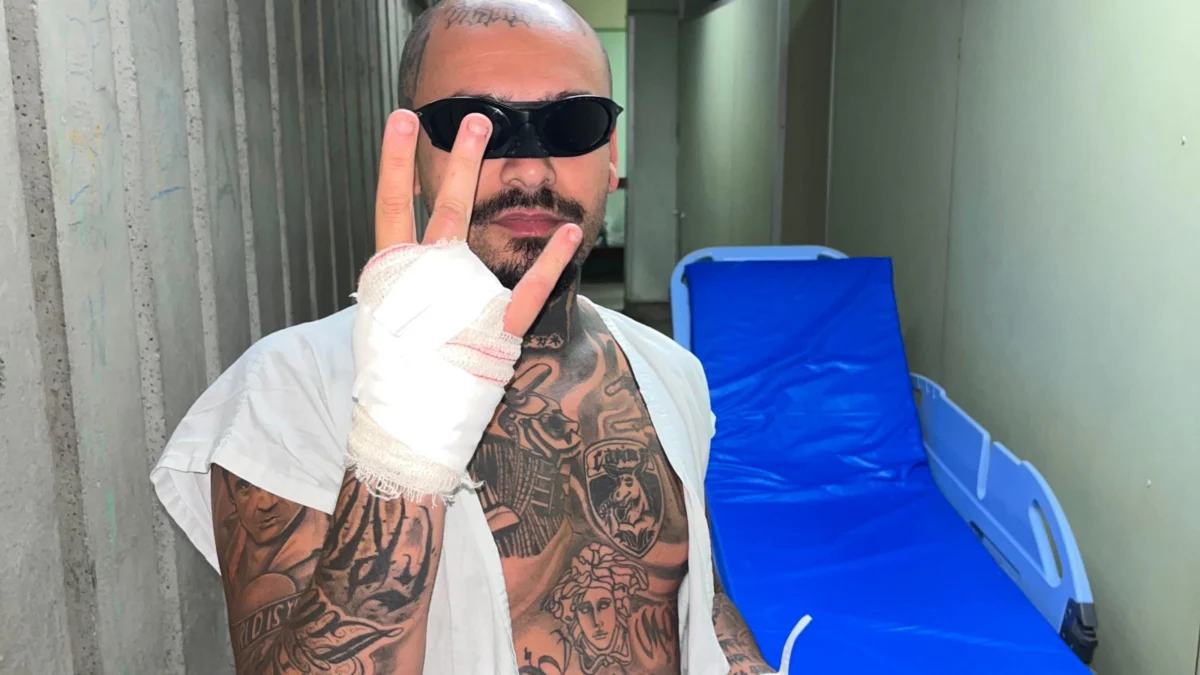
The intersection of high-stakes content creation and public safety has once again resulted in a life-altering tragedy. Adalton Rodrigues, a 31-year-old Brazilian Twitch streamer known to his online community as Lodk, suffered the loss of a finger after attempting to scale a security fence at the Rock in Rio music festival. Despite being a legitimate ticket holder for the event, Rodrigues chose to attempt an unauthorized entry into the "Cidade do Rock" (City of Rock) in Rio de Janeiro, citing a desire to test the venue’s security measures and identify potential vulnerabilities for his broadcast audience.
The incident occurred during the early hours of the festival’s operations. Rodrigues, who maintains a following of approximately 17,900 on the Amazon-owned streaming platform Twitch, was broadcasting live with a companion when the decision was made to bypass the official turnstiles. According to local reports and subsequent statements from the streamer, the motivation was rooted in the "attention economy"—the pursuit of viral content by exposing perceived flaws in the logistics of one of the world’s largest music festivals.
The Chronology of the Incident
Rodrigues arrived at the Barra da Tijuca district, where the Olympic Park is transformed into the festival grounds, well ahead of the scheduled opening times. His initial movements involved a reconnaissance of the perimeter. In his own account, provided later to the Brazilian news outlet UOL, Rodrigues detailed how he circled the venue multiple times, scouting for gaps in the extensive security apparatus. At one point, he reportedly considered unconventional methods of entry, such as renting a canoe to approach the site from the adjacent lagoon, before ultimately deciding on a physical breach of the land-based barriers.
The chosen point of entry was a fence located near a service station. While the area appeared less populated by security personnel at that specific moment, it remained a restricted zone intended only for credentialed staff and authorized service vehicles. As Rodrigues attempted to vault the metal barrier, a ring on his right hand became snagged on a protrusion of the fence. The momentum of his jump, combined with the weight of his body as he descended on the other side, resulted in a severe traumatic injury known medically as a "degloving" or "ring avulsion."
Initially, the adrenaline of the moment masked the severity of the injury. Rodrigues landed on the interior of the perimeter and did not immediately comprehend that he had sustained a permanent injury. It was only when his companion pointed back toward the fence—where the severed portion of the finger remained caught—that the gravity of the situation became apparent.
Medical Intervention and Surgical Outcome
Following the accident, Rodrigues was rushed to the Hospital Municipal Lourenço Jorge, located in the nearby Barra da Tijuca neighborhood. Medical professionals at the facility assessed the trauma to his right ring finger. Upon examination, it was determined that the damage to the vascular system, nerves, and skin was too extensive for a successful reattachment.
Rodrigues described the harrowing moment of realization at the hospital, noting that while the bone remained partially attached, the soft tissue had been completely stripped away during the snagging incident. To prevent the onset of gangrene or a systemic infection, surgeons performed a formal amputation of the remaining phalange. The Municipal Health Secretariat later confirmed that the patient underwent the necessary surgical procedure and was discharged after a period of observation.
The streamer later expressed deep regret over the stunt, acknowledging that the pursuit of "content" had cost him a permanent physical capability. In a move to protect his professional standing on Twitch, Rodrigues deleted the recorded footage of the incident. He cited fears that the graphic nature of the injury and the illegal nature of the trespass would violate Twitch’s Community Guidelines regarding self-harm and the promotion of illegal activities, which could result in a permanent ban of his channel.
Security Infrastructure at Rock in Rio
The incident has highlighted the immense logistical challenge of securing a venue the size of the Cidade do Rock. Rock in Rio is globally recognized not only for its musical lineups but for its sophisticated security protocols. For the 2024 edition, festival organizers implemented a multi-layered security strategy designed to manage crowds exceeding 700,000 people over the course of the event.
According to official data from the organizers, the security operation includes:

- Personnel: Over 2,000 private security guards stationed throughout the interior and exterior perimeters.
- Surveillance: A network of 152 high-definition surveillance cameras integrated into a central Command and Control Center.
- Technology: The use of drones for aerial monitoring, body-worn cameras for security staff, and advanced radar systems to detect unauthorized movements in restricted zones.
- Coordination: Direct integration with the Military Police of Rio de Janeiro and specialized tactical units.
In a formal statement following the incident, Rock in Rio organizers emphasized that the fence Rodrigues attempted to climb was part of the legitimate security perimeter. They reiterated that the area was strictly off-limits to the public and was monitored to ensure the safety of both the attendees and the thousands of workers on-site. The organization warned that any attempt to bypass official entry points is not only a violation of festival policy but a significant risk to life and limb.
The Dangerous Trend of "IRL" Streaming Stunts
The tragedy involving Lodk is part of a broader, more concerning trend within the "In Real Life" (IRL) streaming community. Platforms like Twitch and Kick have seen a rise in creators who engage in "clout-chasing" behavior—performing increasingly dangerous or socially disruptive acts to maintain viewership and drive engagement metrics.
Only days prior to the Lodk incident, another streamer at Rock in Rio became the subject of a police investigation after an aggressive encounter with a well-known Brazilian actor outside the venue. Furthermore, the global streaming community recently condemned a Kick creator who broadcasted himself approaching the wreckage of a fatal plane crash in Brazil, prioritizing "exclusive" footage over the dignity of the victims and the safety of the crash site.
Psychological and media analysts suggest that the real-time feedback loop of live streaming creates a "gamified" reality where creators feel pressured to escalate their actions to satisfy an audience that rewards risk-taking with donations and "likes." In the case of Rodrigues, the presence of a valid ticket suggests that the trespass was entirely performative—a manufactured crisis designed to prove a point about security that ultimately proved the effectiveness of the physical barriers, albeit at a high personal cost.
Legal and Professional Implications
Beyond the physical injury, Rodrigues may face further repercussions. Trespassing on restricted property, even at a public event, carries legal weight in Brazil. While the festival organizers have focused their public messaging on the safety aspect, the incident serves as a reminder that unauthorized entry can lead to criminal charges.
Professionally, the incident places Rodrigues in a precarious position with Twitch. The platform’s Terms of Service are notoriously strict regarding "Dangerous Content." Specifically, the guidelines prohibit "content that encourages or provides instructions on how to self-injure or engage in violence." While Rodrigues deleted the footage, the public nature of the news reports and the admission of his intent to "expose security flaws" could still trigger a review by the platform’s safety team.
Fact-Based Analysis of Public Safety at Major Events
The loss of a limb or digit due to "ring avulsion" is a well-documented risk in industrial and athletic environments, yet it is rarely discussed in the context of public festivals. Safety experts often advise against wearing jewelry when engaging in activities that involve climbing or manual labor near machinery. The Lodk incident serves as a gruesome case study in why these safety recommendations exist.
From a festival management perspective, the incident validates the necessity of "hard" perimeters. While critics of large-scale events often point to the "fortress-like" nature of modern festivals, the injury sustained by Rodrigues demonstrates that these barriers are not merely symbolic. They are functional obstacles designed to funnel traffic through safe, inspected, and controlled channels.
The broader impact on the industry may include even more stringent monitoring of "influencer" activity at major venues. As creators increasingly look to festivals as backdrops for high-risk content, event organizers may be forced to implement specific "anti-climb" measures or increase the presence of security in peripheral zones that were previously considered low-risk.
Conclusion
The case of Adalton "Lodk" Rodrigues is a sobering reminder of the physical realities that exist beyond the digital screen. In an era where the boundary between entertainment and endangerment is frequently blurred, the consequences of a single lapse in judgment can be permanent. As the Cidade do Rock continues to host thousands of music fans, the empty space where a finger once was will serve as a lasting testament to the dangers of sacrificing safety for the sake of a viral moment.
Rock in Rio remains one of the premier cultural events in the world, and its security measures are designed to protect the collective. When individuals choose to step outside those protections for personal gain or social media engagement, they do so at their own peril. The festival’s message remains clear: the safest way to enjoy the music is through the front gate, with a ticket in hand and a respect for the boundaries that keep the public safe.




 Yuyun Lusiyani
 Joko Widodo
 Jia Lissa
 admin
admin
