
 Pevita Pearce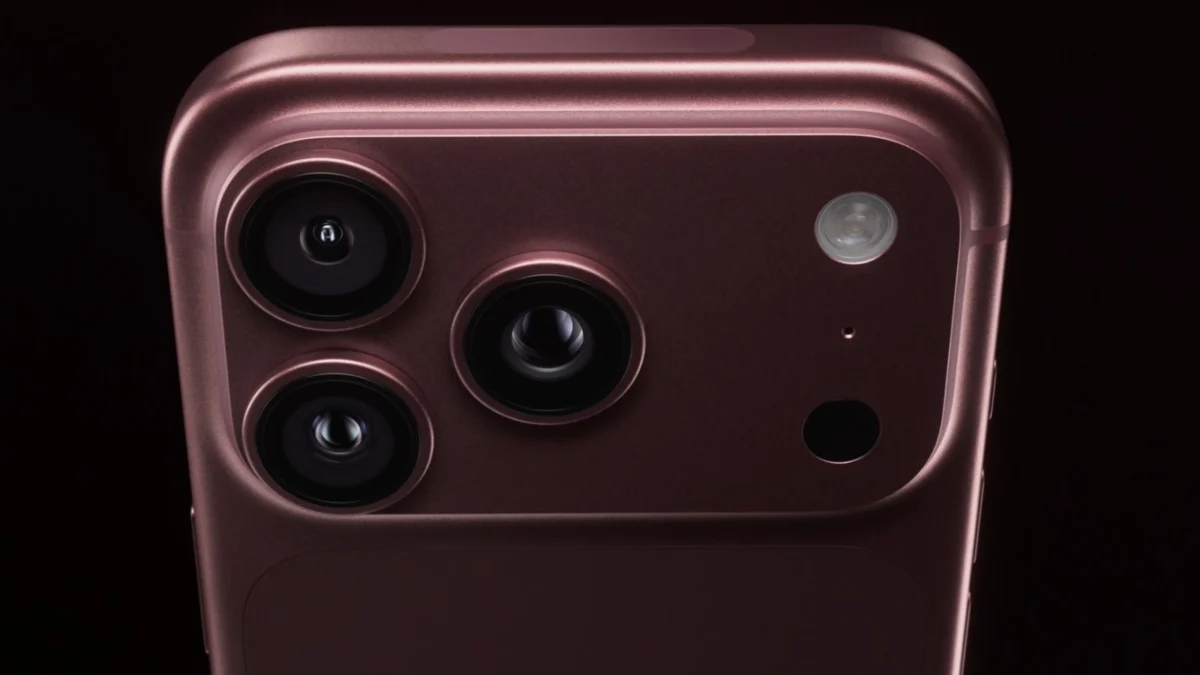
Apple Inc. officially announced its latest flagship smartphones, the iPhone 18 Pro and iPhone 18 Pro Max, during a keynote event at the Steve Jobs Theater today. The new devices represent a significant technological leap for the company, centering on three primary pillars: professional-grade optical hardware, the introduction of the A20 Pro silicon architecture, and a substantial expansion of battery endurance. For the first time in the product’s history, Apple has integrated a variable aperture system into the main camera, a move intended to bridge the gap between mobile photography and dedicated mirrorless camera systems. Alongside these hardware milestones, the devices launch with iOS 27, featuring a deeply integrated artificial intelligence suite that leverages a redesigned Neural Engine.
The Evolution of Mobile Optics: Variable Aperture and Authenticity
The centerpiece of the iPhone 18 Pro series is the 48MP Fusion Main camera. While high-resolution sensors have become standard in the premium segment, Apple has introduced a mechanical variable aperture, allowing the lens to physically adjust its opening. This system enables the camera to shift between different f-stops based on environmental lighting conditions and the user’s desired depth of field. In low-light scenarios, the aperture opens wider to maximize photon intake, while in bright conditions or landscape photography, it can narrow to ensure sharpness across the entire frame.
Advanced users can now exercise granular control through the updated Camera app. The new "Pro Controls" interface allows for manual overrides of the aperture settings, shutter speed, ISO, and white balance. This level of manual adjustment was previously reserved for third-party software, but its native integration signals Apple’s intent to capture the professional cinematography and photography market.
Beyond the hardware, Apple is addressing the rising concern over digital manipulation with a new feature called Apple Reference Image. In an era where generative AI can alter the reality of a photograph, this tool captures signed sensor data at the moment of exposure. This creates a cryptographically secure, unalterable "master" version of the image stored in the file’s metadata. Users and platforms can use this reference to verify whether a photo has been edited or synthesized, providing a standard for digital provenance that aligns with global initiatives like the Coalition for Content Provenance and Authenticity (C2PA).
A20 Pro Silicon and the New Neural Engine
Powering the iPhone 18 Pro lineup is the A20 Pro chip, built on a refined 2-nanometer process. According to Apple’s engineering team, the chip features a 6-core GPU that is up to 40% faster than the previous generation’s A19 Pro. This performance gain is particularly targeted at mobile gaming and real-time video rendering, supporting hardware-accelerated ray tracing with higher frame stability.
However, the most significant advancement lies in the Neural Engine. Apple reports that the A20 Pro’s AI processing units are now twice as powerful as those found in the 2025 models. This increase in computational power is the backbone of the new Siri AI, which operates primarily on-device to ensure user privacy. The updated Siri can now parse personal context from across the OS—scanning emails, messages, and calendar invites to provide proactive assistance. It also features "on-screen awareness," allowing the assistant to understand what a user is looking at and perform actions within apps, such as "send this document to the person I was just emailing."
To maintain this level of performance without thermal throttling, Apple has redesigned the internal cooling architecture. The iPhone 18 Pro utilizes a larger vapor chamber made of a high-conductivity alloy, which distributes heat more efficiently across the frame. This allows the A20 Pro to maintain peak clock speeds for longer durations, a critical factor for professional video recording in ProRes or long-form gaming sessions.
Record-Breaking Battery Life and Charging Efficiency
Apple has made a definitive shift in its battery strategy with the iPhone 18 Pro Max, claiming the "largest battery life increase ever" for the product line. The Pro Max model is rated for up to 45 hours of continuous video playback, while the standard Pro model offers up to 36 hours. These figures represent a nearly 20% improvement over the preceding generation.
This leap in endurance is attributed to several factors: the efficiency of the 2nm A20 Pro chip, a more energy-efficient OLED display with improved LTPO technology, and a physical increase in battery density. Notably, Apple confirmed that these peak battery statistics apply to the eSIM-only models. By removing the physical SIM tray globally for the Pro line, engineers were able to reclaim internal volume, which was subsequently repurposed for additional battery cells and the new thermal management system.
Charging speeds have also seen a long-awaited update. The iPhone 18 Pro series now supports a higher wattage wired charging protocol, capable of reaching a 50% charge in approximately 15 minutes when using a compatible 60W or higher power adapter. This rapid-charging capability is designed to alleviate "range anxiety" for power users who rely on their devices for heavy media production throughout the day.
Design Refinements and New Aesthetic Options
Visually, the iPhone 18 Pro maintains the titanium chassis introduced in earlier models but features a more refined "Micro-Blasted" finish that is more resistant to fingerprints and scratches. The most noticeable change to the front of the device is the reduction in the size of the Dynamic Island. Through advancements in under-display sensor technology, Apple has shrunk the interactive cutout by approximately 20%.
The reduced footprint of the Dynamic Island has allowed for software enhancements in iOS 27. The interface can now display up to three "Live Activities" simultaneously, such as a sports score, a ride-share countdown, and a timer, without cluttering the status bar. The display itself features thinner borders, resulting in a slightly larger active screen area without increasing the overall dimensions of the handsets.
Apple has also refreshed the color palette for the Pro line. In addition to the classic Black and Silver, the company introduced "Glacier"—a cool, iridescent white with blue undertones—and "Burgundy," a deep, metallic red that serves as the flagship color for this cycle.
Chronology of the Launch and Market Availability
The announcement follows months of industry speculation regarding Apple’s transition to variable aperture technology. The timeline for the product rollout is as follows:
- September 9, 2026: Official unveiling at the Apple Event in Cupertino.
- September 12, 2026: Pre-orders begin globally via Apple’s website and retail partners.
- September 18, 2026: Official retail launch and shipping to first-wave customers.
- October 2026: Expanded availability in secondary markets and additional carrier rollouts.
Pricing for the iPhone 18 Pro is expected to start at $1,099 for the 256GB model, while the iPhone 18 Pro Max will start at $1,199. Apple has also introduced a new 2TB storage tier to accommodate the large file sizes generated by the variable aperture camera and 8K video recording capabilities.
Industry Reactions and Broader Implications
Market analysts have reacted positively to the announcement, particularly noting the variable aperture as a "moat" against competitors. "Apple is no longer just competing with other smartphones; they are targeting the entry-level and mid-range dedicated camera market," said one senior analyst at a leading tech research firm. "The combination of physical aperture control and the A20’s AI processing makes the iPhone 18 Pro a formidable tool for the creator economy."
Privacy advocates have also noted the "Reference Image" feature as a necessary step in the fight against misinformation. By embedding authenticity directly into the hardware level, Apple is setting a precedent that other manufacturers are likely to follow. However, the move to an eSIM-only design globally has drawn some criticism from international travelers who rely on physical SIM swapping in regions where eSIM adoption remains low.
From a strategic standpoint, the iPhone 18 Pro signifies Apple’s deep commitment to "Apple Intelligence." By doubling the Neural Engine’s power, the company is betting that the future of the smartphone lies not in the apps themselves, but in how effectively an AI assistant can navigate those apps on behalf of the user.
As the September 18 launch date approaches, the industry will be watching closely to see if the A20 Pro’s performance gains and the new camera hardware translate into the "super-cycle" of upgrades that investors are anticipating. With a focus on professional utility and AI-driven efficiency, the iPhone 18 Pro and Pro Max are positioned as the most specialized devices in the company’s history.




 Yuyun Lusiyani
 Joko Widodo
 Jia Lissa
 admin
admin
