
 Yuyun Lusiyani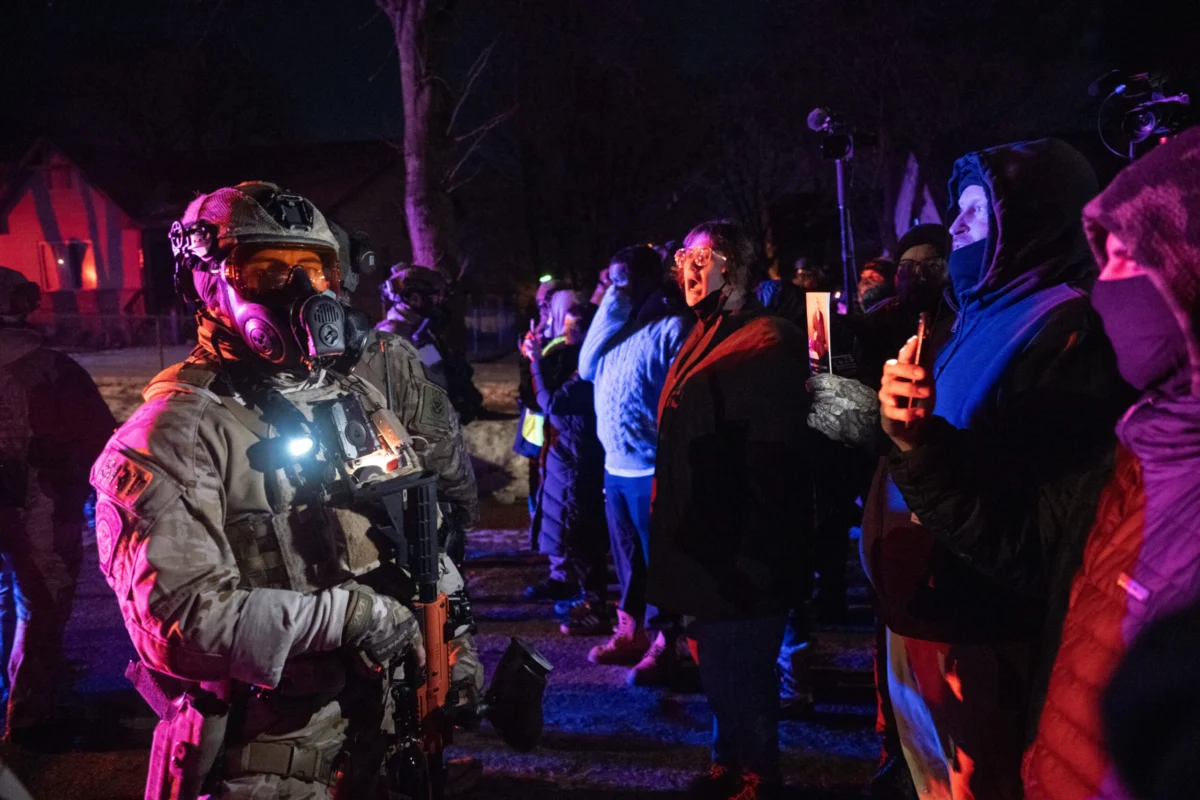
In a decision that has sparked significant internal dissent and raised questions about the Department of Justice’s commitment to holding federal agents accountable, leaders in Washington, D.C., have reportedly quashed plans to pursue severe civil rights charges against an Immigration and Customs Enforcement (ICE) agent. The agent, Christian Castro, 52, is accused of shooting a Venezuelan immigrant, Julio Cesar Sosa-Celis, in the leg and subsequently fabricating details about the incident. This reversal came despite "the strongest possible" objections from the federal prosecutor handling the case in Minnesota, highlighting a contentious internal struggle within the nation’s highest law enforcement agency.
The Minneapolis Incident: A Controversial Shooting
The incident at the heart of the dispute occurred in Minneapolis in January during "Operation Metro Surge," a controversial Trump administration initiative designed to intensify immigration enforcement through the deployment of thousands of federal agents across various states. This period was marked by heightened tensions between federal immigration authorities and local communities, particularly in "sanctuary cities" or areas with strong immigrant populations. The shooting involving Agent Castro was not an isolated event; it was one of three shootings by immigration agents in Minneapolis during this period, two of which proved fatal, underscoring the aggressive nature of the enforcement operation.
On January 14, Agent Castro and another ICE agent were pursuing Alfredo Aljorna, a Venezuelan immigrant, following a traffic stop. Aljorna fled to his residence, which he shared with Sosa-Celis. After a brief struggle, both men managed to enter the home. According to state charging documents, Castro then fired through the closed door, reportedly "knowing [the home] was occupied by several people." A witness later stated that two children were present in the house when Castro discharged his firearm. Sosa-Celis sustained a gunshot wound to the leg. Following the shooting, ICE agents deployed tear gas into the residence and took both men, along with their partners, into custody.
Initially, the Department of Homeland Security (DHS) presented a narrative claiming that Castro and the other agent were ambushed and assaulted with a shovel or broomstick, leading Castro to fire in self-defense. DHS labeled Sosa-Celis and Aljorna "violent criminal illegal aliens" and federal prosecutors proceeded to charge them with assault. However, this narrative quickly unraveled. The following month, federal prosecutors dropped the charges against both men after video evidence emerged that directly contradicted the agents’ sworn testimony. Then-acting ICE Director Todd Lyons issued a rare public statement acknowledging the discrepancy, stating, "Video evidence has revealed the sworn testimony of the two agents appeared to be false." This admission of potential wrongdoing by its officers marked a significant shift from the administration’s typical defense of its agents.
Federal Prosecution Sidelined: The Prosecutor’s Stark Warning
Federal prosecutors in Minnesota had been meticulously preparing to charge Agent Castro with deprivation of rights under color of law. This serious charge, codified under 18 U.S.C. § 242, is typically reserved for law enforcement officers who willfully abuse their authority, causing injury or death. It is the same type of charge leveled against Minneapolis police officers, most notably Derek Chauvin, in connection with the killing of George Floyd, and it carries the potential for lengthy prison sentences. The intent behind such charges is to hold officers accountable for actions that violate the constitutional rights of individuals while acting in their official capacity.
However, a dramatic intervention from "Main Justice" in Washington, D.C., and the U.S. Attorney’s office in Minnesota altered this trajectory. Late on a Tuesday, Matthew Evans, the assistant U.S. attorney in Minnesota directly responsible for the case, informed lawyers representing Sosa-Celis and other victims that Castro would instead be charged "only with False Statements." This charge, typically under 18 U.S.C. § 1001, pertains to making materially false statements to federal officials and carries a significantly less severe punishment if a conviction is secured.
Evans’ email, reviewed by ProPublica, offered an unusually candid glimpse into the internal deliberations and the profound disagreement within the Justice Department. "This is being directed by the Main Justice and the US Attorney," Evans wrote, conveying a sense of top-down imposition. He continued, expressing his personal and professional dismay, "I objected in the strongest possible terms and fought it as hard as I could. It wasn’t enough." He also indicated that the false statement charges could be filed imminently and would likely be under seal. The email concluded with a poignant reflection on his efforts: "It has been an honor and a privilege to try to get justice for your clients." This statement underscores the prosecutor’s belief that a more robust charge was warranted and that the department’s decision represented a failure to achieve full justice.
Official Responses and Contradictions
In response to inquiries, a Department of Justice official offered a generic statement, asserting that civil rights charges necessitate consultation with the civil rights division in Washington, and that "any charging decisions that come out of such investigations are collaborative and deliberative and adhere to the facts and law of that specific case and controversy." The official further claimed that the agency "has not yet reached a conclusion on this matter and will never rush an investigative process and the thorough review of all evidence."
This official statement stands in stark contrast to the communication from Assistant U.S. Attorney Matthew Evans. Evans’ email explicitly stated that a decision had been made regarding the charges and communicated the specific, lesser charge that would be pursued. The assertion that a conclusion had not been reached, therefore, appears to contradict the concrete information provided to the victims’ legal counsel, suggesting either a lack of transparency or a disconnect between different levels of the Justice Department. Both Evans and a spokesperson for the U.S. Attorney’s Office in Minnesota declined further comment, as did an attorney for Sosa-Celis. Castro, who has an outstanding warrant in Minnesota for this case, could not be reached.
State-Level Pursuit of Justice and Inter-State Friction
While the federal civil rights case faces significant curtailment, Agent Castro continues to face multiple state felony charges in Minnesota, including assault with a dangerous weapon. These state charges stem from the same January shooting incident and are being pursued by Hennepin County Attorney Mary Moriarty.
However, the path to state-level accountability has been fraught with its own challenges. After the incident, Castro left Minnesota and returned to Texas. Minnesota officials formally requested that Texas state authorities extradite Castro to face the pending charges. In a move that drew sharp criticism and highlighted simmering federal-state tensions over immigration enforcement, Texas Governor Greg Abbott refused to cooperate with the extradition request. Castro was held for 90 days in jail while the two states engaged in a legal and political battle over the extradition, but he was ultimately released last week. Hennepin County Attorney Mary Moriarty, upon Castro’s release, voiced concerns that he might attempt to flee to Mexico to evade prosecution, underscoring the precariousness of the state’s efforts.
Broader Implications: Rule of Law and Accountability
The Department of Justice’s decision to downgrade the charges against Agent Castro is likely to intensify concerns about the department’s independence and its commitment to the rule of law, particularly under an administration often perceived as aligning the DoJ with its political agenda. Under the Trump administration, the Justice Department’s Civil Rights Division saw significant thinning of its ranks and a notable reduction in the oversight of law enforcement agencies that had been initiated during previous administrations. Critics argue that this pattern suggests a prioritization of supporting federal agents, especially those involved in politically sensitive immigration enforcement, over robust accountability.
A ProPublica analysis conducted earlier this year revealed a troubling pattern: in almost every instance where immigration agents shot individuals during the Trump administration, the administration quickly blamed the injured or deceased within hours of the incident. Furthermore, in many of these cases, federal or local police agencies declined to investigate the agents involved, creating an environment where federal agents often operate with a perceived shield from scrutiny.
Hennepin County Attorney Mary Moriarty drew a direct parallel between the DoJ’s decision in the Castro case and its actions following another fatal shooting by an ICE agent. Just a week before Sosa-Celis was shot, ICE agent Jonathan Ross killed Renee Good in her car. Agents claimed Good drove toward them, but video evidence unequivocally showed Good’s wheels turned away from the agents when she was shot. Federal authorities initially agreed to a joint investigation into Good’s death. However, DoJ officials later inexplicably refused to cooperate with state police, deeming any further review of the fatal shooting "unnecessary." This pattern, Moriarty argues, demonstrates a disturbing tendency within the Justice Department to obstruct or downgrade investigations into alleged misconduct by federal immigration agents, particularly when video evidence contradicts official narratives.
The implications of this decision extend beyond the immediate case. It sends a chilling message regarding the accountability of federal agents, especially those operating under broad enforcement mandates. When high-ranking Justice Department officials override the judgment of federal prosecutors on the ground, particularly in cases involving alleged civil rights violations and documented deception, it can erode public trust in the justice system. Civil rights advocates and legal experts often emphasize that "deprivation of rights under color of law" charges are crucial for establishing that law enforcement officers cannot act with impunity. Reducing such charges to "false statements" effectively shifts the focus from the underlying alleged abuse of power and violence to a mere procedural lie, diminishing the gravity of the initial offense.
Furthermore, the persistent friction between federal and state authorities, exemplified by Governor Abbott’s refusal to extradite Castro, underscores the fragmented nature of law enforcement accountability. When states attempt to pursue justice for alleged crimes committed within their borders by federal agents, federal non-cooperation or obstruction can create legal vacuums and allow agents to evade full accountability.
The decision in the Castro case will likely be seen by many as a troubling manifestation of executive influence over prosecutorial independence, particularly in areas deemed politically sensitive. It raises fundamental questions about whether the Justice Department is fulfilling its mandate to impartially enforce the law and protect civil rights, or if it is increasingly susceptible to political pressures that prioritize institutional defense over individual justice. The legal battle for Julio Cesar Sosa-Celis and the broader struggle for accountability for federal agents continue, but with a new and significant hurdle placed by the very department tasked with upholding justice.




 Joko Widodo
 Jia Lissa
 Pevita Pearce
 admin
admin