
 Joko Widodo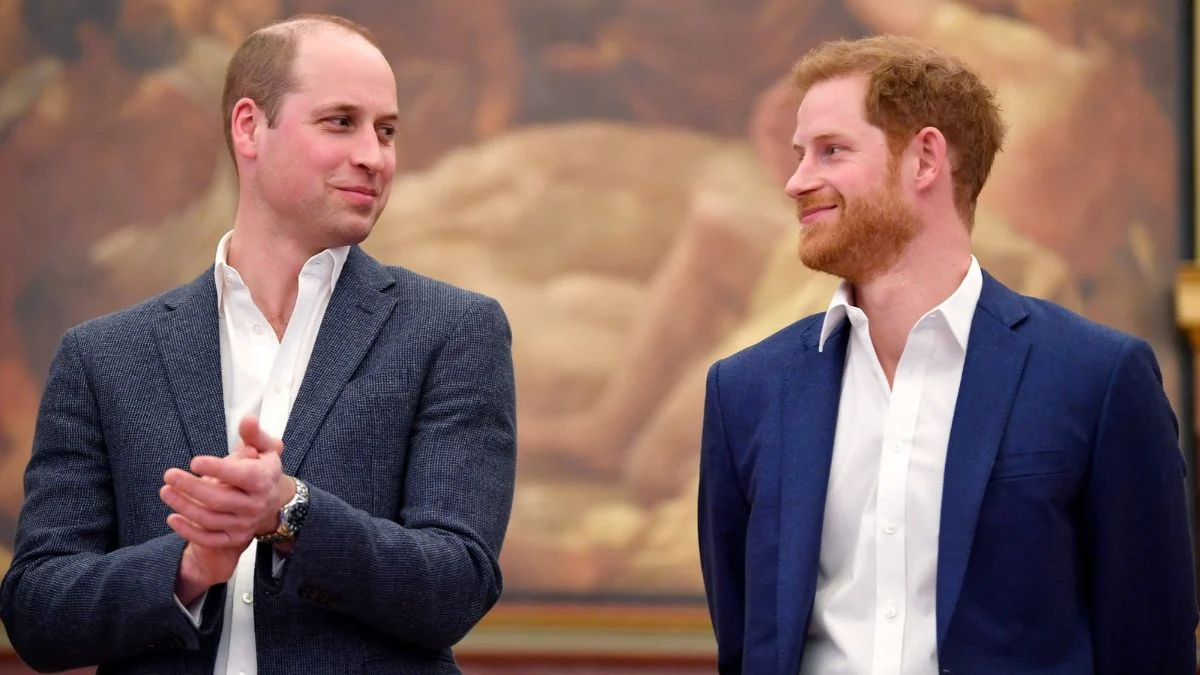
The stark contrast between the publicly perceived estrangement of Prince William and Prince Harry today and the deeply affectionate bond they once shared is being brought into sharp relief by a former royal staff member. Jack Stooks, who served at Highgrove, the Prince of Wales’s country residence, for two decades, has offered a rare and poignant recollection of the princes’ formative years. His memories paint a picture of a fraternal relationship characterized by laughter, shared adventures, and an undeniable closeness, a stark departure from the fractured dynamic that currently defines their interactions.
The current narrative surrounding the royal brothers is one of significant distance, a chasm that widened considerably following Prince Harry’s decision in early 2020 to step back from his senior royal duties alongside his wife, Meghan Markle. This seismic shift in their public and private lives has been further amplified by a series of high-profile disclosures. The watershed moment for many was the couple’s 2021 interview with Oprah Winfrey, during which they made candid and at times critical observations about the inner workings of the monarchy. This was followed by a 2022 Netflix docuseries, "Harry & Meghan," which offered an intimate, albeit curated, look at their experiences. The most recent chapter in this public airing of grievances arrived in January 2023 with the release of Prince Harry’s memoir, "Spare."
Within the pages of "Spare," Prince Harry detailed a confrontation with his elder brother, Prince William, during which he alleged a physical altercation over disagreements concerning Meghan Markle. The memoir also included sensitive remarks about Catherine, Princess of Wales, and Queen Camilla, which are widely believed to have further exacerbated the already strained relationship between the siblings. These candid revelations have undeniably reshaped public perception and contributed to the ongoing speculation about the future of the royal family’s internal dynamics.
Against this backdrop of reported estrangement and public scrutiny, Prince Harry’s recent return to the United Kingdom for various engagements has inevitably placed the current state of his relationship with Prince William under an intense spotlight. It is within this context that Jack Stooks’s recollections, shared with the Daily Express US, provide a valuable counterpoint, offering a historical perspective on the brothers’ bond. Stooks, who witnessed the princes grow from boys into young men at Highgrove, described their childhood as one marked by genuine camaraderie. "William and Harry were just good fun and had a sense of humor," Stooks stated.
His detailed observations underscore the profound intimacy that once existed between the two heirs. "They bounced off each other and were very friendly," Stooks recalled. "The two of them always seemed inseparable as brothers and seemed like best friends." This sentiment suggests a period where their shared experiences and mutual reliance forged a bond that appeared unbreakable, a testament to the unique pressures and privileges of growing up within the confines of the British monarchy. The weight of expectation and public duty, which would later contribute to their diverging paths, seemed to be a shared burden that they navigated together in their youth.
Stooks’s memories extend beyond the fraternal dynamic, also touching upon Catherine, Princess of Wales, and her integration into the royal fold. He described her as "down-to-earth" during her early days as William’s girlfriend and later wife. The former staff member fondly recalled frequently seeing William and Kate together in the Highgrove kitchen, engaged in lighthearted exchanges with the staff, a scene that speaks to a sense of normalcy and familial warmth that was present during that era. These glimpses into private moments, shared by someone who observed them in their less formal settings, offer a humanizing dimension to figures often viewed from a distance.
The significance of Stooks’s testimony lies in its ability to provide a tangible counter-narrative to the current perception of deep-seated animosity. By recalling a time of apparent unity and shared joy, he offers a poignant reminder of what has been lost, or at least significantly altered. This historical perspective is crucial for understanding the complexities of family relationships, particularly when those families are as prominent and scrutinized as the Windsors.
A Timeline of Shifting Fortunes and Fractured Bonds
To fully appreciate the weight of Stooks’s recollections, it is essential to trace the trajectory of the brothers’ relationship, marked by periods of proximity and subsequent divergence.
-
Early Childhood (1980s-1990s): Prince William, born in 1982, and Prince Harry, born in 1984, were raised in close proximity, sharing many of the same educational institutions and experiencing the profound impact of their mother, Princess Diana’s, tragic death in 1997. This shared trauma is widely believed to have forged an unbreakable bond between them during their adolescent years. Stooks’s accounts of their Highgrove childhood align with this period of intense familial connection.
-
Adolescence and Early Adulthood (2000s): As young men, the brothers maintained a visible closeness, often appearing together at public events and sharing a common interest in military service. Prince William pursued his military career with the Household Cavalry and later the Royal Air Force, while Prince Harry served in the British Army, undertaking two tours of duty in Afghanistan. Their shared experiences in the military, though distinct, were often highlighted as further solidifying their bond.
-
Prince Harry’s Marriage and Growing Independence (Late 2010s): The introduction of Meghan Markle into Prince Harry’s life marked a subtle shift. While William and Kate were supportive, whispers of differing approaches to royal life began to emerge. The couple’s decision to establish their own household at Kensington Palace, separate from William and Kate’s, in 2018, was seen by some as a physical manifestation of their diverging paths.
-
The "Megxit" Decision and Public Fallout (2020-2021): Prince Harry and Meghan Markle’s announcement in January 2020 that they would be stepping back as senior royals sent shockwaves through the monarchy and the public. This decision, driven by a desire for greater independence and privacy, inevitably created distance between the Sussexes and the rest of the royal family, including William. The subsequent Oprah Winfrey interview in March 2021, with its criticisms of royal institutions and individuals, significantly deepened the rift.
-
"Spare" and Continued Tensions (2023-Present): Prince Harry’s memoir, "Spare," published in early 2023, provided an unflinching account of his personal struggles and his perspective on key events, including the alleged physical altercation with Prince William. The memoir’s candid nature and critical assessments of family members have been cited as further contributing factors to the ongoing estrangement. Prince Harry’s subsequent visits to the UK have been characterized by brief, often formal, encounters with his brother, with little indication of reconciliation.
Supporting Data: The Public Perception of a Divided Brotherhood
Public opinion polls and media analyses consistently reflect the perception of a divided royal brotherhood. Surveys conducted by organizations like YouGov have indicated a significant portion of the British public views the relationship between William and Harry as strained. The media’s relentless focus on any perceived tension, from body language at public events to carefully worded statements, further solidifies this narrative. The economic implications of this rift are also noteworthy. The Sussexes’ decision to pursue independent commercial ventures, while a personal choice, has also meant a departure from the traditional royal funding model, impacting their public image and the perception of their financial relationship with the Crown.
Inferred Statements and Reactions: A Family Navigating Uncharted Territory
While official statements from Buckingham Palace regarding the brothers’ relationship are typically reserved and focused on unity, the implications of their estrangement are undeniable. It is logical to infer that within the royal family, there is a palpable sense of concern and a desire for resolution. For Prince William, the eldest heir, the responsibility of maintaining family harmony while upholding his future role as King would be a significant burden. For King Charles III, the desire to see his sons reconciled would undoubtedly be a deeply personal one.
The former staff member’s account, while offering a nostalgic glimpse into the past, also implicitly highlights the magnitude of the current disconnect. His emphasis on their youthful "inseparability" serves as a poignant reminder of the bond that existed before the pressures of adulthood, public duty, and personal grievances took their toll.
Analysis of Implications: The Long-Term Impact on the Monarchy
The fractured relationship between Prince William and Prince Harry has far-reaching implications, not only for their personal lives but also for the future of the British monarchy.
-
Public Image and Trust: The perceived division within the royal family can erode public trust and affection. A united front is often seen as a sign of stability and strength, whereas internal conflict can be interpreted as a weakness. The ongoing narrative of sibling rivalry and criticism from within the family can alienate segments of the public.
-
Succession and Continuity: Prince William, as the future King, will carry the weight of the monarchy on his shoulders. A harmonious relationship with his brother, even if their roles are distinct, would present a more stable and reassuring image to the nation and the Commonwealth. Conversely, a continued rift could create an undercurrent of instability during a critical period of transition.
-
The "Brand" of the Monarchy: The British monarchy, in a modern context, functions as a significant global brand. The personal narratives and perceived unity of its key members are integral to this brand. The contrasting paths of William and Harry, and the public airing of their grievances, have undoubtedly impacted how the monarchy is perceived internationally, particularly in comparison to other royal families.
-
Personal Well-being: Beyond the institutional implications, the enduring strain on the brothers’ relationship undoubtedly takes a personal toll on their mental and emotional well-being, and that of their immediate families. The loss of a close sibling bond, amplified by public scrutiny, is a profound personal challenge.
Jack Stooks’s recollections serve as a powerful reminder that beneath the gilded façade of royalty lie complex human relationships. His testimony offers a valuable historical context, allowing for a more nuanced understanding of the brothers’ current predicament. While the path to reconciliation may be long and uncertain, the memory of their once inseparable bond provides a glimmer of hope, suggesting that the foundation of their brotherhood, however tested, may not be entirely eroded. The challenge for the future lies in whether these personal histories can be reconciled with the demands of public duty and the evolving nature of the modern monarchy.




 Yuyun Lusiyani
 Jia Lissa
 Pevita Pearce
 admin
admin
