
 Yuyun Lusiyani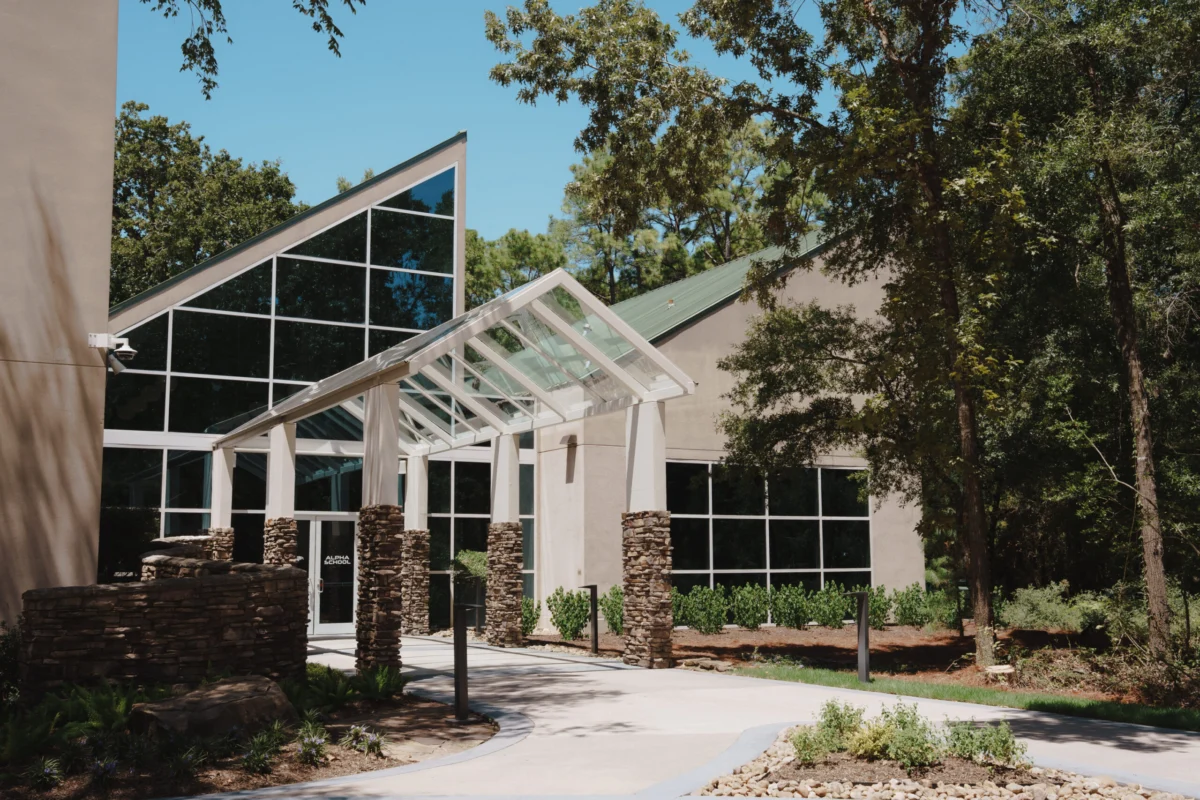
A controversial artificial intelligence-led education network, Alpha School, has strategically leveraged a burgeoning school choice program in Texas to dramatically expand its footprint, quadrupling its private school campuses in the state within a year of being rejected for public charter status. This rapid growth, facilitated by substantial political donations from its founders, has ignited a debate among educators and policymakers regarding accountability, transparency, and the use of taxpayer funds for private, unproven educational models.
The Alpha Model: Disrupting Education with AI and "2 Hour Learning"
Founded on the audacious premise that "School is broken, and we’re here to fix it," Alpha School champions a distinctive "2 Hour Learning" model. This system posits that students can "crush academics" – primarily reading and math – through just two hours of daily engagement with AI software. Human educators, referred to as "guides," are re-envisioned, shifting their focus from direct instruction to motivation and emotional support, aiming to create a highly personalized and efficient learning environment. Co-founder MacKenzie Price initiated the school in 2014, reportedly driven by her eldest daughter’s experience of boredom and feeling held back in traditional public schools. The model gained significant momentum four years ago when tech mogul Joe Liemandt invested a reported $1 billion, setting an ambitious goal to reach a billion students globally with Alpha’s AI-guided platform. This investment propelled Alpha into a national and international expansion trajectory, catching the eye of prominent figures like billionaire hedge fund manager Bill Ackman and Elon Musk, whose Starlink internet service is slated to support new Alpha schools worldwide.
Initial Hurdles: A Cascade of Charter Rejections
Alpha School initially sought to integrate its innovative model into the public education system by applying for charter school status across the United States. By early 2024, the network had submitted applications in at least 10 states, including Texas, Arizona, Arkansas, North Carolina, Pennsylvania, and Utah. The concept, which promised self-paced learning and pioneering AI instruction, initially intrigued some state leaders. As one North Carolina official remarked in September 2024, "My mind is kind of blown by all this."

However, this initial intrigue soon gave way to a series of rejections, as state education boards and charter leaders consistently raised profound concerns about the untested nature of the Alpha model. Officials in Utah, for instance, worried in August 2024 that Alpha’s "guides" might function more as "life coaches" than certified teachers, questioning the efficacy of an AI-led primary curriculum. In North Carolina a month later, a charter school board member voiced fears that "two hours was not nearly enough" to adequately cover required subjects.
A common thread among the rejections was skepticism regarding the diminished role of certified teachers and whether the AI platform could genuinely deliver comprehensive lessons. Many states also questioned if Alpha’s curriculum aligned with their specific state standards; in Utah, Alpha leaders even admitted they hadn’t thoroughly reviewed the state’s curriculum requirements before applying. Beyond pedagogical concerns, states also scrutinized Alpha’s aggressive enrollment projections, which often lacked substantial community support or outreach beyond surveying co-founder MacKenzie Price’s social media followers for parental interest.
Further complicating Alpha’s charter applications were concerns about potential conflicts of interest. At least two state education boards took issue with MacKenzie and Andy Price’s plan to serve on the charter’s oversight board while their companies simultaneously received payments for services like the "two-hour learning platform." Though the Prices pledged to rectify this, board meeting minutes from June indicated their continued presence on the Arizona board – the only state to approve an Alpha-affiliated charter.
Perhaps the most significant and consistent concern revolved around the demographic applicability of Alpha’s model. State officials worried that the platform, largely tested among affluent students who could afford private school tuition or scholarships, might not be effective for the diverse populations typically served by charter schools, including students with academic deficiencies, special education needs, or those learning English as a second language. While Alpha claimed to integrate tools like Duolingo for English language learners, independent verification of its success across varied student populations remained elusive.
Even the largely conservative Texas State Board of Education, known for approving most charter applications over the past decade, rejected Alpha’s proposal in summer 2024. Republican board member Keven Ellis expressed skepticism, stating, "I’m just a little skeptical of those types of gains," referring to Alpha’s claims of substantial academic improvements over short periods.
The Texas Turnaround: Vouchers and Political Influence

Despite these widespread rejections, Alpha School found a different pathway to public funding in Texas, thanks to a newly implemented statewide education program. Unbeknownst to many at the time of her public statements lamenting the difficulty of change, MacKenzie Price and her husband, Andy Price, were actively influencing Texas policy. They had personally championed the controversial voucher initiative through significant political donations, contributing over $2 million to Texas legislators and political action committees both before and after the program’s approval.
This inaugural voucher program, designed to award tax dollars for select students’ homeschooling or private school tuition, provided Alpha School with an alternative entry point into state funding. Just one year after the Texas State Board of Education rejected its charter school application, Alpha dramatically expanded its presence in Texas. A joint investigation by ProPublica and The Texas Tribune revealed that Alpha now operates more than 30 virtual and in-person private campuses across the state, most of which have been accepted into the new voucher program. This rapid expansion positions Alpha among the largest private school chains participating in the initiative.
Democrat Tiffany Clark, a Texas State Board of Education member who voted against Alpha’s charter application, criticized this maneuver, stating, "They took a backdoor approach. They said, ‘You know what, we can’t get in as a charter, but we can continue to be a private school and take these funds.’"
The key to this circumvention lay in the differing oversight mechanisms. Alpha leaders did not reapply to the state education board but instead applied to the Texas comptroller’s office, the state’s chief financial officer, which legislators had designated to administer the voucher program. The comptroller’s office applied significantly less stringent criteria: a school only needed to operate in Texas, be accredited by an approved organization, have been in operation for at least two years, and administer annual standardized tests. Critically, none of Alpha’s private schools participating in the voucher program were required to meet state curriculum standards or demonstrate how their model would lead to student success. The concerns raised by the Texas education board regarding test scores or the use of AI became "not relevant," according to Travis Pillow, a spokesperson for the voucher program, who clarified, "Our role is to make sure that a school meets the requirements in the law."
The scale of the Prices’ political contributions underscores their commitment to influencing policy. Andy Price donated over $250,000 to a PAC supporting pro-voucher candidates, while MacKenzie Price gave $10,000 to Representative Brad Buckley, the Republican legislator who successfully sponsored the Texas voucher bill. She also contributed $200,000 to Kelly Hancock and $100,000 to Don Huffines, both of whom have served as Texas comptroller, the office now overseeing the voucher program. MacKenzie Price’s most significant contributions in Texas went to Governor Greg Abbott’s main fundraising committee, totaling over $1.5 million in the last three years, as Abbott championed the state’s voucher program. This influence was publicly acknowledged when Governor Abbott’s office issued a press release in September 2025, mentioning Alpha School after U.S. Education Secretary Linda McMahon toured an Alpha campus in Austin. Texas Education Commissioner Mike Morath, who had previously recommended approval for Alpha’s charter despite the board’s eventual rejection, also joined the tour, reinforcing Alpha’s visibility among key state officials.
Scrutiny of Academic Claims and Outcomes

Despite Alpha School’s bold claims of drastically improved student outcomes and test scores placing their students in the top 1% to 2% nationally, education experts have voiced significant skepticism. They point out that private schools often self-select affluent students who are predisposed to academic success, and without a requirement to share internal data, such schools can easily cherry-pick positive examples. Alpha officials, who declined interviews for this report, have consistently defended their model in podcasts and other forums.
ProPublica and The Texas Tribune investigated Alpha’s outcomes among lower-income students and in charter school partnerships, revealing a discrepancy between Alpha’s assertions and verifiable data.
One notable example involves Alpha’s partnership with Texas Preparatory School, an Austin charter already facing potential state-imposed closure due to low test scores and financial audits. An Alpha leader informed Texas education officials in May 2025 that implementing their two-hour learning platform had transformed outcomes, with 50% to 60% of students passing state exams, up from a majority failing. However, official test results from the Texas Education Agency contradict this. Experts reviewing the data found that the percentage of students achieving "approaches grade level" – the lowest passing category – only marginally increased from 19% to 21%. More concerning, the share of students at their actual grade level dropped from 10% to zero after Alpha’s involvement. Toni Templeton, a research scientist at the University of Houston Education Research Center, concluded, "I don’t see the extreme growth. If you’re such a high-performing school, you should have no problem demonstrating it." Texas Preparatory School ultimately received its third consecutive F rating, leading to its permanent closure, with the Alpha partnership failing to reverse its trajectory.
Alpha also showcased its private school campus in Brownsville, a predominantly Latino city in one of the nation’s poorest school districts, as proof of its equitable success. MacKenzie Price asserted in a Utah interview, "We don’t care if a student is white, Black or brown, rich or poor. An AI tutor is infinitely patient. I believe this is the most kind of equitable answer to the problem of education." Yet, reports from Wired and CNN have documented families leaving the Brownsville school due to students falling behind academically or experiencing anxiety from learning expectations. Alpha vehemently denies these reports, citing "inaccurate reporting" and "misleading context," but declined to share documentation, citing sensitive student records.
Independent experts reviewing Alpha’s self-published Brownsville student outcome data noted its lack of detailed test scores to substantiate academic growth across all students and inconsistencies in data presentation. Jennifer Steele, an education professor at American University, observed that Alpha’s report only showed significant improvements for second graders, potentially not representative of the entire school. Steele critically stated, "The bottom line is that if you desperately want your child to drill on screens two hours a day and you are prepared to pay a lot of money for that, you might have the kind of child who will test well after doing so. These kids do exist, and the Alpha schools are built to attract their parents. But as a scalable model for public schools – even public charter schools – there is no evidence that it works."
Even in Arizona, the lone state to initially approve an Alpha charter, preliminary state test scores presented to the charter school’s oversight board painted a grim picture. Alpha had projected 65% of its students would achieve English proficiency by the end of the first year; only 28% did. For math, a projected 60% proficiency rate materialized into just 10%. The Arizona Education Department declined to provide the underlying scores.

The Expansion Continues: A "Franchise" Model?
Despite the rejections and questions surrounding its academic efficacy, Alpha School’s expansion efforts have not waned; they have intensified. By summer 2025, Alpha announced the launch of private campuses in 50 cities nationwide, catering to highly specialized learner profiles. These include 13 sports academies, options for competitive video gamers, nature enthusiasts, and even a New York high school campus challenging students to generate $1 million in business ventures, with tuition refunds for those who fall short. Other programs involve students spending a year abroad in Kenya and Ecuador, tasked with establishing new Alpha schools. This diversification of offerings aligns with Alpha’s global ambition, leveraging resources like Elon Musk’s Starlink internet for international expansion.
The rapid growth in Texas, fueled by the new voucher program, exemplifies this aggressive expansion. The differing views on Alpha’s success are stark. Julie Pickren, a Republican state board member who supported Alpha’s initial charter application, expressed enthusiasm for Alpha’s acceptance into the voucher program, viewing it as an individualized learning solution for struggling districts. "I would say thank you to them," Pickren stated, "Thank you for not giving up and looking for a way to serve children."
Conversely, fellow Republican education board member Evelyn Brooks was "shocked" by Alpha’s entry into the voucher program and its rapid expansion. Brooks, who voted against the charter proposal, voiced concerns about the commercialization of education: "You’re just making money. You’re reproducing a model, regardless of the region, regardless of the state."
As Alpha continues to announce new schools, such as a recent campus in a Houston suburb, the debate over its model, its funding, and its true impact on student learning intensifies. Brooks’s characterization of Alpha School as "a franchise" encapsulates the concerns of critics who fear that public funds are increasingly being directed towards private entities with unverified claims, potentially at the expense of established public education systems and rigorous oversight. The Alpha story in Texas highlights a broader national trend where the expansion of school choice programs creates new avenues for private educational providers, sometimes bypassing the very accountability mechanisms designed to protect student interests and taxpayer investments.




 Joko Widodo
 Jia Lissa
 Pevita Pearce
 admin
admin