
 Yuyun Lusiyani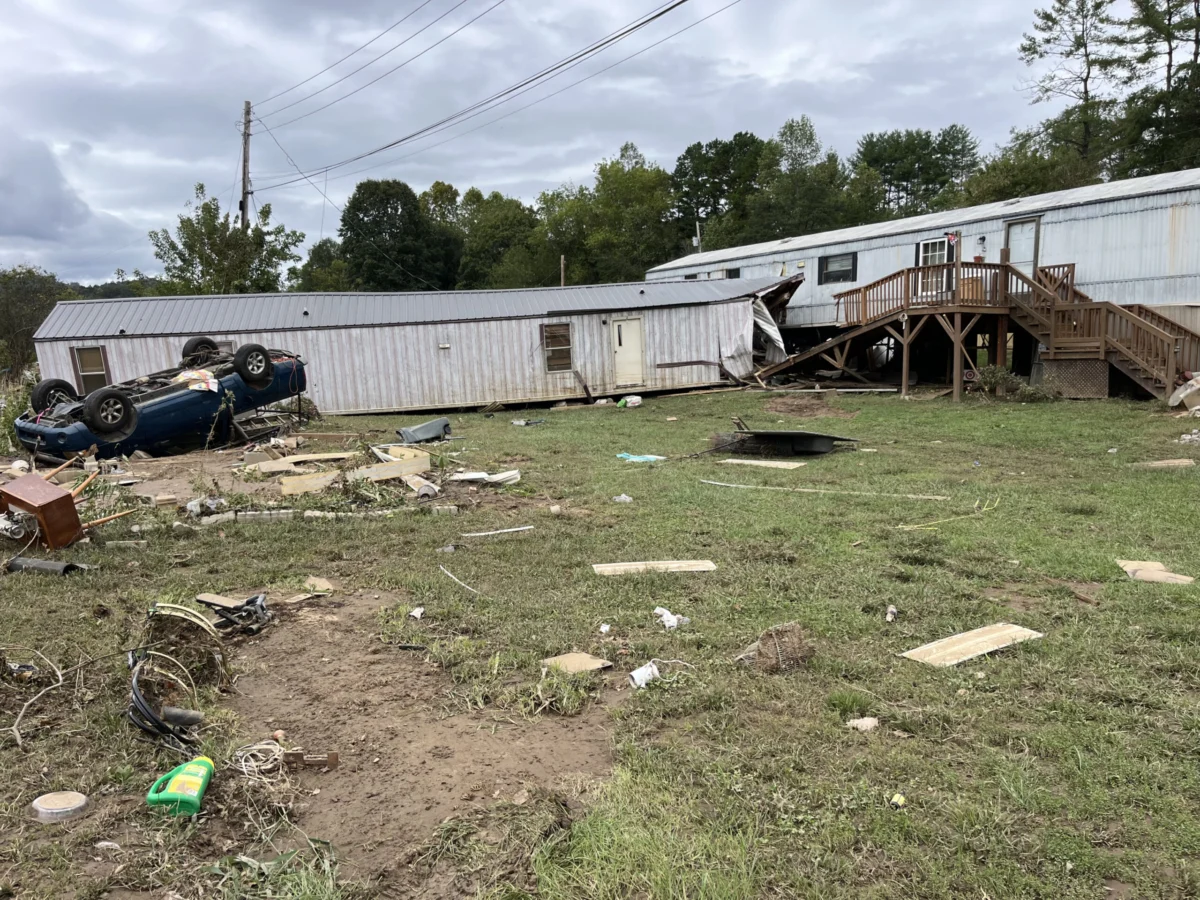
The relentless torrent of the Pigeon River, swollen and roaring, mirrored the escalating dread Dave Masters felt as trees cracked under an unseen force. It was the early hours of September 2004, and through the oppressive darkness, he could discern his father’s house, typically a safe distance of 100 feet from the riverbank, now engulfed by surging water. Masters, a tall and slender man, plunged into the frigid, waist-deep current, battling his way to awaken his 63-year-old father and insist on an immediate evacuation. From the relative safety of his own trailer perched on a hillside, the two watched in horror as Hurricane Frances unleashed its fury upon Western North Carolina. Within an hour, his father’s mobile home, a beacon of stability just moments before, detached from its moorings, bobbing like a fishing float before sailing down the main road. Its journey ended violently, veering into a telephone pole and splitting in two, its shattered remnants coming to rest downstream, caught beneath a bridge.
Just ten days later, the mountainous region, far removed from the coastal frontlines, suffered an unprecedented "double whammy" as Hurricane Ivan dumped even more rain. Haywood County, reeling from the twin disasters, recognized the urgent need for preventative action. It condemned several mobile homes and a wood-frame house situated precariously along the river. Responding to the unequivocal threat of recurrent flooding, the county ultimately acquired the wood-frame house through a federally funded program, transforming the land near Clyde into permanent open space designed to mitigate future loss of life and property. The state also provided funds to relocate Masters’ father and another family from the Hyder Mountain Road trailer park, moving them out of the known floodplain "to mitigate the possibility of future damage to life and property should subsequent events occur," as stipulated by state legislation.
However, a critical oversight in policy would soon manifest its devastating consequences. Despite federal floodplain maps clearly indicating the land where the trailer park stood was at significant risk, Haywood County did not pursue a buyout of the entire mobile home park. Furthermore, it failed to prevent the park’s owners from re-renting the very lots where trailers had been destroyed, including the one Masters’ father had once occupied. This decision, seemingly administrative at the time, laid the groundwork for future tragedy. In 2021, Tropical Storm Fred brought renewed devastation, flooding the Hyder Mountain Road park again and damaging five of the six trailers fronting the river, including the notorious plot. Despite the visible and documented damage, all trailers in that perilous first row remained. The catastrophic climax arrived in 2024 when Hurricane Helene swept one of these mobile homes directly into the raging river, slamming it into the same bridge as before, claiming the life of a resident and three of her beloved dogs.

The repeated, preventable losses at the Hyder Mountain Road mobile home park starkly illustrate a profound vulnerability embedded within existing disaster policy. This policy framework, largely conceived with traditional homeowners and fixed real estate in mind, inadvertently allows residents of mobile homes — often the most affordable and only available housing option for many low-income families — to be placed in harm’s way, time and again.
Mobile Homes: A Policy Blind Spot in Disaster Mitigation
The Federal Emergency Management Agency (FEMA) proudly touts its programs for buying out disaster-prone buildings as "the cornerstone of the Nation’s system for emergency management." Yet, this cornerstone appears to have a fundamental flaw when it comes to mobile homes, which represent the country’s largest source of unsubsidized affordable housing. The core issue lies in their legal classification: mobile homes, even when permanently affixed and serving as lifelong residences, are typically not considered real estate. Instead, they are categorized as personal property, akin to vehicles or boats. This distinction has far-reaching implications, particularly for residents living on flood-prone land.
For a mobile home park’s land to be acquired through a federal buyout, the park owners must willingly participate. However, FEMA’s program offers scant incentive for them to do so. Under current regulations, park owners cannot receive compensation from the government for lost rental income or for the value of the mobile homes themselves, only the land. This financial disincentive creates a significant barrier to proactive mitigation. Some park owners, like Art and Lynne Heinmiller of the Hyder Mountain Road park, who did not respond to multiple inquiries, may simply find the payouts insufficient to justify relocation or cessation of operations. Others may not even be aware of the buyout programs. Consequently, vacant lots are regularly re-rented, perpetuating the cycle of risk.

The grim reality of this policy gap is that it leaves thousands of vulnerable families in flood-prone areas with limited options. When a mobile home is destroyed, the resident often loses their primary asset, while the landowner retains the ability to lease the risky plot again. This creates a moral hazard and a tragic human cost that current policy fails to adequately address.
The Human Cost: A Family’s Tragic Ordeal
Joe Rogers, now 58, remembers the 2004 hurricanes vividly. Then 38 and living less than a mile away across the Pigeon River, he witnessed firsthand the destruction at the Hyder Mountain Road park. He never imagined that just two years later, he would move into the very lot adjacent to where Dave Masters’ father had lived. In 2006, his ailing father gifted him a single-wide trailer, a lifeline for Joe to remain in the increasingly expensive Appalachian region where his family had roots spanning generations. The roughly 900 square feet provided ample space for him to raise his son, and the $200 monthly rent for the riverside lot was manageable on his Waffle House cook’s wages.
In the front yard, Joe and his high school sweetheart, Sandra Justus, cultivated a small haven: two peach trees for shade, a vibrant pink rose of Sharon to attract birds, and a sturdy fence for the multitude of rescue dogs Sandra invariably brought home. Caring for others was central to Sandra’s being. Beyond raising her own daughter, she frequently welcomed other children and animals in need, becoming a dedicated wildlife rehabilitator and a talented hair stylist. She embraced life with a passion for Renaissance fairs, rock ‘n’ roll, and Halloween.

Joe had been assured that major floods were "once every 40 years" events, leading him to believe he had decades of safety. For 15 years, the Pigeon River, though sometimes encroaching on Hyder Mountain Road, spared their home. This changed with Tropical Storm Fred in August 2021. The river inundated all but one of the six trailers closest to its banks. Inside Joe and Sandra’s home, muddy water rose three inches, damaging particleboard floors and the foundation. FEMA assistance eased the financial burden of repairs, but the emotional toll was significant.
The couple married in 2022, Sandra taking Joe’s surname. They were planning to move in 2024 when Hurricane Helene, a Category 4 behemoth, struck Florida and then spun fiercely towards Western North Carolina. The Haywood County Sheriff issued dire warnings of "a catastrophic, life-threatening event" that could surpass the 2004 and 2021 storms. Yet, none of the current park residents had experienced the 2004 devastation, their memories limited to Fred’s "minor damage." Most, including Joe and Sandra, chose to stay, prioritizing the welfare of their beloved dogs and pet birds. "We thought that maybe it would be just like the last flood," Joe recounted.
On the night of September 26, 2024, they went to bed. Within hours, the Pigeon River, typically a shallow five feet, crested at a record 30 feet. The water in their home surged from ankle-deep to chest-high in less than an hour. They frantically packed their birds into travel boxes and cages. Joe managed to move two cars to higher ground, abandoning the third as its wheels spun uselessly in the waterlogged soil. Sandra, initially hesitant, decided against evacuating when she realized she would have to swim through water now well above her head. She sought refuge on a wooden chair atop their waterlogged foam mattress in the bedroom. In the living room, Joe dodged floating furniture, desperately trying to formulate an escape plan as the cold, murky water continued its inexorable rise.
Suddenly, the sheer force of the water ripped the back door from the trailer. Joe watched helplessly as several of their dogs instinctively made their way towards the opening, swimming towards perceived higher ground. The water reached Joe’s neck when, for a fleeting moment, it seemed to recede. He harbored a flicker of hope that the worst was over, only to realize the horrifying truth: the entire home had been dislodged from its foundation. The trailer lurched violently, thrusting Joe towards the ceiling. His fingers instinctively gripped the top of the bedroom door frame as he yelled into the darkness for his wife. Believing the only safe way to extract Sandra was by breaking a window, Joe swam through the kitchen and escaped out the back doorway. Clinging precariously to a sharp metal gutter, he battled the raging current, screaming for someone to call 911, praying emergency responders could reach Sandra by breaching the roof. Tragically, Sandra Rogers and three of her dogs perished in the flood.

Local Governance and the "Property Rights" Dilemma
Following Helene, most homeowners at the Hyder Mountain Road mobile home park, scarred by the repeated floods, desired to leave permanently. However, not owning the land beneath their homes, they were ineligible to pursue individual buyouts. The onus fell upon the park owners to apply to the government for the acquisition of the land.
Yet, this path was not taken. Cody Grasty, Haywood County’s Helene recovery officer, explained that county officials engaged with local mobile home park owners to discuss their recovery plans. According to Grasty, "none of them seemed interested to be done" with operating their mobile home communities. He emphasized that the buyouts the county facilitates are entirely voluntary, and condemning the land is not an option the county currently considers. Grasty suggested that property owners could choose not to lease out low-lying lots, mandate elevated homes as part of lease agreements, or repurpose the land. "It comes back to that property rights thing," Grasty stated. "We can work on solutions, but not until the property owner or homeowner even says, ‘I want to do this.’"
This stance baffles Pam Quinn, whose own wood-frame home across the Pigeon River was purchased by Haywood County in 2007. "It’s right across the river. It’s so close, but they got treated so differently," Quinn observed, highlighting the stark disparity in how different types of properties are addressed, even when facing identical flood risks.

Terry McCracken, who owned the Hyder Mountain Road property with her late husband until selling it in 2019, briefly spoke to a reporter. She believed the 2004 floods were a "once in 100 years" event and was unsure if her husband had ever considered a buyout. The current owners, Art and Lynne Heinmiller, who have experienced two floods in their seven years of ownership, declined to comment further, with Lynne stating she was not offered a buyout application and needed to confer with her husband.
John Richardson, who until recently owned a small mobile home park in neighboring Buncombe County, elucidated the financial realities. He noted that buyouts often represent a financial loss for park owners. With the ongoing housing shortage, even older mobile homes can generate at least $1,000 in monthly rent, with lots yielding upwards of $300. "The cash flow is so good once you’re established in it that there isn’t an incentive to take a buyout," Richardson explained. However, after the Swannanoa River swept seven of his nine homes off their foundations during Helene, Richardson chose to pursue a buyout, unwilling to subject other families to such devastation and unable to meet his mortgage obligations without rental income. His decision underscores the profound personal and financial pressures that can eventually lead a park owner to consider a buyout.
State and Federal Program Gaps: A Call for Coordinated Action
North Carolina Emergency Management (NCEM), the state agency responsible for reviewing and often completing buyout transactions for local governments, stated there is no specific guidance for mobile home park buyouts, and the process is identical to that for commercial or residential properties. Justin Graney, NCEM’s spokesperson, affirmed, "It is entirely the property owners and the local jurisdiction’s decision on whether or not they wish to participate in the program." This hands-off approach places the burden squarely on local governments and private landowners, often leading to inaction due to competing priorities, financial disincentives, or simply a lack of awareness.

Crucially, neither Haywood County nor the state of North Carolina maintains a comprehensive list of high-risk properties where mitigation is deemed essential for public health and safety—a standard practice in many other states. This absence of a centralized, proactive risk assessment and mitigation strategy means that decisions are reactive and piecemeal, rather than systemic. This lack of foresight deeply troubles Dave Masters, the auto mechanic who prudently moved out of the mobile home park before the 2021 floods. "Without a doubt in my mind, it’s going to happen again," Masters asserted, emphasizing the urgent need for permanent removal of structures from the floodplain.
Other states have implemented more robust solutions. In central Pennsylvania, Greene Township fully funded buyouts and relocation assistance for a 54-home park after excessive rainfall rendered most homes uninhabitable in 2006, benefiting both the property owner and residents. Harris County, Texas, successfully acquired a severely flood-prone mobile home park, providing the owner with a multi-million-dollar sum for the land, while homeowners received up to $210,000 for new homes outside the floodplain, and renters received up to 42 months of assistance. These examples highlight the potential for comprehensive programs that address the unique challenges of mobile home communities.
North Carolina itself once pioneered a solution after Hurricane Floyd devastated the Cape Fear region in 1999. The state legislature established a Crisis Housing Assistance Fund, which provided funds to repair homes or relocate families ineligible for federal programs, including mobile home park residents. It also offered additional funding for families whose federal buyout compensation was insufficient to secure a comparable home. Yolanda Abram, the retired director of the North Carolina Redevelopment Center, which oversaw the program, noted that many beneficiaries were mobile home residents. Crucially, the program generally prohibited new homes from being placed back in the floodplain. This program received additional state funding in 2005 to relocate homeowners in flood and landslide zones affected by that season’s hurricanes, with approximately 40 Haywood County families, including Masters’ father, participating. However, this program, while effective for individual relocations, did not address the systemic issue of preventing new families from moving onto the same high-risk lots within mobile home parks.
The Looming Threat: Campers in the Floodplain

Following Hurricane Helene’s devastation, Haywood County implemented new regulations, requiring homes in the floodplain to be elevated and securely anchored to the ground to minimize future catastrophic damage. At the Hyder Mountain Road park, this means any new mobile homes along the river would need to be raised at least eight feet off the ground, an elevation that could cost tens of thousands of dollars. So far, only staircases leading to raised electrical boxes have been installed, but no new mobile homes have returned to these costly-to-elevate lots.
However, a critical loophole exists: these elevation rules do not apply to recreational vehicles (RVs) or campers. Under county regulations, RVs can occupy the floodplain as long as they can be driven or towed away in the event of a storm. In the aftermath of the floods, the county issued permits for five campers to occupy the very same lots where mobile homes had been repeatedly washed away. The grim reality is that, in this community, these campers have become year-round residences, their undercarriages often wrapped in insulation for permanent living. The county has approved them for water, sewer, and electric hookups, implicitly recognizing their residential status. Yet, without elevation and secure anchoring, these temporary structures remain highly vulnerable to fast-moving waters, easily swept downstream with their occupants.
This return of vulnerable housing to repeatedly flooded areas astonished Yolanda Abram, whose former team helped relocate past residents of the park. "It continues to happen where homes are being placed in floodplains, and maybe that shouldn’t be happening now," Abram reflected, highlighting the urgent need for policy reevaluation.
K.K. Bautista, a single mother, now lives in one of these campers, situated in the very row where Masters’ father and Joe Rogers had previously resided. She never desired to be this close to the water again. Hurricane Helene had ripped through her previous trailer at another mobile home park, tearing off its siding and leaving her home exposed. Bautista lost almost everything she owned, save for her car. A nonprofit provided her with a small Jayco Eagle travel trailer, but the lot at Hyder Mountain Road was the only place she could afford. Despite knowing the river had surged there during Helene, she felt she had no other choice. "When it rains, I don’t sleep and I watch the river," Bautista confessed, her eyes darting between the menacing river, her two-year-old daughter, and the road, a constant vigilance against an inevitable threat.

Broader Implications and the Path Forward
The saga of the Hyder Mountain Road mobile home park is a microcosm of a broader national challenge, exacerbated by the intensifying effects of climate change. Western North Carolina, characterized by its steep topography and numerous river valleys, is particularly susceptible to flash flooding and landslides during intense rainfall events, which are becoming more frequent and severe. The increased frequency of storms like Frances, Ivan, Fred, and Helene in a relatively short span underscores a changing reality that outpaces current disaster mitigation strategies.
The policy framework’s failure to adequately address mobile homes as a distinct and vulnerable housing type carries significant implications. It disproportionately affects low-income families and communities, who often rely on mobile homes as their only affordable housing option. This perpetuates cycles of displacement, poverty, and trauma, as individuals lose their homes, possessions, and sometimes their lives, only to be forced back into similarly perilous situations due to economic constraints and policy loopholes. The repeated expenditure of federal and state disaster relief funds on properties that are demonstrably high-risk also represents a profound economic inefficiency. Instead of investing in permanent relocation and mitigation, resources are continually diverted to temporary repairs and recovery efforts that fail to break the cycle.
For Governor Josh Stein’s billion-dollar Hurricane Helene recovery program, Renew NC, the situation at Hyder Mountain Road presents a critical test. While Renew NC’s manual indicates it can help relocate mobile home owners whose damaged trailers face future flood risks, it explicitly does not prevent new families from moving onto lots with a documented history of severe flooding. This glaring omission means that even with significant investment, the underlying vulnerability persists.

Breaking this cycle requires a multi-faceted approach. First, federal and state disaster policies must be reformed to recognize mobile homes as permanent residences deserving of the same protection and mitigation incentives as traditional real estate. This could involve reclassifying mobile homes for buyout purposes or creating specific, well-funded programs tailored to mobile home parks. Second, governments must offer stronger incentives for park owners to participate in buyouts, potentially including compensation for lost rental income or the value of the mobile homes on the property. Third, a proactive, centralized system for identifying and permanently mitigating high-risk properties, including mobile home parks, is essential. This would involve maintaining comprehensive lists of flood-prone areas and actively pursuing buyouts rather than waiting for voluntary participation after a disaster strikes. Finally, local zoning and land-use regulations need to be strengthened to prohibit or severely restrict residential development, including recreational vehicles used as permanent dwellings, in repeatedly flooded areas.
As Wentfard Henson, chief of the Clyde Volunteer Fire Department, starkly put it, regarding the Hyder Mountain Road park, "Where they’re at, it’s not if, it’s just when. It’s going to flood again, there’s no doubt, because it flooded every time we’ve had a storm. It’s flooded four times." The tragic death of Sandra Rogers and her dogs during Hurricane Helene serves as a somber and urgent reminder that without fundamental policy reform and a coordinated commitment from all levels of government, communities like Hyder Mountain Road will continue to face an unending cycle of disaster, loss, and preventable tragedy.




 Joko Widodo
 Jia Lissa
 Pevita Pearce
 admin
admin