
 Ana Megawati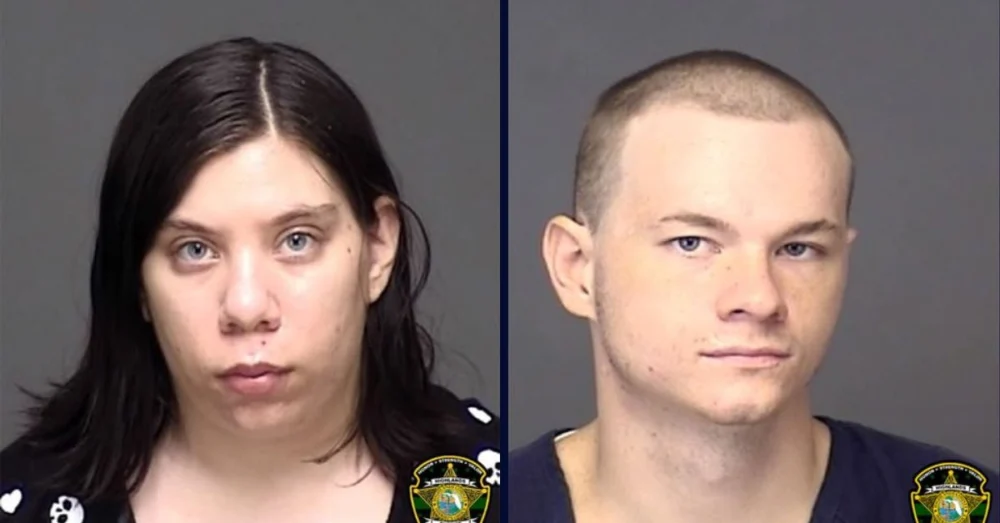
A Florida woman, Britney Andrus, 29, has been condemned to life imprisonment for the heinous 2020 murder and robbery of her husband’s 88-year-old great-grandfather, James Little, in Sebring. The severe sentence, handed down on Wednesday, culminates a protracted legal battle that revealed a cold-blooded scheme orchestrated by Andrus and her boyfriend, Tyler Best, 25, to steal from the vulnerable senior and abscond to Michigan. The case has sent ripples through the community, highlighting the devastating impact of elder abuse and the profound grief inflicted upon victims’ families.
The Crime Unveiled: A Plan to Rob and Flee
The tragic events unfolded in October 2020. Britney Andrus and Tyler Best were residing in a mother-in-law suite attached to James Little’s Sebring home. Andrus’s husband was incarcerated at the time, leaving Little, a man described by his family as loving and helpful, particularly exposed. According to law enforcement, in the days leading up to the murder, Andrus and Best meticulously devised a plan to burglarize Little’s residence. Their targets included Little’s car, cash, and jewelry—some of which held deep sentimental value, having belonged to Little’s wife who had passed away just a month prior. The pair’s ultimate goal was to finance their escape to Michigan, where Andrus reportedly intended to live with her grandmother.
On October 22, 2020, at approximately 1:30 p.m., Andrus reported finding Little unconscious in his bedroom to a neighbor. Little was immediately rushed to a local hospital, where he valiantly fought for his life for five days before succumbing to his injuries on October 27, 2020. An autopsy later confirmed that James Little died from blunt force trauma to the head, having been struck an astonishing 12 times with an unknown object. The medical findings painted a gruesome picture of a violent assault, indicating that Little was left to die while his assailants made off with his possessions.
The Investigation: Piecing Together a Cruel Narrative
Investigators from the Highland County Sheriff’s Office quickly suspected foul play and focused their attention on Andrus and Best, despite their initial attempts to feign innocence. The scene at Little’s home told a stark story of a violent intrusion and theft. Detectives noted the disarray in Little’s bedroom, with open drawers and missing jewelry boxes. His vehicle, a crucial piece of evidence, along with his wallet containing approximately $1,500 in cash, had been stolen. Crucially, a hidden safe, known only to close family members, was also missing.
The probable cause arrest affidavit detailed the chilling conclusion of law enforcement: "Based on the scene, it was evident the victim was awoken by an intruder(s), was struck multiple times, and laid hurt in the residence for some time before EMS and law enforcement being notified." Blood evidence was pervasive throughout the room, further underscoring the brutality of the attack.
The investigative team meticulously gathered surveillance videos from around Sebring, which captured Andrus and Best driving Little’s stolen car and spending his money. This digital trail provided undeniable evidence of their movements and financial transactions post-crime. Furthermore, detectives interviewed several of the couple’s acquaintances. One friend recounted Andrus appearing with blood on her shirt, to which Andrus cryptically stated, "I don’t know what I did" and "It was like he was asking for it anyways," chilling remarks that would later be presented in court as indicative of her culpability and lack of remorse. Best, too, was found to have used some of the stolen money to purchase methamphetamine, highlighting the drug-fueled context of their actions.
Despite the immediate suspicions, it took approximately a year for investigators to gather sufficient evidence to formally arrest Andrus and Best for the slaying. This period of dedicated police work, involving forensic analysis, witness interviews, and digital evidence reconstruction, was critical in building a robust case against the pair.
The Legal Process: Guilty Verdicts and Divergent Sentences
Britney Andrus was ultimately found guilty in July of second-degree murder, burglary of an occupied dwelling, and grand theft of a motor vehicle. These charges carry significant penalties under Florida law. Second-degree murder, defined as a killing committed with a depraved mind regardless of human life but without premeditation, can lead to a life sentence. Burglary of an occupied dwelling, especially when coupled with violence, is also a serious felony. Grand theft of a motor vehicle, while less severe, added to the pattern of criminal behavior.
Tyler Best, her accomplice, chose a different path in the legal process. He previously pleaded guilty to the same charges: second-degree murder, burglary, and grand theft of a motor vehicle. As part of his plea agreement, Best reportedly testified against Andrus during her trial, a move often made by co-defendants to secure a more lenient sentence. In January, Best received a sentence of 15 years in prison, a stark contrast to Andrus’s life sentence, reflecting the value placed on his cooperation by the prosecution and the court. His testimony was pivotal in establishing Andrus’s direct involvement, with Best reportedly testifying that killing Little was Andrus’s idea. He claimed to have initially resisted, stating, "I told her I wanted nothing to do with it. It was a big argument, I packed a suitcase and left." However, he also admitted that the items in the suitcase were stolen from Little, and later testified that Andrus admitted to the killing, saying, "I did it, I did it. I thought she killed this man. I saw blood on her collar."
A Family’s Grief and the Victim’s Voice
The sentencing hearing for Britney Andrus provided a crucial platform for James Little’s family to articulate their profound loss and enduring pain. Joshua Little, the victim’s grandson, delivered a poignant victim impact statement that resonated deeply within the courtroom. He spoke movingly of his grandfather, emphasizing James Little’s benevolent nature and his joy in helping others.

"He was 88 years old when his life was stolen from him during the golden years of his life," Joshua Little stated, his voice undoubtedly laden with emotion, as reported by the Highlands News-Sun. "I know this is a case of homicide but it is also about theft. Britney stole his life and his dignity. In his final moments I can’t imagine how alone he felt, calling out for my grandmother who was no longer there." This statement underscored not only the physical violence but also the emotional and psychological trauma inflicted upon an elderly man in his own home, robbed of his final moments of peace and companionship. The reference to his grandmother, who had only recently passed, added another layer of heartbreak, illustrating the immense vulnerability Little faced.
Joshua Little’s words painted a vivid picture of a man who deserved to live out his remaining years in dignity, not to be brutally murdered for a few possessions. His statement served as a powerful reminder that beyond the legal definitions and procedures, there was a human life, a family, and a community irrevocably scarred by an act of senseless violence. James Little’s son also expressed profound relief following the verdict, stating, "I am extremely gratified by the verdict. It was something the family was waiting for for five years," reflecting the long and arduous journey for justice.
Defense and Prosecution: Contrasting Narratives
During the trial and sentencing, both the defense and prosecution presented their arguments, painting contrasting pictures of Britney Andrus and the circumstances surrounding the crime. Andrus’s defense attorney reportedly highlighted his client’s long-standing struggles with mental health issues, tracing them back to a traumatic childhood event where she discovered her murdered mother’s body at the tender age of five. This argument aimed to humanize Andrus and suggest that her actions might have been influenced by deep-seated psychological trauma, potentially mitigating her culpability. Such a defense strategy often seeks to explain, though not excuse, criminal behavior by pointing to a history of personal hardship and mental instability.
However, prosecutor John Kromholz vehemently rejected this narrative as an excuse for the horrific crime committed. He asserted that the case was not about Andrus’s past history or mental health struggles, but rather about her deliberate and brutal act of murdering an elderly man as he lay in bed, all while under the influence of drugs. "That’s why she’s a danger," Kromholz declared, as quoted by the News-Sun, emphasizing the immediate threat Andrus posed to society due to her capacity for extreme violence, especially when impaired. The prosecution consistently portrayed Andrus as a calculated and dangerous individual whose actions were driven by greed and a disregard for human life, rather than merely a victim of her past circumstances.
Broader Implications: Elder Abuse and Societal Responsibility
The case of James Little’s murder tragically underscores the pervasive and often hidden issue of elder abuse and the particular vulnerability of seniors to crime, especially when perpetrated by those they know or trust. According to the National Council on Aging (NCOA), elder abuse is a significant problem in the United States, with an estimated 1 in 10 Americans aged 60+ experiencing some form of elder abuse annually. Financial exploitation, as seen in this case, is a particularly prevalent form of abuse, often committed by family members or caregivers who gain trust and access to a senior’s assets.
Florida, with its large elderly population, faces unique challenges in protecting its senior citizens. Cases like this serve as a stark reminder of the need for heightened awareness, stronger protective services, and community vigilance. The fact that the perpetrators were living in the victim’s home highlights the insidious nature of such crimes, where the very people meant to be close or supportive turn into predators.
The judicial outcome, particularly the life sentence for Andrus, sends a clear message about the severity with which the legal system views crimes against the elderly. It reflects society’s condemnation of those who exploit and harm vulnerable populations. While no sentence can truly alleviate the pain of loss for the Little family, the decisive action of the courts provides a measure of justice and closure, reinforcing the principle that such egregious acts will not go unpunished.
The case also brings to light the complex interplay of drug abuse, desperation, and criminal behavior. While drug use does not excuse violent crime, it often contributes to impaired judgment and heightened aggression, creating a dangerous combination that can lead to tragic outcomes. Efforts to combat drug abuse, alongside programs aimed at preventing elder exploitation, remain crucial components of a comprehensive public safety strategy.
Conclusion: Justice Served, Lessons Learned
Britney Andrus’s life sentence marks the definitive legal conclusion to a deeply disturbing case that began with a brutal act of violence and theft against an elderly man. Her conviction for second-degree murder, burglary, and grand theft of a motor vehicle, alongside Tyler Best’s earlier plea and sentence, brings a measure of justice to the family of James Little, who endured years of waiting for this resolution.
The court’s decision underscores the sanctity of human life and the particular duty of society to protect its most vulnerable members. While the pain of James Little’s loss will undoubtedly remain with his family, the legal system has delivered a verdict that affirms accountability and seeks to deter future acts of similar cruelty. The memory of James Little, a man who loved helping people, will endure, serving as a solemn reminder of the devastating consequences when trust is betrayed and human dignity is disregarded. This case will stand as a grim testament to the importance of vigilance, community support, and robust legal frameworks in safeguarding the lives and legacies of our elderly population.



 Yuyun Lusiyani
 Joko Widodo
 Jia Lissa
 Pevita Pearce
 admin
admin
