
 Yuyun Lusiyani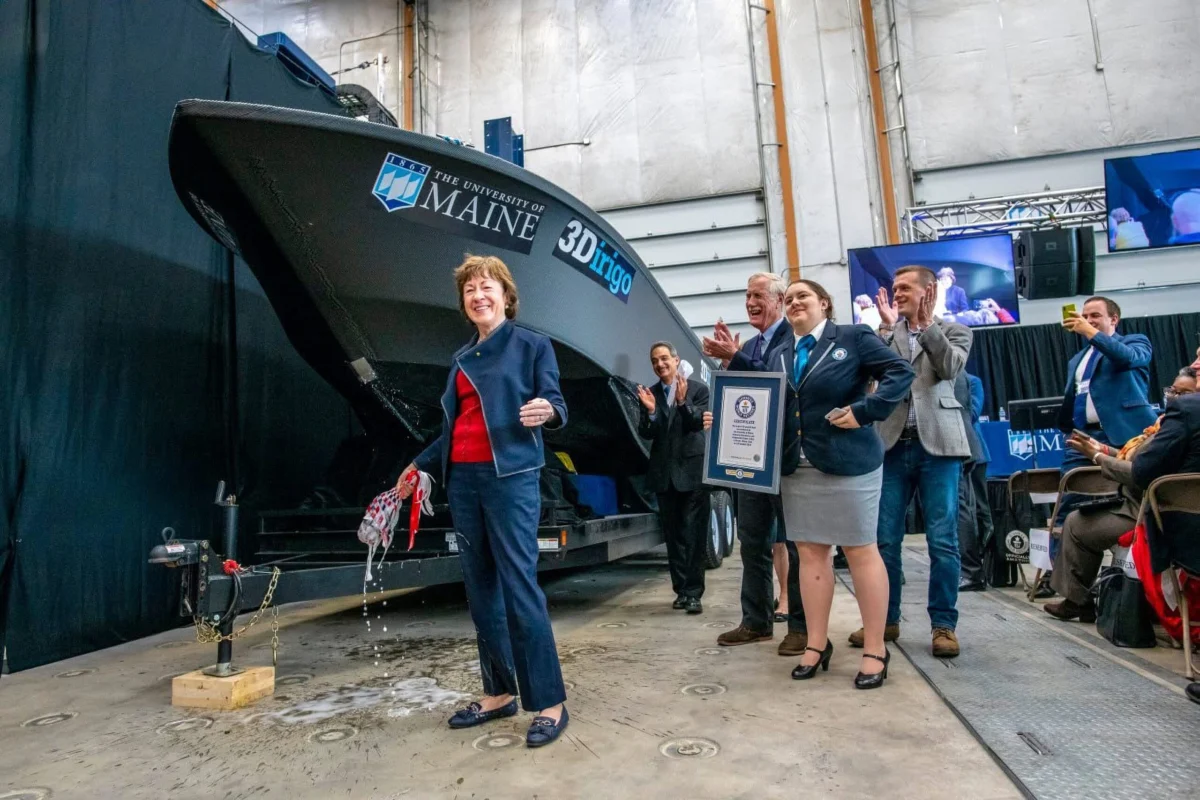
A sprawling federal investigation into alleged political corruption, including a focus on Senator Susan Collins and her connections to Hawaiian defense contractor Navatek, was abruptly terminated following the return of Donald Trump to the White House. This unprecedented halt came as federal law enforcement agencies underwent a significant purge, dismantling specialized units tasked with investigating public corruption and effectively shutting down a roadmap to potential widespread bribery in Congress.
The revelations stem from the detailed confessions of Martin Kao, the former CEO of Navatek, who pleaded guilty to illegal campaign contributions and fraud. Facing a lengthy prison sentence, Kao chose to cooperate with the FBI, providing a comprehensive account of what he described as a "pay-to-play" operation that entangled numerous powerful figures across Capitol Hill. ProPublica, through an independent investigation involving thousands of legal records, internal company documents, and interviews with dozens of individuals familiar with Navatek and the FBI inquiry, has corroborated substantial portions of Kao’s narrative, bringing this halted investigation to public light for the first time.
The Allegations Against Senator Collins and the Corner Bakery Meeting
At the heart of Kao’s allegations concerning Senator Susan Collins was a perilous meeting in the final weeks of 2019 at a Corner Bakery in Washington, D.C. At this time, Senator Collins, a Republican from Maine, was facing a challenging reelection bid, with President Donald Trump’s low approval ratings threatening her two-decade Senate career and her fundraising efforts lagging behind her likely 2020 Democratic challenger.
Scott Reed, then head of the 1820 PAC, a super PAC supporting Collins, met with Kao and two other Navatek executives. A year prior, Collins had reportedly helped Navatek secure a multimillion-dollar Navy research contract in Maine. During the Corner Bakery meeting, Reed allegedly requested a $500,000 donation from Navatek. Federal law explicitly prohibits government contractors from making political contributions, and any exchange of donations for official action constitutes criminal bribery.
Kao, however, claimed Navatek had a proposition: in exchange for a substantial donation, the company sought Collins’ guarantee of tens of millions of dollars in additional federal funding for future government contracts in Maine. To circumvent campaign finance laws and obscure the origin of the funds, Kao planned to funnel the donation through a shell company. He sought assurance that Collins would be aware of the money’s source, and Reed reportedly confirmed she would, ensuring Navatek would receive its government contracts.
Following this meeting, Kao, through the shell company, initially sent $150,000 to the Collins super PAC. Two months later, in February 2020, an internal company email reviewed by ProPublica showed Kao informing Navatek executives that Collins had committed to securing $32 million in naval contracts for the company. Records from that year confirm the Senate allocated at least $10 million based on Navatek’s proposals.
Senator Collins’ office, through deputy chief of staff Annie Clark, "vigorously" denied allegations of bribery and pay-for-play, labeling Kao’s claims as "outlandish." Clark stated that Collins’ campaign was not involved in discussions between Kao and the super PAC and that her office "fully cooperated" with the FBI investigation. She added that "These issues were resolved in 2021 and concluded when the Collins campaign disgorged the illegal contributions that Martin Kao had made without our knowledge." Scott Reed, when questioned, stated he never communicated with Senator Collins or her staff about Kao or Navatek. However, ProPublica reviewed emails suggesting Collins’ office was aware of Kao’s donation; seven days after the $150,000 check cleared, a subordinate of Reed’s emailed a Navatek lobbyist, stating, "Senator Collins would like to call Martin to thank him."

The Navatek Method: A Blueprint for Influence
Before Kao’s leadership, Navatek was a modest Hawaiian engineering firm, founded in 1978 by Steven Loui. It had historically benefited from the influence of the late Senator Daniel Inouye, a master of earmarks who steered significant federal funding to Hawaii-based companies, including Navatek, affectionately known to employees as "Uncle Dan." Inouye’s death in 2012, coupled with Congress’s subsequent discontinuation of earmarks, left Navatek in a precarious position, necessitating a new strategy for securing government contracts.
Kao, who joined Navatek in 2008 as CFO and later became CEO after buying the company from Loui, was described by former employees as an ambitious figure primarily driven by "dollar signs," rather than technological innovation. He reportedly cultivated an erratic management style, telling employees they could be "a beast or a bitch," driving a Ferrari, and exaggerating his credentials. Despite his demeanor, Kao devised an effective, albeit allegedly illicit, "method" to replace the lost earmarks.
This method involved targeting powerful members of the House and Senate appropriations committees. While these members could no longer earmark funds for specific contractors by name, they retained the authority to budget millions for specialized research and development. Kao’s playbook involved:
- University Partnerships: Concocting research projects in collaboration with universities in targeted lawmakers’ districts or states.
- Initial Donations: Making substantial campaign donations to the chosen politicians.
- Lobbying Blitz: Engaging expensive, well-connected lobbyists to arrange meetings on Capitol Hill, pitching the research to congressional staff. Internal spreadsheets reviewed by ProPublica even listed members of Congress as specific lobbyists’ "specialty."
- Direct Requests: Kao told the FBI that in private meetings, lawmakers sometimes directly asked for donations, or lobbyists relayed specific financial requests from intermediaries. Kao believed these were understood as bribes.
- Legislative Drafting: Navatek and congressional staffers collaborated closely, with Navatek often composing specific language that would be inserted, sometimes verbatim, into Senate funding requests and committee reports. These descriptions were so precise that Navatek would become the only logical recipient of the funds.
- Navy Pressure: Once budgets passed, congressional staff would pressure Navy officials to award the funds to Navatek, often overriding concerns about project merit or competitive bidding. Former contracting officers reported feeling compelled to comply, fearing repercussions from Congress.
Crucially, Kao told the FBI that much of Navatek’s research under his stewardship was of "no real value" and never resulted in products the military actually wanted to buy. Employees internally referred to this as thriving in the "valley of death," where research languishes without practical deployment. An example cited was a project in Maine to modify small boats to reduce "slamming" impact, which resulted in a 3D-printed prototype that the Navy reportedly had no plans to use.
This "method" boosted Navatek’s annual revenue from approximately $10 million to nearly $40 million by 2020. The company spent over $500,000 on lobbying in the second half of 2019 alone. Former executive Eric Schiff remarked, "It was eye-opening for me, frankly. ‘Oh my God, all of it is for sale. It’s all for sale.’"
Chronology of the Relationship and Contributions
Kao’s initial direct interaction with Senator Collins in 2018, he told the FBI, required a campaign donation to secure the meeting. While not illegal to exchange face time for contributions, this set a precedent. Navatek, eager to expand beyond Hawaii, saw Maine as an ideal location due to its coastal nature, demand for high-tech jobs, and Collins’ senior position on the Senate Appropriations Committee.
To facilitate this expansion, Navatek hired Glen Mandigo, a lobbyist with ties to the University of Maine. Mandigo allegedly inquired about Navatek’s desired funding and Kao’s willingness to support Collins’ campaign. Following a meeting where Kao pitched an $8 million boat hull research project, Mandigo reportedly suggested Kao bundle tens of thousands for Collins’ reelection. Mandigo denied participating in any pay-to-play arrangements.

FBI agents later found substantial evidence aligning with Kao’s account, including corporate records and email correspondence. Kao’s donations in summer 2018 preceded Collins’ inclusion of $8 million for Navatek’s proposal in the defense budget, with emails showing her staff directing the Navy to allocate the funds to Navatek. Subsequent emails from April 2019 revealed Kao and Mandigo planning a fundraiser, openly mixing discussions of Navatek’s Collins-backed contract with fundraising efforts.
In August 2019, Collins attended a publicity event at Navatek’s Maine headquarters, posing for photos with Kao. Behind the scenes, FBI evidence showed Kao orchestrating over $40,000 in donations from his extended family, directing Collins’ campaign finance director, Amy Abbott, to reallocate excess contributions to his father, an illegal straw donor tactic. Abbott reportedly emailed Kao, "This is perfect… We are so grateful for ALL the Kao support!"
Kao claimed that during a private meeting with Collins, Abbott, and another staffer before the event, he was told the campaign expected more donations, and Collins herself stated, "You’ve seen me deliver." Less than a month later, the Senate’s draft defense budget included $21.5 million for Navatek’s Maine projects. Kao then emailed a Collins campaign fundraiser, offering, "We are here to help anyway we can… financially or whatever." This desire to donate more led to the Corner Bakery meeting with Scott Reed of the 1820 PAC. Kao’s email to Reed outlining his shell company scheme and Reed’s "Very smart" reply further underscored the alleged nature of the transaction.
The Unraveling: Discovery and Cover-up
Kao’s elaborate scheme began to unravel in early 2020. The Campaign Legal Center, a non-profit watchdog, flagged a suspicious $150,000 donation to the Collins super PAC from a newly created LLC, "Society of Young Women Scientist and Engineers," notable for a typo. It quickly became clear the LLC was a shell company designed to hide the fact that the donation originated from Navatek’s accounts, a direct violation of the ban on government contractors making political contributions.
In response to the public scrutiny, Kao, with the alleged guidance of Reed and super PAC lawyer Cleta Mitchell, attempted a cover-up. Mitchell, who later played a significant role in Trump’s 2020 election challenges, suggested the shell company make charitable donations, particularly in Maine, to appear as a legitimate nonprofit. "That would help both of us, I think," Mitchell wrote in an email, adding, "We should develop a plan and timetable, so there are some scholarships given over the next several months, and particularly, perhaps in Maine, where the bad press was." Kao and his team subsequently offered scholarships to women in STEM at state universities where they sought government contracts, attempting to make the cover-up politically beneficial.
However, Navatek’s troubles mounted. Kao compounded his issues by defrauding the COVID-era Paycheck Protection Program, inflating Navatek’s payroll to secure $13 million in loans. This proved to be the final straw for Navatek founder Steven Loui, who reported Kao to federal authorities. Loui condemned Kao’s "unethical and illegal method of winning contracts" as a departure from the company’s prior conduct.
On September 30, 2020, law enforcement raided Navatek’s Honolulu offices, arresting Kao for fraud and seizing company records.
The FBI Investigation and Kao’s Cooperation

The public unraveling of Navatek attracted the attention of Michelle Ball and Kevin Gounaud, agents from the FBI’s elite anti-corruption unit, CR-15. They meticulously sifted through thousands of seized records, focusing on Navatek’s lobbying, donation strategy, and ties to politicians, particularly Senator Collins. Their investigation highlighted Kao’s 2018 contributions to Collins just before the $8 million research funding appeared in the federal budget. They also found evidence of Kao’s illegal straw donations totaling around $33,000 in 2019, made through relatives to circumvent individual contribution limits.
In the face of overwhelming evidence, Kao pleaded guilty to both fraud and campaign finance crimes in the fall of 2022. While awaiting sentencing, he began cooperating with the same FBI agents and prosecutors who had brought him down. Over three days of extensive interviews that lasted into late 2024, Kao became a rare witness: an insider with deep ties to elected officials willing to speak candidly about how Washington’s influence economy allegedly worked.
Kao asserted that politicians, particularly Collins, were "willing participants" in his scheme, famously stating, "It takes two to tangle." He also claimed that taxpayers indirectly funded Navatek’s entire political operation, as the company diverted money from government contracts to pay for lobbyists and campaign contributions, a potentially illegal practice. For their final meeting in September 2024, Kao provided the FBI with a 50-page document detailing Navatek’s dealings with over a dozen members of Congress and their staff, offering it as a roadmap for further investigation.
Despite his cooperation, Kao was sentenced to 87 months in prison, with the judge offering no leniency based on his assistance.
The Trump Administration’s Intervention
By late 2024, FBI agents Ball and Gounaud, having independently corroborated much of Kao’s account and reviewed extensive evidence, believed they had sufficient grounds to launch a broader investigation into bribery involving members of Congress. They had asked supervisors to approve this new phase of the probe and were even contemplating the use of undercover operatives. However, this effort was prematurely halted by a seismic shift within the Department of Justice.
Following Donald Trump’s return to the White House, the DOJ experienced a "campaign of vengeance," with Trump appointees demanding a purge of individuals who had investigated him. The specialized FBI unit CR-15, where Ball and Gounaud worked, and the Public Integrity Section of the Justice Department, which handled public corruption cases, were systematically dismantled. Agent Ball, targeted for her involvement in investigations related to Trump’s attempts to overturn the 2020 election, was fired in October 2025 for allegedly "weaponizing" the Justice Department. She is currently challenging her termination in a lawsuit. Agent Gounaud was pushed out in early 2026.
The Public Integrity Section itself collapsed spectacularly in February 2025 after staff were reportedly ordered to drop a case against a Trump ally, New York City Mayor Eric Adams. Its leadership resigned en masse, and Trump appointees ordered the remaining prosecutors to halt new corruption cases, just months after Kao delivered his detailed confessions and roadmap to the FBI.
The investigation sparked by Kao’s revelations is now effectively dead. The government is no longer engaging with an informant who offered critical insights into alleged congressional corruption. Before her firing, Agent Ball did manage to secure approval for one new investigation, focusing on South Carolina, another state Navatek had eyed for expansion. This probe centered on a steak dinner Kao reportedly shared with Senator Lindsey Graham, but its fate remains unclear given the broader dismantling of anti-corruption efforts.

Broader Implications and Lingering Questions
The abrupt cessation of a potentially wide-ranging public corruption investigation raises significant concerns about accountability in Washington. While the Supreme Court has narrowed the definition of bribery, making prosecution challenging, ProPublica’s findings suggest that influence is readily purchased. The case of Martin Kao and Navatek highlights a system where, even without direct earmarks, a "method" of strategic donations, lobbying, and legislative manipulation can yield substantial government contracts, sometimes for projects of questionable value.
The ongoing roles of key figures in Collins’ campaign, such as Amy Abbott and Scott Reed, despite their alleged connections to the now-disgorged illegal contributions and the super PAC’s alleged involvement in the shell company scheme, underscore the enduring nature of political networks. Senator Collins, currently campaigning for reelection, continues to highlight her power on the appropriations committee and her ability to direct funding to Maine, a power now viewed through the lens of Kao’s allegations.
The FBI spokesperson, Ben Williamson, stated that claims against Collins were investigated years ago, and "nothing implicating Senator Collins or Senator Collins’ campaign" was found, calling any suggestion otherwise "totally false." However, Williamson notably did not respond to questions regarding the new investigation initiated in late 2024 based on Kao’s previously unreported cooperation. This distinction between prior investigations and the newly revealed, subsequently halted probe is critical.
As ProPublica continues to report on this series of stories, the implications extend beyond individual politicians, casting a shadow over the integrity of federal contracting processes and the impartiality of political funding. The collapse of dedicated anti-corruption units under the Trump administration leaves a void, raising questions about who will investigate and hold accountable those who may trade public service for private gain.




 Joko Widodo
 Jia Lissa
 Pevita Pearce
 admin
admin