
 Pevita Pearce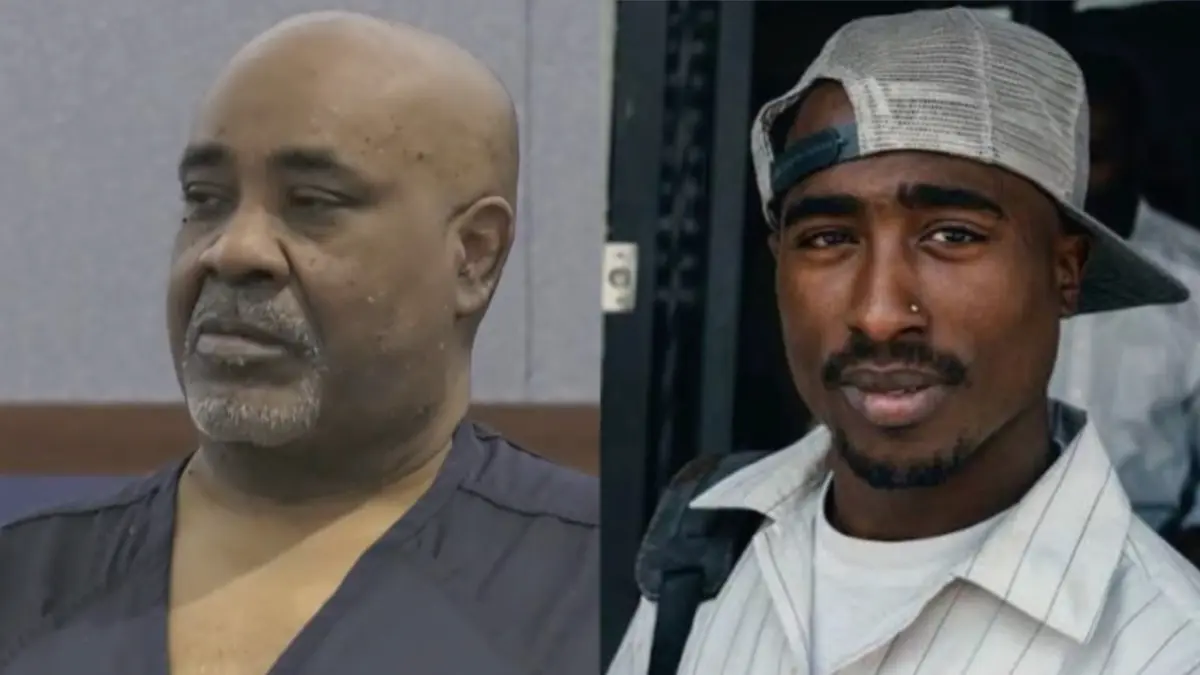
In a courtroom filled with the heavy silence of a thirty-year wait for justice, Duane “Keefe D” Davis was sentenced on Tuesday, October 13, 2026, to 40 years to life in prison for the murder of hip-hop icon Tupac Shakur. The sentencing, handed down in a Las Vegas courtroom, marks the definitive legal conclusion to one of the most infamous cold cases in American history. Davis, 63, was convicted on August 31, 2026, of murder with the use of a deadly weapon, with an added sentencing enhancement for his role in promoting and assisting a criminal gang. The decision comes more than three decades after the drive-by shooting near the Las Vegas Strip that claimed the life of the 25-year-old artist and activist, an event that reshaped the landscape of the music industry and global pop culture.
The sentencing hearing was characterized by intense emotion and a palpable sense of historical gravity. Davis, a former leader of the South Side Compton Crips, remained largely defiant throughout the proceedings. Observers in the courtroom noted a tense exchange between the defendant and the presiding judge, during which Davis reportedly rolled his eyes as the court detailed the gravity of his crimes. Despite the overwhelming evidence presented during the trial—much of it drawn from Davis’s own public admissions in memoirs and interviews—he has continued to maintain his innocence, with his legal team immediately signaling their intent to appeal the verdict.
The Voices of the Shakur Family
The most poignant moments of the hearing were provided by the victim impact statements delivered by Tupac Shakur’s surviving family members. Sekyiwa Shakur, the rapper’s sister, addressed the court with a statement that transcended a simple plea for punishment, framing her brother’s death as a profound loss to the world’s intellectual and cultural heritage. She spoke of the "void that never closes," describing how the men in the Shakur family were fundamentally altered by the violence of September 1996.
Sekyiwa drew direct parallels between her brother and monumental historical figures such as Malcolm X, Martin Luther King Jr., and John F. Kennedy. She challenged the court and the public to imagine the trajectory of history had those leaders been assassinated at the age of 25. "Tupac was just beginning to understand his power as a leader," she stated. "To take that away from him, and from us, is a crime against the future." Her testimony emphasized that the sentencing was not merely about a single act of violence, but about the decades of potential that were extinguished in a hail of gunfire on Flamingo Road.
Mopreme Shakur, Tupac’s stepbrother and a fellow artist, also addressed the court. His testimony focused on the personal milestones that Davis’s actions had stolen from the family. He expressed a deep, lingering sadness that Tupac never had the opportunity to father children of his own or to participate in the lives of his nieces and nephews. Both Sekyiwa and Mopreme urged the judge to impose the maximum allowable sentence, arguing that Davis had spent the last thirty years not in hiding, but in a state of arrogant impunity.
The Prosecution’s Case: Profit and Gang Culture
The prosecution’s argument for the maximum sentence centered on Davis’s behavior in the years following the murder. Prosecutors contended that Davis did not merely evade justice; he actively sought to monetize the killing. Since 2018, Davis has been vocal about his involvement in the events of September 7, 1996, releasing a memoir titled Compton Street Legend and participating in numerous documentaries and media interviews.
The state argued that these public disclosures were not acts of contrition but were calculated moves to profit from the suffering of the Shakur family. "The defendant turned a tragedy into a brand," the lead prosecutor stated during the hearing. "He treated the life of a young man as a commodity to be sold to the highest bidder in the form of book deals and ‘exclusive’ interviews. This level of callousness warrants the harshest penalty the law provides."
Central to the conviction was the "criminal gang enhancement." Under Nevada law, crimes committed to benefit or promote a criminal enterprise carry significantly heavier penalties. The jury found that the murder of Tupac Shakur was a direct result of a retaliatory conflict between the South Side Compton Crips and the Mob Piru Bloods, the latter of which was associated with Death Row Records and Suge Knight. The prosecution successfully argued that Davis, as the "shot-caller" for his set, orchestrated the hit to assert dominance and avenge a physical altercation that had occurred earlier that evening at the MGM Grand.
The Defense’s Rebuttal and the Alibi
Defense attorney Michael Sanft presented a vigorous, albeit unsuccessful, challenge to the sentencing and the underlying conviction. Sanft’s strategy focused on the delay in prosecution and the nature of Davis’s public statements. He argued that if the evidence against Davis was as substantial as the state claimed, charges should have been filed decades ago. He suggested that the recent prosecution was motivated more by political pressure and the high-profile nature of the victim than by new, credible evidence.
In a move that surprised many legal analysts, Davis attempted to distance himself from his previous admissions. After his conviction in August, he claimed in an interview with The Hollywood Reporter that his previous stories were "exaggerations" intended to generate financial gain and "clout" in the entertainment industry. During the sentencing phase, his defense team reiterated this stance, characterizing Davis as a storyteller who got caught up in his own fiction.
Furthermore, Davis presented a new alibi, claiming he was not in Las Vegas at the time of the shooting. He alleged that following the Mike Tyson vs. Bruce Seldon boxing match, he had traveled back to California and was at a bar in West Los Angeles near the UCLA campus when the shooting occurred. However, the prosecution dismissed this as a "desperate fabrication," noting that it contradicted decades of his own recorded statements and the testimony of multiple witnesses who placed him in the white Cadillac from which the fatal shots were fired.
A Chronology of the Case (1996–2026)
The road to the 2026 sentencing has been long and winding, marked by decades of speculation, conspiracy theories, and investigative dead ends.
- September 7, 1996: Tupac Shakur and Suge Knight are involved in a fight with Orlando "Baby Lane" Anderson (Davis’s nephew) at the MGM Grand in Las Vegas. Hours later, a white Cadillac pulls up alongside Knight’s BMW at Flamingo Road and Koval Lane. Four shots strike Shakur.
- September 13, 1996: Tupac Shakur dies from his injuries at University Medical Center.
- 1996–2010: The investigation remains active but yields no charges. Orlando Anderson, the suspected shooter, is killed in an unrelated gang shooting in 1998.
- 2018: Duane Davis begins making public statements about the murder in the Netflix documentary Unsolved. He later releases his memoir, Compton Street Legend, where he admits to being in the car and providing the weapon used in the shooting.
- July 2023: Las Vegas Metropolitan Police execute a search warrant at Davis’s home in Henderson, Nevada, seizing electronics and memorabilia.
- September 29, 2023: Davis is arrested and charged with murder with a deadly weapon.
- August 31, 2026: A jury finds Davis guilty of first-degree murder.
- October 13, 2026: Davis is sentenced to 40 years to life.
Analysis of Legal and Cultural Implications
The sentencing of Duane Davis represents a significant milestone in the American legal system’s handling of cold cases. It demonstrates that even decades after a crime, self-incrimination through media channels can serve as a primary catalyst for prosecution. Legal experts suggest that this case may serve as a cautionary tale for individuals who believe that the statute of limitations or the passage of time provides a shield against prosecution for murder, which has no statute of limitations in Nevada.
The case also highlights the complexities of the "proffer" system. Early in the investigation, Davis had entered into a "proffer agreement" with federal authorities, which he believed granted him immunity for his statements. However, the prosecution successfully argued that this immunity did not extend to his subsequent public statements, books, and interviews, nor did it prevent state-level authorities from using independent evidence to secure a conviction.
Culturally, the sentencing provides a sense of closure to a chapter of music history that has been defined by the "East Coast-West Coast" rivalry of the 1990s. The death of Tupac Shakur, followed shortly by the murder of The Notorious B.I.G. in 1997, left a permanent scar on the hip-hop community. While conspiracy theories regarding the involvement of various figures have persisted for thirty years, the court’s decision focuses the culpability on the gang-related retaliation orchestrated by Davis.
Finality for the Shakur Estate
While the 40-year-to-life sentence ensures that Davis will likely spend the remainder of his life behind bars, the legal battle is not entirely over. Davis’s intent to appeal suggests that the case will remain in the judicial system for several more years. His defense is expected to focus on the admissibility of his book as evidence and the alleged "prejudicial" nature of the gang enhancement.
However, for the Shakur family and millions of fans worldwide, the sentencing of the last living person directly involved in the vehicle that night provides a measure of peace. The court’s acknowledgment of Tupac’s status as a leader and the profound impact of his loss serves as a formal validation of the grief his family has carried since 1996. As the proceedings concluded, the focus shifted from the defendant back to the legacy of the man he helped kill—a legacy that, despite the violence of his end, has only grown in the three decades since.

 Yuyun Lusiyani
 Ana Megawati
 Joko Widodo
 Nana Wu
 Eva Lovia
 Jia Lissa