
 Ana Megawati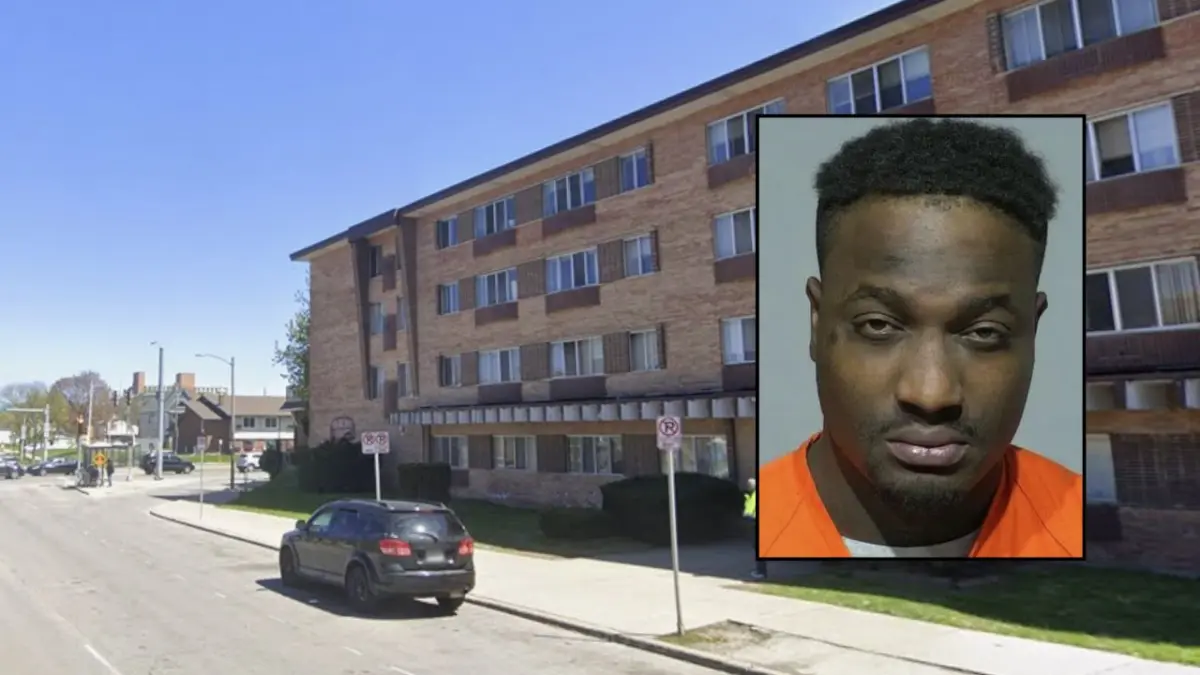
A Wisconsin man, Terry Jefferson, 35, has been handed a life sentence for the brutal murder of his friend, Charles Williams, who was assisting him with an apartment move in Milwaukee. The sentencing, which took place on October 8, followed a jury’s conviction for first-degree intentional homicide, a charge that underscores the gravity and premeditation of the crime. The judicial decision brings a somber close to a case that illuminated the tragic intersection of personal relationships and gun violence, as the court rejected Jefferson’s assertion of self-defense. He will become eligible for parole after serving 35 years, after which any release would be followed by extended supervision.
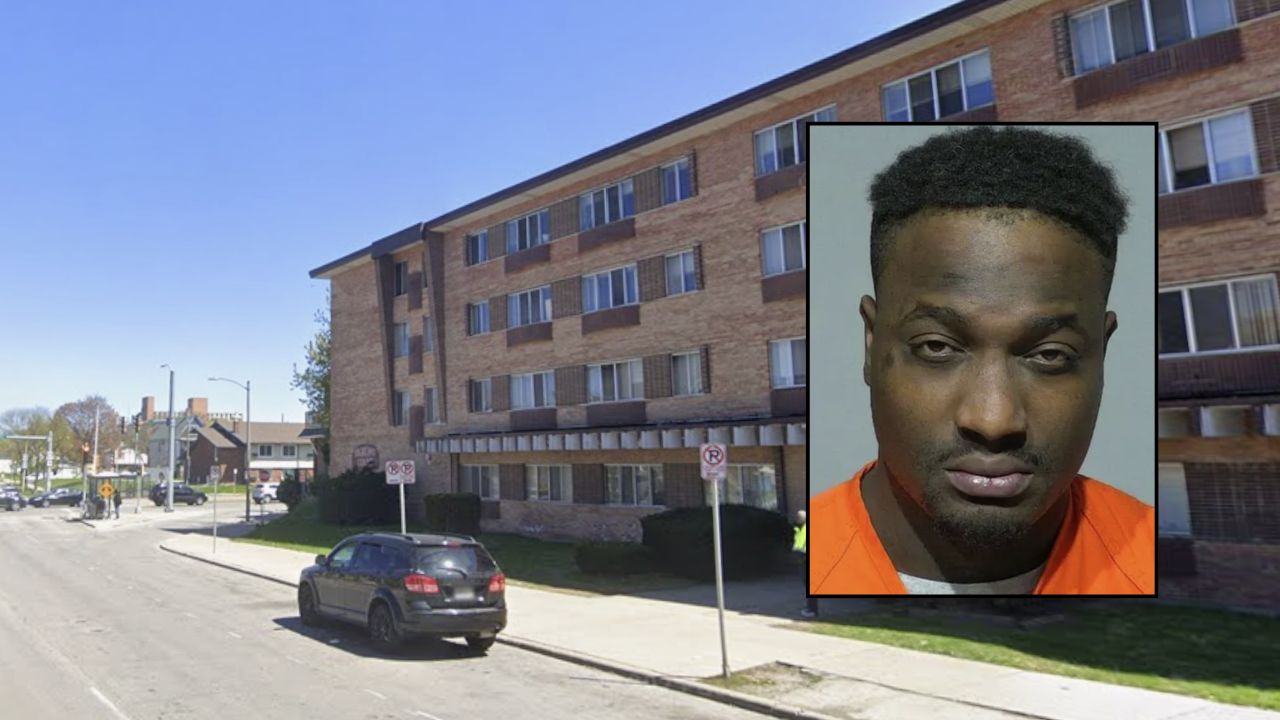
The harrowing incident unfolded on February 26, 2025, at an apartment complex in Milwaukee, Wisconsin. Charles Williams, a friend to Jefferson, had dedicated his day to helping Jefferson settle into his new residence. What began as an act of camaraderie and assistance tragically escalated into a deadly confrontation, leaving Williams dead and Jefferson facing the most severe penalties under state law.
The Fatal Encounter: A Day of Moving Turns Deadly
The day of the shooting, February 26, 2025, began like many others for friends helping each other transition to a new home. Terry Jefferson was moving into an apartment at the Highland Court complex in Milwaukee, and Charles Williams was generously lending his time and effort. The two men were utilizing a shopping cart to transport belongings from Jefferson’s vehicle to his new unit, navigating the building’s elevator system. The atmosphere, presumably mundane and cooperative for much of the day, took a sudden and violent turn just before 5 p.m.
At approximately 4:57 p.m., police officers from the Milwaukee Police Department were dispatched to the apartment building in response to urgent reports of gunfire. Upon arrival, the scene was one of chaos and tragedy. Officers found Charles Williams gravely wounded, lying on the ground in a pool of blood, clearly in immense pain. A few feet away stood Terry Jefferson, holding a firearm. Law enforcement personnel acted swiftly, ordering Jefferson to drop the weapon. According to police reports, Jefferson complied with the commands without further incident and was promptly taken into custody.
Williams, suffering from multiple gunshot wounds, was rushed to a nearby hospital, where medical professionals made valiant but ultimately futile attempts to save his life. He was pronounced dead shortly after arrival, his life cut short by the very person he was helping.
Witness Accounts and Initial Investigations
The initial stages of the investigation relied heavily on immediate observations and the testimony of an apartment manager, who became a crucial witness. The manager recounted hearing a single gunshot ring out from the direction of the apartment Jefferson was in. Upon investigating, he observed Williams on the ground and Jefferson standing nearby. In a chilling exchange, Jefferson reportedly told the apartment manager that Williams "shot himself" and "tried to grab my gun."
The apartment manager, recognizing the gravity of the situation and the clear distress of Williams, retreated to his own apartment to contact emergency services. It was during this critical moment, while on the phone with 911 dispatchers, that he heard a terrifying volley of additional gunfire – six or seven shots, fired "in rapid succession." This sequence of events, an initial shot followed by a significant pause and then a flurry of subsequent shots, would later become a critical piece of evidence challenging Jefferson’s self-defense narrative. The rapid succession of shots contradicted the notion of a single, instantaneous act of self-preservation, instead suggesting a more prolonged and deliberate act.
Milwaukee Police Department detectives immediately secured the scene, initiating a thorough investigation. Forensic teams were deployed to collect physical evidence, including shell casings, bullet trajectories, and any other pertinent items that could shed light on the exact sequence of events and the positions of those involved. Witness statements from other residents, though not detailed in the initial reports, would also have been systematically collected to build a comprehensive picture of the incident. The professionalism and swift response of the Milwaukee Police Department were instrumental in containing the scene and apprehending the suspect, preventing further potential harm.
Terry Jefferson’s Account: A Claim of Self-Defense
During his interview with police, Terry Jefferson provided his version of the events leading to Charles Williams’ death. He confirmed that Williams was indeed helping him move and that they were using a shopping cart to transport items via the building’s elevator. Jefferson stated that he was carrying his gun in the pocket of his hooded sweatshirt on the day of the move.
Jefferson’s narrative centered on a claim of self-defense. He alleged that while inside the elevator, Williams was "very close to him" and began "grabbing for stuff." Jefferson claimed he believed Williams was reaching for his firearm, prompting him to fire a single shot at Williams, striking him in the face. This initial shot, according to Jefferson, was an act of perceived necessary self-preservation.
What transpired next, however, significantly complicated his self-defense claim. Jefferson admitted that after seeing Williams bleeding, his immediate concern was not for his friend’s welfare, but for his belongings. He stated he moved the shopping cart to prevent Williams’ blood from staining his possessions. As Williams struggled with the severe injury, Jefferson then encountered an issue with his firearm – it jammed. While attempting to clear the jam, he reportedly told Williams to "chill out." Yet, Jefferson maintained that Williams continued to reach for his gun, leading him to fire several more shots, emptying the weapon.
This detailed account, while presented as self-defense, contained several elements that raised significant questions for investigators and, ultimately, the jury. The act of prioritizing belongings over a mortally wounded friend, the pause between the first and subsequent shots, and the sustained firing until the weapon was empty, all pointed away from a purely reactive, fear-driven response.
The Legal Journey: From Arrest to Conviction
Following his arrest, Terry Jefferson was formally charged with first-degree intentional homicide. In Wisconsin, this charge is among the most serious, requiring the prosecution to prove beyond a reasonable doubt that the defendant caused the death of another human being with the intent to kill. The maximum penalty for this offense is a life sentence, underscoring the severe nature of the accusation.
The legal process for Jefferson began with initial court appearances, including a bail hearing and a preliminary examination. During the preliminary examination, a judge determined there was enough probable cause to proceed with the case to trial. Jefferson then entered a plea of not guilty, setting the stage for a contentious legal battle where his defense team would argue for self-defense, while the prosecution sought to establish intent.
The trial itself was a complex and emotional affair, unfolding over several days or weeks in the Milwaukee County Courthouse. Prosecutors meticulously presented their case, building a narrative that contradicted Jefferson’s self-defense claim. They likely highlighted:
- The apartment manager’s testimony: The distinct pause between the first shot and the subsequent volley of shots, followed by Jefferson’s initial statement that Williams "shot himself" and "tried to grab my gun" – a statement that would be scrutinized for consistency and truthfulness.
- Forensic evidence: Ballistics reports would have detailed the number of shots fired, entry and exit wounds on Williams, and the trajectory of bullets within the apartment, potentially disproving Jefferson’s account of Williams’ movements or proximity.
- Jefferson’s own statements: His admission of moving the cart to protect his belongings, and the act of clearing a jammed gun while Williams was wounded, suggested a level of control and deliberation inconsistent with a panicked self-defense scenario.
- Lack of credible threat: The prosecution would have argued that Williams, after being shot in the face, would have been severely incapacitated and unlikely to pose a continued, imminent threat that warranted multiple additional shots.
The defense, conversely, would have vigorously presented Jefferson’s self-defense argument. They would have attempted to paint a picture of a man legitimately fearing for his life, reacting instinctually to what he perceived as a threat. They might have emphasized the close quarters of the elevator, the suddenness of Williams’ alleged actions, and the stress of the situation. However, the sheer number of shots fired and the circumstances surrounding them proved difficult to reconcile with a purely defensive action.
After hearing all the evidence and arguments, the jury deliberated. Their verdict of guilty on first-degree intentional homicide signaled a collective rejection of Jefferson’s self-defense claim. The jury found that Jefferson acted with intent to kill, rather than in reasonable self-preservation.
The Sentencing: Life Behind Bars
The sentencing hearing on October 8 was the culmination of the judicial process. For first-degree intentional homicide in Wisconsin, a life sentence is mandatory. The court’s primary decision at this stage typically revolves around determining the eligibility for parole. In Terry Jefferson’s case, the judge stipulated that he would be eligible for parole after serving 35 years. This means that Jefferson will spend a minimum of three and a half decades incarcerated before he can even be considered for release. Should he ever be granted parole, he would remain under extended supervision for the remainder of his life, a testament to the severity and lasting impact of his crime.
Sentencing hearings often include victim impact statements, where the family and loved ones of the deceased have the opportunity to express the profound loss and devastation caused by the crime. While not explicitly detailed in the original report, it is highly probable that Charles Williams’ family addressed the court, sharing their grief, anger, and the enduring void left by his absence. Such statements are critical in humanizing the victim and ensuring that the court understands the full scope of the tragedy. For the Williams family, this sentencing, while bringing a measure of justice, can never truly fill the void left by Charles’s untimely and violent death.
Broader Implications and Context
The case of Terry Jefferson and Charles Williams casts a harsh light on several critical societal issues, particularly gun violence and the tragic breakdown of personal relationships. Milwaukee, like many urban centers, grapples with persistent challenges related to gun violence. According to various reports from the Milwaukee Police Department and local news outlets, the city has experienced fluctuating but often high rates of homicides and non-fatal shootings in recent years. While specific statistics for 2025 are not yet available, historical data from organizations like the Wisconsin Department of Justice and the FBI consistently show firearms as the primary weapon in homicides across the state.
This incident also highlights the complexities surrounding self-defense laws. While Wisconsin, like most states, upholds the right to self-defense, there are strict legal parameters defining what constitutes a reasonable and necessary use of force. The jury’s rejection of Jefferson’s claim underscores the legal system’s scrutiny of such defenses, particularly when multiple shots are fired and other actions (like moving belongings) seem to contradict an immediate, life-or-death struggle. The burden of proof for self-defense often requires demonstrating that the perceived threat was imminent, that the force used was proportional, and that there were no reasonable alternatives to using deadly force. In this case, the prosecution successfully argued that Jefferson’s actions exceeded these parameters.
The location of the crime, a residential apartment building, also raises concerns about community safety. Incidents of gun violence in multi-unit dwellings can deeply impact residents’ sense of security and well-being. The sounds of gunfire, the presence of police, and the knowledge of a violent death within their shared living space can leave lasting psychological scars on a community.
For Charles Williams’ family and friends, the sentencing brings a sense of finality to the legal proceedings, but the emotional scars will undoubtedly remain. The loss of a loved one under such violent circumstances is an unimaginable tragedy, compounded by the fact that the perpetrator was a friend. This case serves as a stark reminder of how quickly seemingly ordinary interactions can turn fatal when firearms are involved and conflicts escalate beyond control.
Conclusion
Terry Jefferson’s life sentence for the first-degree intentional homicide of Charles Williams marks a profound and tragic conclusion to a case rooted in an act of friendship that ended in violence. The Milwaukee County court system, through a diligent investigation and a comprehensive trial, held Jefferson accountable for his actions, rejecting his defense and affirming the gravity of taking a human life. As Jefferson begins a minimum of 35 years behind bars, the legal system has delivered its judgment, but the memory of Charles Williams and the devastating impact of his loss will continue to resonate with his loved ones and the wider Milwaukee community, serving as a somber testament to the irreversible consequences of gun violence.


 Yuyun Lusiyani
 Joko Widodo
 Nana Wu
 Eva Lovia
 Jia Lissa