
 Jia Lissa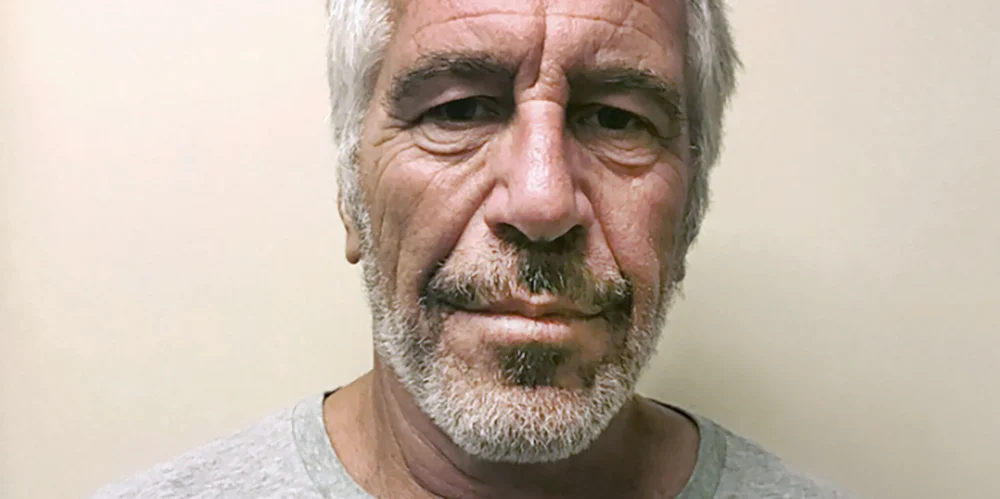
Newly released documents from the United States Department of Justice have brought renewed scrutiny to the final hours of Jeffrey Epstein, the disgraced financier and convicted sex offender who died in federal custody in August 2019. The cache of files, made public late Thursday, provides a granular look at the conduct of the two correctional officers tasked with monitoring Epstein at the Metropolitan Correctional Center (MCC) in Manhattan. Among the most startling revelations are records indicating that one guard performed specific internet searches for Epstein’s status just minutes before his body was discovered, as well as evidence of unexplained cash deposits made into the guard’s bank account in the period surrounding the death.
The documents focus heavily on the actions of Tova Noel and Michael Thomas, the two primary guards assigned to the Special Housing Unit (SHU) where Epstein was being held while awaiting trial on federal sex trafficking charges. While the New York City Medical Examiner’s Office officially ruled Epstein’s death a suicide by hanging, the procedural failures and personal conduct of the staff on duty have remained a focal point for investigators and the public alike.
Digital Footprints and Contradictory Statements
According to FBI records included in the DOJ release, Tova Noel’s internet search history from the morning of August 10, 2019, suggests an intense interest in Epstein’s status shortly before the official discovery of his death. The logs indicate that Noel searched for the phrase “latest on Epstein in jail” at 5:42 a.m. and again at 5:52 a.m. These searches occurred less than an hour before her colleague, Michael Thomas, reportedly found Epstein unresponsive in his cell at approximately 6:30 a.m.
The timing of these searches is significant not only because of their proximity to the discovery of the body but because they appear to contradict Noel’s later testimony. In a sworn statement provided to the Department of Justice in 2021, Noel explicitly denied conducting Google searches regarding Epstein during that shift. The emergence of digital evidence to the contrary raises questions regarding the veracity of the accounts provided by the staff present during the incident.
However, some analysts suggest the searches may not be as anomalous as they initially appear when viewed in the context of the guard’s entire shift. Journalist Michael Tracey, who reviewed the documents, noted that Noel’s search history included queries for other high-profile inmates at the facility. Shortly before searching for Epstein, Noel looked up “KENYATTA TAISTE,” another federal inmate, and shortly after the Epstein queries, she searched for “omar amanat,” a tech entrepreneur also held at the MCC. Tracey argued that these searches, followed by a query for “law enforcement discounts,” might suggest a guard simply browsing information about the facility’s notable residents rather than a targeted or conspiratorial action.
Financial Discrepancies and Unexplained Deposits
Perhaps more concerning to investigators than the internet searches were the financial records associated with Tova Noel. The DOJ files reveal a pattern of cash deposits that have yet to be fully explained. According to the documents, Noel made a $5,000 cash deposit approximately ten days before Epstein’s death. This was not an isolated event; bank records from December 2018 showed seven cash deposits totaling $11,880.
Further investigation by journalists, including Julie K. Brown of the Miami Herald—whose reporting was instrumental in reopening the Epstein case—pointed to additional financial activity. Brown noted that bank records showed numerous monthly “Quick Zelle” cash payments into Noel’s account during the period Epstein was in custody. While these deposits do not directly prove a link to Epstein or his associates, the volume and frequency of cash infusions for a federal correctional officer, whose salary is public record, have remained a point of interest for federal authorities.
The financial scrutiny of the guards was part of a broader effort to determine if any outside influence played a role in the lapses in security that night. While no charges of bribery were ever brought against Noel or Thomas, the unexplained nature of these funds has fueled persistent questions regarding the environment inside the MCC.

The Night of the Incident: A Chronology of Negligence
The newly released files provide a detailed timeline of the night of August 9 and the early morning of August 10, 2019. The documents paint a picture of a facility suffering from extreme professional negligence. Under MCC protocols, guards were required to perform checks on inmates in the SHU every 30 minutes.
The DOJ records confirm that Noel and Thomas failed to conduct these checks for several hours. Instead of monitoring the tier, Noel spent a portion of her shift shopping for furniture online and reportedly slept at her desk. Her partner, Michael Thomas, was found to have been perusing motorcycle websites. To cover their tracks, both guards were accused of falsifying institutional logs to indicate that they had performed the required checks when they had not.
A particularly evocative detail in the FBI briefing involves surveillance footage from the night. The report describes a “mysterious orange shape” spotted on blurry video near Epstein’s cell at approximately 10:40 p.m. Investigators believe this figure was Tova Noel. The briefing states that a correctional officer, believed to be Noel, was seen carrying linens or inmate clothing toward the L-Tier. This detail is significant because Epstein was ultimately found with strips of orange cloth—matching the color of inmate attire or linens—used as a ligature. This was the last time any staff member approached the entrance to the tier until the body was discovered the following morning.
Legal Aftermath and Institutional Failure
In the wake of Epstein’s death, Noel and Thomas were indicted on federal charges of conspiring to defraud the United States and falsifying records. However, the legal proceedings did not result in prison time. In 2021, the duo entered into a deferred prosecution agreement with the DOJ. Under the terms of the deal, the guards admitted to willfully and knowingly falsifying the records. In exchange for their cooperation and completion of community service, the criminal charges against them were eventually dropped in late 2021.
The Epstein case served as a catalyst for a broader reckoning within the Bureau of Prisons (BOP). The MCC, which had long been criticized for its "hellish" conditions, including rodent infestations, structural decay, and chronic understaffing, was eventually ordered to be closed in 2021. The facility’s failure to prevent the death of its most high-profile inmate was cited as a primary example of the systemic dysfunction within the federal prison system.
The DOJ’s decision to release these files now appears to be part of a continuing effort toward transparency, though the documents also contain highly sensitive and unverified allegations involving other public figures. Included in the same document release were disturbing and uncorroborated claims from FBI interviews suggesting that former President Donald Trump may have been involved in an assault facilitated by Epstein. The Trump campaign and the former president have consistently and vehemently denied any wrongdoing or personal involvement in Epstein’s criminal activities, dismissing such allegations as politically motivated fabrications.
Broader Implications and Lingering Questions
The release of these documents ensures that the Jeffrey Epstein saga remains a matter of public debate and investigation. While the "suicide" ruling remains the official cause of death, the evidence of guard negligence, contradictory statements, and unexplained financial activity continues to provide fertile ground for those who believe the full story has not yet been told.
From a journalistic and legal standpoint, the files underscore the fragility of the federal carceral system. The fact that an inmate of Epstein’s notoriety could be left unmonitored for hours while guards engaged in personal internet browsing and slept highlights a catastrophic failure of oversight. Furthermore, the discrepancy between Noel’s digital history and her sworn statements points to a persistent issue with witness reliability in the immediate aftermath of the event.
As the Department of Justice continues to process and release information related to the Epstein investigation, the focus remains on the intersection of institutional failure and individual misconduct. While the criminal cases against the guards are closed, the "mysterious orange shape" on the surveillance video and the "Quick Zelle" payments remain as haunting footnotes to one of the most controversial deaths in the history of the American justice system. The documents released this week do not provide a "smoking gun" for a murder conspiracy, but they do solidify the narrative of a facility where rules were treated as suggestions, and where the digital and financial trails of those in charge told a very different story than their official reports.


 Yuyun Lusiyani
 Joko Widodo
 Eva Lovia
 Pevita Pearce
 admin
admin