Yuyun Lusiyani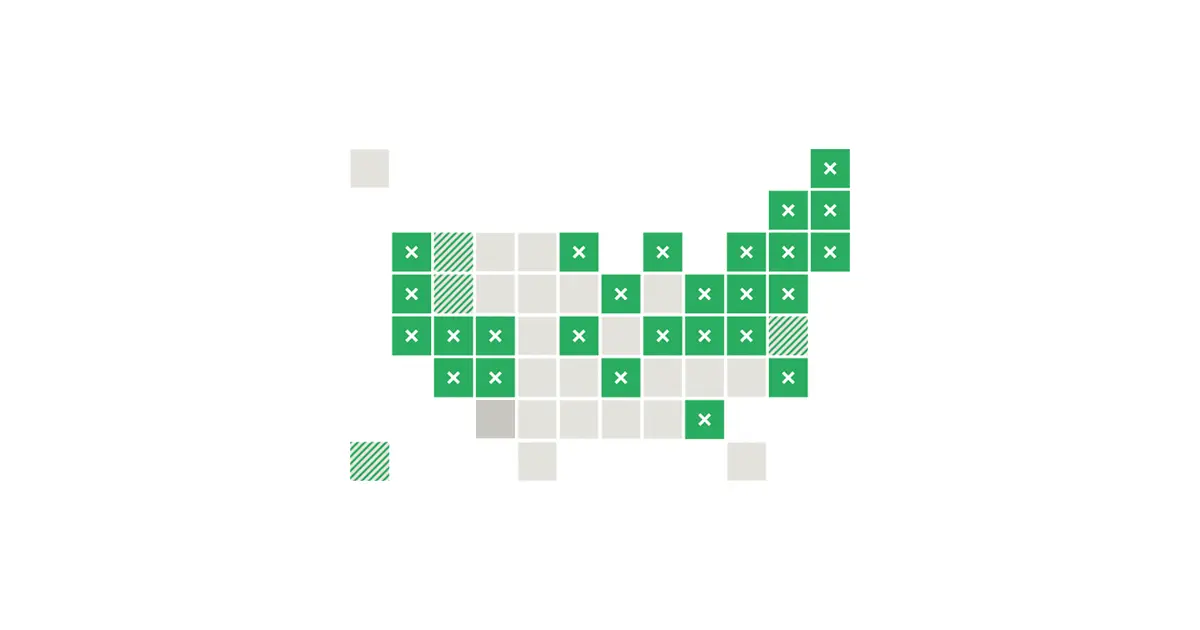
Since September 2025, the Department of Justice’s (DOJ) Civil Rights Division has embarked on an unprecedented legal campaign, filing lawsuits against 30 states and the District of Columbia. The central demand in these cases: the immediate production of unredacted voter rolls, comprehensive databases containing sensitive personal information on millions of American citizens. This aggressive federal initiative, launched under President Donald Trump’s administration, has been framed by the White House as a critical component of its broader push to assert federal control over election administration and to identify and prosecute alleged noncitizen voters. However, this sweeping effort has encountered formidable resistance in federal courts nationwide, leading to a near-total judicial rebuke of the government’s arguments and tactics.
The Campaign for Voter Rolls: A Timeline of Federal Action
The legal offensive began in September 2025, signaling a significant escalation in the Trump administration’s focus on election integrity, a recurring theme following the contentious 2020 election cycle. These lawsuits sought to compel states, which have historically maintained autonomous control over their voter registration databases, to surrender information that typically includes names, addresses, birthdates, party affiliations, voting histories, and sometimes partial Social Security numbers or driver’s license numbers. The term "unredacted" is crucial here, as many states routinely redact certain sensitive data when voter rolls are released for public inspection, balancing transparency with privacy concerns. The administration’s demand for full, unredacted access immediately raised alarms among state election officials and civil liberties advocates alike, who cited concerns over voter privacy, data security, and federal overreach into state sovereignty.
To date, the federal judiciary has rendered final rulings in 26 of these pivotal lawsuits. The outcomes have been strikingly consistent: all 26 cases have resulted in dismissals, with judges unanimously rejecting the Justice Department’s legal theories. Four cases are still pending a decision, while one state opted to settle, the terms of which have not been publicly detailed. The overwhelming judicial consensus against the DOJ’s position underscores the significant legal hurdles faced by the administration in its attempt to centralize election data.
The judges presiding over these 26 cases were assigned randomly, reflecting a cross-section of federal judicial appointments. Of these, eight were appointees of President Donald Trump himself, four were appointed by former Republican President George W. Bush, and the remaining 14 were appointed by Democratic presidents, specifically Bill Clinton, Barack Obama, and Joe Biden. The bipartisan nature of the judicial opposition to the DOJ’s arguments highlights the legal rather than purely political nature of the courts’ rejections.
Tactic 1: The "Election Integrity" Gambit and Judicial Rejection
The initial phase of the DOJ’s legal strategy involved the first seven lawsuits, which shared an identical opening argument. These complaints explicitly cited President Trump’s March 2025 executive order on election integrity as the foundational authority. The Justice Department contended that this executive order, coupled with existing federal election laws, necessitated federal access to state voter rolls to ensure compliance with federal statutes. The implicit goal, as interpreted by many, was to investigate and potentially prosecute alleged instances of noncitizen voting and other forms of voter fraud, an issue repeatedly emphasized by the Trump administration.
However, federal judges swiftly dismantled this legal approach. Maine federal Judge Lance E. Walker, a Trump appointee, issued a scathing critique of the government’s presentation. He noted, "The United States’ championing of its claims under the [election laws], in both its briefing and its presentation at the hearing on this matter, can only be described as halfhearted. And for good reason, since neither statute gives the United States the power to compel Maine to produce its current [unredacted voter list]."
Judges consistently ruled that the government had failed to establish a legal or factual basis for its sweeping demand. While federal election laws, such as the National Voter Registration Act of 1993 (NVRA) and the Help America Vote Act of 2002 (HAVA), mandate that states maintain accurate and up-to-date computerized voter lists containing specific confidential information, the courts found that these statutes grant the federal government only limited powers of enforcement. Crucially, they do not authorize the kind of broad, unredacted data collection sought by the DOJ. The NVRA, for instance, focuses on facilitating voter registration and ensuring list maintenance, while HAVA aims to improve election administration and security, but neither provides a clear mandate for the federal government to seize comprehensive state voter rolls without specific cause.
Several judges went further, accusing the administration of using election integrity laws as a pretext for a more insidious agenda: voter suppression. California federal Judge David O. Carter, a Bill Clinton appointee, articulated this concern powerfully: "The foundation upon which American democracy has been built is the right to vote. … Now it seems the Executive Branch of the United States government wants to abridge the right of many Americans to cast their ballots. … The Court does not take lightly DOJ’s obfuscation of its true motives." His statement underscored the judiciary’s deep skepticism regarding the government’s stated intentions.
Pennsylvania federal Judge Cathy Bissoon, an Obama appointee, echoed these suspicions, stating, "Public statements from government officials reveal its intentions: to create a nationwide voter-database, for potential weaponization in future elections; as a ‘fishing expedition,’ hoped to advance unsubstantiated claims of non-citizen voting; and as a tool for immigration enforcement." These judicial observations pointed to a perceived strategy to create a centralized database that could be used to challenge legitimate voters or to fuel narratives of widespread fraud.
In an extraordinary rebuke, later echoed by other courts across the nation, the judge overseeing the Oregon case, Mustafa T. Kasubhai, a Joe Biden appointee, articulated a profound loss of trust in the Justice Department itself. He wrote that the federal government’s actions had undermined the judiciary’s longstanding presumption of regularity – the expectation that the DOJ acts in good faith and with legitimate purposes. He characterized the government’s demands as "chilling," adding, "The presumption of regularity that has been previously extended to Plaintiff that it could be taken at its word — with little doubt about its intentions and stated purposes — no longer holds." This statement was a significant blow, indicating that the court perceived a deliberate deception or misrepresentation of motives by the nation’s chief law enforcement agency. All seven lawsuits employing this initial tactic were summarily dismissed.
Tactic 2: Repurposing the Civil Rights Act and its Backlash
Undeterred by these initial setbacks, the Justice Department pivoted its legal strategy for the subsequent 19 lawsuits. This second wave of complaints conspicuously omitted any reference to President Trump’s executive order and avoided reliance on federal voting laws. Instead, the government’s lawyers invoked a provision of the Civil Rights Act of 1960, specifically Title III. This section of the landmark legislation requires the preservation of state and local election records.
The government lawyers contended that Title III granted the Attorney General "sweeping power" to obtain these records, again asserting the objective of curbing noncitizen voting. However, this interpretation dramatically diverged from the historical and intended purpose of Title III. Enacted during the height of the Civil Rights Movement, Title III was a critical tool designed to protect the fundamental right to vote, particularly for African Americans in the South who faced systemic disenfranchisement. It empowered the federal government to access records that would prove discrimination, investigate practices that unlawfully excluded Black voters from the rolls based on race, and ensure that all eligible citizens could exercise their franchise.
Judges across the country vehemently rejected the administration’s novel application of Title III. They ruled that the provision applies specifically to voter registration documents – the original records of an individual’s attempt to register – not to the continuously updated and dynamically generated voter rolls that states compile. Furthermore, the courts noted that Title III requires the government to provide an explanation for its need for the records, a justification the DOJ consistently failed to furnish adequately.
West Virginia federal Judge Thomas E. Johnston, a George W. Bush appointee, concisely stated, "Clearly, this demand is devoid of any factual basis." His ruling, like many others, highlighted the government’s inability to articulate a legitimate, specific need for the records under the statute’s original intent.
Several judges expressed astonishment at what they perceived as the administration’s audacity in attempting to repurpose an anti-discrimination law – designed to expand and protect voting rights – into a mechanism potentially used to restrict them. D.C. federal Judge Randolph D. Moss, an Obama appointee, provided extensive historical context to underscore this point: "Title III was the Department of Justice’s answer to two years of resistance and obstruction by state election officials who destroyed, failed to retain, or simply refused to disclose the voting records … that would prove that black voters were victims of disparate treatment and had been unlawfully excluded from the rolls based on nothing more than their race." He implied that the administration’s current use of Title III was a perverse inversion of its original, noble purpose.
Judges also identified a fundamental logical conflict in the DOJ’s arguments. They noted that the administration’s claim to be enforcing federal election laws (like NVRA and HAVA) which require voter lists to be continuously updated and maintained, directly contradicted its interpretation of Title III, which prohibits any alteration of voter records once created for preservation purposes. Maryland Judge Stephanie A. Gallagher, a Trump appointee, captured this absurdity: "The United States’s proposed interpretation of the CRA would therefore criminalize the same conduct that the [voting laws] require. This Court will not read [Title III] to produce such an absurd result." Judge Bissoon, the Pennsylvania judge, concluded that the administration’s interpretation of Title III "does violence" to the law’s true meaning and intent. To date, all 19 DOJ complaints relying on this Civil Rights Act claim have also been dismissed.
The Legal Landscape: Judicial Composition and Unanimous Rejection
The comprehensive nature of the judicial rejection is a critical aspect of this legal saga. In written opinions, every single one of the 26 federal judges who have ruled on these cases has unequivocally rejected the Justice Department’s arguments and dismissed its lawsuits. This unanimous outcome, spanning judges appointed by presidents from both major political parties, signifies a broad consensus within the federal judiciary that the Trump administration’s legal strategies lacked merit and, in some instances, questioned its underlying motives. The remaining four cases continue to be litigated, and their outcomes are keenly awaited, though the pattern established thus far suggests a similar fate.
Appeals and the Road Ahead: A Battle for Precedent
Facing a string of decisive losses at the district court level, the Trump administration has indicated its determination to continue the legal battle. It has appealed most of its adverse rulings to federal appeals courts, signaling its intent to pursue the issue up to the highest judicial authority, the Supreme Court, if necessary. This underscores the administration’s commitment to its objective of acquiring state voter rolls, despite the significant legal and public opposition.
The first appeal to reach a decision further cemented the district courts’ position. An opinion from the Sixth Circuit Court of Appeals upheld the district judge’s decision to dismiss the Michigan case. The appellate court’s reasoning powerfully articulated the perceived misuse of Title III: "Back then, the government used this power to ensure that everyone who had the right to vote could freely exercise that right. But today, the government invokes Title III for an inverse purpose — to ensure that some people have not voted." This appellate ruling sets a significant precedent, reinforcing the argument that the DOJ’s interpretation fundamentally perverts the original intent of the Civil Rights Act.
Further compounding the administration’s challenges, on October 9, a U.S. district judge issued a separate ruling declaring the Justice Department’s national effort to acquire and share state voter rolls an "illegal abuse of its authority." This broad condemnation reiterates the consistent judicial finding of overreach. A Justice Department spokesperson stated that the department is "reviewing the ruling," indicating that the legal fight is far from over.
Statements and Reactions: DOJ Defends its Stance
In response to inquiries regarding the widespread judicial rejections, a Justice Department spokesperson issued a statement defending the department’s actions: "Our attorneys are skilled, principled advocates who argue every case honestly and in good faith. Disagreement with the government’s position is not evidence of bad faith. We look forward to making our case on appeal." This official response maintains the DOJ’s position that its actions are legally sound and driven by legitimate concerns, despite the unanimous judicial skepticism.
However, the consistent judicial rebukes have drawn strong reactions from various stakeholders. State election officials, many of whom have expressed concerns about the security and privacy implications of handing over unredacted voter data, have largely welcomed the court rulings as affirmations of state sovereignty in election administration. Privacy advocates have voiced deep relief, emphasizing the potential for misuse of such sensitive data if consolidated into a federal database. Civil rights organizations have also been vocal, arguing that the administration’s efforts, if successful, could lead to discriminatory practices and deter eligible citizens from voting, particularly minority groups and naturalized citizens who might be erroneously targeted as "noncitizen voters." Legal scholars have largely supported the judges’ interpretations, underscoring the importance of adhering to the legislative intent of statutes like the Civil Rights Act.
Broader Implications: Federalism, Privacy, and the Future of Elections
This protracted legal battle carries profound implications for several critical aspects of American governance and democracy.
Firstly, it represents a significant clash over federalism and states’ rights. The administration’s push for federal control over state voter rolls challenges the long-standing tradition of states largely managing their own elections. The courts, in consistently siding with the states, have reaffirmed the constitutional balance of power, emphasizing that absent clear legislative authority, the federal government cannot unilaterally commandeer state resources or override state election administration processes. This judicial stance acts as a bulwark against potential federal overreach into areas traditionally reserved for state governance.
Secondly, voter privacy and data security are at the forefront of the debate. Unredacted voter rolls contain highly personal information. Consolidating such data into a single federal database raises legitimate concerns about cybersecurity vulnerabilities, the potential for political weaponization, and the erosion of individual privacy. The courts’ rulings implicitly acknowledge these concerns by questioning the government’s need for such extensive data without robust legal justification.
Thirdly, the litigation impacts the ongoing public discourse surrounding election integrity and the unsubstantiated claims of widespread noncitizen voting. The Trump administration has consistently highlighted alleged noncitizen voting as a significant threat to election security, though comprehensive studies and expert consensus have repeatedly shown such instances to be exceedingly rare and not impactful on election outcomes. The judges’ criticisms of the DOJ’s "fishing expedition" and "obfuscation of its true motives" suggest that the courts view these lawsuits less as genuine efforts to combat widespread fraud and more as part of a broader political agenda.
Finally, the outcomes of these cases, particularly if upheld by appellate courts and potentially the Supreme Court, will set crucial precedent for the future of election administration. They will likely solidify the boundaries of federal power in election matters and reinforce the principle that significant changes to the electoral landscape must be pursued through clear legislative action by Congress, rather than through executive orders or novel interpretations of existing statutes by the executive branch. The unanimous judicial rejection serves as a powerful reminder of the judiciary’s role as a check on executive power and a guardian of constitutional principles, especially when fundamental rights like the right to vote are perceived to be at stake. The ongoing appeals process means that the final chapter of this contentious legal saga is yet to be written, but the initial rulings have sent an unmistakable message about the limits of federal authority in state election affairs.


 Joko Widodo
 Eva Lovia
 admin
admin