Yuyun Lusiyani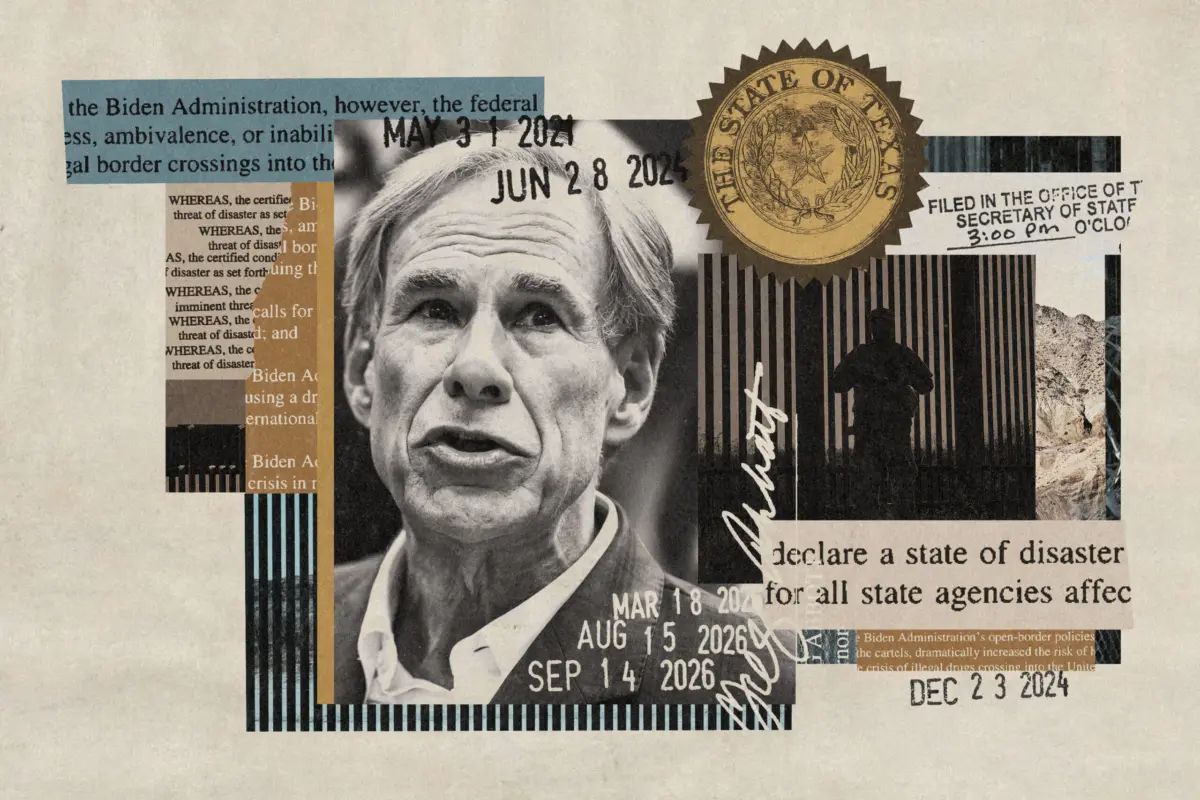
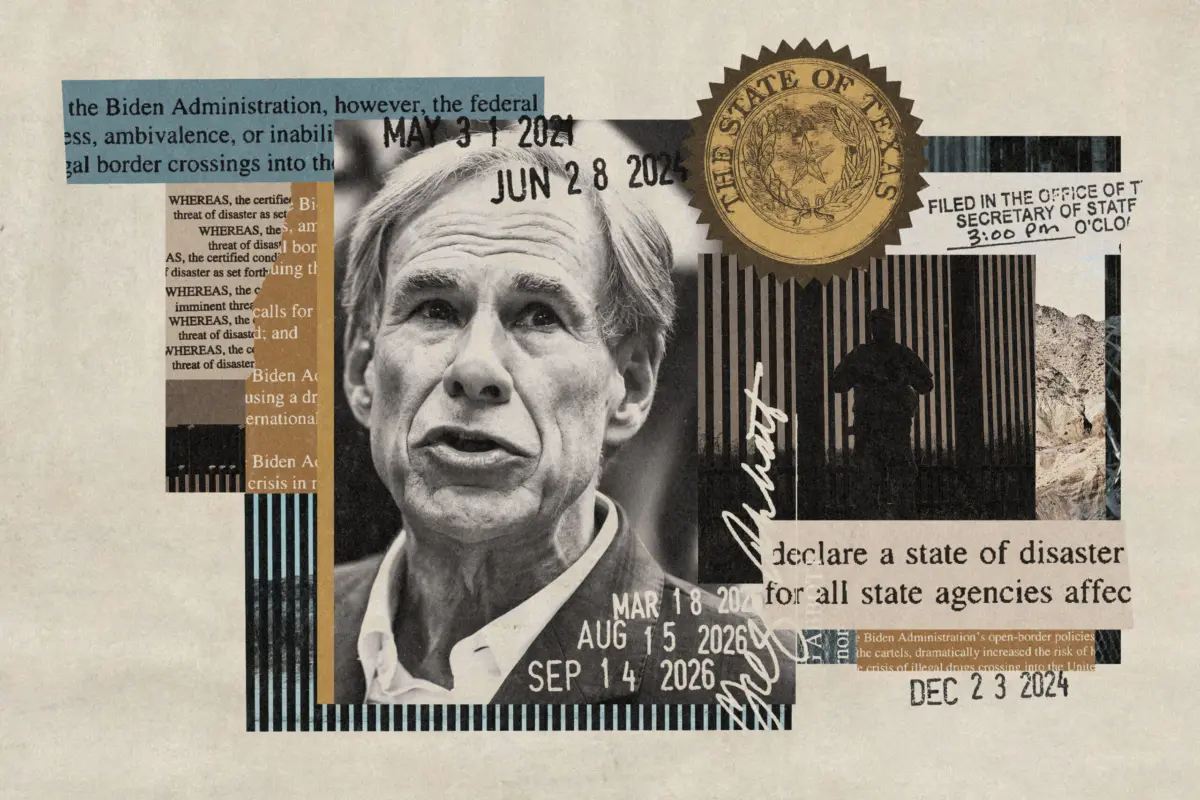
Last month, Texas Gov. Greg Abbott reiterated a claim he has consistently made for the past five years, asserting that the number of people crossing the Texas-Mexico border illegally "posed an ongoing and imminent threat" across the state. This declaration served as the basis for renewing a border security disaster proclamation, an action that has significantly expanded his executive powers without requiring approval from the state Legislature. This ongoing state of emergency, now in its fifth year, has ignited a fierce debate over executive authority, fiscal accountability, and the actual conditions on the Texas-Mexico border.
The "Weak Governor" State and Executive Power Expansion
Texas operates under a constitution designed to create a "weak governor," a deliberate post-Reconstruction effort to prevent the concentration of power seen under previous administrations. The state constitution places significant limitations on gubernatorial authority, often requiring legislative approval for major policy initiatives and funding allocations. However, disaster declarations offer a powerful mechanism to bypass these checks and balances. Under a declared emergency, the governor can unilaterally shift funds between agencies, suspend certain state regulations, and award no-bid contracts—powers typically reserved for the legislative body or subject to rigorous procurement processes. This inherent flexibility, intended for genuine, acute crises, has become a cornerstone of Governor Abbott’s border strategy.
Since Abbott first declared an emergency at the border during the Biden administration in May 2021, he has renewed or amended the proclamation at least 69 times. Remarkably, 21 of these renewals have occurred during the tenure of the Trump administration, which began in January 2025. This frequency and duration are unprecedented in modern Texas history, drawing comparisons to his three-year renewal of the COVID-19 disaster declaration, even as he simultaneously downplayed the pandemic’s severity. Political science professor Cal Jillson of Southern Methodist University in Dallas described the situation as "unprecedented," noting, "I don’t think that there is a similar example, certainly not as to the length of the emergency, and certainly not after the emergency has seemed to pass."
A Chronology of Declarations and Contradictory Data
Governor Abbott’s initial border declaration in May 2021 came four months into President Joe Biden’s term, a period characterized by a significant surge in migrant encounters. At that time, U.S. Customs and Border Protection (CBP) was reporting more than 180,000 apprehensions along the southwest border in a single month. Abbott contended that the federal government’s "inability or unwillingness to enforce immigration laws" had created a "humanitarian crisis" in numerous Texas communities. His order explicitly stated that "The Biden Administration’s open-border policies have enabled escalating violence from the cartels, dramatically increased the risk of human trafficking, and created a severe crisis of illegal drugs crossing into the United States."
However, the current border landscape presents a stark contrast to the conditions that prompted the initial emergency. The Trump administration, which took office in January 2025, has reported an "unprecedented" drop in the flow of migrants and claims to have reached "historic lows," even asserting "16 straight months of zero releases." While the "zero releases" claim has been met with scrutiny regarding its methodology and scope, overall apprehensions along the southwest border have indeed dropped significantly, averaging approximately 8,000 a month this year. This substantial decrease in border crossings raises critical questions about the continued justification for an "ongoing and imminent threat" and the perpetuation of emergency powers.
Despite these dramatic shifts in reported border activity, Governor Abbott’s office maintains its position. Deputy Press Secretary Madeline Waschak stated that the governor has been clear about border security remaining an "ongoing priority." In a written statement, Waschak asserted, "The damage caused by four years of failed border policies under Democrat rule did not disappear overnight, and the progress we have made will not sustain itself without continued vigilance." She added, "Securing the border requires constant, deliberate action to combat illegal crossings, cartel smuggling, fentanyl trafficking, and other criminal activity that threatens public safety in Texas. Governor Abbott will ensure the tools remain in place to safeguard our state as we work alongside the Trump Administration to deter, arrest, detain, and deport illegal immigrants."
Operation Lone Star: An $14 Billion Initiative
The prolonged disaster declaration has provided the legal framework for Operation Lone Star (OLS), a multi-agency border security initiative launched by Governor Abbott in March 2021. OLS was conceived with the stated aim of stemming the flow of illegal immigration, drug smuggling, and human trafficking into Texas and the wider United States. Under the emergency powers granted by the declaration, Operation Lone Star has enabled the state to implement aggressive enforcement tactics. These include charging migrants with criminal trespassing for crossing the border through private property, deploying thousands of Texas National Guard members to the border, constructing physical barriers, and soliciting assistance from other states.
The financial commitment to Operation Lone Star has been staggering. During the Biden administration, Texas budgeted over $11 billion for border security efforts. Following the inauguration of the Trump administration, an additional $3 billion was allotted last year, bringing the total estimated investment to over $14 billion. Much of this funding is channeled through the Texas Department of Public Safety (DPS) and the Texas Military Department (TMD), which are the primary agencies responsible for executing major enforcement efforts on the ground. Beyond these agencies, the governor’s office itself has seen a substantial increase in its share of border spending, allotting nearly $230 million last year to distribute through grants, primarily to local prosecutors and government agencies assisting with OLS.
Scrutiny Over Non-Competitive Contracts and Accountability
One of the most contentious aspects of the prolonged emergency declaration is the ability of state agencies to award non-competitive contracts. Since January 2025, when the Trump administration began, DPS and the Texas Military Department have awarded more than $5 million in noncompetitive contracts, citing the ongoing emergency as justification. These contracts cover a range of items, from essential equipment to support services, including a Ford F-150 truck, rifles, pistols, and even apartment rentals.
For instance, state records reveal a contract exceeding $2 million awarded to Texas-based CTC Gunworks LLC for rifles and pistols intended for active-duty personnel. Officials with CTC Gunworks could not be reached for comment. The Texas Military Department referred inquiries about its procurement processes to the governor’s office, while a DPS spokesperson defended the practice, stating that even with expedited purchases, the department "still follows best practices and aims to select vendors offering the best value, determined by cost, quality, and ability to meet the specific disaster response requirements." The spokesperson added that specific contracts were tied to existing state contracts.
Beyond procurement, Operation Lone Star has faced significant criticism regarding its effectiveness and accountability. In 2022, a joint investigation by ProPublica, The Texas Tribune, and The Marshall Project uncovered that the state’s reported successes often included arrests unrelated to the border or immigration, and drug seizures made by troopers not directly assigned to the operation, artificially inflating its achievements. Furthermore, reports from The Texas Tribune and Army Times exposed dire working conditions, chronic pay delays, and a distressing wave of suicides among National Guard members deployed under OLS, raising serious humanitarian concerns.
Legislative Challenges and Future Implications
The Republican governor, currently seeking his fourth term next month, has arguably consolidated executive power in Texas to an unprecedented degree. This expansion has not gone unchallenged. State lawmakers from both parties have repeatedly attempted to curb the governor’s powers under the state’s disaster act. Last year, several measures were filed that would have mandated legislative approval for extending disaster declarations beyond a certain period. However, none of these bills ultimately passed, underscoring the political difficulty of reining in executive authority once established.
Democratic state Rep. Mary González of El Paso, who serves as vice chair of the Appropriations Committee, voiced her concerns during a recent Tribune-hosted event. She noted that while state legislators have begun to scale back border funding, a significant portion of that money "still lies in the governor’s office which has no checks and balances." González added, "because we are still under an emergency—which is not an emergency anymore—an emergency border security statement which he can just use that money, you have seen some questionable appropriations under the veil of border security."
Political science professors like Brandon Rottinghaus of the University of Houston characterize this situation as "the quiet power of the governor." He explains that such power is often not overtly boasted about because "the more that it becomes a political issue, the more that there might be some contestation of it." Rottinghaus also highlighted the broader implications of this precedent, cautioning that "Even someone who strongly supports the governor’s border policies might ask whether they want a future governor of the opposite party using the same interpretation of emergency authority for years," adding that "governors, once they get a power, are hesitant to give it back."
Governor Abbott, however, remains resolute in his conviction that Texas’s work in securing the border is far from over. At a press conference in early October, where he discussed the federal government’s $7.5 billion reimbursement for border security expenses incurred by the state, Abbott declared, "We must secure the border not just for the next two years of the Trump administration, but we gotta do it forever."
While Texas will undoubtedly continue to confront issues related to border crossings and drug trafficking, the ongoing debate centers on whether these persistent challenges inherently justify a continuous state of emergency. The current trajectory sets a significant precedent for executive power in a state historically wary of concentrated authority, raising fundamental questions about the balance of power, fiscal oversight, and democratic accountability in Texas governance.


 Joko Widodo
 Eva Lovia
 admin
admin