
 Jia Lissa
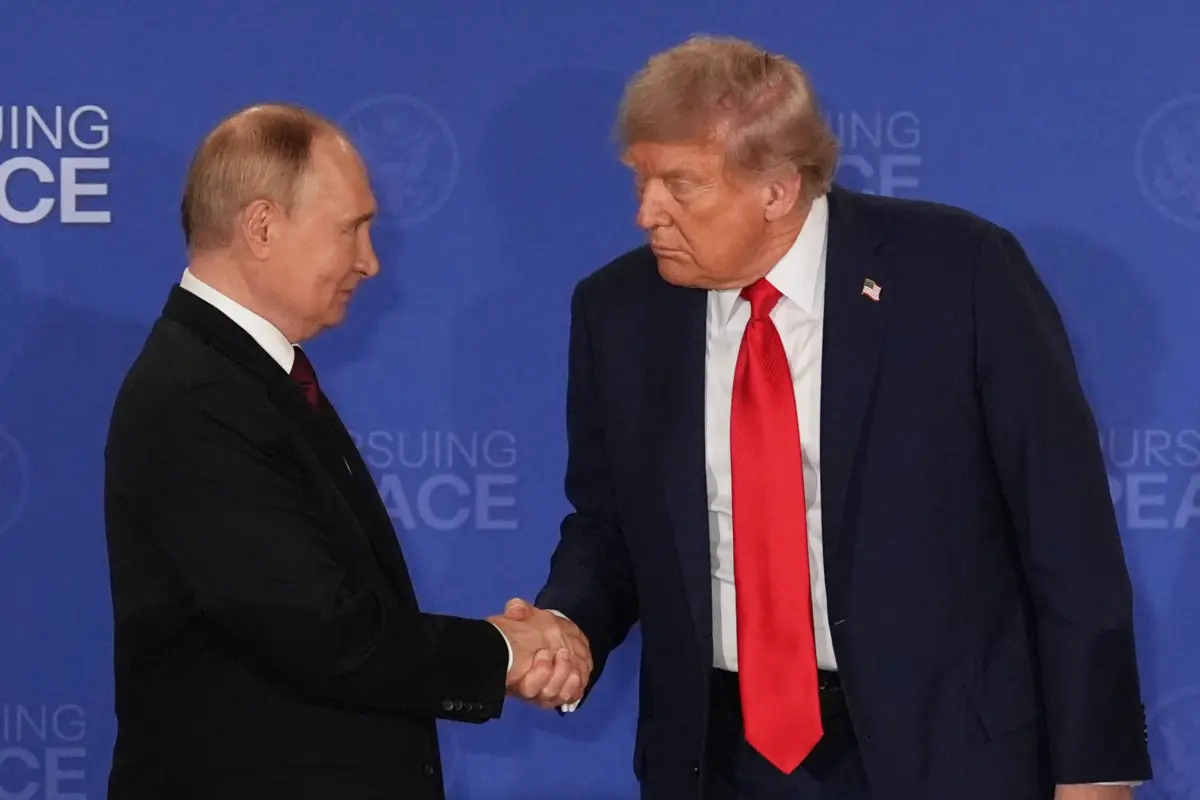
President Donald Trump has aggressively pushed back against a growing wave of bipartisan criticism following his administration’s decision to drop all primary sanctions against the Russian Federation. This sweeping executive action, which has sent shockwaves through both the halls of Congress and international diplomatic circles, was characterized by the President as a necessary tactical maneuver to facilitate a peace settlement in the ongoing Russia-Ukraine conflict. The move comes shortly after a temporary lifting of sanctions on Russian diesel fuel, a decision initially framed as a measure to stabilize domestic energy prices and provide relief to American consumers ahead of the critical midterm election cycle. In a detailed statement released via Truth Social on Sunday, the President sought to clarify his rationale, arguing that maintaining a heavy sanctions regime would ultimately prove counterproductive to the goal of ending the hostilities in Eastern Europe.
The President’s strategic pivot marks a significant departure from the "maximum pressure" campaign that has defined U.S. foreign policy toward the Kremlin since the escalation of the conflict. By yanking the sanctions, Trump asserted that he is removing obstacles to diplomacy, stating that he does not wish to "drive, foolishly, Russia away from the bargaining table" at a time when he claims "great progress" is being made in peace talks and hostage negotiations. This justification, however, has done little to appease critics who argue that the sudden removal of economic leverage provides Vladimir Putin with a financial lifeline, potentially prolonging Russia’s ability to fund its military operations.
The Strategic Rationale: Peace Negotiations and Global Markets
Central to President Trump’s defense is the assertion that the United States must act as a neutral arbiter to bring the war to a swift conclusion. In his Sunday communication, Trump emphasized that his primary objective is the cessation of hostilities, a goal he believes is hindered by the legislative efforts of Congress to codify sanctions. The President specifically targeted a pending sanctions bill named in honor of the late Senator Lindsey Graham, a long-time hawk on Russian relations. Trump noted that while he is currently shielding Russia from the bill’s provisions to protect the peace process, he retains the authority to "sign it later, or any time that I want," suggesting that the threat of future sanctions remains a tool in his diplomatic arsenal.
Beyond the immediate goal of a ceasefire, the President linked his decision to broader geopolitical interests, specifically mentioning the Islamic Republic of Iran. Trump posited that Russia’s current level of cooperation—or lack of significant military and technological assistance to Tehran—is a delicate balance that must be maintained. He argued that aggressive U.S. sanctions could inadvertently push Moscow into a closer, more dangerous alliance with Iran, a development he claimed "stupid people" in Washington fail to grasp. By maintaining a functional economic relationship with Moscow, the administration hopes to keep Russian influence over Iranian interests within manageable bounds.
The Diesel Crisis and Attacks on Russian Infrastructure
A significant portion of the President’s recent rhetoric has been directed at Ukrainian President Volodymyr Zelenskyy and the tactical decisions made by the Ukrainian military. Trump expressed sharp disapproval of Ukraine’s strategy of targeting Russian diesel refineries, an effort aimed at crippling the Kremlin’s domestic revenue and military logistics. From the President’s perspective, these strikes are a primary driver of volatility in the global diesel market, which has seen prices surge to historic highs, impacting American farmers, ranchers, and logistics firms.
"Zelenskyy is using Diesel Refineries in Russia as a target, knowing that these attacks are seriously hurting the world diesel markets," Trump wrote, highlighting the domestic economic fallout. He contrasted this with Russia’s continued export of millions of barrels of diesel at what he described as "a low price" to the world market. The President’s narrative suggests that the Ukrainian leadership is indifferent to the economic suffering of Western nations, further alleging that the massive influx of financial aid from Europe and the previous Biden administration has disincentivized Zelenskyy from seeking an end to the war.
Political Backlash and the Republican Divide
The decision to lift sanctions has opened a visible rift within the Republican Party, pitting the President’s "America First" diplomatic approach against the traditional hawkish wing of the GOP. The most vocal opposition has come from figures like Senator John Cornyn (R-TX) and Senator Thom Tillis (R-NC), who view the move as a betrayal of long-standing security commitments. Senator Cornyn, reflecting on the legacy of the late Senator Lindsey Graham, for whom the contested sanctions bill was named, remarked on social media that Graham "would be appalled" by the administration’s current trajectory.
Adding a complex layer to the domestic political drama is the role of Darline Graham (R-SC), who was elected to fill the seat following her brother’s passing. While she has generally remained an ally of the President, the sanctions issue has forced a rare moment of public disagreement. At a recent campaign event where the President was supporting her candidacy, Graham offered a measured but firm critique. "Personally, I would choose to put the pressure on Russia to end the war and get gas prices down," she told supporters. "Because I don’t trust Putin, and I don’t trust Russia." Her comments underscore the difficulty Republican lawmakers face in balancing loyalty to the Trump administration with a constituent base that remains deeply suspicious of Russian intentions.

Chronology of the Sanctions Pivot
The path to the current total lifting of sanctions followed a series of incremental steps and escalating tensions between the White House and the legislative branch:
- Late 2024 – Early 2025: High global energy prices and inflationary pressures lead to increased domestic calls for relief. The administration begins exploring "carve-outs" for energy-related exports.
- Mid-2025: President Trump announces a temporary waiver on sanctions specifically targeting Russian diesel fuel, citing the need to protect American agriculture and transport sectors ahead of the midterms.
- October 2025: Reports emerge of back-channel negotiations between Washington and Moscow. President Trump signals that legislative sanctions packages, such as the Graham Bill, are "impediments to peace."
- The Truth Social Declaration: In a series of posts, the President officially confirms the lifting of all primary sanctions, triggering immediate condemnation from both Democratic leaders and senior Republican senators.
- Current Status: The administration continues to block the implementation of the Graham Sanctions Bill, while the Treasury Department begins the process of unfreezing certain Russian assets to facilitate trade in "essential commodities."
Economic Data: The Impact on American Industry
The administration’s focus on the diesel market is rooted in stark economic realities facing the American interior. According to data from the Department of Agriculture and various energy analysis firms, diesel prices directly correlate with the operational costs of over 2 million farms across the United States. In the last fiscal year, the cost of diesel fuel for agricultural use rose by an estimated 35%, leading to a corresponding increase in food production costs.
By allowing Russian diesel to flow back into the global supply chain without the friction of sanctions, the administration expects a price correction of approximately $0.50 to $0.80 per gallon over the next quarter. For a standard large-scale farming operation, this could result in tens of thousands of dollars in annual savings. Furthermore, the transportation industry, which relies on diesel for nearly 70% of all freight movement in the U.S., views the stabilization of fuel prices as critical to curbing broader consumer inflation. These data points form the backbone of the President’s argument that his foreign policy is, at its heart, a domestic economic policy.
Implications for the Ukraine Conflict and Global Stability
The President’s assessment of the state of Ukraine remains one of the most controversial aspects of his current platform. He has described the country as being in "shambles," noting the loss of significant territory and the degradation of its naval capabilities, stating that its "oceans and seas are gone." This grim portrayal is used to bolster his argument that Ukraine should have accepted a "better deal" years ago and that the current human cost—specifically the loss of the "male population"—is unsustainable.
International analysts are divided on the long-term implications of this policy shift. Supporters argue that a "grand bargain" involving the lifting of sanctions in exchange for a permanent ceasefire and territorial concessions might be the only way to prevent a wider European conflict or a nuclear escalation. Critics, however, warn that this approach sets a dangerous precedent, signaling to other global powers that territorial aggression can eventually be rewarded with the restoration of economic ties.
The diplomatic community is also closely watching the reaction of European allies. While many European nations have suffered from the energy crisis triggered by the war, there remains a strong consensus within NATO regarding the necessity of maintaining pressure on the Kremlin. The unilateral nature of the U.S. decision to lift sanctions could potentially strain the transatlantic alliance, leading to a fragmented international response to future crises.
Conclusion and Future Outlook
As the debate intensifies, the White House shows no signs of retreating from its position. The President remains firm in his belief that the path to peace is paved with economic pragmatism rather than punitive measures. With the midterm elections approaching, the success or failure of this strategy will likely be measured by two primary metrics: the movement of energy prices at the pump and the progress—or lack thereof—at the negotiating table between Moscow and Kyiv.
For now, the "Graham Bill" remains in a state of legislative limbo, a symbol of the tug-of-war between a President determined to reshape global order and a Congress wary of abandoning its role as a check on executive power. As Darline Graham and other Republican leaders navigate this turbulent political landscape, the world watches to see if Trump’s "Peace Through Trade" experiment will bring the desired stability or if it will embolden a resurgent Russia on the world stage.


 Yuyun Lusiyani

 Joko Widodo
 Eva Lovia

 Pevita Pearce

 admin
