
 Jia Lissa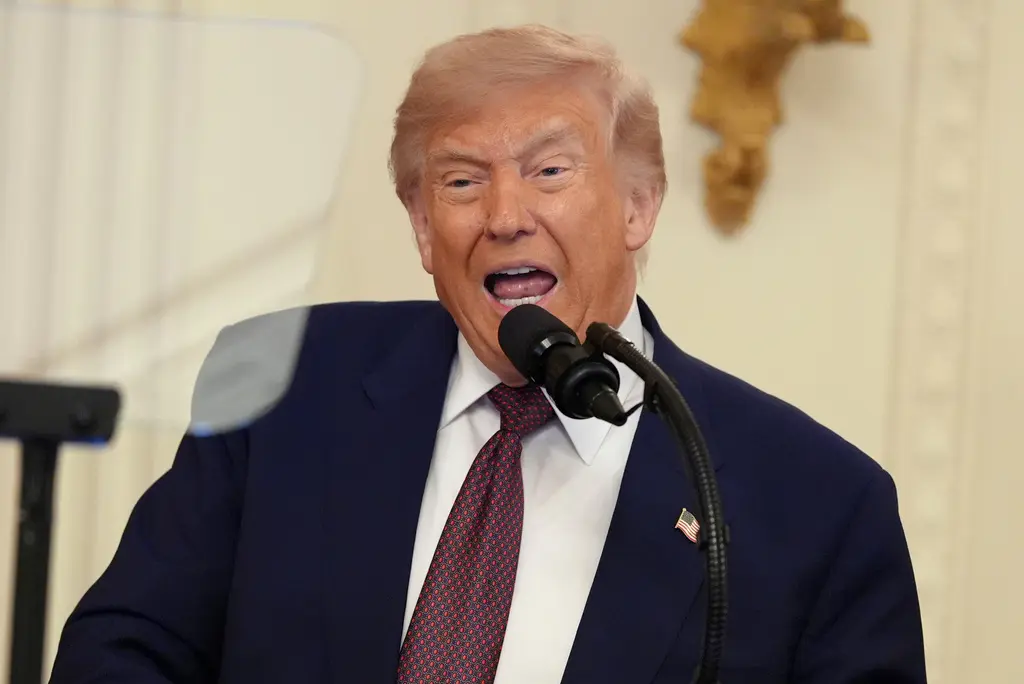
In a development that signals significant political turbulence just weeks before the 2026 midterm elections, President Donald Trump’s job approval rating has plummeted to a record low of 33 percent, according to a comprehensive new Washington Post-ABC News-Ipsos poll released on Sunday. This figure marks the lowest approval rating for the president across any major survey conducted during his second term, underscoring a deepening rift between the administration and the American electorate. The findings are mirrored by a concurrent NBC News survey, which places the president’s approval at 34 percent, suggesting a consensus among national pollsters that the executive branch is facing a crisis of public confidence.
Beyond the baseline approval figures, the survey reveals a stark public perception regarding the president’s ethical conduct. A substantial 66 percent of respondents—a two-thirds majority—believe that President Trump is "using the presidency to enrich himself." This sentiment appears to be fueled by a series of controversial administrative decisions and policy maneuvers that critics have characterized as blatant conflicts of interest. The poll highlights specific grievances, including the administration’s push to rename the John F. Kennedy Center for the Performing Arts after the sitting president and the use of federal taxpayer funds to finance television advertisements promoting the president’s personal brand and specific policy agendas.
The Erosion of Public Trust: A Detailed Statistical Breakdown
The Washington Post-ABC News-Ipsos data suggests that the current 33 percent approval rating is not an isolated outlier but rather part of a sustained downward trajectory. For context, Nate Silver’s "Silver Bulletin" tracking average, which aggregates data from dozens of reputable polling firms, currently places Trump’s national approval at 37.5 percent. While slightly higher than the ABC/Washington Post individual result, it remains significantly below the historical average for second-term presidents entering a midterm cycle.
The depth of the dissatisfaction is particularly visible in the qualitative sections of the survey. When asked about the president’s ideological positioning, 66 percent of voters described Trump as "too extreme." This label appears to transcend partisan lines, capturing a segment of independent and moderate voters who may have supported the administration in the 2024 general election but have since become disillusioned with the current direction of the executive branch.
Furthermore, the poll explored public sentiment regarding specific administrative actions. The proposal to place the Trump name on the Kennedy Center, a cornerstone of Washington D.C.’s cultural landscape, met with overwhelming resistance. Eight in ten respondents labeled the move as "inappropriate," with 59 percent classifying it as "completely inappropriate." Similarly, 74 percent of the electorate expressed disapproval of the federal government’s expenditure on television advertisements that blur the line between official government communication and political campaigning.
Chronology of the 2026 Approval Decline
The decline in President Trump’s approval ratings can be traced through a series of legislative and executive developments throughout the first half of 2026. The following timeline outlines the key events that have contributed to the current political climate:
- January 2026: The administration announces a "National Branding Initiative," which includes the proposed renaming of several federal landmarks. Public backlash is immediate but initially confined to partisan circles.
- March 2026: Reports surface regarding the allocation of Department of the Treasury funds for a nationwide media blitz. The administration defends the move as "public information services," but transparency advocates raise concerns over the partisan nature of the content.
- June 2026: During a Medal of Honor ceremony in the East Room of the White House, the president delivers a speech that focuses heavily on domestic political rivals and personal business successes. The event, intended to be non-partisan, draws criticism for its tone.
- August 2026: Economic indicators show a cooling in the manufacturing sector, a key component of the president’s "America First 2.0" platform. Approval ratings begin to dip below the 40 percent threshold.
- October 2026: The release of the ABC/Washington Post-Ipsos poll confirms the record low of 33 percent, coinciding with the final stretch of the midterm campaigns.
Midterm Implications: The Demand for a Congressional Check
The polling data carries dire implications for the Republican Party as it prepares for the upcoming midterm elections. The survey asked voters whether they would prefer a Democratic-led Congress to act as a "check" on the president or a Republican-led legislature to support his agenda. The results indicate a strong preference for divided government: 58 percent of voters opted for a Democratic-led Congress, while only 39 percent preferred a Republican majority.
This 19-point gap suggests a significant "enthusiasm gap" that could impact turnout in key swing districts. Political analysts note that the desire for a legislative check often correlates with perceptions of executive overreach. With two-thirds of the country viewing the president as "too extreme" and "self-enriching," the Democratic platform of oversight and accountability appears to be resonating with a broad cross-section of the public.
Historically, midterm elections serve as a referendum on the sitting president. In 2018 and 2022, similar shifts in public sentiment preceded significant changes in the composition of the House and Senate. If the current polling holds, the 2026 midterms could result in a substantial reshuffling of power on Capitol Hill, potentially stalling the president’s legislative agenda for the remainder of his term.

Official Responses and Political Reactions
The White House has been quick to dismiss the polling results, maintaining a stance of defiance. In a brief statement, a spokesperson for the administration characterized the ABC/Washington Post-Ipsos poll as "partisan propaganda" designed to influence the outcome of the midterms. "The only poll that matters is the one on Election Day," the spokesperson stated, echoing a frequent refrain from the executive branch. Supporters of the president argue that the survey oversamples urban areas and fails to account for the "silent majority" that continues to back the administration’s trade and immigration policies.
Conversely, Democratic leadership has seized on the data as evidence of a mandate for change. House Minority Leader Hakeem Jeffries (or the relevant 2026 Democratic leader) issued a statement suggesting that the American people are "tired of the presidency being treated as a personal business venture." Democrats are expected to lean heavily into the "enrichment" narrative in the final weeks of the campaign, focusing on ethics reform and the restoration of traditional norms in government.
Non-partisan ethics watchdogs have also weighed in on the findings. Organizations such as Citizens for Responsibility and Ethics in Washington (CREW) noted that the public’s perception of self-enrichment is rooted in documented instances of the president’s properties being used for official government functions and the continued intermingling of private business interests with public policy decisions.
Broader Impact and Policy Implications
The record-low approval rating and the widespread belief that the president is using his office for personal gain have broader implications for the stability of American institutions. When a majority of the citizenry perceives the head of state as prioritizing personal wealth over the public good, the resulting erosion of institutional trust can take years to repair.
This perception also complicates the administration’s ability to navigate international relations. Foreign allies and adversaries alike monitor domestic approval ratings as a measure of a leader’s political capital. A president with 33 percent approval may find it increasingly difficult to negotiate trade deals or security alliances, as international partners may question the administration’s ability to deliver on long-term commitments amidst domestic instability.
Furthermore, the "extreme" label applied by 66 percent of the public could lead to increased polarization within the Republican Party itself. Moderate GOP members in competitive districts may begin to distance themselves from the White House to salvage their own re-election prospects. This internal friction could lead to a fractured party platform, making it difficult for the administration to maintain a unified front on key votes in the waning days of the current legislative session.
Analysis of the "Enrichment" Sentiment
The most striking aspect of the survey is the 66 percent figure regarding self-enrichment. In previous administrations, ethical concerns were often relegated to the background of political discourse, overshadowed by economic or national security issues. However, the 2026 data suggests that ethical conduct has become a primary driver of voter sentiment.
The specific mention of the Kennedy Center and taxpayer-funded advertisements provides a window into what the public deems "inappropriate." The Kennedy Center, established as a living memorial to the 35th president, holds a unique place in the American consciousness. The attempt to append the Trump name to such an institution is viewed by many as an attempt to rewrite national history in the image of the current executive. Similarly, the use of federal funds for promotional ads is seen as a violation of the "power of the purse," where executive branch resources are diverted from public service to political theater.
As the nation moves toward the November elections, these themes of ethics, extremism, and the need for a congressional check are likely to dominate the airwaves. Whether the administration can pivot and address these concerns—or if the current trajectory will lead to a historic shift in the legislative branch—remains the central question of the 2026 political cycle. For now, the numbers tell a clear story: a president increasingly isolated from the majority of the people he serves, facing an electorate that is deeply skeptical of his motives and his methods.


 Yuyun Lusiyani
 Joko Widodo
 Eva Lovia
 Pevita Pearce
 admin
admin