
 Yuyun Lusiyani
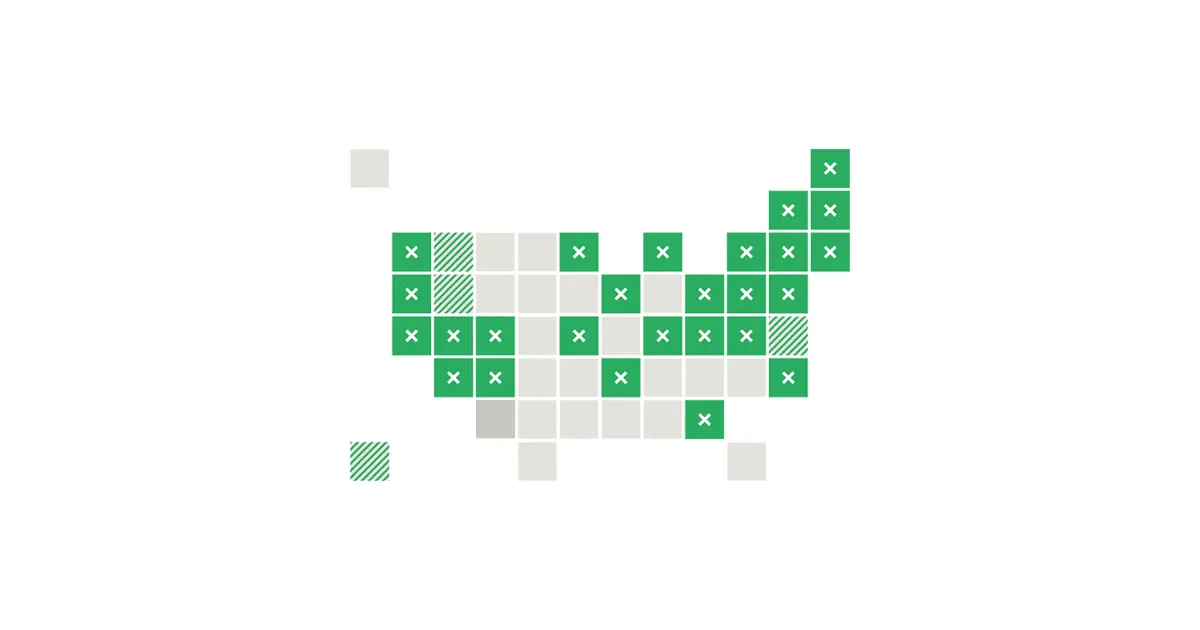
Since September 2025, the Department of Justice’s (DOJ) Civil Rights Division has embarked on an unprecedented legal campaign, suing 30 states and the District of Columbia to compel the surrender of their unredacted voter rolls. This aggressive push, widely seen as a cornerstone of President Donald Trump’s broader initiative to assert federal control over state-run elections and prosecute alleged noncitizen voters, has encountered near-unanimous resistance from the federal judiciary. To date, 26 of these high-stakes lawsuits have reached final rulings, with all outcomes decisively rejecting the DOJ’s arguments and dismissing its complaints. Four cases remain pending, while one state has reportedly settled, though details of that agreement remain scarce.
The Unprecedented Federal Offensive on State Voter Data
For centuries, the administration of elections, including the maintenance of voter registration lists, has been a jealously guarded prerogative of individual states. These rolls, meticulously compiled and updated by state and local election officials, contain a wealth of personal information on millions of American citizens. While the specific data points vary by state, unredacted versions can include highly sensitive details such as full names, residential addresses, dates of birth, voting history, and in some cases, portions of Social Security numbers or driver’s license information. Such data has traditionally been managed and protected under state privacy laws, with federal access typically restricted and defined by specific statutes.
President Trump’s administration, however, has signaled a significant departure from this historical norm. Following a March 2025 executive order on election integrity, the administration intensified its focus on perceived vulnerabilities in the nation’s voting systems, particularly the unsubstantiated claims of widespread noncitizen voting. This executive order served as the foundational impetus for the DOJ’s subsequent legal actions, framing the demand for unredacted voter rolls as a critical step in verifying compliance with federal election laws and rooting out ineligible voters. Critics, including election experts and civil rights organizations, immediately viewed this as a thinly veiled attempt to centralize election control, intimidate voters, and create a federal database ripe for partisan exploitation.
A Chronology of Contention: From Executive Order to Courtroom Battles
The timeline of this federal offensive began in March 2025 with President Trump’s executive order, which mandated a review of election practices and called for enhanced federal oversight to ensure "integrity." By September 2025, the DOJ’s Civil Rights Division, under the directive stemming from this order, began filing lawsuits against states nationwide. The legal strategy unfolded in two distinct phases, each employing different statutory interpretations to justify the federal demand for state voter data.
The initial wave of seven lawsuits, launched shortly after the September directive, directly invoked the March 2025 executive order and existing federal election laws. These cases were met with swift and unyielding judicial skepticism. As these first cases were being dismissed, the DOJ recalibrated its approach, deploying a second tactic in 19 subsequent lawsuits, shifting its legal basis to a provision within the Civil Rights Act of 1960. This strategic pivot, however, proved no more successful than its predecessor, leading to a cascade of further judicial rejections throughout late 2025 and into 2026. The consistent judicial pushback has now culminated in 26 final rulings, all unfavorable to the federal government, while four cases await judgment, and one state opted for a settlement, avoiding a protracted legal battle. The rapid succession of these dismissals underscores the judiciary’s deep concerns regarding the administration’s legal theories and stated motivations.
Tactic One: Election Integrity and the Limits of Federal Power
The first seven lawsuits initiated by the DOJ’s Civil Rights Division shared a common legal framework. They explicitly cited President Trump’s March 2025 executive order on election integrity and argued that federal election laws empowered the Justice Department to demand states’ unredacted voter rolls. The stated purpose was to ensure states were adhering to federal election mandates, ostensibly by verifying the accuracy and eligibility of registered voters.
However, federal judges across the country swiftly and unequivocally rejected this line of reasoning. They found a profound lack of legal or factual basis for the government’s expansive demand. While acknowledging that federal laws like the National Voter Registration Act (NVRA) and the Help America Vote Act (HAVA) require states to maintain accurate, up-to-date computerized voter lists that may include confidential information, the judges stressed that these statutes grant the federal government only limited powers of enforcement. Crucially, they do not bestow upon the DOJ the authority to compel the wholesale surrender of unredacted state voter rolls without specific cause or a narrowly tailored request.
The judicial critiques were particularly pointed. Maine federal Judge Lance E. Walker, a Trump appointee, lambasted the government’s presentation, stating, "The United States’ championing of its claims under the [election laws], in both its briefing and its presentation at the hearing on this matter, can only be described as halfhearted. And for good reason, since neither statute gives the United States the power to compel Maine to produce its current [unredacted voter list]." This sentiment was echoed by several judges who went further, accusing the administration of utilizing federal election laws as a mere pretext to suppress voting rather than protect it.
California federal Judge David O. Carter, a Bill Clinton appointee, delivered a searing rebuke, emphasizing the fundamental nature of voting rights: "The foundation upon which American democracy has been built is the right to vote. … Now it seems the Executive Branch of the United States government wants to abridge the right of many Americans to cast their ballots. … The Court does not take lightly DOJ’s obfuscation of its true motives." Similarly, Pennsylvania federal Judge Cathy Bissoon, an Barack Obama appointee, articulated serious concerns about the administration’s true objectives: "Public statements from government officials reveal its intentions: to create a nationwide voter-database, for potential weaponization in future elections; as a ‘fishing expedition,’ hoped to advance unsubstantiated claims of non-citizen voting; and as a tool for immigration enforcement."
Perhaps one of the most extraordinary condemnations came from Oregon federal Judge Mustafa T. Kasubhai, a Joe Biden appointee. He wrote that the federal government’s actions had severely undermined the judiciary’s longstanding trust in the Justice Department, calling the behavior "chilling." Judge Kasubhai stated, "The presumption of regularity that has been previously extended to Plaintiff that it could be taken at its word — with little doubt about its intentions and stated purposes — no longer holds." This sentiment, echoed by other courts, signified a profound erosion of judicial confidence in the integrity and good faith of the DOJ under the current administration. All seven lawsuits employing this first tactic were ultimately dismissed.
Tactic Two: The Civil Rights Act and a Misguided Interpretation
Undeterred by the initial wave of dismissals, the DOJ pivoted its legal strategy for the subsequent 19 lawsuits. This second tactic abandoned any mention of President Trump’s executive order and sidestepped federal voting laws altogether. Instead, the government invoked Title III of the Civil Rights Act of 1960, a provision designed to ensure the preservation of state and local election records.
Government lawyers contended that Title III granted the Attorney General "sweeping power" to obtain these records, specifically to curb noncitizen voting. However, this interpretation starkly contradicted the historical context and legislative intent of the law. Title III was enacted during the height of the Civil Rights Movement to combat systemic racial discrimination in voting, particularly in the Jim Crow South. Its primary purpose was to enable federal access to election records to investigate and dismantle practices that disenfranchised Black voters, such as arbitrary literacy tests, poll taxes, and discriminatory registration procedures. It was a tool to protect and expand the right to vote, not to restrict it based on unproven allegations.
Federal judges again rejected the DOJ’s arguments as a gross misapplication of the statute. They ruled that Title III applies specifically to voter registration documents and other foundational election records that demonstrate the process of registration, not to the comprehensive, state-generated voter rolls themselves, which are dynamic lists subject to continuous updates. Furthermore, the statute requires the government to provide a clear explanation of why it needs the records—a requirement the DOJ consistently failed to meet. West Virginia federal Judge Thomas E. Johnston, a George W. Bush appointee, succinctly captured this failure, stating, "Clearly, this demand is devoid of any factual basis."
Several judges expressed profound astonishment at the administration’s "audacity" in attempting to repurpose an anti-discrimination law designed to protect voting rights into a mechanism to potentially disenfranchise voters. D.C. federal Judge Randolph D. Moss, an Obama appointee, eloquently articulated the historical significance of Title III, noting: "Title III was the Department of Justice’s answer to two years of resistance and obstruction by state election officials who destroyed, failed to retain, or simply refused to disclose the voting records… that would prove that black voters were victims of disparate treatment and had been unlawfully excluded from the rolls based on nothing more than their race." He highlighted the irony of the current administration’s attempt to invert the law’s original intent.
Judges also pointed out a fundamental legal conflict in the DOJ’s position. The federal election laws that the administration initially cited require voter lists to be continuously updated, reflecting changes in residency, death, or other eligibility factors. Conversely, Title III explicitly bans any alteration of voter records once they are requested for preservation. Maryland Judge Stephanie A. Gallagher, a Trump appointee, remarked on this inherent contradiction: "The United States’s proposed interpretation of the CRA would therefore criminalize the same conduct that the [voting laws] require. This Court will not read [Title III] to produce such an absurd result." Judge Bissoon further underscored the severity of the misinterpretation, stating that the administration’s reading of Title III "does violence" to the law’s true meaning. All 19 complaints relying on this second tactic were also dismissed.
The Judiciary’s Unanimous Stance: A Bipartisan Rebuke
The final rulings in 26 of these lawsuits paint a clear picture of judicial consensus. In every single case, federal judges, representing a diverse spectrum of presidential appointments, have rejected the Justice Department’s arguments and dismissed its lawsuits. The breakdown of judicial appointees is particularly telling: eight judges were appointed by President Trump, four by another Republican, George W. Bush, and 14 by Democratic presidents (Biden, Obama, and Clinton). This distribution demonstrates that the dismissals were not simply a matter of partisan judicial divides but rather a broad, bipartisan rejection of the legal theories put forth by the administration. The unanimity across these ideologically varied benches underscores the profound flaws in the DOJ’s legal reasoning and its attempts to expand federal authority over state election administration. This consensus signifies a powerful affirmation of the separation of powers and the judiciary’s role in checking executive overreach.
Appeals, a Setback, and the Road Ahead
Despite the overwhelming judicial defeats at the district court level, the Trump administration has indicated its resolve to continue the legal battle. The Justice Department has appealed most of its losses to various federal appeals courts and has publicly stated its intention to consider taking its fight all the way to the Supreme Court if necessary.
In response to inquiries about the consistent dismissals, a Justice Department spokesperson issued a statement defending its legal team: "Our attorneys are skilled, principled advocates who argue every case honestly and in good faith. Disagreement with the government’s position is not evidence of bad faith. We look forward to making our case on appeal." This statement suggests the DOJ views the district court rulings as simply a preliminary stage in a prolonged legal contest.
However, the early returns from the appellate level have not been favorable to the administration. The only appeal decided so far backed the district judge who threw out the Michigan case, providing another significant setback for the DOJ’s efforts. In a scathing opinion, the Sixth Circuit Court of Appeals highlighted the stark contrast between the historical application of Title III and the administration’s current use: "Back then, the government used this power to ensure that everyone who had the right to vote could freely exercise that right. But today, the government invokes Title III for an inverse purpose — to ensure that some people have not voted." This appellate ruling further solidifies the judicial interpretation that the DOJ’s actions represent a perversion of the Civil Rights Act’s original intent.
Compounding these challenges, a separate development on October 9 saw a U.S. district judge rule that the Justice Department’s broader national effort to acquire and share state voter rolls constituted an "illegal abuse of its authority." This ruling, while potentially distinct from the 26 dismissed cases, nonetheless reinforces the judiciary’s deep skepticism regarding the legality and motivations behind the administration’s voter roll campaign. A Justice Department spokesperson confirmed the department is "reviewing the ruling," signaling that further legal maneuvers are likely.
Broader Implications: Federalism, Voter Privacy, and Election Integrity Debates
The Justice Department’s sweeping legal campaign and its subsequent, near-total rejection by the federal judiciary carry profound implications for American democracy. At its core, this battle is a test of federalism, challenging the traditional balance of power between the federal government and individual states in the administration of elections. The judiciary’s consistent defense of state sovereignty in this domain reaffirms the constitutional principle that states retain primary authority over their electoral processes.
Beyond federalism, the controversy raises significant concerns about voter privacy. The demand for unredacted voter rolls, containing sensitive personal information, exposes millions of Americans to potential risks if such data were to be centralized and potentially mishandled or misused. Civil liberties advocates have warned that creating a national voter database, as hinted at by some judges, could be exploited for partisan targeting, voter suppression, or even immigration enforcement, far beyond the stated goal of identifying noncitizen voters.
This legal saga also deeply intertwines with the ongoing, often contentious, national debate surrounding election integrity. While legitimate concerns about election security and accuracy are valid, critics argue that the administration’s focus on noncitizen voting, largely unsubstantiated by empirical evidence of widespread fraud, serves as a pretext to implement policies that could disenfranchise eligible voters. The judges’ accusations of "pretext" and "obfuscation of true motives" lend significant weight to these concerns.
Finally, the consistent and forceful judicial rebukes could have lasting effects on the Justice Department’s institutional standing. The erosion of the "presumption of regularity"—the traditional judicial deference to the government’s stated intentions—is a severe condemnation. It suggests that the courts perceive the DOJ’s actions in these cases as less about impartial legal enforcement and more about pursuing a politically motivated agenda, potentially damaging the department’s reputation as an independent arbiter of justice. The outcome of the ongoing appeals, particularly if the cases reach the Supreme Court, will ultimately determine the long-term legal and political ramifications of this unprecedented federal attempt to assert control over state voter rolls.


 Joko Widodo
 Eva Lovia
 Jia Lissa

 Pevita Pearce

 admin
