
 Yuyun Lusiyani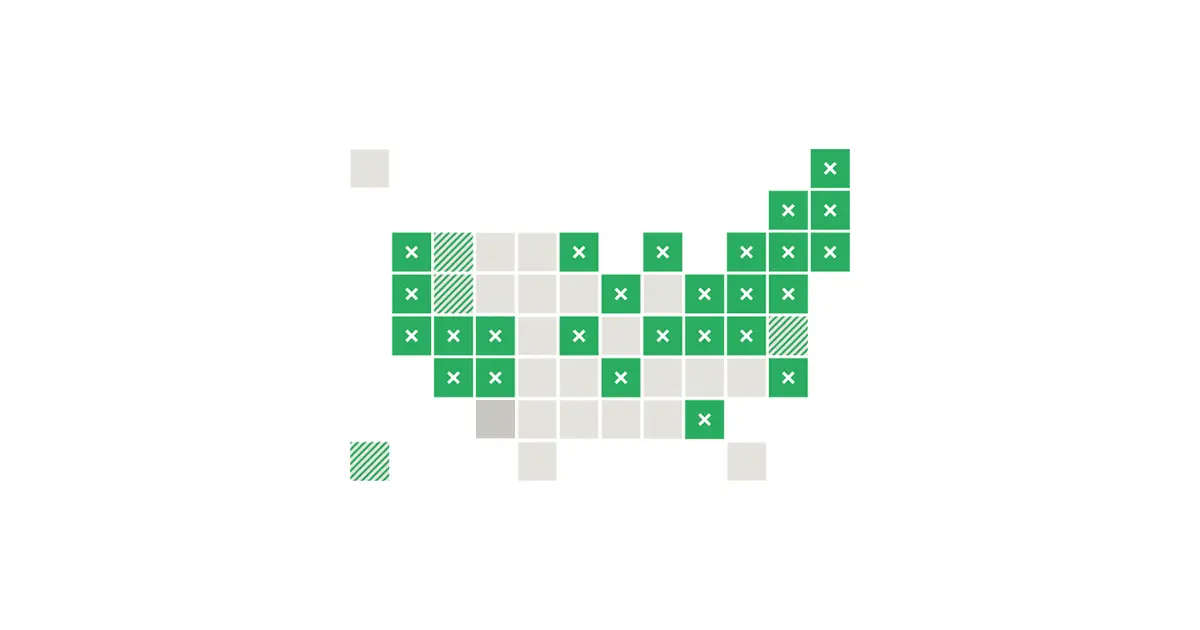
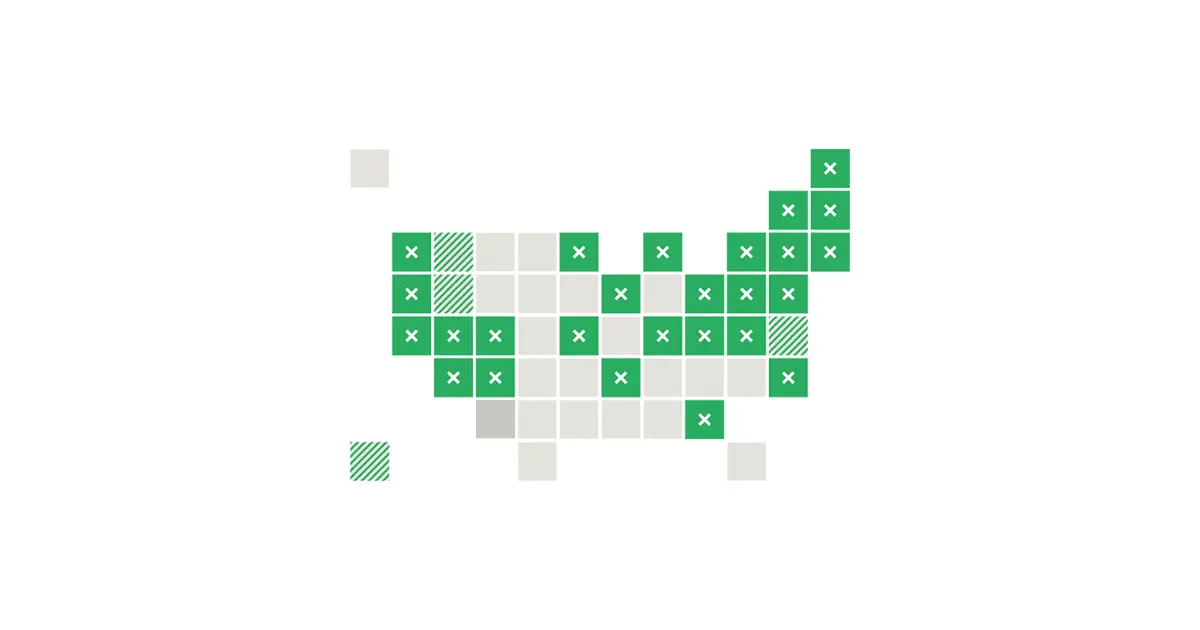
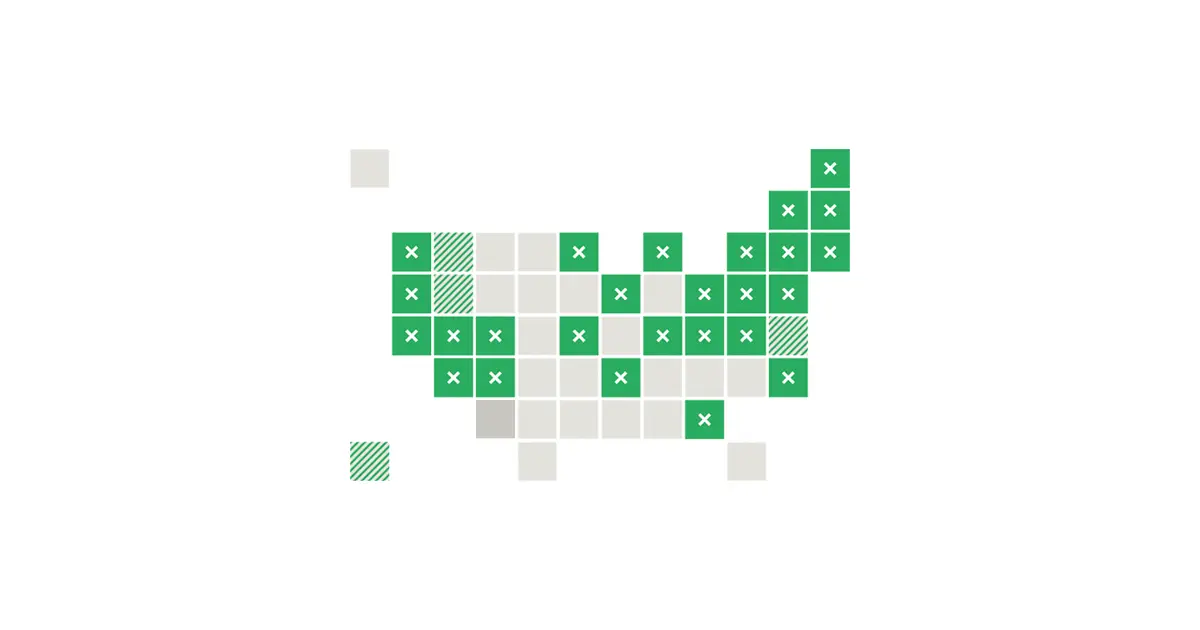
Since September 2025, the Department of Justice’s Civil Rights Division has initiated a sweeping legal campaign, suing 30 states and the District of Columbia to compel the surrender of their unredacted voter rolls. This aggressive federal push, aimed at taking federal control over elections and prosecuting alleged noncitizen voters, has met with near-unanimous judicial resistance, raising profound questions about federalism, voter privacy, and the integrity of the Justice Department. To date, 26 of these lawsuits have reached final rulings, with every single one dismissed by federal judges across the nation. Four cases remain active, and one state has opted to settle.
The Context: Trump’s Election Integrity Agenda and the Battle for Voter Data
At the heart of these unprecedented legal battles lies President Donald Trump’s sustained focus on "election integrity" and his long-standing claims of widespread voter fraud, particularly involving noncitizens. Following the contentious 2020 presidential election, which saw numerous unsubstantiated allegations of fraud, Trump has consistently advocated for stricter election oversight and what he terms a "federal takeover" of election administration. This current wave of lawsuits is seen by many observers as a direct manifestation of that agenda.
Voter rolls are comprehensive databases maintained by individual states and localities, containing sensitive personal information on millions of registered American citizens. Typically, these rolls include details such as names, addresses, dates of birth, political party affiliations, and voting histories. While some elements of these lists are publicly accessible for legitimate purposes like campaign outreach, crucial data is often redacted to protect voter privacy and prevent misuse. States have historically managed these rolls, adhering to their own privacy laws and federal requirements for accuracy. The DOJ’s demand for unredacted rolls represents a significant departure from this established practice, prompting concerns from state officials and privacy advocates alike. The Justice Department argues that it needs these unredacted lists to verify compliance with federal election laws and to investigate potential instances of noncitizen voting, which is illegal in federal elections. However, critics argue that the actual incidence of noncitizen voting is exceedingly rare, often the result of administrative error rather than deliberate fraud, and does not justify such a broad federal intrusion into state election systems.
Chronology of Legal Tactics and Judicial Rejection
The Department of Justice’s legal strategy unfolded in two distinct phases, each met with resolute rejection from the federal judiciary.
Tactic No. 1: The "Election Integrity" Pretext
The initial seven lawsuits, launched shortly after the campaign began in September 2025, employed a uniform opening argument. They directly referenced President Trump’s March 2025 executive order on election integrity, asserting that the Justice Department required states’ unredacted voter rolls to ensure compliance with federal election laws. This approach, however, quickly faltered under judicial scrutiny.
Federal judges meticulously examined the legal basis for the government’s demands, concluding that there was no legitimate statutory authority for such an expansive request. While federal laws do mandate that states maintain accurate and up-to-date computerized voter lists containing confidential information, the statutes grant the federal government only limited enforcement powers. The judges consistently found that the DOJ’s interpretation stretched these powers beyond their legislative intent.
In a scathing indictment, Maine federal Judge Lance E. Walker, a Trump appointee, characterized the United States’ advocacy for its claims as "halfhearted." He bluntly stated, "And for good reason, since neither statute gives the United States the power to compel Maine to produce its current [unredacted voter list]."
Beyond the lack of legal footing, several judges went further, accusing the administration of using election laws as a mere pretext to pursue broader, potentially suppressive goals. California federal Judge David O. Carter, a Bill Clinton appointee, expressed profound concern: "The foundation upon which American democracy has been built is the right to vote. … Now it seems the Executive Branch of the United States government wants to abridge the right of many Americans to cast their ballots. … The Court does not take lightly DOJ’s obfuscation of its true motives."
Pennsylvania federal Judge Cathy Bissoon, an appointee of Barack Obama, echoed these sentiments, pointing to public statements from government officials that revealed the administration’s true intentions: "to create a nationwide voter-database, for potential weaponization in future elections; as a ‘fishing expedition,’ hoped to advance unsubstantiated claims of non-citizen voting; and as a tool for immigration enforcement."
Perhaps one of the most extraordinary rebukes came from the Oregon case, where federal Judge Mustafa T. Kasubhai, a Joe Biden appointee, wrote that the federal government’s actions had eroded the judiciary’s longstanding trust in the Justice Department. He deemed the actions "chilling," stating, "The presumption of regularity that has been previously extended to Plaintiff that it could be taken at its word — with little doubt about its intentions and stated purposes — no longer holds." This sentiment, notably, was echoed by other courts across the country, indicating a systemic breakdown of trust between the judiciary and the executive branch’s legal arm. All seven lawsuits employing this first tactic were ultimately dismissed.
Tactic No. 2: Misinterpreting the Civil Rights Act of 1960
Undeterred by the initial dismissals, the Justice Department pivoted its strategy for the subsequent 19 lawsuits. This second wave of complaints made no mention of President Trump’s executive order and avoided reliance on general federal voting laws. Instead, the government lawyers invoked Title III of the Civil Rights Act of 1960, a provision designed to require the preservation of state and local election records. The DOJ claimed this section granted the attorney general "sweeping power" to obtain these records, ostensibly to curb noncitizen voting.
However, judges quickly highlighted the stark contrast between the DOJ’s interpretation and the law’s original intent. Title III was a landmark piece of legislation enacted during the Civil Rights Movement, specifically to combat systemic voter discrimination. Its primary purpose was to enable the federal government to access election records to protect the right to vote, particularly by facilitating investigations into practices that disenfranchised Black voters in the Jim Crow South. It empowered federal authorities to uncover evidence of racial discrimination where state officials had previously destroyed, refused to retain, or simply concealed voting records.
Judges unanimously rejected the government’s revised arguments, ruling that Title III applies only to voter registration documents and other existing election records, not to the comprehensive, dynamic voter rolls that states generate and continuously update themselves. They further noted that the statute requires the government to provide an explanation of why it needs the records, a justification the DOJ consistently failed to provide. West Virginia federal Judge Thomas E. Johnston, a George W. Bush appointee, succinctly stated, "Clearly, this demand is devoid of any factual basis."
Several judges expressed astonishment at the administration’s audacious attempt to weaponize an anti-discrimination law, originally designed to expand voting access, as a tool to potentially restrict it. D.C. federal Judge Randolph D. Moss, an Obama appointee, vividly recalled the law’s genesis: "Title III was the Department of Justice’s answer to two years of resistance and obstruction by state election officials who destroyed, failed to retain, or simply refused to disclose the voting records … that would prove that black voters were victims of disparate treatment and had been unlawfully excluded from the rolls based on nothing more than their race." The irony of the DOJ attempting to repurpose such a foundational civil rights statute for a seemingly inverse objective was not lost on the courts.
Furthermore, judges identified a fundamental conflict in the DOJ’s approach. Federal election laws mandate that voter lists be continuously updated, reflecting changes in voter eligibility and residency. Title III, however, explicitly prohibits the alteration of voter records. Maryland Judge Stephanie A. Gallagher, a Trump appointee, underscored this logical inconsistency: "The United States’s proposed interpretation of the CRA would therefore criminalize the same conduct that the [voting laws] require. This Court will not read [Title III] to produce such an absurd result." Judge Bissoon further condemned the administration’s interpretation of Title III, writing that it "does violence" to the law’s true meaning. All 19 DOJ complaints relying on the Civil Rights Act claim were also dismissed.
The Judicial Consensus: A Unanimous Rejection
The consistency of the judicial outcomes is particularly striking. Of the judges randomly assigned to the 26 cases that have reached final rulings, eight were appointed by President Trump, four by President George W. Bush, and 14 by Democratic presidents (Biden, Obama, or Clinton). Despite this diversity in appointing authorities, every single one of these 26 judges, in detailed written opinions, has rejected the Justice Department’s arguments and thrown out its lawsuits. This unanimous rejection across varied judicial philosophies highlights the profound weaknesses in the government’s legal positions.
Four cases remain ongoing, with no final decision yet rendered, and one state opted to settle, the terms of which have not been publicly disclosed. The Trump administration has signaled its intent to appeal most of its losses to federal appeals courts, and has indicated it will consider taking its fight to the Supreme Court if necessary.
Appeals and Ongoing Legal Battles
The appeals process has already begun to yield results, further solidifying the district courts’ positions. The only appeal decided so far backed the district judge who threw out the Michigan case. The Sixth Circuit Court of Appeals, in its opinion, echoed the district judges’ concerns about the DOJ’s motives, stating, "Back then, the government used this power to ensure that everyone who had the right to vote could freely exercise that right. But today, the government invokes Title III for an inverse purpose — to ensure that some people have not voted." This appellate affirmation lends significant weight to the lower court rulings and suggests a difficult path forward for the administration’s legal strategy.
Adding to the administration’s challenges, on October 9, a U.S. district judge issued a separate ruling, declaring that the Justice Department’s broader national effort to acquire and share state voter rolls constituted an illegal abuse of its authority. A Justice Department spokesperson stated that the department is "reviewing the ruling," indicating the administration’s continued commitment to its strategy despite repeated judicial setbacks.
The Department of Justice’s Stance
In response to inquiries regarding the widespread dismissals and judicial criticism, a Justice Department spokesperson issued a statement maintaining the integrity of its legal efforts. "Our attorneys are skilled, principled advocates who argue every case honestly and in good faith," the spokesperson said. "Disagreement with the government’s position is not evidence of bad faith. We look forward to making our case on appeal." This statement underscores the department’s unwavering belief in its legal interpretations, even as federal courts across the country systematically dismantle them.
Broader Implications and Future Outlook
The unanimous rejection of the Justice Department’s lawsuits carries significant implications for American federalism, voter privacy, and the future of election administration.
Reinforcing State Sovereignty: The rulings strongly reaffirm the principle of state control over elections, pushing back against what many perceive as an unprecedented federal overreach. The consistent judicial defense of state authority in managing voter rolls underscores the delicate balance of power enshrined in the U.S. Constitution. If these rulings hold through the appeals process, they will establish a robust legal precedent against federal attempts to seize state voter data without clear statutory authority.
Protecting Voter Privacy: The courts’ emphasis on the confidential nature of voter information validates concerns raised by privacy advocates. Granting the federal government unfettered access to unredacted voter rolls could expose millions of Americans to potential data misuse, identity theft, or targeted harassment, reinforcing the importance of state-level privacy protections.
The Integrity of the Justice Department: The judges’ strong rebukes, particularly those accusing the DOJ of "obfuscation of its true motives" and undermining the "presumption of regularity," are deeply troubling. Such criticism from the judiciary, if sustained, could erode public trust in the impartiality and non-political nature of the Civil Rights Division, a crucial arm of the Justice Department historically dedicated to protecting fundamental rights.
The "Noncitizen Voting" Narrative: The repeated judicial rejection of the DOJ’s arguments also undermines the administration’s broader narrative about widespread noncitizen voting. By finding no legal or factual basis for the demands, the courts implicitly challenge the premise that such an issue requires an aggressive federal intervention of this magnitude.
Long-Term Impact on Election Administration: Should the administration fail in its appeals, this legal campaign will have largely failed to achieve its stated objective of gaining federal control over state voter rolls. This could compel the administration to seek legislative solutions or abandon this particular avenue of intervention. Conversely, if the Supreme Court were to unexpectedly side with the DOJ, it would fundamentally alter the landscape of election administration, shifting significant power from states to the federal government.
The ongoing appeals will be closely watched, as they will ultimately determine the long-term legal and political consequences of this ambitious, yet so far unsuccessful, federal endeavor to control the nation’s voter data. The unanimous voice of the federal judiciary has, for now, drawn a clear line in the sand, defending state autonomy and voter privacy against what it perceives as an overzealous and legally unfounded federal intrusion.


 Joko Widodo
 Eva Lovia
 Pevita Pearce
 admin
admin
 Lina Irawan