
 Yuyun Lusiyani
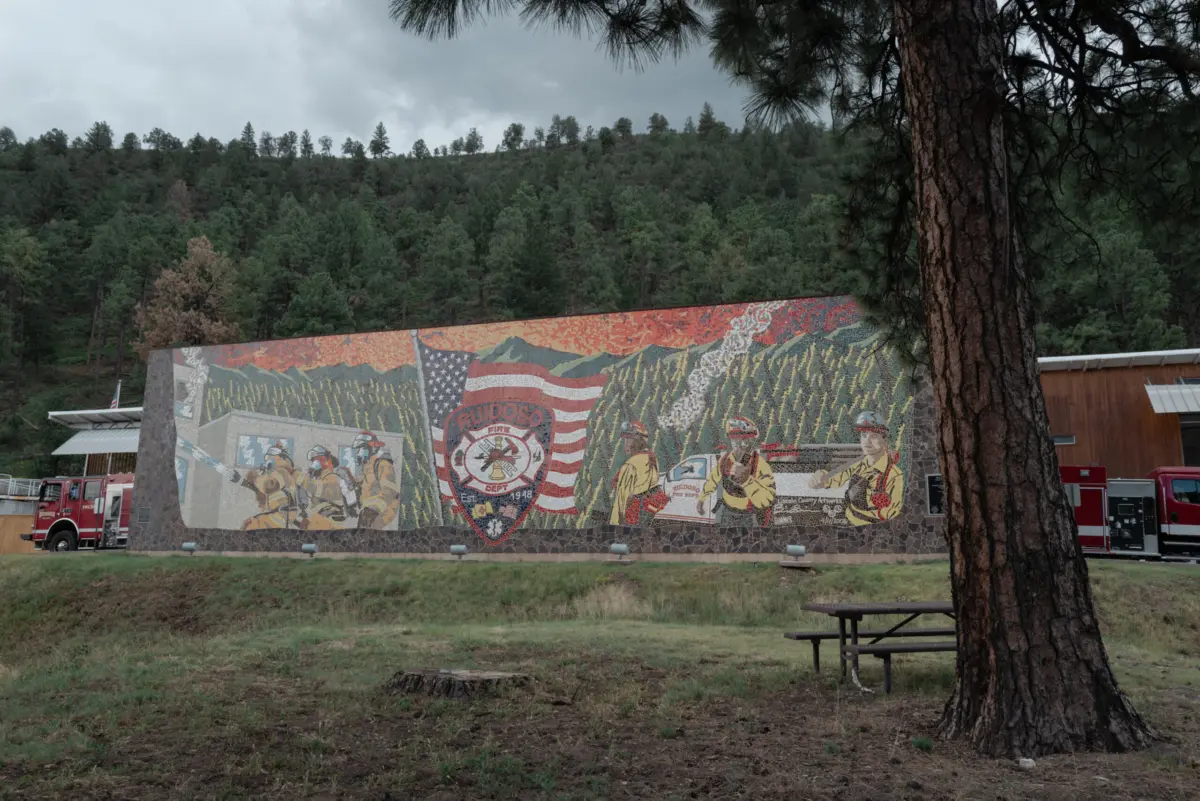
The summer of 2025 arrived in Ruidoso, New Mexico, cloaked in a fragile optimism that belied a lurking danger. As peak tourist season commenced, Mayor Lynn Crawford, a Republican with a distinct Texas drawl, embarked on a public relations campaign to reassure visitors and residents alike that the picturesque mountain village was safe. In a radio address on June 30, 2025, Crawford expressed frustration with locals who were sharing flood warnings on social media, dismissing their concerns: “They spout stuff off. And I don’t know why they’re so afraid. I do not understand it.” This public dismissal of palpable fears would tragically foreshadow a disaster that claimed three lives and exposed a profound disconnect between official assurances and environmental realities.
A Community on Edge: The Lingering Scars of 2024

Ruidoso, a popular escape for Texans seeking cooler climes, and its smaller neighbor, Ruidoso Downs, typically swell from 10,000 year-round residents to more than double that number during the summer months. The village’s economic vitality hinges precariously on tourism, particularly horse racing at the iconic Ruidoso Downs Race Track & Casino. However, the community was still reeling from the previous summer’s devastation. In 2024, two massive wildfires, the South Fork and Salt fires, had incinerated 25,000 acres in the Sacramento Mountains above the town. The subsequent monsoon season brought severe flooding that destroyed approximately 1,000 homes, leaving an indelible scar on the landscape and the collective psyche of Ruidoso.
Since then, residents had remained on high alert. The arrival of a new monsoon season brought sporadic flooding, threatening the horse racing industry and the lucrative Fourth of July festivities. Mayor Crawford, who managed an exclusive club at the racetrack as his primary occupation and earned less than $26,000 as mayor, frequently downplayed the risks. In an interview with a Texas news anchor, he stated, “We have flooding temporarily. And just almost as fast as it came to town, and went through town, it’s gone.”
The Perilous Geography: Burn Scars and Economic Imperatives

The economic vulnerability of Ruidoso was inextricably linked to its precarious geography. The intense wildfires of 2024 had not merely burned forests; they had transformed the very soil of the Sacramento Mountains. Scientists explain that severe burn scars create hydrophobic soil, meaning the ground no longer absorbs water effectively. This phenomenon, akin to pouring water repeatedly over cooled hot wax on a carpet, significantly increases runoff. When such conditions exist on steep slopes above a river — in this case, the Rio Ruidoso, winding through log homes, tourist shops, and the racetrack — the danger of flash floods and debris flows becomes exponentially higher. Research indicates that if over 20% of the ground burns at moderate to high severity, especially on steep slopes, the risk of post-fire flooding skyrockets. The fires above Ruidoso far exceeded this critical threshold.
Despite this well-understood scientific threat, Ruidoso’s leadership, from Mayor Crawford to New Mexico’s Democratic Governor Michelle Lujan Grisham, remained committed to the town’s long-held animating idea: that nature could be tamed for tourist enjoyment and community profit. This resolve was most evident in the substantial public investment in the Ruidoso Downs racetrack. After the 2024 floods damaged the track, New Mexico authorized a $16 million public investment to rebuild culverts and create an 8-acre holding basin in the infield to mitigate future flooding. This project, completed by Memorial Day 2025, prioritized the track’s reopening, enabling it to host the lucrative All American Futurity, the world’s richest quarter horse race with a $3 million annual prize. The track’s owners, Jana and Johnny Trotter (unrelated to the flood victims), had also contributed over $35,000 to Governor Lujan Grisham’s gubernatorial campaigns.
State officials, including then-transportation secretary Ricky Serna, fast-tracked the track repairs, even as subordinates raised concerns about FEMA reimbursement standards. A spokesperson for the governor, Michael Coleman, asserted that these investments were “necessary to protect life and safety,” not solely for economic development. However, the track’s former marketing director, Tim Keithley, openly stated to KRQE in February 2025, “We need to race so that the community can have tourism and bring those Texans over to spend some money with us.” This sentiment underscored the pervasive financial motivation driving recovery efforts.

A Brewing Storm: Warnings Dismissed and Preparations Lacking
By late June 2025, internal alarms were sounding. On June 26, Ruidoso’s emergency management department elevated its threat awareness level due to sporadic flooding that had already destroyed an upstream bridge and a forecast for more rain. Yet, the very next day, the threat level was inexplicably reduced. Publicly, the village continued to project an image of preparedness and safety. The communications department admonished residents for sharing "fear-based falsehoods" and outdated videos of catastrophic flooding on social media, urging them to "Protect our community from fear-based falsehoods." This narrative of downplaying risk persisted even as local and state-commissioned expert reports, including those from Cobb, Fendley & Associates, predicted severe flooding scenarios. These models outlined a "100-year storm" that could bring six times the volume of the destructive July 2024 flood, identifying over 200 at-risk properties, including the Riverview RV Park.
Fire Chief Cade Hall, despite these warnings, had for weeks declined to pre-position additional flood specialists in low-lying areas. He later disputed ProPublica’s reporting on the emergency response but refused to provide specifics. First responders, who spoke anonymously for fear of reprisal, confirmed that decisions made by Crawford, Hall, and others had left residents and tourists vulnerable, even with knowledge of the impending danger. Former Mescalero Apache Tribe president Thora Walsh Padilla criticized the prioritization of money over public safety: “You’re taking a chance with people who aren’t even from this area and don’t know how to get around enough. You’re putting them in jeopardy.”

One critical mitigation project—the repair and replacement of old, damaged bridges and culverts upstream on the Rio Ruidoso—languished due to bureaucratic disputes between village and state officials over responsibility. These structures, known to act as dams during floods, could exacerbate downstream threats, a fact acknowledged by Ruidoso’s emergency manager, Eric Queller. While the track’s infrastructure was rapidly rebuilt, these vital upstream projects were neglected.
The Trotters’ Tragic Journey into the Floodplain
Amidst this backdrop of official assurances and underlying peril, Sebastian and Stephanie Trotter, an Army helicopter pilot and a nursing student from El Paso, Texas, arrived in Ruidoso. Seeking a family-friendly camping experience, they saw no online warnings of danger. With their two children, Sebastian Rowan, 7, and Charlotte, 4, and three dogs, they booked a desirable riverside spot at the Riverview RV Park on Sunday, July 6. Online photos depicted a gentle river, seemingly perfect for dipping toes. That day, the Rio Ruidoso (Spanish for “noisy river”) briefly flooded, prompting firefighters to rescue at least four people. The campground host dismissed it as a regular occurrence, and the water soon receded. The Trotters enjoyed the village, where elk and wild horses sometimes grazed near tourists, and the children delighted in picking out souvenirs: a rainbow gemstone for Sebastian and a bracelet and ring for Charlotte.

On July 4, just one state over in central Texas, violent flooding killed over 130 people, a stark regional warning that Ruidoso’s leadership seemed to disregard. While the Ruidoso Downs racetrack held its races, Mayor Crawford hosted members at the exclusive Jockey Club, where private tables commanded six-figure sums. Tourists arriving in Ruidoso, like the Trotters, remained largely unaware of the true threat.
July 8, 2025: The Catastrophe Unfolds
On Tuesday, July 8, storm clouds gathered over the Sacramento Mountains. At 1 p.m., Mayor Crawford presided over a council meeting, acknowledging the Texas flood victims and expressing gratitude for Ruidoso’s “fortune.” He stated, “The goal of the village is to protect the village,” framing public safety as a balance with tourism. Yet, almost simultaneously, radar indicated storms dousing the burn scars. By 1:30 p.m., firefighters exchanged texts about the intensifying weather, one noting, “It could be interesting.”

Less than an hour later, the predicted “big one” arrived. A fierce rain began near the Rio Ruidoso’s headwaters, with nearly three-quarters of an inch falling on charred ground within ten minutes. At 2:12 p.m., the National Weather Service issued a flash flood warning, upgrading it to an emergency 35 minutes later as debris flows plunged into the river.
At Village Hall, Crawford adjourned the council meeting just after 3:10 p.m., declaring, “We’ve had a wall of water come over. It’s predicted this is the big one.” He then immediately called Rick Baugh, the track’s general manager. According to track executive Josh Gibson, Crawford warned Baugh that water would arrive in “45 minutes or so.” This advance notice allowed Baugh and his team to evacuate dozens of grooms living in the barns, averting a potential mass casualty event at the racetrack.
Meanwhile, three miles upstream at the Riverview RV Park, the Trotters and other campers were caught unprepared. Despite multiple text alerts received by some in the park, including co-owner Jason Fulcher, these warnings were perceived as routine due to "alert fatigue" from daily, often multiple, alerts. Fulcher stated he followed the village’s advice to "be vigilant, watch the skies, stay out of low-lying areas, watch the river," but his property was inherently in a low-lying area. The Trotters themselves received no alerts from the National Weather Service or the village. Critically, no first responders drove through the Riverview RV Park with loudspeakers to urge evacuation, unlike in other parts of the community, despite the park being only a third of a mile from the fire department’s headquarters.

Around 3 p.m., as rain intensified, the Trotters retreated to their trailer. Suddenly, the flood tore through a wall, ripping off the trailer’s slide-out compartment. Stephanie, holding both children, was swept into the raging waters, losing her son, Sebastian, in the chaos. Sebastian Sr. dove in after his son but was struck by a boulder and a floating truck. The water, described as "liquid cement" by a survivor, carried tree-sized logs, vehicles, and dumpsters, erasing the river’s normal course.
Jason Fulcher, the RV park owner, barely escaped in his truck. His own two children were trapped inside his house, clinging to a ceiling fan as the water rose. Campground host Jere Stark and another camper, Benjamin Timothy Feagin, were also swept away.
Desperate Rescues and Heartbreaking Discoveries

Firefighters, only about a third of the department on duty, responded to the unfolding catastrophe. Two swiftwater technicians rescued Fulcher’s children from his house. The elder Sebastian Trotter was found wounded, clinging to a tree. Stephanie Trotter was rescued downstream, but her daughter, Charlotte, was gone.
As the floodwaters receded, the grim search began. The crumpled remains of the Trotters’ trailer revealed only their surviving dog. At 5:20 p.m., Benjamin Timothy Feagin’s body was discovered under a bridge. Firefighters scoured the riverside as darkness fell, navigating a landscape transformed by the flood. A firefighter, guided by an intuition, looked back at a softball field strewn with debris and saw the shape of a child’s body. It was Sebastian Rowan Trotter. Charlotte Emery Trotter’s body was found nearby. Three lives were lost, including two young children on what was meant to be a family vacation.
The Aftermath: Blame, Denial, and Lingering Vulnerability

In the immediate aftermath, state officials’ private correspondence revealed a primary concern for the racetrack. Jeremy Klass, a senior disaster recovery official, inquired if horses needed evacuation. Heath Dobrovolny, the state floodplain coordinator at the time, declared, "This should be a priority," referring to the track. While Dobrovolny later disputed favoring the track, the focus on the wealthy racing enterprise contrasted sharply with the lack of warnings and evacuations at the vulnerable RV park.
At a news conference on July 9, Mayor Crawford emphasized the "historic" nature of the flood, asserting that officials had done everything possible. Fire Chief Hall echoed this, stating, "I don’t know that I would have done anything differently." Ali Rye, the state homeland security director, acknowledged the tragedy but maintained, "We put out every bit of messaging we possibly could." Governor Lujan Grisham, a month later, claimed, "No governor, no state, no president, no one at the federal level can sort of predict what happens with the weather and emergencies."
These statements directly contradicted the expert flood models created for both the state and the village. Joseph Loverich, a civil engineer involved in the 2024 state flood models, lamented, "Unfortunately, it’s stuff that was modeled." The Cobb Fendley model had predicted a 100-year flood six times the volume of the 2024 event; the July 8 flood, a 50-year event, was only a third of that anticipated maximum. At an October 2025 meeting, Michael Martinez, Ruidoso’s former deputy manager, stunned property owners by stating the July 8 flood "wasn’t even a big one. I mean, that was half of what we expected, of the max." When Jason Fulcher interjected, "So you guys knew?" and Jarvis added, "We had campers," the county manager, Jason Burns, cut her off.

Martinez soon softened his stance, stating, "Did I do enough? I ask myself that question every day, and I come to the same realization every day: I don’t know what more I could have done. I honestly don’t." He later left Ruidoso for a job in El Paso and was replaced by Heath Dobrovolny, the former state floodplain coordinator. Dobrovolny subsequently implemented a policy prohibiting village employees from speaking to journalists. A video of the contentious October meeting, originally posted by the county, was also removed from the internet, with Burns claiming its disappearance was "not intentional."
Broader Implications and a Cycle of Complacency
The Ruidoso tragedy serves as a stark and challenging lesson for communities across the American West, where the intertwined threats of escalating wildfires and subsequent post-fire flooding are becoming a new normal. In the summer following the Ruidoso flood, Colorado experienced a fatality and over a dozen rescues due to post-fire flooding. Flash floods in the Grand Canyon claimed three lives, and Utah declared a state of emergency due to similar events. While federal scientists have developed models for post-fire debris flows, an accessible tool for communities to assess post-fire flood risk remains elusive.

The village of Ruidoso, now surviving on over half a billion dollars in state and federal disaster aid since 2024—nine times its annual budget—still grapples with inadequate preparedness. The Mescalero Apache, who traditionally settled on higher ground, recognized the untrustworthy nature of the river. However, a century of aggressive fire suppression by the Forest Service, epitomized by the Smokey Bear campaign (whose living icon was found near Ruidoso), led to unnaturally dense forests. As the climate warms, these forests, now heavy with fuels, burn hotter, leaving behind increasingly dangerous burn scars. Between 1950 and 2010, wildfires in the Rio Ruidoso watershed burned less than 11,000 acres; since then, nearly 54,000 acres have burned—almost five times more in a fraction of the time.
The state finally secured $249 million for a buyout program, mostly federal funds, for at-risk property owners. The Fulchers, who settled a wrongful death lawsuit brought by the Trotters and Feagin’s family, are still awaiting an appraisal for their property. Sebastian Trotter, still recovering from severe injuries, has vowed for accountability, stating, "I will not just let us be forgotten—let our kids be forgotten." An attorney for the Trotters has formally notified the village of their intent to sue.
Despite the devastation and ongoing legal actions, a disturbing cycle of complacency persists. Green shoots on burn scars offer a deceptive sense of security, but scientists like Belize Lane of Utah State University warn, "This is not a one-and-done kind of thing. There is still an opportunity for many, many more events that may not look like that, but may still be hugely destructive." Former county manager Randall Camp observed, "Everybody always goes back to sleep."

The Ruidoso News, in a July story largely relying on the mayor’s analysis, quoted Crawford: "The legacy is one of resilience, not giving up, fortitude, rugged individualism, the ability for you to be all you can be and not give up." Yet, the racetrack remains closed, its grand All American Futurity moved to Texas. Weeds now grow six feet high in the $16 million holding pond. Crawford, however, continues to promise that racing will return to Ruidoso.
At the Riverview RV Park, a wooden cross adorned with flowers stands attached to a towering tree, a poignant memorial: "In loving memory of Benjamin ‘Tim’ Feagin, Sebastian Rowan Trotter, Charlotte Emery Trotter, And their two dogs Zeus & Ellie." The Fulchers erected it on the anniversary of the flood. A firefighter who helped search for the children expressed the lingering burden: "We carry a lot of guilt for things that we weren’t able to do. We feel like we could have done more."
Even as the park sits empty and taped off, and the Fulchers’ house bears the muddy handprints of their children on its ceiling, Ruidoso continues to advertise tourism in West Texas. A mobile home park upstream of the closed racetrack is mostly full, its managers seemingly oblivious or dismissive of the past, one remarking, "I don’t think it’ll ever flood again like that." The Rio Ruidoso still babbles, appearing welcoming. On a summer day, you could still go put your toes in, but the serene surface now hides a history of unheeded warnings and profound loss.




 Nila Kartika Wati

 Eva Lovia

 Lina Irawan

 Ana Megawati

 Joko Widodo
