
 Joko Widodo
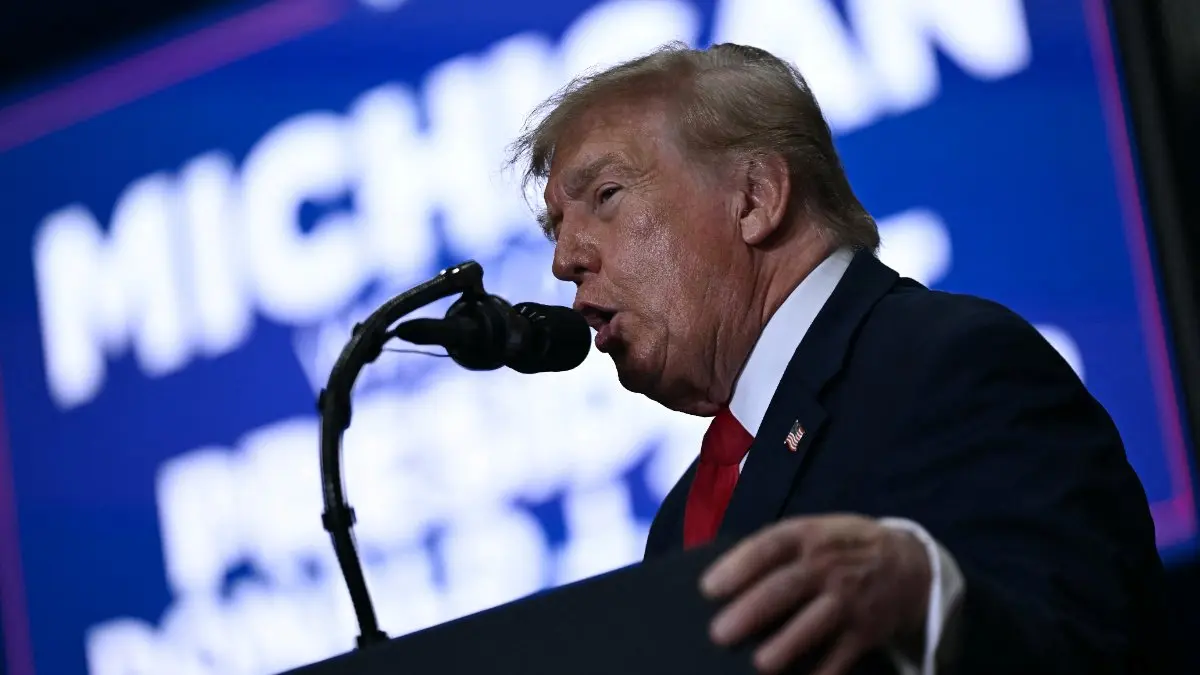
Port Huron, MI – In a highly charged rally held Sunday in Port Huron, Michigan, President Donald Trump directly injected the somber legacy of the September 11th terrorist attacks into the state’s closely contested U.S. Senate race. The former president unleashed a barrage of unsubstantiated accusations against Democratic candidate Abdul El-Sayed, while simultaneously endorsing and amplifying the campaign of Republican nominee Mike Rogers. These remarks, delivered just days before Michigan voters head to the polls, have thrust the tight electoral contest into the national spotlight and ignited significant controversy.
The rally, held in the heart of Michigan’s industrial landscape, was designed to galvanize Republican voters and reinforce Trump’s influence in key swing states. However, the focus quickly shifted from traditional policy discussions to intensely personal and inflammatory rhetoric directed at El-Sayed, a former mayor of Dearborn and a physician. Trump’s pronouncements painted a stark and alarming picture of the Democratic candidate, leveraging fear and national security concerns to undermine his candidacy.
Trump’s Rhetorical Assault on Abdul El-Sayed
During his address to a fervent crowd of supporters, President Trump employed highly charged language, labeling Abdul El-Sayed as a "jihadist" and a "Muslim Brotherhood member" without providing any verifiable evidence to substantiate these claims. The former president explicitly stated, "Anyone with that record of support for jihadists would be screened and unable to get a seat on an airplane. They certainly should not give him a seat in the United States Senate." He further escalated his remarks by suggesting El-Sayed would be "the only senator that will have to go through a metal detector before he’s allowed to go into the Senate," a statement that drew a mix of cheers and murmurs from the audience.
In stark contrast, Trump presented Republican nominee Mike Rogers, a former five-term Congressman representing Michigan’s 8th congressional district, as the embodiment of American values and security. He characterized Rogers as "apple pie," a metaphor intended to evoke a sense of wholesome, traditional Americanism and reliability. This juxtaposition served to amplify Trump’s narrative, casting El-Sayed as an outsider and a threat, while positioning Rogers as a safe and patriotic choice for the state.
Connecting the Senate Race to the Scars of 9/11
A particularly poignant and controversial element of Trump’s speech was his direct invocation of the September 11th attacks. He welcomed to the stage David Beamer, the father of Todd Beamer, a passenger who famously died on United Flight 93 while attempting to regain control of the aircraft from the hijackers. Todd Beamer’s last words, "Let’s roll," have become an enduring symbol of American courage and defiance in the face of terrorism.
Trump seized upon Beamer’s presence to draw a direct parallel between the events of 9/11 and the current Michigan Senate race. "Twenty-five years later, Michigan needs to stand up and fight just like Todd did to stop a jihadist from walking into the Capitol," Trump declared, explicitly linking El-Sayed to the perpetrators of the 9/11 attacks. This statement, devoid of any factual basis concerning El-Sayed’s background or political platform, sought to imbue the election with a sense of national urgency and existential threat.
David Beamer, in his address to the rally attendees, echoed the former president’s sentiments, articulating a deeply personal perspective on the perceived dangers facing the nation. He stated that "the enemy is right here among us" and characterized El-Sayed as "anti-American." Beamer went on to suggest that "a birth certificate doesn’t make you an American," a provocative statement given that both Abdul El-Sayed and Mike Rogers were born in Michigan, a fact that underscores the inherent complexity of identity and belonging in American society.
El-Sayed’s Background and Denials
Abdul El-Sayed’s background has been a recurring point of contention throughout his political career. He is the son of Egyptian immigrants and a medical doctor by profession. His campaign has consistently and emphatically denied any affiliation with the Muslim Brotherhood, an international Islamist organization. El-Sayed has publicly denounced the organization and has called for an end to the "demonization of Muslim communities." To date, El-Sayed’s campaign has not issued a formal statement in direct response to the specific remarks made at the Port Huron rally. However, his consistent public stance on these matters serves as a clear refutation of Trump’s characterizations.
The accusations leveled by President Trump are particularly significant given the historical context of Islamophobia and xenophobia that has often surfaced in American political discourse. The linking of a political opponent to terrorism, especially without evidence, represents a severe escalation of rhetorical tactics and can have a profound impact on public perception and electoral outcomes.
Mike Rogers’ Response and the Nuances of the Race
While President Trump sought to solidify Republican unity around his message, Mike Rogers, the GOP nominee, appeared to adopt a more measured approach during a subsequent appearance on NBC’s "Meet the Press." When questioned about his agreement with Trump’s characterizations of Abdul El-Sayed, Rogers distanced himself from the harshest rhetoric. He stated that the election was primarily a contest between "me versus Abdul" and explicitly said, "I’ve never called him a terrorist."
This distinction is crucial. While Rogers benefited from Trump’s endorsement and the energy generated by the rally, his decision to not fully embrace the most inflammatory accusations suggests an awareness of the potential political fallout and a desire to maintain a broader appeal. It highlights the complex dynamics within the Republican party, where loyalty to Trump often competes with the need to win over moderate or undecided voters.
The Broader Implications for Michigan and the Nation
The intensity of the rhetoric employed at the Port Huron rally underscores the high stakes of the Michigan Senate race. Polls indicate that the contest is exceptionally close, effectively tied, making every vote and every narrative particularly impactful. President Trump’s intervention, while intended to bolster the Republican candidate, has undeniably injected a deeply divisive and potentially alienating element into the final days of the campaign.
The ramifications of these remarks extend beyond the immediate electoral battle. The deliberate conflation of a political opponent’s identity with terrorism, particularly when tied to a national tragedy like 9/11, can contribute to a broader climate of intolerance and distrust. It raises questions about the ethical boundaries of political campaigning and the responsibility of political leaders to foster civil discourse.
Furthermore, the involvement of David Beamer and the emotional resonance of his son’s story, while understandable from a personal perspective, risks exploiting genuine grief for political gain. The notion that "a birth certificate doesn’t make you an American" is a particularly concerning sentiment in a diverse nation like the United States, and its application in this context, where both candidates are native-born Michiganders, is perplexing and potentially divisive.
The September 11th attacks remain a pivotal moment in American history, a shared national trauma that continues to shape national security policies and public consciousness. To strategically deploy the memory of this tragedy and the sacrifices made on that day as a weapon in a contemporary political contest, particularly against a candidate based on unsubstantiated claims related to their heritage or perceived affiliations, is a tactic that has drawn significant criticism from civil liberties advocates and political analysts alike.
The outcome of the Michigan Senate race will undoubtedly be influenced by a multitude of factors, including economic conditions, policy platforms, and the candidates’ own campaign strategies. However, the controversy ignited by President Trump’s remarks in Port Huron has undeniably placed the election at the center of a national debate about identity, national security, and the nature of political discourse in an increasingly polarized America. The coming days will reveal the extent to which this charged rhetoric resonates with Michigan voters as they cast their ballots, determining not only the next senator for the state but also potentially shaping the broader tone of political engagement across the nation. The legacy of 9/11, a day of profound national unity in the face of adversity, has been invoked in a manner that could, conversely, serve to deepen societal divisions.



 Nila Kartika Wati

 Eva Lovia

 Lina Irawan

 Yuyun Lusiyani

 Ana Megawati
