
 Joko Widodo
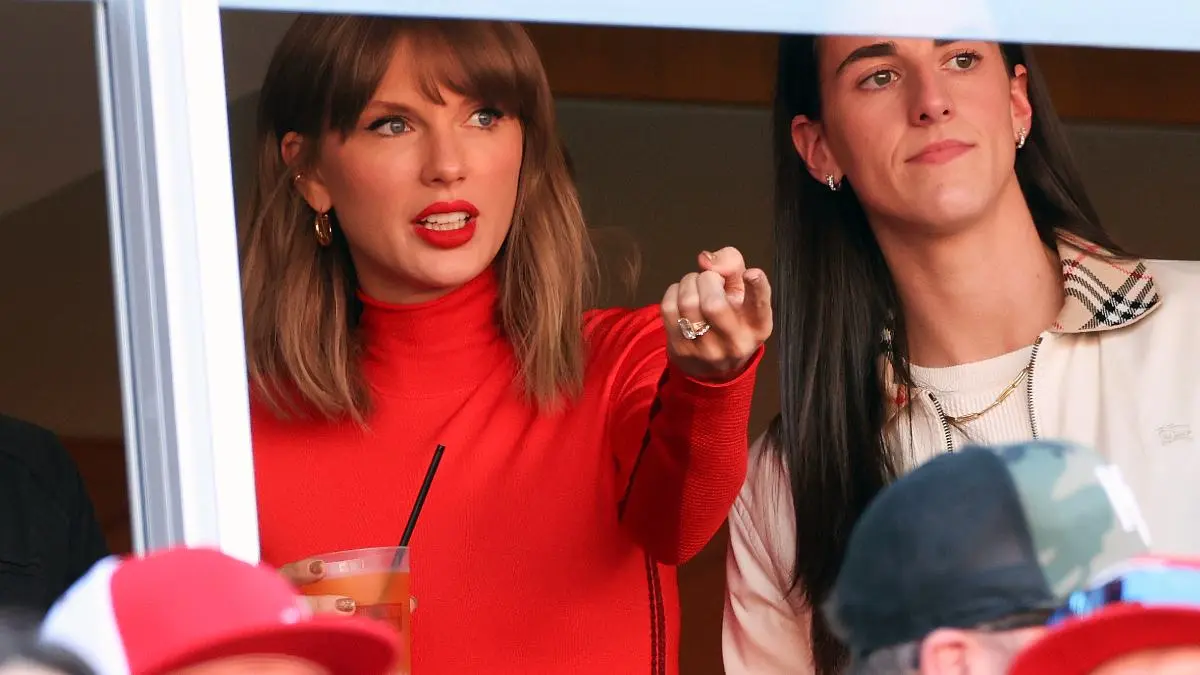
New York, NY – Monica McNutt, a prominent voice in New York Knicks broadcasting, has broken her silence regarding a widely discussed hot-mic incident involving global superstar Taylor Swift during Game 4 of the NBA Finals in June. McNutt, appearing on the popular "The Pivot" podcast hosted by Ryan Clark, Channing Crowder, and Fred Taylor, expressed her bewilderment at the immense viral reach of her casual remark and the subsequent backlash from Swift’s dedicated fanbase, known as Swifties. The incident, which unfolded during a nationally televised broadcast, ignited a fervent online debate, highlighting the immense cultural influence of both the artist and her supporters.
The Genesis of a Viral Moment: Swift at the Finals
The scene was set at Madison Square Garden, a hallowed ground for basketball aficionados and a frequent celebrity hotspot. Game 4 of the NBA Finals pitted the New York Knicks against a formidable opponent, drawing a crowd filled with notable personalities. Among them was Taylor Swift, a cultural phenomenon whose presence alone guarantees significant attention. McNutt, part of the Knicks’ broadcast team, was engaged in commentary during the game.
The hot-mic incident occurred as broadcast personnel were attempting to confirm Swift’s seating arrangement, specifically whether she was positioned courtside. Upon her eventual identification, McNutt was overheard making a comment that would soon reverberate across social media platforms. Her statement, captured and amplified, was: "She’s not a Knicks fan, get out of here, girl." This seemingly innocuous remark, intended as a lighthearted observation within the context of the broadcast, quickly became a focal point of discussion.
McNutt’s Perspective: Bewilderment and Context
Speaking on "The Pivot," McNutt articulated her feelings of being "mystified" by the sheer scale of the reaction. She explained that she had no prior inkling that her brief soundbite would achieve such widespread notoriety. The revelation of her comment going viral reached her only after the game had concluded, a testament to the rapid dissemination of information in the digital age.
"I had no idea that moment would become so significant," McNutt stated during the podcast. "I learned I had gone viral after the game." This admission underscores the often unpredictable nature of online virality, where even minor comments can be plucked from their original context and amplified exponentially.
Deconstructing the Remark: Colloquialism and Intent
McNutt elaborated on the specific phrasing of her comment, emphasizing the importance of understanding colloquialisms. She argued that her words, particularly "get out of here, girl," were not meant to be taken literally as an expulsion. Instead, she intended them as a casual, almost dismissive expression within the vernacular of sports commentary.
"Viewers should be able to understand a little colloquialism," McNutt explained. She further contextualized her remark by referencing her observations of Swift at previous Knicks games. "But I had just seen you at a Knicks game with your man in no Knicks gear, and all the celebrity Knicks fans I am familiar with, blue and orange down baby, it ain’t no question. So, literally, it’s a throwaway comment." Her intention, as she conveyed, was to playfully question Swift’s perceived allegiance to the team, especially in the absence of overt team apparel. This was contrasted with her understanding of established celebrity fans who demonstrably display their team loyalty.
The Swiftie Phenomenon: Power of the Fanbase
The swift and intense backlash McNutt faced is a clear indicator of the formidable power wielded by Taylor Swift’s fanbase. The "Swifties" are renowned for their unwavering loyalty and their proactive defense of their idol. When McNutt’s comment was circulated, it was perceived by many as disrespectful or dismissive of Swift.
This reaction is not unprecedented. Swift’s fans have a history of mobilizing online to defend her against perceived slights or criticisms, whether they originate from media personalities, other celebrities, or the public at large. Their collective online presence and coordinated efforts can significantly influence public discourse and exert pressure on individuals and organizations. The rapid spread of the hot-mic clip and the subsequent torrent of critical comments on social media platforms are a testament to this organized fan engagement.
Chronology of the Incident and Aftermath
June 2024 (Specific Date Undisclosed): Taylor Swift attends Game 4 of the NBA Finals, held at Madison Square Garden. Her presence garners significant media attention.
During Game 4 Broadcast: Members of the broadcast team, including Monica McNutt, are discussing Swift’s attendance. A hot-mic recording captures McNutt’s remark: "She’s not a Knicks fan, get out of here, girl."
Post-Broadcast/Within Days: The hot-mic clip begins to circulate widely on social media platforms, including TikTok, X (formerly Twitter), and Instagram.
Days Following Broadcast: The comment ignites a firestorm of criticism from Swifties, who accuse McNutt of being rude, unprofessional, and unnecessarily critical of Swift. Social media platforms are inundated with posts defending Swift and criticizing McNutt.
Subsequent to Viral Outcry: Monica McNutt issues an apology for her remark, acknowledging the unintended consequences of her comment.
Recent Episode of "The Pivot" Podcast: McNutt appears on the podcast and provides an in-depth explanation of her perspective, expressing her bewilderment at the viral nature of the incident and reiterating her intent behind the original comment. She clarifies that she did not intend for her remark to be taken literally and was unaware of how the soundbite reached such a broad audience.
Supporting Data and Contextual Information
The NBA Finals are a high-profile event, drawing millions of viewers worldwide. The presence of a global superstar like Taylor Swift amplifies this viewership and media interest significantly. Her attendance at sporting events has consistently translated into increased ratings for those events. For instance, her appearances at Kansas City Chiefs games during the NFL season were widely credited with boosting viewership for those broadcasts. This heightened visibility means that any comment made in relation to her, especially during such a high-stakes event, is under intense scrutiny.
The digital landscape of 2024 is characterized by the rapid dissemination of content. Platforms like TikTok and X have become powerful engines for viral spread, capable of taking a brief audio or video clip and exposing it to millions within hours. The algorithms of these platforms often favor engaging or controversial content, which can further accelerate its reach. McNutt’s comment, touching upon celebrity, sports fandom, and a beloved pop icon, contained all the elements ripe for viral amplification.
Official Responses and Repercussions
While "The Pivot" podcast served as McNutt’s platform to address the incident, official statements from the New York Knicks organization or the NBA regarding McNutt’s comment have not been publicly released. The focus has largely remained on McNutt’s personal account and her apology.
McNutt’s decision to appear on "The Pivot" suggests a desire to control the narrative and offer her perspective directly to a large audience, rather than allowing the online speculation to define the situation. Her reiteration of the "throwaway comment" aspect and the emphasis on colloquialism are attempts to reframe the incident as a minor misstep rather than a deliberate slight.
Broader Impact and Implications
The Monica McNutt-Taylor Swift hot-mic incident offers a compelling case study in several contemporary phenomena:
- The Power of Celebrity Endorsement and Fandom: It vividly illustrates the immense cultural and economic power wielded by global superstars and their dedicated fanbases. Swift’s ability to mobilize her fans, as demonstrated by the swift and significant backlash, underscores the importance of understanding this demographic for any brand or public figure.
- The Volatility of Social Media: The incident highlights how easily remarks can be taken out of context and amplified online, leading to unforeseen consequences. It serves as a cautionary tale for anyone in the public eye, emphasizing the need for careful consideration of on-air comments and their potential for viral spread.
- The Nuances of Sports Commentary: McNutt’s defense of her comment as a "throwaway" and a "colloquialism" points to the inherent informality and sometimes unscripted nature of live sports broadcasting. However, in an era of pervasive recording and instant sharing, even seemingly minor comments can be scrutinized with intense rigor.
- The Blurring Lines Between Sports and Pop Culture: The presence of a major pop star at a basketball game, and the subsequent media storm generated by a comment about her fandom, signifies the increasing intersection of sports and pop culture. These events are no longer solely about the athletic competition but also about the celebrity narratives and cultural conversations that surround them.
McNutt’s explanation on "The Pivot" podcast provided valuable insight into her perspective and the context of her remark. While her apology aimed to quell the controversy, the incident itself serves as a potent reminder of the complex dynamics at play in today’s media landscape, where a single hot-mic moment can ignite a global conversation. The enduring loyalty of Swifties and the relentless nature of social media ensure that such incidents, even when seemingly minor, can have lasting repercussions for those involved.



 Nila Kartika Wati

 Eva Lovia

 Lina Irawan

 Yuyun Lusiyani

 Ana Megawati
