
 Lina Irawan
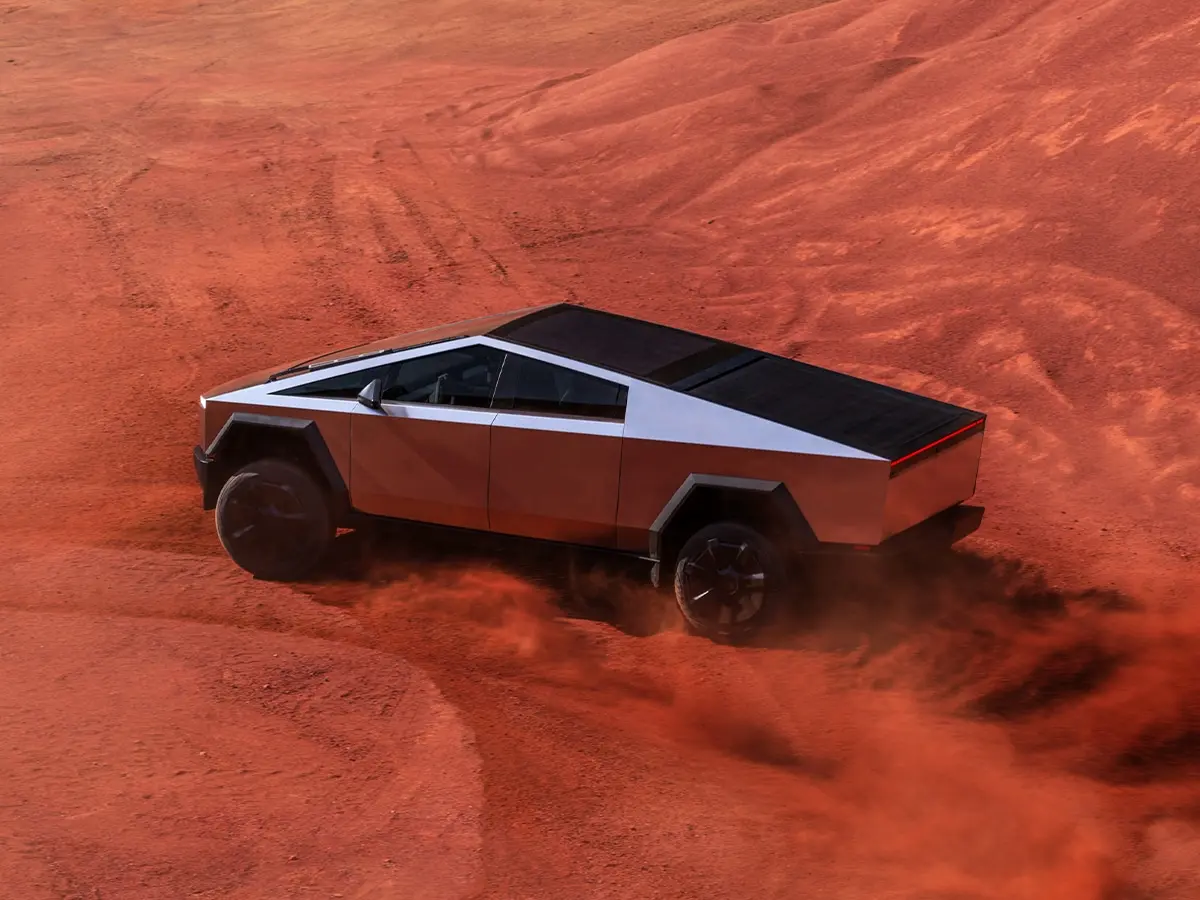
Tesla has officially terminated its plans to bring the Cybertruck to the Australian and New Zealand markets, ending years of speculation regarding the availability of the electric pickup truck in the Oceania region. The decision comes approximately seven years after the company first began accepting reservations for the vehicle and more than two years after it stopped taking new orders locally. In an official communication dispatched to reservation holders, Tesla confirmed that the project to produce a right-hand-drive (RHD) version of the stainless-steel utility vehicle has been discontinued. The announcement marks a significant shift in Tesla’s global strategy, as the company pivots toward consolidating its production efforts on existing high-volume models and upcoming platforms.
According to the correspondence sent to customers, Tesla cited "careful consideration" as the reason for the withdrawal. The email stated that plans to produce the Cybertruck for Australia and New Zealand have been discontinued and that the company is no longer able to fulfill the reservations placed by local consumers. This move affects thousands of reservation holders who had placed refundable AUD $150 deposits since the vehicle’s high-profile unveiling in late 2019. Tesla has committed to providing full refunds for these deposits, a process the company expects to complete within 30 days of receiving confirmed payment details from the affected customers.
Financial Recompense and the Full Self-Driving Incentive
To mitigate the disappointment of the cancellation, Tesla has introduced a unique incentive for those who held Cybertruck reservations. Affected customers are being offered a complimentary one-year subscription to the Full Self-Driving (FSD) (Supervised) software package. Based on current Australian subscription rates of AUD $149 per month, this offer is valued at approximately AUD $1,788. However, the offer comes with a significant caveat: it can only be redeemed upon the purchase and delivery of a new Tesla Model 3 or Model Y.

The FSD (Supervised) software, while advanced, remains a Level 2 driver-assistance system that requires the driver to remain attentive and ready to take control at any moment. The incentive appears to be a strategic attempt by Tesla to convert frustrated Cybertruck reservation holders into owners of its more traditional sedan and SUV models. The company noted that this offer could be combined with certain existing promotions, potentially lowering the barrier to entry for customers looking to remain within the Tesla ecosystem despite the loss of the Cybertruck option.
A Chronology of the Cybertruck’s Regional Journey
The timeline of the Cybertruck in Australia and New Zealand is characterized by early enthusiasm followed by years of regulatory and engineering uncertainty.
- November 2019: Tesla unveils the Cybertruck in California. CEO Elon Musk announces that the vehicle will be available globally, and Tesla begins accepting AUD $150 (NZD $200) refundable deposits in Australia and New Zealand.
- 2020–2021: Global interest surges, with estimates suggesting over one million reservations worldwide. Tesla maintains that a right-hand-drive version is part of the long-term production roadmap.
- May 2022: Tesla quietly stops taking new reservations for the Cybertruck in markets outside of North America, including Australia. This move signals the first major indication that international availability might be restricted.
- November 2023: Production of the Cybertruck officially begins at Giga Texas. Initial deliveries are limited to the "Foundation Series" in the United States.
- May 2024: During a shareholder meeting, Elon Musk casts doubt on the Cybertruck’s international prospects, noting that the vehicle was designed specifically for North American regulations and that meeting international standards would require significant re-engineering.
- Early 2025: Despite Musk’s skepticism, Tesla’s Australian Country Director, Thom Drew, tells local media that the engineering team is still "working hard" to find a path for a right-hand-drive version.
- Early 2026: Tesla sends official cancellation notices to all reservation holders in Australia and New Zealand, confirming the vehicle will not be launched in these markets.
Engineering and Regulatory Hurdles
The cancellation is largely attributed to the immense technical and regulatory challenges associated with adapting the Cybertruck for markets outside of North America. The vehicle’s unique "exoskeleton" design, constructed from cold-rolled stainless steel, presents significant hurdles for international safety standards, particularly concerning pedestrian safety and occupant protection.
In Australia, vehicles must comply with the Australian Design Rules (ADR), which include strict requirements for "crumple zones" and external projections. The rigid nature of the Cybertruck’s stainless-steel body has raised concerns among safety experts regarding its ability to absorb energy during a collision. Furthermore, the sharp angles of the vehicle’s design are difficult to reconcile with European and Australian standards aimed at reducing injury to pedestrians and cyclists.

The requirement for a right-hand-drive (RHD) configuration added another layer of complexity. Converting a vehicle with such a specialized steer-by-wire system and structural architecture requires substantial capital investment. Given that the RHD market (which includes the UK, Japan, Australia, and South Africa) represents a smaller fraction of global truck demand compared to the North American left-hand-drive market, the return on investment for an RHD Cybertruck likely failed to meet Tesla’s internal benchmarks.
Market Data and the Shift in Production Focus
Recent sales data from the United States suggests that the initial "hype" phase of the Cybertruck may be cooling, which likely influenced the decision to abandon expansion into smaller markets. According to estimates from Cox Automotive, US sales of the Cybertruck saw a significant decline between 2024 and 2025. Sales reportedly dropped from 38,965 units in 2024 to 20,237 units in 2025—a decrease of approximately 48 percent.
This downward trend in the domestic market suggests that the Cybertruck may remain a niche product rather than a mass-market volume driver like the Model Y. For a company increasingly focused on manufacturing efficiency and the development of a next-generation "Robotaxi" platform, the diversion of engineering resources to create a low-volume, RHD-specific version of a complex vehicle became difficult to justify.
International Context and Global Rejections
Australia and New Zealand are not the only regions where the Cybertruck has faced roadblocks. The vehicle has yet to receive EU-wide type approval, effectively barring it from mass sale in the European Union. While a handful of individual units have been registered in Europe through "Individual Vehicle Approval" (IVA) loopholes—often requiring modifications like rounded edge covers—German authorities recently made headlines by rejecting a request to import and register Cybertrucks for US military personnel stationed in the country.

The rejection by German regulators underscored the fundamental conflict between the Cybertruck’s design and modern safety philosophy. Authorities cited the lack of sufficient pedestrian protection and the rigidity of the front end as non-negotiable safety violations. Without a major redesign of the vehicle’s front clip and body panels, the Cybertruck remains effectively locked out of most major global markets outside of the US, Canada, and Mexico.
Impact on the Australian Electric Utility Market
The exit of the Cybertruck leaves a void in the burgeoning Australian electric utility (or "ute") market, which is currently dominated by traditional internal combustion engine (ICE) models like the Toyota HiLux and Ford Ranger. While the Cybertruck was never expected to be a direct competitor to these workhorses in terms of price, its presence was anticipated as a halo product for the EV movement.
The cancellation may provide an opening for other manufacturers. Ford has been trialing the F-150 Lightning in various international markets, and Rivian has long expressed interest in an Australian launch, though it has yet to commit to a firm date. Meanwhile, Chinese manufacturers such as LDV and BYD have already begun introducing electric utes to the Australian market, albeit in more traditional form factors.
For Tesla, the focus in Australia and New Zealand will now return exclusively to the Model 3 and Model Y. These two models currently account for the vast majority of EV sales in the region. By offering the FSD incentive, Tesla is clearly prioritizing the retention of its most loyal fans, even if it cannot provide them with the specific vehicle they originally desired.

Broader Implications for Tesla’s Brand
The cancellation of the Cybertruck in Oceania highlights a growing tension within Tesla’s product strategy. Under the leadership of Elon Musk, the company has often prioritized "first-principles" engineering and radical design over traditional market-specific adaptations. While this approach resulted in the ground-breaking Model S and Model 3, the Cybertruck appears to have pushed the limits of this philosophy to a point where global scalability is no longer feasible.
The decision to refund deposits after seven years may also impact consumer trust. While the $150 deposit was a relatively small financial commitment, the long wait times and eventual cancellation reflect the challenges Tesla faces in moving from a Silicon Valley startup to a mature global automaker. As the EV market becomes increasingly crowded with established legacy brands and aggressive new entrants, the ability to deliver on long-term product promises will be crucial for maintaining brand equity.
In conclusion, the Cybertruck will remain a North American curiosity for the foreseeable future. For Australian and New Zealand enthusiasts, the "stainless-steel spaceship" has reached the end of the road before it even arrived. As Tesla processes the final refunds, the focus shifts to whether the company can successfully transition these would-be truck owners into its existing fleet, or if they will look toward other manufacturers to fulfill their electric utility needs.




 Nila Kartika Wati

 Eva Lovia

 Yuyun Lusiyani

 Ana Megawati

 Joko Widodo
