
 Pevita Pearce
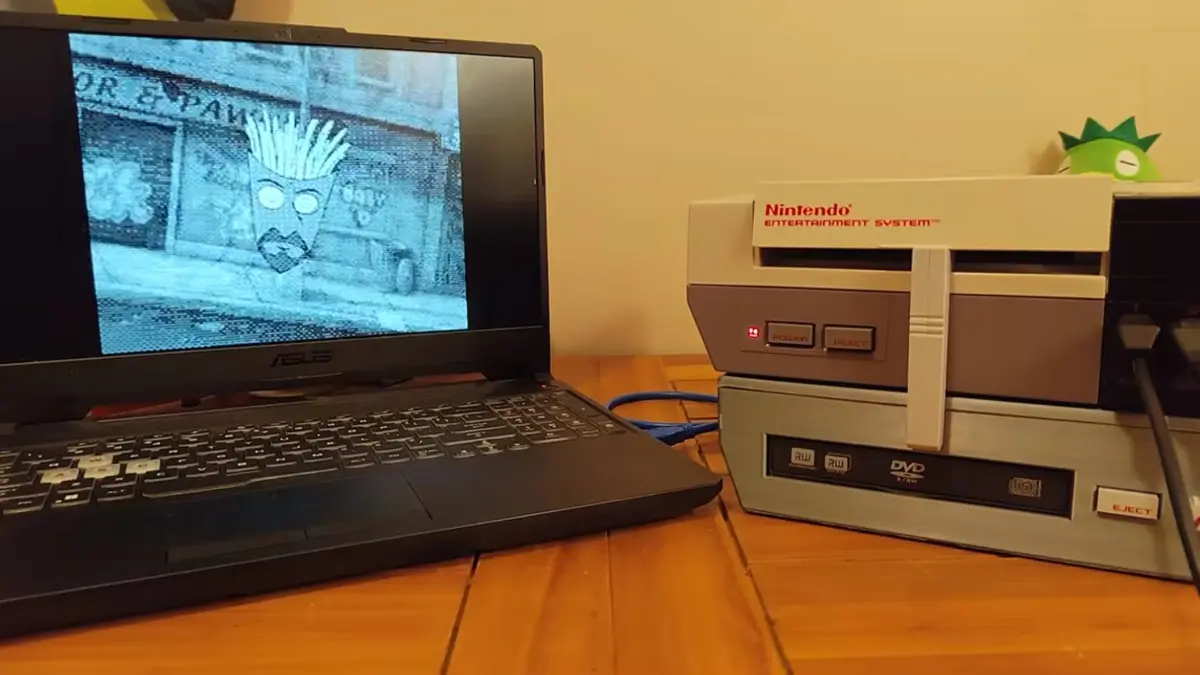
The Nintendo Entertainment System (NES), a cornerstone of the 1980s home video game industry, has been repurposed into a fully functional desktop computer by a prominent hardware modder and YouTuber known as Throaty Mumbo. This ambitious project, documented in an exhaustive 55-minute technical presentation, demonstrates the potential for legacy hardware to be adapted for modern computing tasks, including internet browsing, word processing, and media playback. By integrating modern field-programmable gate array (FPGA) technology with original 8-bit hardware, the creator has successfully bridged a 40-year gap in computing history, delivering a machine that functions as a productivity suite while maintaining the aesthetic and tactile charm of the 1985 console.
The project, colloquially titled "NESPC," represents a significant achievement in the retro-modding community. While the NES was originally designed as a dedicated gaming machine, its Japanese counterpart, the Famicom, was marketed as the "Family Computer." Throaty Mumbo’s endeavor essentially fulfills the original nomenclature of the system, transforming it from a simple entertainment device into a workstation complete with a keyboard, mouse, MIDI support, and the ability to run the seminal 1993 first-person shooter, Doom.
Historical Context and Technical Limitations of the NES
To appreciate the magnitude of the NESPC project, one must understand the technical constraints of the original hardware. Released in North America in 1985, the NES was powered by a Ricoh 2A03 8-bit processor, which was based on the MOS Technology 6502 core. It featured a mere 2 KB of onboard work RAM and 2 KB of video RAM. By comparison, even the most basic modern smartphones possess millions of times more memory and processing power.
The system was never intended to handle high-level operating systems or complex multitasking. Its architecture was specialized for sprite manipulation and tile-based backgrounds, rendering it largely incompatible with the x86 or ARM architectures that define modern personal computing. Consequently, the transition to a "PC" required not just software emulation, but a sophisticated hardware-software hybrid approach that could offload intensive tasks while still utilizing the NES as the primary interface and output device.
The Evolution of the NESPC: A Chronology of Development
The development of the NESPC was characterized by a series of iterative failures and technical breakthroughs. Throaty Mumbo’s initial attempts focused on software-based solutions that attempted to force the original 8-bit CPU to handle modern tasks.
- The Windows 98 Experiment: The creator first attempted to run a modified, "bootleg" version of Windows 98. This proved largely unsuccessful, as the overhead required to emulate a 32-bit environment on an 8-bit processor resulted in a system that was functionally inert and prone to immediate crashes.
- The Linux Emulator Phase: Following the failure of the Windows attempt, Mumbo experimented with a stripped-down Linux-based emulator. While this provided a more stable foundation, the performance was prohibitively slow, with input lag making basic navigation impossible.
- The FPGA Breakthrough: The project found its footing when the creator pivoted to using the EverDrive N8 Pro. This high-end flash cartridge contains an onboard FPGA—a type of integrated circuit that can be programmed to mimic other hardware. By utilizing the FPGA to handle the demanding x86 processing, the NES was essentially relegated to a terminal role, handling the display output and input signals while the cartridge did the heavy lifting.
This hybrid architecture allowed for the creation of a custom, Windows-inspired desktop environment. The resulting interface includes a taskbar, a "Start" menu, a file manager, and a recycling bin, all rendered within the NES’s native resolution and color palette.
Hardware Modifications and Peripheral Integration
A key requirement for any functional PC is the ability to interface with standard input devices. The NES, which originally used simple two-button controllers, lacked the necessary ports for modern peripherals. To rectify this, Mumbo engineered a custom USB adapter that allows the console to recognize and interact with a standard keyboard and mouse.
The hardware expansion did not stop at input devices. The NESPC also features:
- MIDI Support: Through a custom interface, the system can connect to a MIDI keyboard, allowing users to compose music using the NES’s iconic Ricoh 2A03 sound chip.
- The NESCD Accessory: Building upon a previous project, Mumbo integrated an optical drive capable of reading CDs and DVDs. This allows the console to function as a media center, capable of playing music and video.
- Wi-Fi Connectivity: Through the use of modern wireless modules, the NESPC can connect to the internet. This enables the console to access a text-heavy version of the web, with the creator demonstrating successful navigation of Wikipedia and YouTube.
The "Can It Run Doom?" Benchmark
In the world of hardware modification, the ability to run the 1993 title Doom is considered the ultimate litmus test for any non-traditional computing device. Over the years, Doom has been ported to everything from digital cameras and printers to pregnancy tests. The NESPC project successfully added the NES to this list.

Running Doom on the NES is a complex feat because the game’s 3D engine requires significantly more computational power than the console’s 2D hardware can provide. By leveraging the EverDrive’s FPGA, Mumbo was able to render the game’s pseudo-3D environments and project them onto the NES’s display. While the visuals are described as "glitchy" and "crunchy" due to the console’s limited color depth and resolution, the game remains fully playable. This achievement serves as a testament to the versatility of the NES when paired with modern co-processors.
Media Playback and Visual Fidelity
One of the more visually striking aspects of the project is the console’s ability to play video content. Mumbo demonstrated this by playing an episode of the animated series Aqua Teen Hunger Force. Due to the NES’s hardware limitations, the video is rendered in a high-contrast, "crunchy" black-and-white format.
While the video quality is far below modern high-definition standards, the technical achievement lies in the data throughput. Streaming video data through an 8-bit console requires sophisticated compression and a high-speed data path between the storage medium (the DVD drive or internet connection) and the Picture Processing Unit (PPU). The resulting aesthetic has been praised by enthusiasts for its unique, lo-fi "retrofuturistic" appeal.
Broader Implications and Official Documentation
The NESPC project is more than a novelty; it is a contribution to the open-source hardware and software movement. Throaty Mumbo has made the project files, including the custom desktop environment and hardware schematics, available on GitHub. This transparency allows other engineers and hobbyists to study the code, improve upon the design, or attempt their own builds.
From a broader perspective, this project highlights several trends in modern technology:
- Sustainability and E-Waste: By finding new uses for 40-year-old hardware, modders highlight the longevity of well-built electronics.
- The Power of FPGAs: The project demonstrates how FPGA technology can be used to "bridge" different eras of computing, providing a second life to devices that would otherwise be obsolete.
- The Intersection of Engineering and Art: The creation of a "Windows-on-NES" interface is an exercise in UI/UX design within extreme constraints, forcing the creator to prioritize essential functions and creative visual solutions.
Analysis of the Retro-Modding Trend
The success of the NESPC project follows a string of similar high-profile retro-computing experiments. In mid-2026, a developer gained international attention for running Doom on a Canon DSLR camera, and another YouTuber recently made headlines for restoring a childhood PC only to find 30-year-old data and gaming cheats. These stories resonate because they tap into a collective nostalgia while showcasing the ingenuity required to overcome the "planned obsolescence" of the modern tech industry.
Industry analysts suggest that the interest in retro-modding is driven by a desire for "tangible" computing. In an era of cloud-based services and locked-down ecosystems, the NESPC represents a return to a time when hardware was understandable, hackable, and physically substantial.
Conclusion
The transformation of the Nintendo Entertainment System into the NESPC is a landmark achievement in the field of hobbyist engineering. By successfully integrating a desktop environment, internet browsing, and media playback into a machine from 1985, Throaty Mumbo has proven that the boundaries of legacy hardware are often defined more by imagination than by silicon.
While the NESPC may be, as its creator admits, "very strange and impractical," it serves as a powerful proof of concept. It reminds the technology community that even the oldest devices can be adapted for the modern age, provided one has the technical skill and the patience to navigate the complexities of 8-bit architecture. As the project lives on through GitHub, it will likely inspire a new generation of modders to look at their old consoles not as relics of the past, but as foundations for the future.




 Nila Kartika Wati

 Eva Lovia

 Lina Irawan

 Yuyun Lusiyani

 Ana Megawati

 Joko Widodo
