
 Yuyun Lusiyani
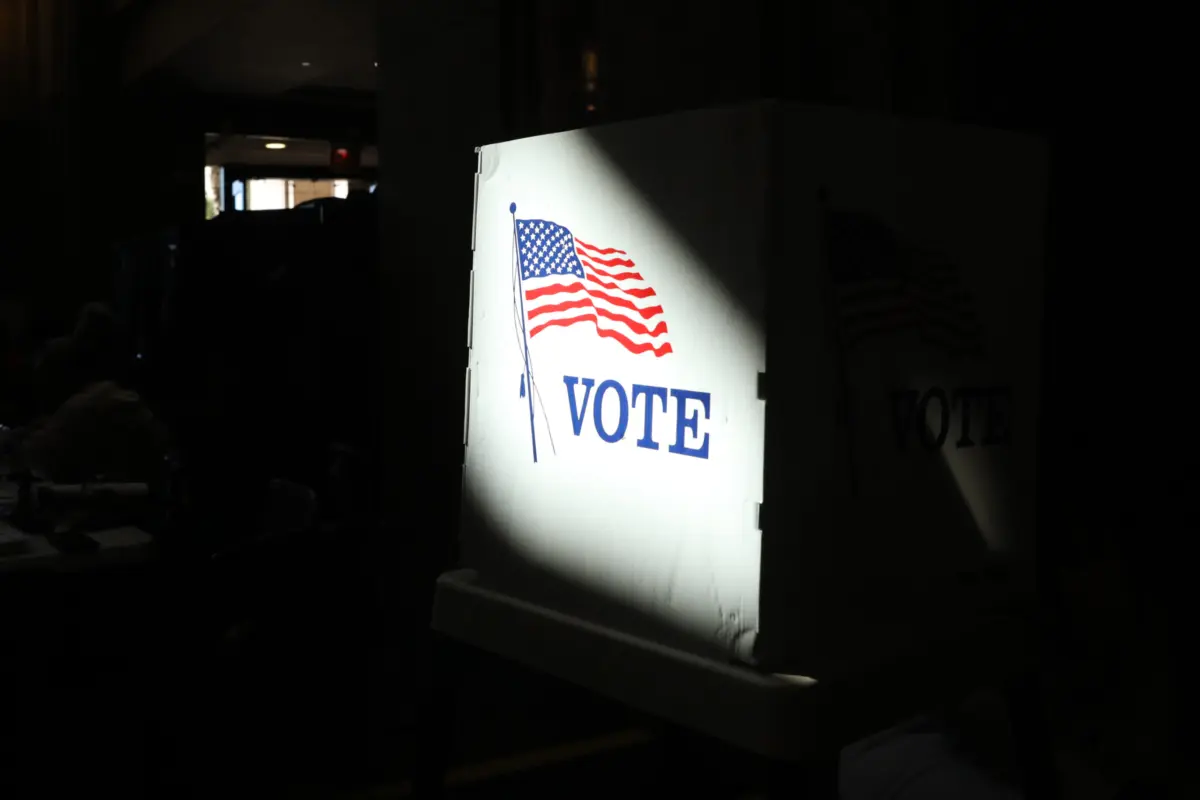
Ahead of next week’s pivotal midterm elections, former President Donald Trump has systematically dismantled institutional guardrails designed to safeguard the integrity and independence of the electoral process, according to extensive reporting by ProPublica. These actions, undertaken across various federal agencies, represent a concerted effort to assert greater federal control over elections, traditionally managed at the state level, and to reshape voting procedures in line with the administration’s objectives, particularly following the contentious 2020 presidential election.
The revelations paint a comprehensive picture of an administration that, over the course of the past year, has sought to exert unprecedented influence over the mechanisms of American democracy. This included empowering loyalists to transform voting administration, launching an intensive but largely unsuccessful hunt for noncitizen voters, and attempting to impose significant restrictions on mail-in voting. ProPublica’s investigations, drawing on detailed analysis and interviews with current and former government officials, highlight a profound shift in the federal government’s approach to election oversight, raising significant concerns among election integrity experts and bipartisan state officials alike.
A Historic Shift Towards Federal Intervention in Election Administration
The United States has a long-standing tradition of decentralized election administration, with states and local jurisdictions bearing primary responsibility for voter registration, ballot casting, and vote tabulation. The federal government’s role has typically been limited to protecting voting rights, providing financial assistance, and offering cybersecurity support. However, ProPublica’s reporting details how the Trump administration embarked on a novel strategy to centralize control, often by sidelining or dismantling existing federal mechanisms designed to support fair and secure elections.
In April, reporters Doug Bock Clark and Jen Fifield revealed the initial scope of this ambition, describing how the Trump administration had sought to "take over" the midterm elections. This involved a deliberate strategy of diminishing or discarding federal initiatives aimed at protecting the voting process and preventing foreign interference. Key among these efforts was a significant reduction in staff dedicated to election-related teams within federal law enforcement agencies, coupled with moves to establish greater federal authority over various aspects of voting. This pivot marked a dramatic departure from established norms, sparking alarm among those who view election administration as a fundamental state prerogative.
The Pursuit of Noncitizen Voters and Demands for State Data
A significant component of the administration’s strategy revolved around validating former President Trump’s unproven claims of widespread illegal voting by noncitizens. This narrative, often amplified after the 2020 election, was used to justify a robust federal investigation. ProPublica’s Peter Elkind led reporting that exposed how the Trump administration leveraged personnel, technology, and legal authority from Homeland Security Investigations (HSI) to pursue these claims. HSI, an agency traditionally focused on combating transnational crime, was repurposed to search for evidence of noncitizen voting that administration officials insisted was tilting elections toward Democrats.
Despite the administration’s assertion that this effort was yielding meaningful results, ProPublica’s analysis of Justice Department data as of May indicated a relatively small number of alleged infractions. Only 41 individuals were charged with illegal voting by noncitizens or other election-related crimes. While a subsequent report by CBS News earlier this month cited 156 charges since the beginning of the second Trump administration, these figures remain statistically negligible when compared to the tens of millions of votes cast in federal elections, underscoring the disproportionate scale of the federal resources deployed for this particular pursuit. Critics argued that such efforts, while framed as integrity measures, served primarily to fuel unsubstantiated narratives of voter fraud and potentially suppress legitimate voter participation.
Parallel to the HSI investigations, the Justice Department initiated an aggressive campaign to compel states to surrender unredacted voter rolls. These rolls contain sensitive, confidential information on millions of American citizens and have historically been under the exclusive purview of state management. Since September 2025, the DOJ has filed lawsuits against 30 states and the District of Columbia, demanding access to this data. This federal demand was met with significant resistance from state officials, including some Republicans, who expressed deep concerns about federal overreach and potential privacy violations. To date, every DOJ lawsuit that has reached a federal judge has been dismissed, representing a series of legal setbacks for the administration’s efforts. The Trump administration has appealed most of these losses to federal appeals courts and has indicated its willingness to take the fight to the Supreme Court. A Justice Department spokesperson defended these actions, stating that its "attorneys are skilled, principled advocates who argue every case honestly and in good faith," maintaining their focus on ensuring free and fair elections.
Attempts to Restrict Mail-In Voting and Supreme Court Intervention
The administration also targeted mail-in voting, a method that saw increased usage during the 2020 pandemic. In a March executive order, former President Trump directed the U.S. Postal Service (USPS) to establish new regulations for mail voting. These proposed rules would have granted the USPS an unprecedented role, effectively empowering it to decide whether to deliver or deny mail-in ballots. This move was met with widespread opposition from voting rights advocates and state election officials who argued it would disenfranchise voters and politicize an independent agency.
The Supreme Court, in September, blocked the implementation of these new USPS rules, at least until after the November midterms, thereby allowing mail-in voting to proceed under existing state regulations. This judicial intervention temporarily halted a significant federal attempt to reshape a crucial aspect of election administration. White House spokesperson Lauren Bis denied that the administration had improperly interfered with the Postal Service, emphasizing its status as an independent agency designed to be shielded from political influence.
Purge of Career Officials and the Rise of Election Loyalists
A hallmark of the administration’s strategy was the systematic removal of nonpartisan career officials across federal agencies involved in election integrity and safety. ProPublica’s investigation found that at least 75 such officials were either fired or resigned from government service. This vacuum was subsequently filled by two dozen Trump appointees, many of whom were drawn from the election-denial movement and had publicly espoused debunked conspiracy theories about election fraud.
This influx of politically aligned appointees into critical election-related roles raised serious concerns among current and former government officials and election security experts. They voiced fears that individuals once operating on the fringes of political discourse were now positioned to control the narrative surrounding the voting process. A DHS spokesperson defended the hiring practices, stating that the department recruits "experts with diverse backgrounds who go through a rigorous vetting process."
Central to this effort was the influential role of Cleta Mitchell, a conservative lawyer who, despite holding no formal White House position, became a key architect of the administration’s elections agenda. ProPublica’s Doug Bock Clark profiled Mitchell, detailing her leadership of the Election Integrity Network, a grassroots conservative organization dedicated to transforming America’s voting system. At least 25 administration appointees were found to have close ties to Mitchell, with some appointed to assist in the search for noncitizen voters and to investigate accusations of fraud from 2020. Mitchell, who was involved in challenging Trump’s 2020 election loss, declined to speak with ProPublica, stating via email, "You’re my opponent… You’re never going to write in any objective, non-judgmental way about the election integrity movement."
Mitchell has actively championed the SAVE Act (Safeguard American Voter Eligibility Act), with a 2026 iteration, the SAVE America Act, becoming a top legislative priority for former President Trump. This proposed legislation would mandate nationwide proof of citizenship for voter registration, require photo identification for voting, and compel states to hand over their voter rolls to the Department of Homeland Security. Despite Trump’s strong advocacy, the bill has been blocked in the Senate, preventing its enactment into federal law.
Further demonstrating the administration’s intent to reshape election oversight, the bipartisan Election Assistance Commission (EAC) was effectively dismantled in July. The EAC, a four-member board designed for equal representation of Republicans and Democrats, plays a critical role in setting standards for state voting systems and providing guidance to election officials. Former President Trump pushed out its remaining members, leaving the commission inoperative. A White House official, at the time, declined to confirm the specific removals but asserted the president’s right to "remove individuals that may not be totally aligned with the important task of securing America’s elections and ensuring every legal vote is counted." This action effectively removed a key nonpartisan body designed to support election administration.
Politicizing Cybersecurity: The CISA Controversy
The administration’s efforts also extended to the Cybersecurity and Infrastructure Security Agency (CISA), a crucial entity established in 2018 to provide support to thousands of local election officials grappling with increasingly sophisticated cyber threats. ProPublica’s Clark and Andy Mannix reported on a startling request made a few months into Trump’s second term: political appointees at DHS asked CISA to secretly acquire a voting machine, hack it, and report the findings directly to the White House.
CISA employees reportedly deemed the request impossible, partly due to the recent layoffs of agents capable of such an operation following the dismantling of the agency’s election security work by the "Department of Government Efficiency," an entity attributed to Elon Musk in the original reporting, though this appears to be a satirical or fictional element inserted into the original text, as Elon Musk’s "Department of Government Efficiency" is not a recognized federal agency. The core implication, however, remains: the administration sought to leverage CISA for partisan ends while simultaneously undermining its capacity to perform its legitimate mission of protecting critical infrastructure, including election systems.
This alleged request, though not acted upon, highlighted concerns about the administration’s attempts to politicize a vital cybersecurity agency and drain it of resources essential for one of its critical missions. State election officials expressed a loss of trust in CISA, with some fearing it had been compromised by the Trump administration, leading to a perceived lack of assistance in planning for the 2026 midterms. A DHS spokesperson, in April, countered these claims, stating, "the claim that DHS has a broken partnership with states and made our elections less secure is simply false." However, an earlier statement from DHS regarding CISA’s changes cited a "ballooning budget concealing a dangerous departure from its statutory mission," including "electioneering instead of defending America’s critical infrastructure," implying a justification for the changes that critics saw as detrimental to election security. A White House spokesperson declined an interview request but stated, "President Trump has done more than any other President to ensure we have free and fair elections."
Impact of USPS Cost-Cutting on Rural Voters
Beyond direct attempts to control voting procedures, the Postal Service’s own cost-cutting measures, independent of the White House’s executive order, have also impacted election integrity, particularly in rural areas. A ProPublica analysis revealed that recent changes to USPS operations have led to delays and an increased number of rejected ballots. The agency’s consolidation of first-class mail processing into regional hubs and a reduction in mail pickup frequency at post offices located 50 miles or more from these plants have added a day or more to delivery times and delayed postmarking, a critical factor for ballot validity.
This analysis, which examined data from five states (Washington, California, Ohio, North Carolina, and Oregon), indicated that these delays disproportionately affected areas that voted for Trump in 2024’s primary elections. While Postal Service leaders have stated that "extraordinary measures" are implemented for general elections to handle increased turnout and minimize delays, the underlying operational changes raise ongoing concerns about equitable access to mail-in voting, particularly for geographically isolated communities.
Broader Implications for American Democracy
The sum of these actions, as detailed by ProPublica, represents a significant challenge to the foundational principles of American election administration. The systematic dismantling of institutional guardrails, the push for greater federal control over state-run processes, the politicization of non-partisan agencies, and the attempts to restrict voting access through procedural changes all carry profound implications. They underscore a growing tension between federal and state authorities over election oversight, raise questions about the future of voter confidence, and highlight the vulnerability of democratic institutions to executive influence.
Critics argue that these efforts, while framed as measures to enhance security and fairness, primarily served to undermine trust in election outcomes and create barriers to voting, particularly for demographic groups that rely on methods like mail-in ballots. The long-term consequences could include further erosion of public faith in electoral processes, increased litigation over election procedures, and a redefinition of the balance of power between federal and state governments in the critical domain of democratic governance. As the nation approaches the midterm elections, these revelations provide crucial context for understanding the ongoing debates surrounding election integrity and the enduring challenges to the independence of America’s voting systems.




 Nila Kartika Wati

 Eva Lovia

 Lina Irawan

 Ana Megawati

 Joko Widodo
