Lina Irawan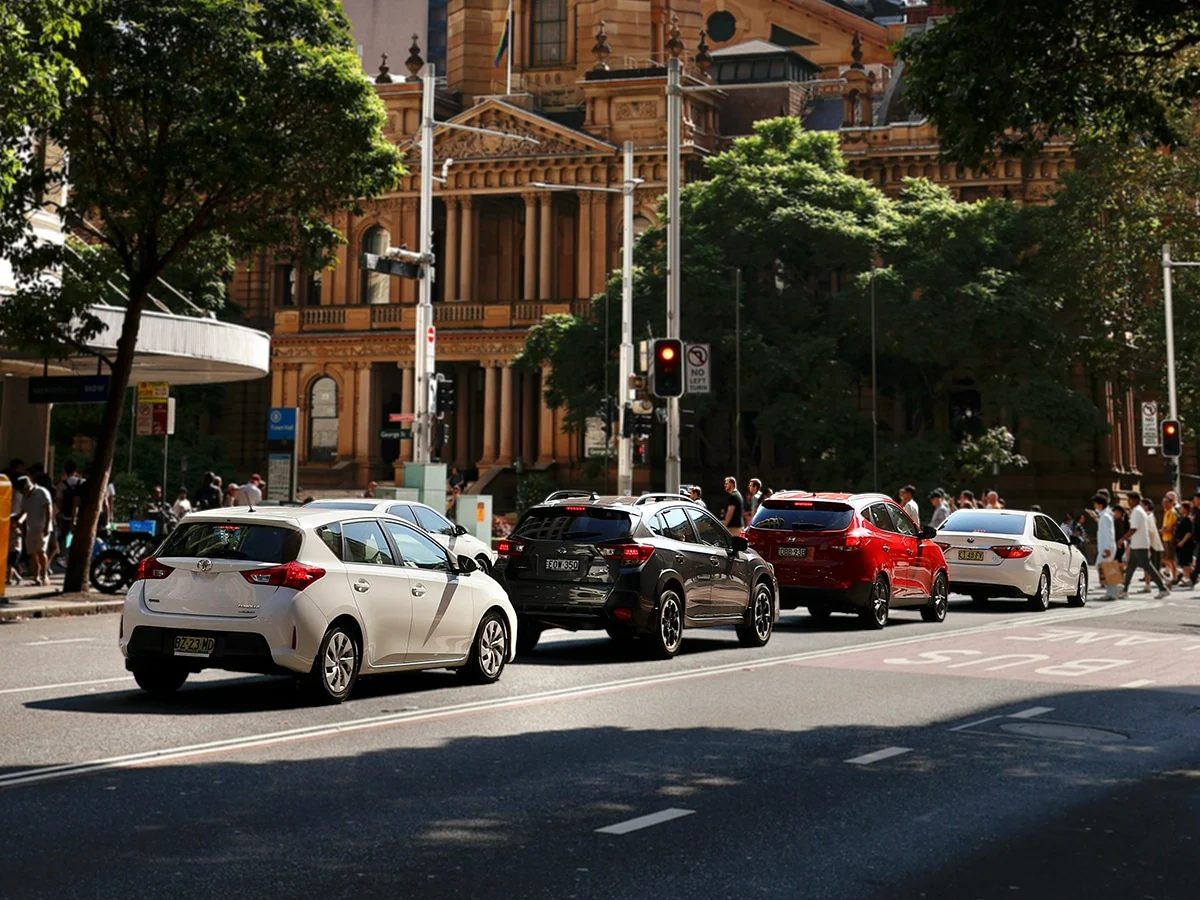
The City of Moreton Bay in Queensland has officially launched a pioneering $170,000 trial of artificial intelligence-managed traffic signals, marking a significant departure from the mechanical and electronic infrastructure that has governed Australian roads for over seven decades. Situated at the critical junction of Paper Avenue and Moreton Parade in Petrie, the trial represents a strategic attempt to modernize the nation’s aging traffic management systems. By replacing fixed-phase timers and underground electromagnetic induction loops with high-precision 3D LiDAR and optical sensors, the project aims to eliminate the daily frustration of motorists idling at red lights while cross-streets remain vacant. This initiative, scheduled to run from September 2026 through 2029, serves as the primary testing ground for a sophisticated technology suite developed by the Austrian transportation firm SWARCO. If successful, the Petrie installation will act as a blueprint for a significantly larger $15 million deployment across major arterial transport corridors in Brisbane, signaling a nationwide shift toward "smart" infrastructure.
The Technological Shift: From Induction Loops to 3D Spatial Intelligence
For the majority of the 20th and early 21st centuries, Australian traffic management has relied on the Sydney Coordinated Adaptive Traffic System (SCATS) or similar frameworks that utilize inductive loops—wire coils buried beneath the asphalt that detect the presence of metal. While revolutionary when first introduced, these systems are inherently limited by their binary nature; they can detect that a vehicle is present, but they struggle to differentiate between a bicycle, a heavy freight truck, or a bus, and they offer virtually no data regarding pedestrians or micro-mobility users.
The SWARCO system being trialed in Moreton Bay abandons this legacy approach in favor of "active demand" management. Using a combination of overhead optical cameras and Light Detection and Ranging (LiDAR) technology, the system constructs a real-time, three-dimensional model of the intersection. This spatial intelligence allows the AI controller to identify individual road users with high granularity. By recognizing the specific type of vehicle approaching—and its speed—the AI can dynamically adjust signal phases. Instead of following a predetermined cycle where "Movement A" always follows "Movement B," the system can skip phases entirely if no demand is detected or extend a green light for a heavy vehicle to prevent unnecessary braking and acceleration, which are primary contributors to urban emissions and brake wear.
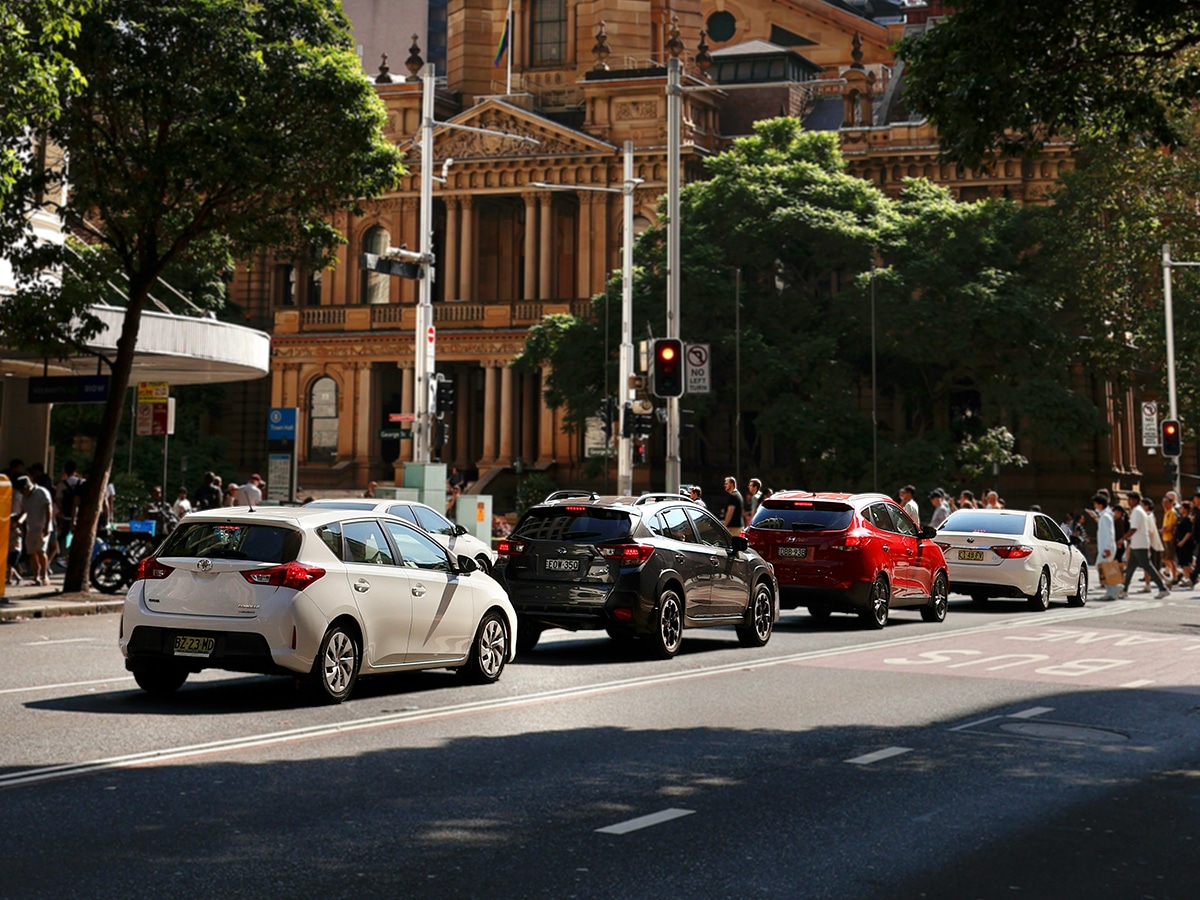
A Chronology of Traffic Innovation in Australia
To understand the significance of the Moreton Bay trial, one must look at the timeline of traffic control in Australia. In the 1950s, the first automated signals began replacing manual police direction, utilizing simple mechanical timers. By the late 1970s and early 1980s, the development of SCATS allowed for a degree of coordination between intersections, using centralized computers to manage flow based on loop data. However, these systems remained "reactive" rather than "predictive."
The current trial represents the third major era of traffic management:
- 1950s–1970s: Fixed-time cycles and manual intervention.
- 1980s–2010s: Centralized adaptive systems (SCATS) using underground sensors.
- 2020s and beyond: Decentralized AI and LiDAR-based spatial modeling with real-time autonomous decision-making.
The Moreton Bay trial is strategically located adjacent to the University of the Sunshine Coast (UniSC) Moreton Bay campus. This location provides a diverse mix of road users, including high volumes of students, public transport buses, and local commuters. The data collected between 2026 and 2029 will be scrutinized by urban planners to determine how the AI handles "edge cases," such as emergency vehicle priority and the erratic movement patterns of pedestrians in a university precinct.
Supporting Data: The Economic and Environmental Cost of Idling
The push for AI integration is driven by increasingly dire statistics regarding urban congestion. According to data from Infrastructure Australia, the social cost of congestion in the nation’s capital cities is projected to reach $38.8 billion annually by 2031 if no significant technological interventions are made. In Brisbane alone, the average commuter loses dozens of hours per year to avoidable traffic delays.

International benchmarks provide a compelling case for the SWARCO trial. In Pittsburgh, USA, the implementation of the SURTRAC system—a similar AI-driven approach developed at Carnegie Mellon University—resulted in a 25 percent reduction in travel times and a 40 percent reduction in time spent idling at red lights. From an environmental perspective, the implications are equally profound. Idle vehicles are significantly less fuel-efficient and produce higher concentrations of particulate matter. The Pittsburgh study noted a 21 percent reduction in vehicle emissions following the AI rollout.
Moreton Bay Mayor Peter Flannery emphasized these benefits, noting that the trial is not merely about convenience but about sustainability. "There is the potential to substantially reduce the time motorists spend unnecessarily sitting at red lights, which is often constrained by legacy traffic control methods," Flannery stated. "This presents the opportunity to reduce emissions as vehicles will idle less at traffic lights."
Behavioral Engineering: Rewarding Compliance via "Rest in Red"
A secondary but vital component of the AI traffic revolution is the ability to influence driver behavior through positive reinforcement. While traditional Australian enforcement relies heavily on speed cameras and financial penalties, the new sensors allow for "behavioral signaling."
In several US jurisdictions, including Portland and Albuquerque, "Rest in Red" configurations have been trialed. In these systems, the signal defaults to red in all directions during low-traffic periods. As a vehicle approaches, sensors calculate its speed. If the driver is adhering to the posted speed limit, the light turns green before they are forced to stop. If the driver is speeding, the light remains red, forcing a stop. This creates a direct, immediate feedback loop that rewards law-abiding behavior.

Data from Southeast Powell Boulevard in Portland showed that average speeds dropped from 63 kph to the 48 kph limit almost immediately after the implementation of speed-triggered signals. Furthermore, a North Carolina Department of Transportation study found that such configurations contributed to a 43 percent reduction in total crashes across monitored corridors. While the Moreton Bay trial is currently focused on flow optimization, the underlying hardware is fully capable of supporting these behavioral safety features in the future.
Official Responses and Stakeholder Perspectives
The transition to AI-managed roads has prompted a mix of optimism and caution from experts. Associate Professor Mohsen Ramezani of the University of Sydney noted that while the hardware is advanced, the true challenge lies in the software’s "decision-making" capabilities. "We can equip an intersection with heaps of sensors," Ramezani explained, "but it’s the decision-making—the smartness—that still needs to be improved." He suggested that the next hurdle will be moving from managing a single intersection to synchronizing an entire network of AI "nodes."
From a local government perspective, the shift introduces a new fiscal reality. A spokesperson for the Moreton Bay City Council confirmed that the move toward AI signals involves a transition from a "build-and-forget" infrastructure model to a "Software-as-a-Service" (SaaS) model. Because the AI requires continuous data processing—often handled at off-site data centers—councils will face ongoing subscription and data management fees.
"There will be ongoing costs associated with using the AI-powered traffic signal, which will be assessed as part of the trial," the spokesperson stated. This financial commitment is reflected in the proliferation of data centers across Sydney and South East Queensland, which are increasingly being utilized to process the "firehose" of data generated by smart city sensors.

Broader Implications for Urban Planning and Privacy
The implications of this trial extend beyond the timing of lights. The use of 3D LiDAR is a strategic choice for privacy-conscious municipalities. Unlike high-resolution video cameras, which can capture facial features and license plates (raising significant surveillance concerns), LiDAR creates a "point cloud" of data. It "sees" a person as a three-dimensional shape but cannot identify them individually, providing a balance between high-level data collection and citizen privacy.
Furthermore, the Petrie trial is a precursor to the integration of "Connected and Autonomous Vehicles" (CAVs). Future iterations of the SWARCO system will likely utilize V2I (Vehicle-to-Infrastructure) communication, where the traffic light "talks" directly to the car’s onboard computer, advising it of the optimal speed to maintain to hit a "green wave" of lights, thereby eliminating the need for braking altogether.
As the trial progresses toward its 2029 conclusion, the metrics for success will be clear: a measurable decrease in transit times, a reduction in localized carbon monoxide levels, and a cost-benefit analysis that justifies the recurring software fees. If the Moreton Bay experiment succeeds, the iconic "red light at an empty street" may soon become a relic of Australia’s automotive history, replaced by a silent, invisible algorithm that keeps the nation moving.



 Joko Widodo
 admin
admin
 Yuyun Lusiyani
 Eva Lovia