
 Nila Kartika Wati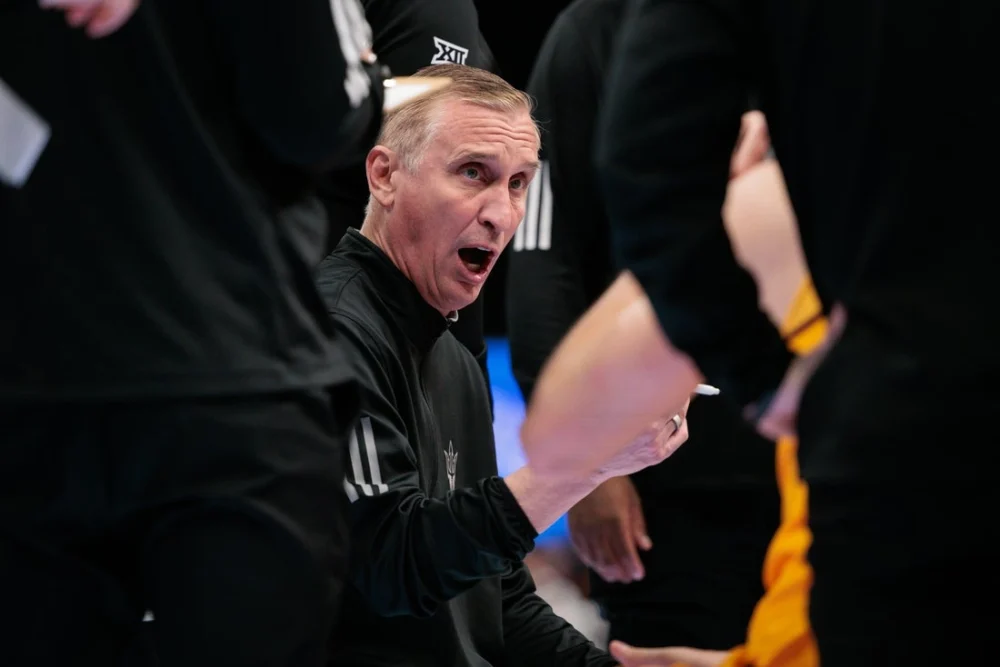
The tenure of Bobby Hurley as the head coach of the Arizona State Sun Devils men’s basketball program has officially come to an end, with athletic director Graham Rossini announcing Wednesday that Hurley’s contract will not be renewed. This decision marks the conclusion of an 11-season journey for Hurley, during which he led the program to three NCAA Tournament appearances but ultimately fell short of sustained postseason success. The announcement arrived mere hours after the Sun Devils suffered a decisive 91-42 defeat at the hands of the No. 7 ranked Iowa State Cyclones in the second round of the Big 12 Conference Tournament, a performance that underscored the team’s struggles throughout the season.
A Disappointing Culmination to an Era
The timing of the announcement, directly following such a lopsided loss, speaks volumes about the direction the athletic department is looking to steer the program. While the loss to Iowa State provided a stark and immediate backdrop, the decision to part ways with Hurley appears to be the culmination of a season that, despite some notable victories, ultimately fell short of expectations. Arizona State concluded the 2023-2024 campaign with a 17-16 overall record, finishing a disappointing 11th in the highly competitive Big 12 Conference. This placement in the standings, coupled with a first-round exit from the conference tournament, likely proved to be the tipping point for the university’s leadership.
Rossini Expresses Gratitude Amidst Change
In a statement released by the university, Athletic Director Graham Rossini acknowledged Hurley’s significant contributions to the program and the broader landscape of college basketball. "Bobby Hurley has made incredible contributions to the sport of basketball, and that certainly includes many memorable moments during his time as our head coach," Rossini stated. "While we will not be extending his contract, we are so grateful for the 11 years that Coach, Leslie, Cameron, Sydney, Bobby Jr., and he spent with us at ASU. We wish Coach well moving forward and we are thankful for his leadership while at ASU." The statement, while expressing gratitude for Hurley’s service and acknowledging his family’s involvement, clearly signals a desire for a fresh start. The mention of his family, Leslie and their children Cameron, Sydney, and Bobby Jr., underscores the personal impact of this transition for the Hurley family, who became deeply embedded in the Arizona State community during his tenure.
Hurley’s Legacy: A Statistical Overview
During his 11 seasons at the helm of the Sun Devils, Bobby Hurley amassed a record of 185-167. This puts him second in program history for coaching wins, trailing only the legendary Ned Wulk, who secured 406 victories between 1957 and 1982. While Hurley’s win total represents a respectable achievement, the overall trajectory of the program, particularly in recent years, likely played a crucial role in the decision-making process.
Navigating Challenges and Glimmers of Hope
Despite the ultimate outcome, Hurley’s tenure was not without its bright spots and significant moments. The Sun Devils reached the NCAA Tournament in three seasons: 2017-18, 2018-19, and most recently in 2022-23. These tournament berths represented periods of heightened excitement and success for the program and its fanbase. However, a persistent challenge throughout Hurley’s time in Tempe was advancing beyond the first round of the NCAA Tournament; the Sun Devils were unable to achieve this milestone under his guidance.
This past season, even as the team struggled to find consistent footing in the demanding Big 12, there were flashes of the kind of performance that could energize a fanbase. A notable victory over then-No. 14 Kansas in Hurley’s final home game on March 3rd provided a significant upset and a moment of triumph. Furthermore, an opening-round win against Baylor in the Big 12 tournament offered a glimmer of hope that the team might find momentum in the postseason. However, these victories, while significant, were ultimately not enough to overcome the season’s overall inconsistencies and the program’s perceived standing within the conference.
A Storied Playing Career and Coaching Beginnings
Bobby Hurley’s connection to elite basketball predates his coaching career. As a player at Duke University under Coach Mike Krzyzewski, Hurley was a standout point guard, leading the Blue Devils to two national championships in 1991 and 1992. He remains the NCAA’s all-time assists leader, a testament to his exceptional playmaking abilities and court vision.
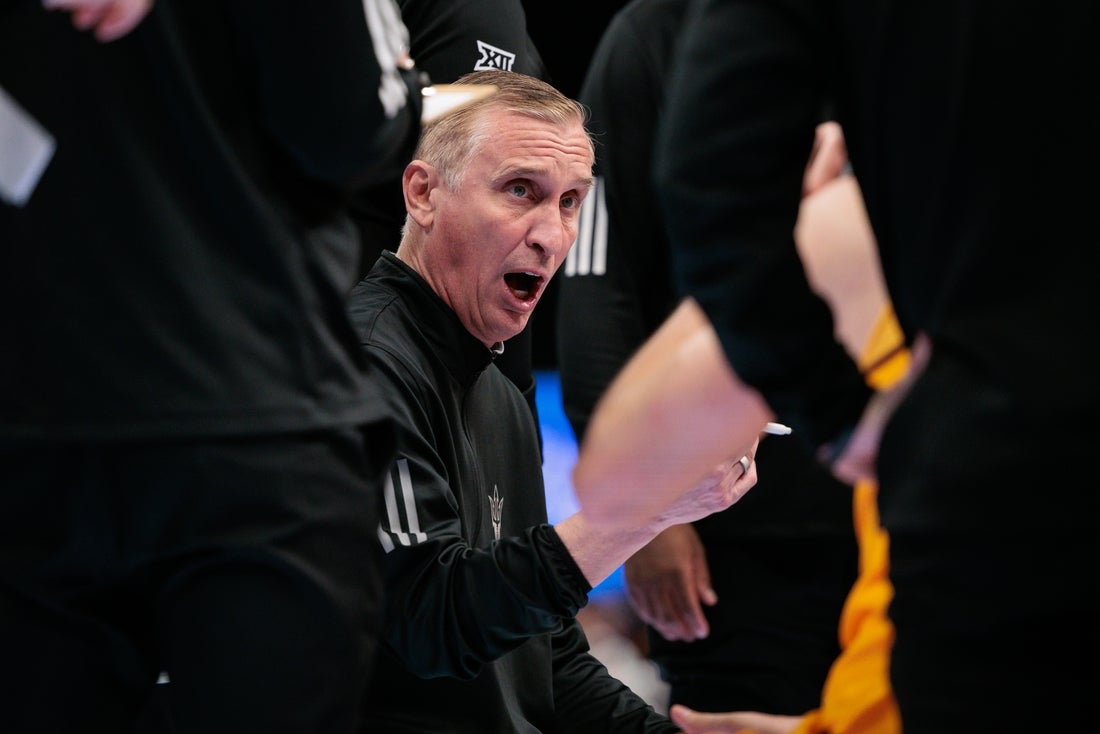
Before arriving at Arizona State in 2015, Hurley also had a stint as head coach at the University at Buffalo. In his second and final season with the Bulls in 2015, he guided the program to its first-ever NCAA Tournament berth, demonstrating an early ability to elevate a program. His move to Arizona State was seen as a significant step, bringing a coach with championship pedigree and a reputation for developing guards to a Power Five conference program.
The Strategic Context of the Big 12 Move
Arizona State’s move to the Big 12 Conference for the 2024-2025 academic year presented a new and significantly more challenging landscape for all of its athletic programs, including men’s basketball. The Big 12 is widely recognized as one of the toughest basketball conferences in the nation, boasting a consistent presence of top-tier teams and a demanding schedule. Entering this new conference, there was an inherent understanding that the competition would be fierce and that sustained success would require a robust and competitive program.
Hurley’s tenure, therefore, must be viewed within this evolving conference alignment. The expectation for any coach in a Power Five conference, especially one with Hurley’s playing background, is to consistently compete for NCAA Tournament bids and, ideally, make deep runs in March Madness. The 11th-place finish in the Big 12, while understandable given the league’s strength, likely raised concerns about the program’s ability to establish itself as a consistent contender in this new, more demanding environment.
Analyzing the Implications of the Coaching Change
The departure of Bobby Hurley opens a pivotal new chapter for Arizona State men’s basketball. The incoming athletic director, Graham Rossini, now faces the critical task of identifying and recruiting a new head coach who can elevate the program in the highly competitive Big 12. The search will likely involve looking for a candidate with a proven track record of success, a strong recruiting ability, and the strategic acumen to navigate the conference’s challenges.
The immediate impact of this change will be felt on the recruiting trail. Current and prospective student-athletes will be looking closely at the direction of the program and the identity of the new coaching staff. Maintaining the existing talent and attracting new high-caliber players will be paramount for the successor to build a winning culture.
Furthermore, the financial implications of a coaching change, including buyout clauses and the cost of a new coaching staff, are significant considerations for any university. However, the long-term potential for increased success, fan engagement, and revenue generation often outweighs these immediate costs.
Looking Ahead: The Search for a New Leader
The coming weeks will be crucial for Arizona State as they embark on their search for a new head coach. The athletic department will be under pressure to make a swift and effective decision that sets the program on a positive trajectory. The success of the next head coach will be measured not only by wins and losses but also by their ability to build a sustainable program that consistently competes at the highest level of college basketball. The legacy of Bobby Hurley will be a point of reference, but the focus will undoubtedly shift towards building a new era of success for the Sun Devils.




 Yuyun Lusiyani
 Joko Widodo
 Eva Lovia
 Pevita Pearce
 admin
admin
 Lina Irawan