
 Ana Megawati
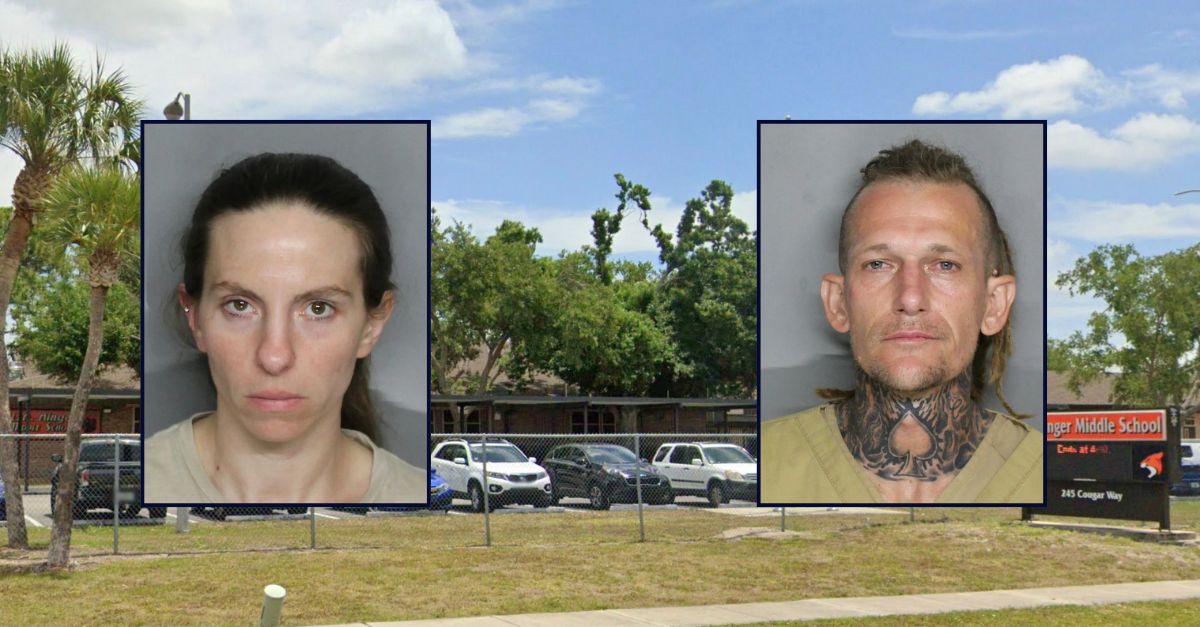
A shocking incident at a Charlotte County middle school has led to the arrest of a Florida couple after their young daughter suffered a near-fatal overdose of fentanyl, a powerful synthetic opioid, reportedly taken from their family home. The event has sent ripples of concern through the community, highlighting the escalating dangers of the opioid crisis and the critical need for heightened awareness and preventative measures, particularly concerning child safety within homes where illicit drugs are present. Courtney Marie Delaney, 34, and Joshua Lee Sanders, 40, are now facing serious charges of child neglect, with legal proceedings set to unfold in the coming weeks.
A Harrowing Morning at L.A. Ainger Middle School
The alarming sequence of events began on the morning of March 10, when emergency services were dispatched to L.A. Ainger Middle School in Englewood. At approximately 9:19 a.m., deputies from the Charlotte County Sheriff’s Office received a distress call concerning a female student who had stopped breathing. Upon their swift arrival, first responders found the unidentified student in a dire state, unresponsive on a classroom floor. The school nurse, whose quick thinking and immediate action were later lauded, was already performing cardiopulmonary resuscitation (CPR) on the unconscious child, a testament to the preparedness and dedication of school staff in crisis situations.
The situation escalated rapidly, underscoring the extreme potency of fentanyl. A deputy, equipped with vital emergency medical tools, administered a single dose of nasal Narcan, an opioid overdose reversal medication. The application of Narcan, a life-saving intervention increasingly found in public spaces and carried by first responders, produced an almost immediate positive response, indicating an opioid overdose. Paramedics arrived shortly thereafter, transporting the child to a local hospital for comprehensive medical evaluation and ongoing care. Her survival is largely attributed to the prompt and effective actions of school personnel and law enforcement.
The Investigation Unravels a Disturbing Narrative
The investigation into the incident quickly pieced together a disturbing narrative. According to the probable cause affidavit, the school nurse was alerted to the crisis by another student who frantically knocked on her office door. Directed to the classroom, the nurse discovered the unresponsive girl, felt a weak pulse, and immediately initiated CPR, performing four rounds before deputies arrived on the scene.
Once stabilized and somewhat coherent, the victim herself provided crucial details to first responders, painting a chilling picture of how she came into contact with the deadly substance. She recounted seeing her father, Joshua Sanders, consume narcotics, which piqued her curiosity. More critically, she stated that she had located an "essential oil bottle" containing a white powder within the family bathroom. Believing it to be her father’s narcotics, she took the bottle to school, where she consumed the powder in a bathroom near her classroom. Shortly after, she began to "feel funny," a sensation that rapidly progressed into a life-threatening medical emergency. Other students corroborated parts of her story, informing school staff that the victim had told them she "snorted a white powder off the toilet paper holder in the bathroom stall" and was seen with white powder on her nose.
A subsequent search of the victim’s backpack by authorities yielded the crucial evidence: an essential oil bottle containing a substance that field-tested positive for fentanyl, confirming the presence of the highly dangerous drug.
Parental Admissions and Negligence Charges
The focus of the investigation soon turned to the child’s parents, Courtney Delaney and Joshua Sanders. When investigators contacted Delaney about the incident, her initial reaction was highly telling. She allegedly admitted to having "just got into an argument" with Sanders over "some missing fentanyl," stating she had "kicked [him] out of the bedroom." This admission immediately raised red flags regarding the presence of illegal narcotics within the family home and the parents’ awareness of the situation.
In a post-Miranda interview, Delaney provided further details, admitting that Sanders had been residing in her home with her three children for approximately a year. During this period, she claimed to have found what she suspected to be narcotics on numerous occasions. Her stated response was to "throw the narcotics away and not say anything to [Sanders] about it." She acknowledged knowing Sanders was a narcotics user, specifically identifying fentanyl as his drug of choice. Despite this knowledge, and her repeated discovery of drugs, she allegedly "would act as if she had no idea what happened to them" when Sanders inquired about the missing substances. The morning prior to the overdose, she and Sanders had indeed argued over a missing bottle of essential oils, though she claimed genuine ignorance of its whereabouts at that specific time. Investigators concluded that Delaney made "no effort" to remove Sanders from the home, despite his continued presence of narcotics around her children.
The victim’s subsequent statements to police further implicated her father. She revealed that her father used the same bathroom as her and her siblings and, on the morning of March 10, she deliberately took a bottle marked "FENT," which she knew contained her father’s narcotics. She explicitly stated that Sanders "regularly" left narcotics "within reach of all three children in the residence." Her intention, she claimed, was to give the bottle to her mother, but she forgot and brought it to school instead. Before first period, she tried the substance in the bathroom, feeling unwell, and made it to class with the assistance of her best friend, her last memory being taking out her notebook before losing consciousness.
Joshua Sanders, when interviewed, allegedly admitted to knowingly leaving the narcotics where his daughter could access the bottle. He expressed remorse, asking police to convey his apologies to his child. Both parents have been charged with one count of child neglect resulting in great bodily harm and two counts of neglect without great bodily harm. The distinction in charges reflects the severe outcome for the victim and the general endangerment of the other two children in the household.
Legal Ramifications and Bond Status
Following their arrests, Courtney Marie Delaney was released after posting a bond of $25,000. Joshua Lee Sanders, however, remained in custody as of Monday afternoon, held on a significantly higher bond of $450,000, reflecting the severity of the charges and the direct link to the life-threatening incident. Both are scheduled to appear in court for their arraignments on April 20, where they will formally respond to the charges against them. Child neglect resulting in great bodily harm is a felony offense in Florida, carrying potentially severe penalties including lengthy prison sentences, substantial fines, and long-term consequences impacting parental rights. The specific sentences would depend on various factors, including prior criminal history and the discretion of the court.
Official Reactions and Community Concern
Sheriff Bill Prummell of the Charlotte County Sheriff’s Office issued a strong statement following the arrests, emphasizing the gravity of the situation. "First and most importantly, I am glad to hear that the student will make a full recovery," Sheriff Prummell stated. "This could have ended very, very differently if not for the fast actions taken by the school nurse and other staff, as well as my deputies. It is inexcusable and unforgivable that this child was able to access this poison so easily, and that’s why these arrests were made. I thank God that we were able to intervene before something even worse happened." His statement reflects a blend of relief for the child’s recovery and firm resolve regarding parental accountability.
Beyond law enforcement, the incident undoubtedly prompted internal reviews and discussions within the Charlotte County Public Schools system. While specific statements from school officials were not immediately released, it is highly probable that the district is reinforcing existing drug awareness programs, reviewing protocols for responding to medical emergencies, and ensuring that all staff are adequately trained in administering Narcan and recognizing signs of overdose. School districts nationwide are grappling with the pervasive nature of the opioid crisis, and incidents like this serve as a stark reminder of the need for continuous vigilance and proactive measures.
Child Protective Services (CPS) would also be involved in this case, particularly given the child neglect charges and the presence of other children in the home. Their primary objective would be to assess the safety and well-being of all children involved and determine appropriate interventions, which could include temporary removal from the home, supervised visitation, or mandatory participation in parenting classes and substance abuse treatment programs for the adults. The community reaction has been one of shock and anger, with many expressing concern for the child and calling for stricter enforcement against drug use in homes with children.
The Broader Context: Fentanyl’s Deadly Reach
This incident serves as a harrowing illustration of the broader public health crisis gripping the nation: the opioid epidemic, and specifically, the increasingly lethal threat posed by fentanyl. Fentanyl is a synthetic opioid 50 to 100 times more potent than morphine. Even a tiny amount, equivalent to a few grains of salt, can be fatal. It is often mixed with other drugs, sometimes without the user’s knowledge, dramatically increasing the risk of overdose.
According to the Centers for Disease Control and Prevention (CDC), drug overdose deaths involving synthetic opioids (primarily fentanyl) rose by 16% from 2020 to 2021, accounting for more than two-thirds of all opioid overdose deaths. While overdose deaths predominantly affect adults, the number of adolescent overdose deaths has also seen a tragic surge. Data from the CDC and the American Academy of Pediatrics indicates a significant increase in fentanyl-related deaths among children and adolescents, underscoring that no age group is immune to its devastating effects. Florida, in particular, has been hit hard by the opioid crisis, with fentanyl being a major contributor to overdose fatalities across the state. The widespread availability of illicitly manufactured fentanyl has created an unprecedented public health challenge, requiring a multi-faceted approach involving law enforcement, public health initiatives, and community education.
The increasing prevalence of Narcan (naloxone) in schools and among first responders is a direct response to this crisis. Narcan acts by rapidly reversing the effects of opioid overdose, buying critical time for medical professionals to provide further treatment. Its availability and proper training in its use are now considered essential tools in combating the immediate threat of opioid-related fatalities.
Implications for Child Safety and Parental Responsibility
The case of the Charlotte County middle school student tragically underscores several critical implications. Foremost is the paramount importance of child safety within the home environment. Parents and guardians have a fundamental legal and moral responsibility to ensure their children are not exposed to dangerous substances, especially highly potent drugs like fentanyl. The ease with which this child accessed the drug, allegedly left "within reach" of multiple children, points to a severe breach of this responsibility.
The charges of child neglect against Delaney and Sanders reflect Florida’s legal framework for protecting children. Child neglect in Florida is defined as a caregiver’s failure to provide a child with the care, supervision, and services necessary to maintain the child’s physical and mental health, or a caregiver’s failure to make a reasonable effort to protect a child from abuse, neglect, or exploitation. When such neglect results in great bodily harm, it elevates to a more serious felony offense, carrying significant legal consequences. This case will undoubtedly serve as a stark reminder to parents about the potential legal repercussions of maintaining an unsafe home environment, particularly concerning illicit drugs.
Moving Forward: Education, Prevention, and Accountability
As the legal proceedings against Courtney Delaney and Joshua Sanders move forward, the broader community will continue to grapple with the implications of this incident. It reinforces the urgent need for enhanced public education campaigns about the dangers of fentanyl, not just for users, but for anyone who might come into contact with it, especially children. Parents, educators, and community leaders must collaborate to raise awareness about safe storage practices for all medications, both prescription and illicit, and the absolute necessity of keeping dangerous substances out of reach of minors.
Schools, already on the front lines of many societal challenges, are increasingly becoming crucial points for intervention and education regarding drug abuse. This incident will likely spur further discussions on drug education curricula, the role of school resource officers, and the availability of mental health and substance abuse counseling for students. The quick actions of the school nurse and deputies saved a life, demonstrating the critical importance of emergency preparedness in schools.
The arraignments for Delaney and Sanders on April 20 will mark the next step in a legal process that seeks to hold them accountable for their alleged negligence. While the immediate focus remains on the well-being of the recovering child and the prosecution of those responsible, this tragic event serves as a potent and sobering reminder of the pervasive nature of the drug crisis and the collective responsibility to protect the most vulnerable members of society.




 Yuyun Lusiyani
 Joko Widodo
 Jia Lissa
 Pevita Pearce
 admin
admin
