Jia Lissa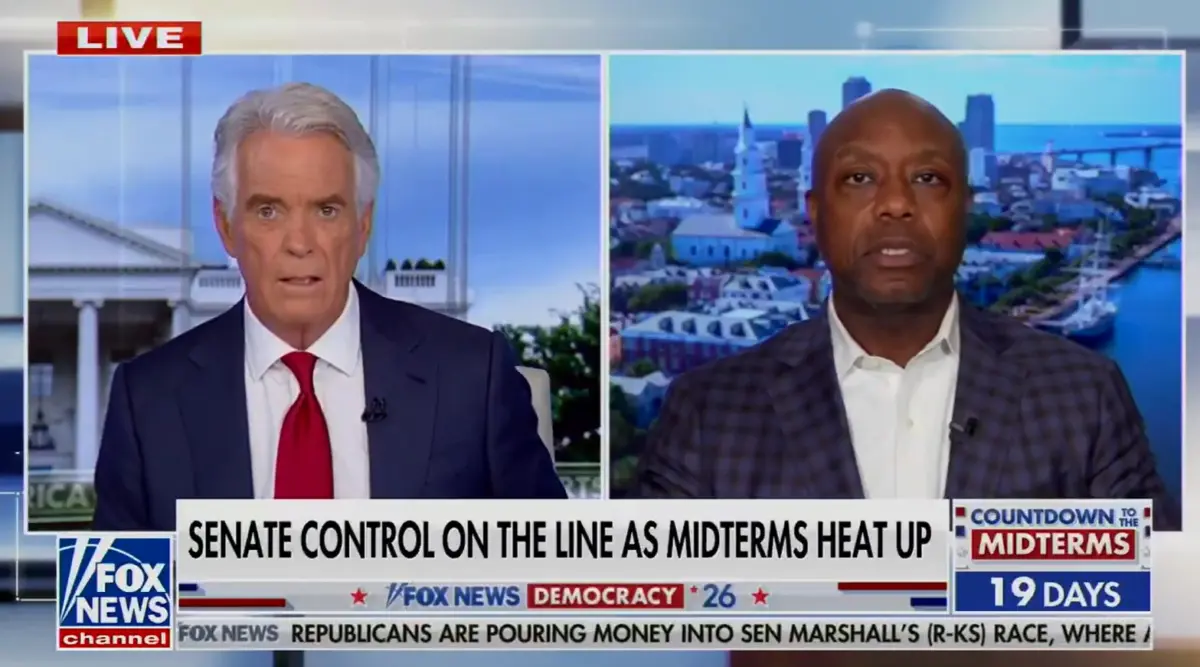
In a pivotal broadcast exchange that underscored the internal anxieties of the Republican Party during the 2022 midterm election cycle, Fox News anchor John Roberts engaged in a pointed dialogue with Senator Tim Scott (R-SC) regarding the shifting political landscape. The interview, which aired as voters prepared to head to the polls, highlighted a significant decline in former President Donald Trump’s approval ratings among his own party base, alongside a growing public preoccupation with the rising cost of living. This conversation served as a microcosm of the broader strategic challenges facing the GOP: balancing the influence of the party’s former leader with the urgent economic concerns of the American electorate.
The dialogue began with Roberts presenting a series of data points from recent Fox News polling, which suggested that the Republican Party’s traditional advantages were being tested by complex voter sentiments. Roberts specifically pointed to the "historic low" approval ratings for Donald Trump among Republicans, a metric that signaled a potential shift in the party’s internal cohesion. This line of questioning forced a discussion on whether the former president’s legacy and ongoing public presence would serve as a catalyst for turnout or a "drag" on the party’s performance in critical swing districts.
The Statistical Landscape: Polling Data and Voter Priorities
The Fox News poll cited by Roberts revealed a stark reality regarding the American psyche in the lead-up to the elections. According to the data, 59 percent of respondents identified the cost of living as their primary concern, overshadowing other traditional campaign issues such as border security, crime, or social policy. This economic anxiety was attributed to the highest inflation rates seen in four decades, with gas prices and grocery costs reaching levels that significantly impacted household budgets.
Furthermore, the polling regarding Donald Trump indicated a notable cooling of enthusiasm within the Republican ranks. Roberts noted that Trump’s approval rating among Republicans had plummeted to 76 percent. While 76 percent remains a majority, it represents a substantial decline from the 92 percent approval rating he enjoyed approximately eighteen months prior. This 16-point drop suggested that a segment of the GOP base was beginning to distance itself from the former president, or at the very least, was becoming less vocal in its support as the party attempted to navigate a post-2020 political environment.
The "vulnerability" Roberts described was two-fold. First, the GOP needed to capitalize on the dissatisfaction with the Biden administration’s economic performance. Second, they had to manage the "Trump factor," which Democrats were actively using to frame the election as a choice between two ideologies rather than a referendum on the incumbent president.
Senator Tim Scott’s Strategic Pivot
Faced with the data regarding Trump’s declining numbers, Senator Tim Scott utilized a classic political communication strategy: the pivot. Rather than engaging directly with the specifics of the polling decline or the potential liabilities of the former president, Scott redirected the conversation toward the legislative record of the Democratic Party and the economic platform of the GOP.
Scott argued that the midterm elections should be viewed through the lens of specific policy decisions made by the Democratic-led Congress. He specifically cited instances where he claimed Democrats voted against funding for rural hospitals and supported tax increases that affected senior citizens on Social Security, hourly workers earning overtime, and service industry professionals relying on tips. By framing the Democrats as the party of "tax hikes" and the Republicans as the party of "everyday Americans," Scott sought to refocus the narrative on the 59 percent of voters worried about their pocketbooks.
"The president’s legacy is on the midterm ballot," Scott stated, referring to Trump. He echoed Trump’s own sentiment that voters should cast their ballots as if the former president were personally seeking office. However, Scott’s interpretation of this "legacy" was rooted in the 2017 Tax Cuts and Jobs Act and other deregulatory measures, which he argued put "300 bucks a month" back into the pockets of citizens. This rhetorical move attempted to merge the personal popularity of Trump with the broader policy goals of the Republican Party, suggesting that the "agenda" was more important than the individual polling numbers.
Chronology of the 2022 Midterm Climate
To understand the weight of this interview, it is essential to look at the timeline of events that shaped the 2022 political environment.
- January – June 2022: Inflation begins a steady climb, eventually peaking at 9.1 percent in June. The Federal Reserve begins a series of aggressive interest rate hikes, leading to concerns about a potential recession.
- May 2022: The leak of the Supreme Court’s draft opinion on Dobbs v. Jackson, which would eventually overturn Roe v. Wade, begins to shift the political momentum. Democrats see a surge in fundraising and engagement.
- August 2022: The FBI’s search of Mar-a-Lago regarding classified documents brings Donald Trump back to the forefront of national headlines, creating a dilemma for GOP candidates trying to focus on inflation.
- September – October 2022: Polling begins to show a "tightening" of the race. While Republicans were initially expected to win a "red wave," the decline in Trump’s approval and the focus on social issues create a more competitive environment.
- Late October 2022: The interview between John Roberts and Tim Scott occurs, highlighting the GOP’s final push to ensure economic issues remain the top priority for voters.
Fact-Based Analysis of the Legislative Claims
During the interview, Senator Scott made several specific claims regarding Democratic voting records. A factual analysis of these claims provides a clearer picture of the partisan divide in Washington.
The reference to "rural hospitals" likely pertains to various amendments proposed during the negotiation of the American Rescue Plan or the Inflation Reduction Act. Republicans frequently argued that Democratic spending packages prioritized urban infrastructure or climate initiatives over the immediate needs of rural healthcare facilities. Conversely, Democrats argued that their legislation provided billions in general relief that hospitals could access, and that Republican opposition to the bills as a whole was the primary obstacle to funding.
Regarding the "tax on tips" and "overtime," Scott’s rhetoric refers to the Republican opposition to increased IRS enforcement funding included in the Inflation Reduction Act. The GOP warned that a more robust IRS would disproportionately target lower-to-middle-income earners, including those in service industries. Democrats and the Treasury Department countered this by stating that the enforcement was aimed at high-wealth tax evaders and that audit rates for those making under $400,000 would not increase.
Scott’s assertion that Republicans put "300 bucks a month" in pockets refers to the cumulative effect of the 2017 tax cuts. While the benefits of these cuts varied by income bracket, they remained a cornerstone of the GOP’s economic identity, used to contrast with the Biden administration’s fiscal policies.
Broader Implications for the GOP and the 2024 Cycle
The exchange between Roberts and Scott was more than just a pre-election interview; it was an early indicator of the internal debate that would eventually consume the Republican Party heading into the 2024 presidential primary.
The 16-point drop in Trump’s approval among Republicans signaled a "softening" of his base that other potential candidates, including Scott himself, would eventually look to capitalize on. It suggested that while the MAGA movement remained the dominant force in the party, there was a growing "exhaustion factor" or a pragmatic concern about electability in a general election setting.
For Senator Tim Scott, the interview served as a platform to reinforce his personal brand. By concluding the segment with a narrative about his own upbringing—rising from poverty in a single-parent household to the halls of the U.S. Senate—Scott positioned himself as a messenger of the "American Dream." This aspirational rhetoric is a key component of Scott’s political identity, allowing him to bridge the gap between the populist rhetoric of the Trump era and the more traditional, optimistic conservatism of the pre-Trump GOP.
Reaction from Political Analysts and Opponents
While the Fox News segment was largely a friendly platform for Scott, the data presented by Roberts did not go unnoticed by political strategists on both sides.
Democratic strategists seized on the polling data to argue that the Republican Party was "out of touch" with the concerns of moderate voters who were wary of a return to the volatility of the Trump administration. They argued that the focus on "legacy" and "agenda" was a distraction from the GOP’s stance on social issues like abortion, which they believed would ultimately decide the midterms.
On the other hand, conservative analysts praised Scott for his refusal to take the "bait" regarding Trump’s polling. They argued that by focusing on the "fairness and freedom" of the American system, Scott provided a roadmap for how the GOP could win over suburban voters who might be skeptical of Trump personally but remained ideologically aligned with Republican economic policies.
Conclusion: A Party at a Crossroads
The interview between John Roberts and Tim Scott encapsulated the tension of a party at a crossroads. The data presented—59 percent concern over cost of living versus a 16-point drop in the leader’s popularity—represented the two paths the GOP could take. One path focused on the "kitchen table" issues that historically win elections, and another focused on the personality and grievances of a single figure.
As the midterm results eventually showed, the "red wave" that many predicted failed to materialize in the magnitude expected, with the GOP winning a narrow majority in the House but failing to take the Senate. This outcome lent credence to the concerns Roberts raised: that economic headwinds alone might not be enough to overcome the "drag" of a polarizing leader and a focus on the past rather than the future. Senator Scott’s performance in the interview, however, remains a textbook example of how the party’s rising stars attempt to navigate these treacherous political waters, blending loyalty to the base with an optimistic vision for the broader electorate.



 Yuyun Lusiyani
 Joko Widodo
 Eva Lovia
 admin
admin