
 Ana Megawati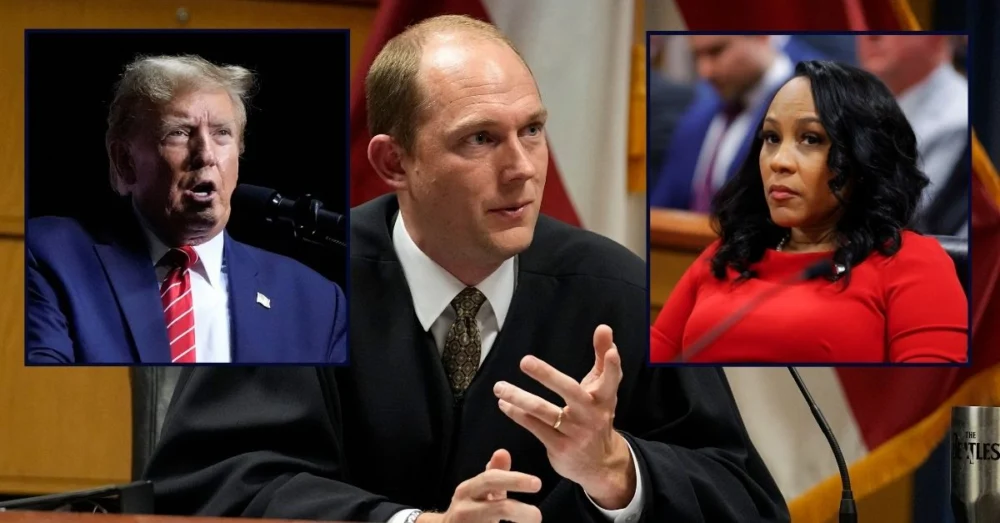
Atlanta, Georgia – Fulton County Superior Court Judge Scott McAfee has delivered a significant blow to District Attorney Fani Willis, denying her attempt to intervene in a burgeoning legal battle over approximately $16.85 million in attorneys’ fees sought by former President Donald Trump and his erstwhile co-defendants. The ruling, issued on Monday, reinforces Willis’s formal disqualification from the high-profile racketeering (RICO) case that once targeted Trump, effectively barring her office from participating in the proceedings to determine the potentially massive financial award.
The contentious claim for legal expenses stems from a novel Georgia statute, Senate Bill 224 (SB 224), enacted in 2025. This groundbreaking legislation permits criminal defendants to recoup legal costs if a prosecutor is disqualified due to "improper conduct." This law, a direct response by Republican lawmakers to the unfolding saga of the Trump RICO prosecution, has set the stage for an unprecedented financial reckoning for the state.
The Genesis of the Fee Dispute: A Novel Georgia Law
At the heart of the current legal skirmish is SB 224, a legislative measure designed to hold prosecutors financially accountable for conduct deemed improper. Passed in 2025 amidst heightened political tensions surrounding the Trump prosecution, the law empowers defendants to seek monetary awards for legal expenses incurred when a prosecuting attorney is removed from a case due to ethical breaches or other disqualifying actions. Its passage was a clear legislative response, spearheaded by allies of former President Trump within the Georgia General Assembly, to the perceived overreach and controversies that plagued the Fulton County District Attorney’s office during its pursuit of the election interference case.
The law’s intent is to create a deterrent against prosecutorial misconduct and to provide a mechanism for restitution for defendants who incur substantial legal costs due to such impropriety. Its application in the Trump RICO case marks its first significant test, setting a critical precedent for prosecutorial conduct and accountability within Georgia’s legal system. The specific threshold for "improper conduct" leading to disqualification, as defined by the statute, aligns directly with the circumstances that led to Willis’s removal.
Following the dismissal of the sprawling RICO indictment, Trump’s legal team was quick to leverage this new statute. Earlier this year, they filed a comprehensive motion, detailing over 200 pages of invoices and billable hours, totaling approximately $6.26 million. These expenses covered a vast array of legal services, including attorney fees, expert witness costs, investigative services, and other vendor expenses incurred in defending against the initial election interference charges. Separately, several other former co-defendants in the case have collectively filed their own motions, seeking in excess of $10.79 million, bringing the total potential liability for the state to a staggering $16.85 million. These figures underscore the immense financial burden placed on defendants in complex, high-stakes litigation, particularly those involving allegations of racketeering.
A Tumultuous Chronology: From Indictment to Disqualification and Dismissal
The roots of this legal and financial entanglement stretch back to the initial indictment of former President Trump and 18 co-defendants in August 2023. The Fulton County District Attorney’s office, led by Fani Willis, brought charges under Georgia’s Racketeer Influenced and Corrupt Organizations (RICO) Act, alleging a broad conspiracy to overturn the results of the 2020 presidential election in Georgia. The indictment, spanning 98 pages and listing 41 counts, accused the defendants of engaging in a "criminal enterprise" to reverse Trump’s electoral defeat.
However, the prosecution’s trajectory quickly became mired in controversy. In late 2023 and early 2024, allegations surfaced regarding a romantic relationship between District Attorney Willis and Nathan Wade, a special prosecutor she had appointed to lead the Trump case. These accusations, brought forth by a co-defendant, sparked a heated legal challenge arguing that Willis had financially benefited from the relationship, creating an insurmountable conflict of interest and an "appearance of impropriety."
The ensuing evidentiary hearings captivated national attention, with Judge Scott McAfee presiding over extensive testimony from Willis, Wade, and other witnesses. In March 2024, Judge McAfee issued an initial ruling acknowledging a "significant appearance of impropriety" but offered an ultimatum: either Willis or Wade would have to step aside for the prosecution to continue. Wade ultimately withdrew from the case, allowing Willis to remain, albeit under intense scrutiny.
This decision was swiftly appealed by several defendants, including Trump, arguing that Willis’s entire office should be disqualified. The Georgia Court of Appeals took up the matter, and in a pivotal ruling in late December 2024, they formally removed Fani Willis and her office from overseeing the years-old case. The appellate court’s decision cited the "wholly disqualifying" nature of the appearance of impropriety, emphasizing the need to restore public confidence in the integrity of the judicial proceedings.
With Willis and her office disqualified, the case languished in a state of legal limbo. A new prosecutor, appointed in Willis’s absence, inherited a complex and politically charged investigation. After months of review and assessment, the newly appointed prosecutor made the decision in November 2025 to dismiss the remaining RICO charges against Trump and his co-defendants "in the interests of justice." This final dismissal officially brought an end to the protracted legal battle, paving the way for the current motions seeking to recoup legal expenses under SB 224.
Willis’s Failed Bid to Intervene: Arguments and Rejection

Facing the prospect of her office’s budget being potentially depleted by millions of dollars in legal fees, District Attorney Willis sought to intervene directly in the recoupment proceedings. Her motion to stay the proceedings, filed with Judge McAfee, highlighted the "new and unchallenged" nature of SB 224, arguing that the statute "prescribes no process other than a bench trial" and that "errors in the proceedings" might occur without a prosecutor’s "participation."
Willis articulated a concern for fundamental due process, asserting, "Without intervention by the District Attorney, any award would violate basic fundamental notions of due process by denying her an opportunity to be heard or even challenge the reasonableness of the claimed attorney fees before it is taken from her budget." Her argument underscored the perceived unfairness of being excluded from a process that could directly impact the financial resources and operational capacity of her office. She essentially argued that while disqualified from the underlying criminal case, her office still had a vested interest in defending the public’s funds against potentially inflated claims.
However, Judge McAfee remained unswayed. In his Monday order, he firmly rejected Willis’s plea, ruling that her "wholly disqualified" status in the original case extended to "any ancillary aspect" of the proceedings, including the determination of attorneys’ fees. McAfee emphasized that allowing Willis to inject herself into this phase would contradict the very basis of her removal, which was predicated on the need to eliminate the appearance of impropriety and restore public trust.
"[T]he motion to intervene is denied," the order concluded, leaving Willis and her office on the sidelines as the fee dispute moves forward. McAfee’s decision reiterates the strict interpretation of disqualification, signaling that once a prosecutor is removed for improper conduct, their involvement ceases across the board, even in matters with direct financial consequences for their department.
Who Will Represent the State? The Role of PAC and Fulton County
While Willis’s office is now barred from the fee proceedings, the state’s interests will not go undefended. Judge McAfee’s ruling clarified that the Prosecuting Attorneys’ Council of Georgia (PAC) will step in to "adequately represent" the office’s interests. PAC is a state agency established to assist district attorneys and solicitors-general throughout Georgia, providing training, legal advice, and, in certain circumstances, stepping in to handle cases when a local prosecutor is recused or disqualified. Their involvement ensures that experienced legal counsel will scrutinize the defendants’ claims for reasonableness and legal merit.
Furthermore, Judge McAfee granted intervention rights to Fulton County itself, recognizing its direct financial stake in the outcome. The judge noted that the county provides the "overwhelming source of funding" for the District Attorney’s office, making it a crucial party to the proceedings. "The financial buck appears likely in some form to eventually stop at the county’s desk," McAfee observed, acknowledging that any award of fees would ultimately draw from taxpayer funds administered by the county. This decision highlights the broader financial implications of the case, shifting the potential burden from the DA’s operational budget directly to the county’s coffers, which are funded by local taxpayers. The county’s intervention ensures that local government, as the ultimate payor, has a voice in challenging the claims.
Legal and Political Implications: "Novelty Abounds"
Judge McAfee’s ruling and the ongoing fee dispute underscore the significant legal and political ramifications of SB 224 and the unprecedented nature of the Trump RICO case. The judge himself acknowledged the uncharted territory, writing, "Novelty abounds." This new law creates a powerful incentive for prosecutorial ethics, but it also carries potential risks.
- Precedent for Prosecutorial Accountability: SB 224 establishes a formidable new layer of accountability for prosecutors in Georgia. While prosecutorial immunity generally protects against civil lawsuits for actions taken in their official capacity, this law creates a direct financial consequence for disqualifying conduct. It could lead to increased scrutiny of prosecutorial practices and a more cautious approach to high-stakes cases where ethical challenges are likely.
- Financial Burden on Taxpayers: The potential $16.85 million award, if granted, would represent a substantial financial burden on Fulton County taxpayers. This raises questions about the allocation of public funds and the cost of prosecutorial misconduct. Critics of the law might argue it could chill legitimate prosecutions by making DA offices overly risk-averse, fearing significant financial penalties.
- Political Weaponization Concerns: The passage of SB 224 by Republican lawmakers, specifically in response to the Trump prosecution, has led to accusations that the law itself is a form of "lawfare" or political weaponization of the legislative process. While framed as an accountability measure, its timing and specific application fuel narratives of political retribution.
- Impact on Willis’s Future: The ongoing scrutiny and the financial implications of this ruling could further complicate Fani Willis’s political future and her standing as District Attorney. Already facing significant criticism and a formal disqualification, the prospect of her office’s actions leading to millions in taxpayer-funded payouts will undoubtedly be a potent issue in future elections or recall efforts.
- Chilling Effect on Prosecutorial Discretion: While accountability is vital, some legal experts express concern that laws like SB 224 could have a "chilling effect" on prosecutorial discretion, particularly in politically sensitive cases. Prosecutors might become hesitant to pursue novel or controversial charges if the risk of disqualification and subsequent financial penalties becomes too high, potentially hindering justice in certain complex cases.
Looking Ahead: Evidentiary Hearings
With Willis’s intervention denied, the case will now proceed to evidentiary hearings. Judge McAfee indicated that these hearings will address the specific costs and fees claimed by each of the 14 different defendants. The motions will be heard in chronological order of filing, with the Prosecuting Attorneys’ Council and Fulton County diligently challenging the reasonableness and necessity of each expense.
Steve Sadow, lead attorney for Donald Trump in the Georgia case, lauded the court’s decision, reiterating his earlier commitment to seeking recoupment. In a post on X (formerly Twitter), Sadow stated, "Judge McAfee has properly denied DA Willis’ motion to intervene in POTUS’ action for reimbursement of attorney fees because her disqualification for improper conduct bars Willis and her office from any further participation in this dismissed, lawfare case."
These upcoming hearings will delve deep into the minutiae of legal billing, potentially scrutinizing every hour and every expense claimed by the defendants’ legal teams. The outcome will not only determine the financial liability of Fulton County but will also set a crucial precedent for the interpretation and application of Georgia’s novel SB 224, shaping the landscape of prosecutorial accountability for years to come.



 Yuyun Lusiyani
 Joko Widodo
 Jia Lissa
 Pevita Pearce
 admin
admin
