
 Nila Kartika Wati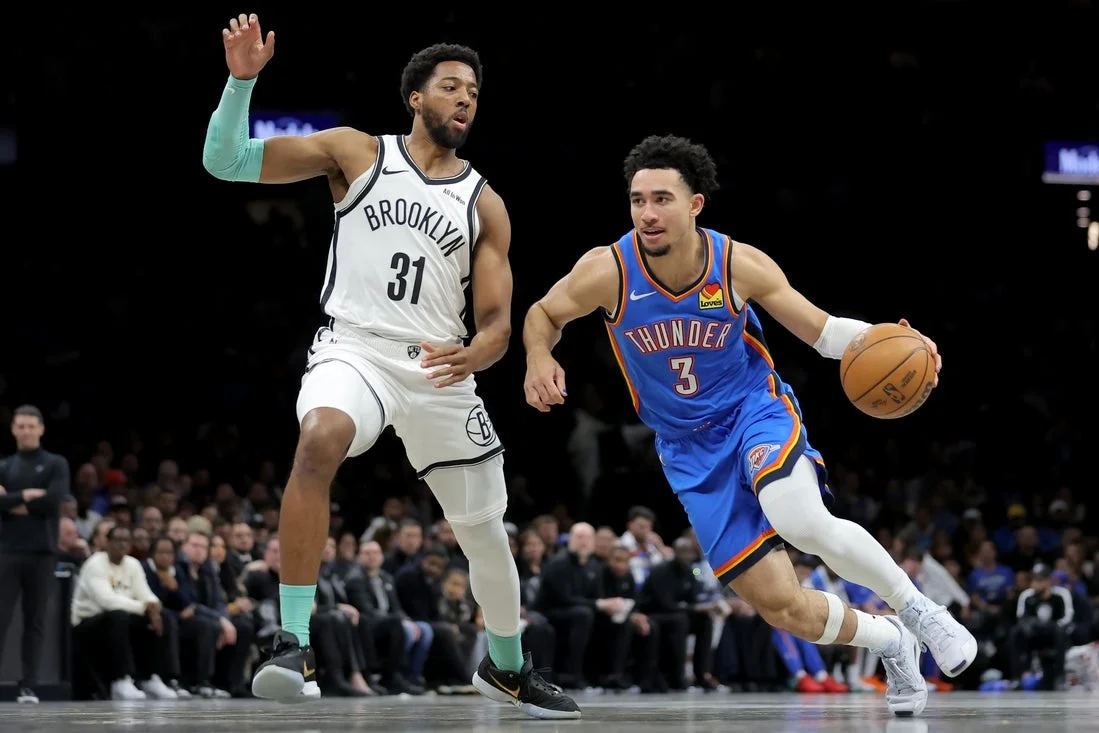
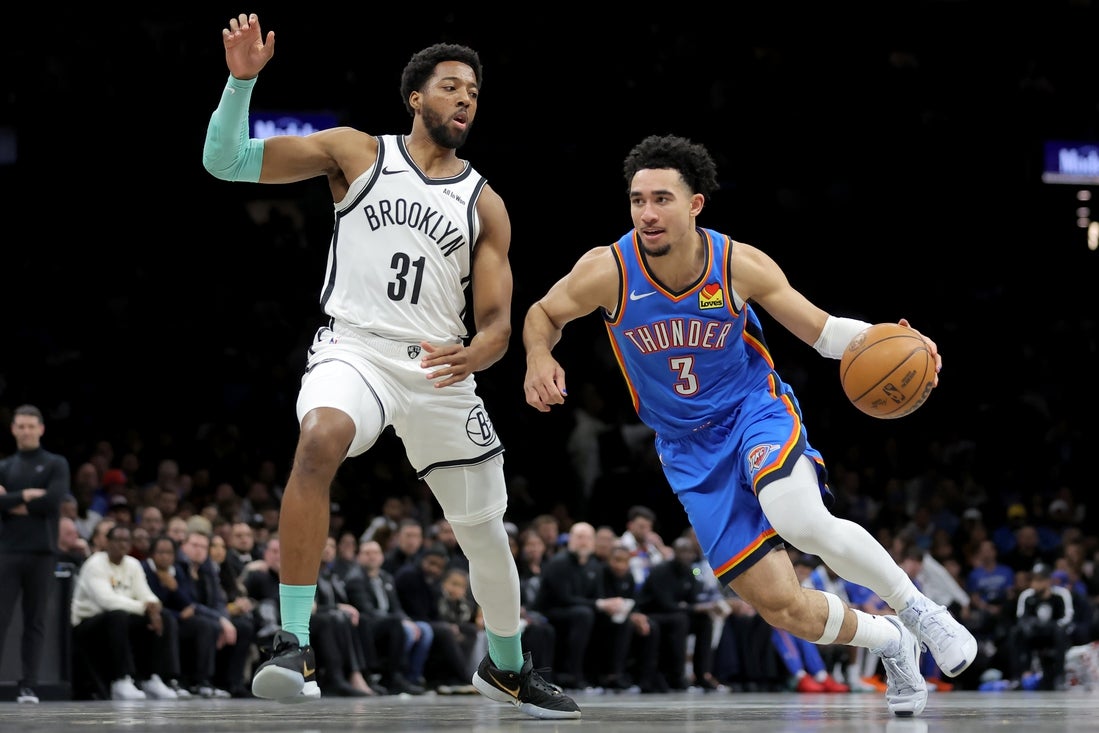
The Oklahoma City Thunder are riding an unprecedented wave of success, their 15-3 record since the acquisition of guard Jared McCain on February 4th a testament to their potent blend of offensive firepower and increasingly stingy defense. While McCain’s recent season-high 26-point outburst against the Brooklyn Nets on March 18th rightfully garnered attention, head coach Mark Daigneault is emphasizing a less celebrated, yet equally crucial, aspect of the former Philadelphia 76er’s game: his defensive commitment. As the Thunder prepare for a Saturday road matchup against the struggling Washington Wizards, Daigneault’s focus on McCain’s defensive development underscores the team’s holistic approach to player integration and their unwavering pursuit of the Western Conference’s top seed.
Integrating Talent, Emphasizing Fundamentals
Since arriving in Oklahoma City, McCain has seamlessly integrated into a Thunder squad already boasting a league-best 55-15 record. "I don’t know how much he’s developed but he’s definitely integrated well," Daigneault stated, highlighting McCain’s rapid assimilation. "He’s learning his teammates, he’s learning our system, the fundamentals that we emphasize." This emphasis on core principles, Daigneault explained, is particularly evident on the defensive end. "He’s done a really good job of committing to our fundamentals and the things that we need to do on the defensive end of the floor."
McCain’s offensive prowess is undeniable; he possesses the ability to create his own shot and knock down perimeter jumpers, making him a dynamic scoring threat. However, Daigneault acknowledges that his offensive capabilities come with inherent defensive challenges. "Obviously he’s a very potent offensive player, but he gives up some size and needs to be really fundamental and feisty (defensively) and he’s done that, especially lately." This measured approach to player evaluation, recognizing both strengths and areas for growth, is a hallmark of Daigneault’s coaching philosophy and a key driver of the Thunder’s consistent success.
A Trade That Transformed Trajectories
The trade that brought McCain to Oklahoma City on February 4th, sending him from Philadelphia to the Sooner State, has proven to be a pivotal moment for the Thunder. Prior to the deal, Oklahoma City held a respectable 11-7 record in their initial 18 games. The subsequent 15-3 stretch, coinciding with McCain’s arrival, paints a stark picture of the team’s elevated performance. This dramatic improvement, occurring mid-season, signals a significant shift in the team’s dynamics and their championship aspirations. The Thunder’s ability to integrate new talent so effectively, without a dip in performance, speaks volumes about the team’s culture and Daigneault’s coaching acumen.
The impact of McCain’s addition has been particularly pronounced during the extended absence of Jalen Williams. Alongside Shai Gilgeous-Alexander, Williams is one of the Thunder’s primary ball-handlers and a critical offensive engine. His recovery from a hamstring strain, which has kept him sidelined since February 11th, has placed additional responsibility on other players to contribute to both playmaking and scoring. McCain, with his scoring ability and growing defensive contributions, has stepped into this void, providing crucial offensive support and defensive intensity.
The Unfolding Race for the Top Seed
Currently, the Oklahoma City Thunder stand at 55-15, a formidable record that places them firmly in contention for the top seed in the Western Conference. Their current 10-game winning streak is a testament to their sustained excellence and a clear signal to their rivals. As of Saturday’s matchup, they hold a three-game lead over the second-place San Antonio Spurs, intensifying the battle for home-court advantage throughout the playoffs. This pursuit of the top seed is not merely about seeding; it’s about securing the most advantageous path through a highly competitive conference.
A Stark Contrast in Fortunes: Wizards’ Struggles
In stark contrast to the Thunder’s dominance, the Washington Wizards are mired in a dispelling season. The Wizards are currently on a 14-game losing streak, their last victory occurring on February 20th. During this extended period of defeat, they have been outscored by an average of nearly 15 points per game, highlighting their significant struggles on both ends of the court. This losing streak has been a painful narrative for the franchise and its fanbase, underscoring the challenges they face in rebuilding and competing.
The statistical disparity between the two teams is staggering. The Thunder lead the NBA in net rating, outscoring opponents by an impressive 10.9 points per 100 possessions. Conversely, the Wizards languish at the bottom of the league with a net rating of minus-11.1, indicating their consistent inability to keep pace with opponents. Furthermore, Oklahoma City’s defensive prowess is evident in their league-low field goal percentage allowed to opponents at 43.4%.
History and Turnover Woes
The upcoming Saturday game marks the second and final meeting between the Wizards and the Thunder this season. The first encounter on October 30th saw Oklahoma City secure a decisive 19-point victory. This win came during a brutal 14-game losing streak for the Wizards, foreshadowing the difficult season they would endure.
Turnovers have been a recurring theme in the Wizards’ struggles, and the previous matchup with the Thunder exemplified this. Oklahoma City capitalized on Washington’s 23 turnovers, converting them into 26 points, while committing only six turnovers themselves, which resulted in just five points for the Wizards. This stark 21-point differential in points off turnovers underscores a critical area where Washington consistently falters. In their most recent outing, a 117-95 loss to the Detroit Pistons on Thursday, the Wizards again surrendered a significant advantage, with the Pistons scoring 23 points off 19 Washington turnovers, resulting in a 10-point swing.
Glimmers of Hope Amidst Adversity
Despite the overwhelming struggles, there are isolated instances of positive development within the Wizards roster. Much like Daigneault’s focus on McCain’s defensive growth, Wizards coach Brian Keefe has expressed satisfaction with the recent defensive improvements of third-year reserve center Tristan Vukcevic. This is particularly noteworthy given that Vukcevic has also experienced a surge in his offensive game, recording the two best offensive performances of his career in the past four games.
"He’s one of the better bigs in the league in terms of disruptions — disrupting the ball, getting his hands on things," Keefe remarked, acknowledging Vukcevic’s impact beyond scoring. This suggests that even in a challenging season, the Wizards are working to identify and nurture developing talent, a crucial aspect of any long-term rebuilding strategy.
Short-Handed and Seeking Solutions
The Wizards’ struggles are further compounded by significant personnel issues. Star acquisition Anthony Davis has yet to make his debut for the team, having been sidelined since early January. The team provided an update on Friday, stating that Davis continues to progress but will remain out until at least a later evaluation this month. Adding to their woes, Trae Young, acquired from the Atlanta Hawks in February, has missed the last two games due to a quadriceps contusion and has only played in five contests since the trade.
On Saturday, the team elaborated on Young’s condition, announcing he has a right quadriceps contusion and lower back irritation, with the injuries being treated conservatively. While Young will not require surgery, no definitive timeline for his return has been provided. This continued absence of key players leaves the Wizards severely short-handed and further hinders their ability to compete effectively. The ripple effect of these injuries not only impacts the current season’s outcome but also raises questions about the integration and impact of their new acquisitions moving forward.
Broader Implications and Future Outlook
The Oklahoma City Thunder’s current trajectory suggests a strong likelihood of securing the top seed in the Western Conference. Their blend of established stars, emerging talent like McCain, and a cohesive team system under Daigneault positions them as a formidable contender in the postseason. The emphasis on defensive improvement, even for their offensive-minded acquisitions, demonstrates a mature and strategic approach to building a championship-caliber team.
For the Washington Wizards, the season has become a protracted exercise in evaluation and development amidst overwhelming defeat. The continued absence of key players like Davis and Young makes it difficult to assess the true potential of their roster. The focus for the remainder of the season will likely shift towards player development, particularly for younger talent like Vukcevic, and a thorough assessment of their long-term strategy. The stark contrast between the two teams in this matchup serves as a potent illustration of the varied paths franchises can take, from sustained dominance to rebuilding through adversity. The Thunder’s success, fueled by both star power and the diligent development of players like Jared McCain, offers a compelling case study in effective team building and strategic execution.



 Yuyun Lusiyani
 Joko Widodo
 Eva Lovia
 Pevita Pearce
 admin
admin
 Lina Irawan