
 Eva Lovia
The Kingdom of Norway has entered a new era with the formal accession of King Haakon VIII, following the deeply sorrowful passing of his father, His Majesty King Harald V. The transition of power, a cornerstone of constitutional monarchies, was marked by a solemn and profoundly personal ceremony at the Royal Palace in Oslo, underscoring the enduring traditions and the solemn duties that accompany the Norwegian crown.
King Haakon VIII, who had kept a vigil by his father’s side throughout the preceding night, was tasked with the immediate and arduous responsibility of formally announcing the end of one reign and the commencement of his own. This historic declaration was made before an extraordinary Council of State, convened with remarkable speed in the wake of King Harald V’s death, which occurred at 6:35 a.m. on Friday, August 28, 2026. The Council, comprising key figures of the Norwegian government and state, convened just five hours after the King’s passing, a testament to the nation’s preparedness for such eventualities and the solemnity with which royal successions are handled.
A Sombre Declaration and the Weight of a Crown
In a voice marked by grief yet steady with resolve, King Haakon VIII addressed the assembled dignitaries. "It is my duty to inform the Council of State that my beloved father, His Majesty King Harald V, died today, August 28, 2026, at 6:35 a.m.," he stated, his words echoing through the historic halls of the Royal Palace. This pronouncement, while anticipated given King Harald’s declining health in recent years, carried the immense weight of personal loss and national transition.
Following this solemn announcement, King Haakon VIII, in accordance with the provisions of the Norwegian Constitution, formally declared his own accession to the throne. "In accordance with the provisions of the Constitution, I have acceded to the government as King of Norway," he proclaimed, embracing the constitutional mandate that now places the reins of the monarchy in his hands.
Embracing a Royal Legacy: Name and Motto
The choice of regnal name for the new monarch was a matter of keen public interest, a tradition deeply rooted in Norwegian history. While his parents had bestowed upon him the name Haakon, honouring the first King of Norway, he officially confirmed his chosen "I will take the name of Haakon VIII." This selection is a direct nod to the foundational monarch of Norway, signalling a commitment to the nation’s historical narrative and the enduring legacy of its royal lineage.
In a move that emphasized continuity and stability, King Haakon VIII also articulated his commitment to upholding the royal motto that has guided his father, grandfather, and great-grandfather. "I will continue with the motto chosen by my father, grandfather and great grandfather: All For Norway," he declared. This enduring slogan, "Alt for Norge" in Norwegian, was immediately published by the Royal House of Norway alongside a new official portrait of the new King, a visual representation of his accession and his pledge to serve the nation.
A New Portrait and the Human Face of Succession
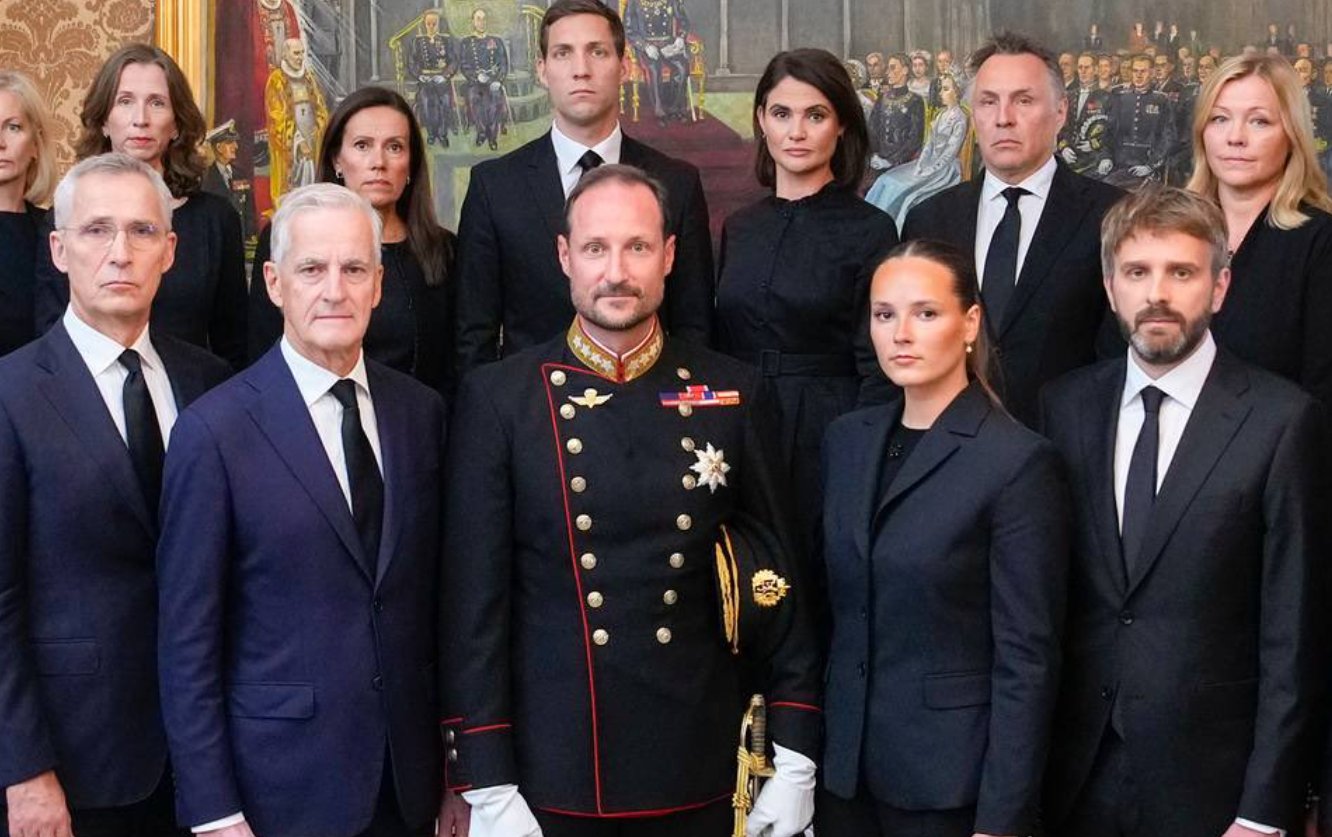
The newly released portrait of King Haakon VIII offers a poignant glimpse into the personal toll of this significant moment. Captured in the hours following his father’s death, the monarch appears sombre and visibly exhausted. This is understood to be a direct consequence of the sleepless night spent at his father’s bedside, a period of intense personal anguish that preceded the public duties of his accession. King Harald V’s passing as dawn broke on August 28, 2026, marked the end of a reign that spanned over three decades, a period characterized by stability, dedication, and a deep connection with the Norwegian people.
Queen Sonja, the beloved consort of the late King Harald V, is reported to be at home, grappling with the profound loss of her husband of 58 years. Their wedding anniversary, a date they were due to celebrate the very next day, August 29, now becomes a poignant reminder of their enduring partnership and the immense void left by his passing.
The Heir Apparent and the Future of the Monarchy
Accompanying King Haakon VIII to the extraordinary Council of State was his eldest child and now heir to the throne, Crown Princess Ingrid Alexandra. At 22 years old and currently pursuing her university studies in Oslo, Crown Princess Ingrid Alexandra represents the future of the Norwegian monarchy. Her position as the first woman to be first in line to the Norwegian throne is a significant milestone, reflecting the nation’s progressive stance on gender equality and its commitment to modernizing its institutions. Her presence alongside her father at this pivotal moment underscores the continuity of the royal line and the preparation of the next generation for leadership.
The absence of King Haakon VIII’s wife, Queen Mette-Marit, from the Council of State was also noted. Her recuperation following a lung transplant, necessitated by severe pulmonary fibrosis, is ongoing. The medical team had previously indicated that her condition was critical, giving her only an estimated year to live, making the successful transplant a cause for significant relief and hope within the Royal Family and across the nation.
Navigating Complexities: Public Scrutiny and Royal Responsibilities
The Norwegian Royal Family, like many prominent institutions, faces ongoing public scrutiny. Recent revelations concerning Queen Mette-Marit’s past association with the convicted sex offender Jeffrey Epstein, and the ongoing legal situation of her son from a previous relationship, Marius Borg Høiby, who is currently serving a four-year prison sentence for multiple offences, including rape, under house arrest at the royal residence, present ongoing challenges. These personal circumstances, while separate from the formal duties of state, inevitably form part of the broader public narrative surrounding the monarchy.
The Royal House of Norway operates within a constitutional framework that defines the monarch as Head of State, a symbolic and unifying figurehead whose role is to represent the nation and uphold its traditions. While the day-to-day governance of Norway is managed by the elected government, the monarchy plays a crucial role in national identity, continuity, and providing a sense of stability, particularly during periods of transition.
Background and Historical Context
The Norwegian monarchy has a long and storied history, tracing its origins back to the Viking Age. The current Royal House of Glücksburg ascended to the Norwegian throne in 1905 when Norway gained its independence from Sweden. King Harald V himself became King in 1991, succeeding his father, King Olav V. His reign was marked by a commitment to accessibility, a genuine connection with the Norwegian people, and a steady hand during periods of both national prosperity and global challenge. He was known for his down-to-earth demeanour and his deep love for sports, particularly sailing.
King Harald V’s reign saw Norway navigate significant social and economic changes, including the continued development of its oil and gas industry, its commitment to international peace-keeping efforts, and its strong stance on environmental protection. His role as a unifying figure was particularly evident during national tragedies, where his expressions of sympathy and solidarity provided comfort and strength to the nation.
The transition to King Haakon VIII’s reign occurs at a time when monarchies across Europe are adapting to evolving societal expectations. While the fundamental role of the monarch remains, there is an increasing emphasis on transparency, public engagement, and demonstrating the continued relevance of the institution in the 21st century. King Haakon VIII’s stated commitment to "All For Norway" and his choice of regnal name suggest a dedication to these principles, aiming to honour the past while charting a course for the future.
Immediate Reactions and National Sentiment
Following the official announcement, expressions of condolence and support have begun to pour in from across Norway and from international leaders. The Prime Minister’s office is expected to issue a formal statement, likely offering condolences to the Royal Family and acknowledging the significance of this moment for the nation. Similar messages are anticipated from the Speaker of the Storting and other political leaders, emphasizing national unity during this period of change.
The Norwegian public, while accustomed to the stability of its monarchy, will undoubtedly be processing this news with a mix of sadness for the loss of King Harald V and anticipation for the reign of King Haakon VIII. The coming days and weeks will involve a series of traditional ceremonies and engagements, including formal proclamations and public appearances, that will allow the nation to formally acknowledge its new sovereign and pay tribute to the late King.
Broader Implications and the Path Forward
The accession of King Haakon VIII marks a significant moment of continuity and transition for Norway. His commitment to the traditional motto and his chosen regnal name suggest a desire to build upon the legacy of his predecessors while navigating the complexities of the modern world. The public’s attention will undoubtedly be focused on how King Haakon VIII and the Royal Family will address the evolving expectations of the public and the ongoing challenges that face the institution of monarchy.
The Royal House of Norway, in its modern form, has consistently strived to balance tradition with progress. King Haakon VIII inherits a monarchy that, while deeply respected, operates within a society that values democratic principles and open dialogue. His reign will be a test of his ability to embody the enduring values of the crown while engaging with the contemporary concerns and aspirations of the Norwegian people. The successful navigation of this path will be crucial in ensuring the continued relevance and strength of the Norwegian monarchy for generations to come. The coming period, marked by mourning and the formal establishment of the new reign, will set the tone for King Haakon VIII’s tenure as he leads Norway into a new chapter of its history.



 Nana Wu
 Joko Widodo
 admin
admin
 Nila Kartika Wati
 Lina Irawan