
 Yuyun Lusiyani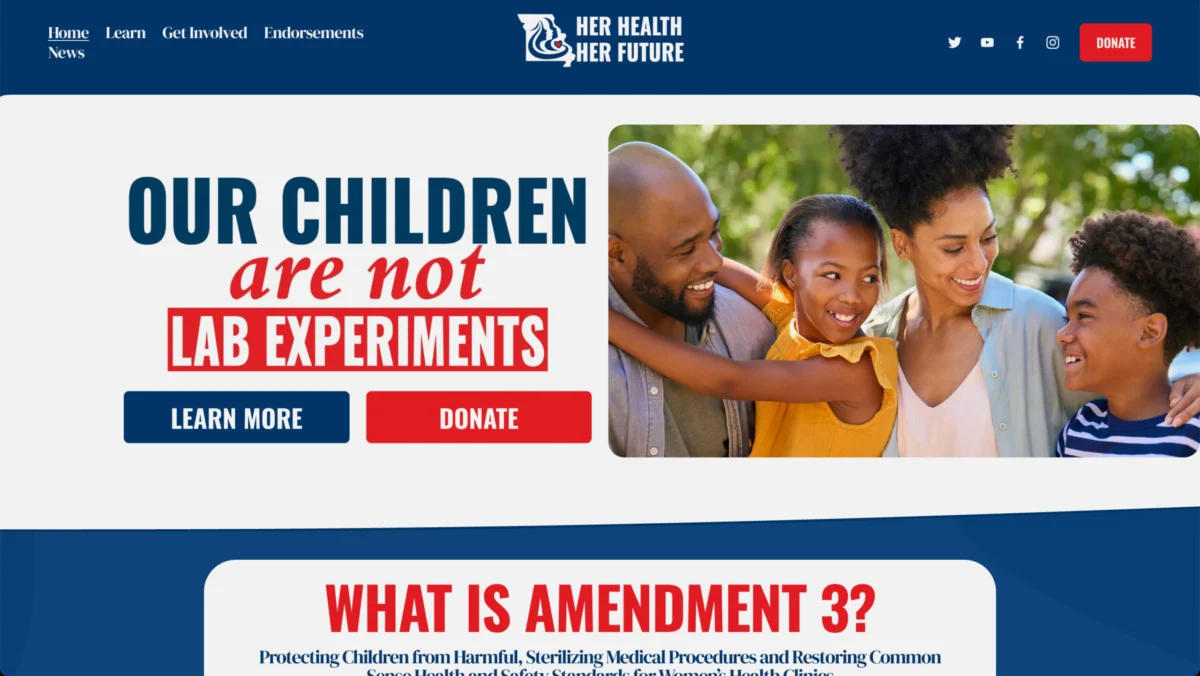
Two years after Missouri voters decisively enshrined reproductive rights in their state constitution, overcoming a campaign marred by false claims about gender transition surgeries for minors, Republican leaders are making another attempt to roll back those protections. This November, a new ballot initiative, also designated Amendment 3, seeks to restore a near-total abortion ban while constitutionally prohibiting gender-affirming care for minors – a strategy critics decry as deceptive and an affront to direct democracy. This renewed push highlights a persistent disconnect between the will of the state’s GOP-dominated legislature and the preferences of its electorate, a pattern that has repeatedly seen citizens use the initiative petition process to enact policies opposed by the Republican establishment.
The Genesis of Conflict: Roe v. Wade and Missouri’s Immediate Aftermath
The national landscape of abortion rights dramatically shifted in June 2022 when the U.S. Supreme Court overturned Roe v. Wade, eliminating the constitutional right to abortion. Missouri, like many conservative states, had a "trigger law" in place, which immediately activated a near-total ban on abortion, with very limited exceptions. This legislative action, spearheaded by the state’s Republican supermajority, swiftly ended most abortion services within Missouri, sending shockwaves through the state’s healthcare system and reproductive rights advocacy groups.
In response, a broad coalition of reproductive rights advocates mobilized, gathering signatures to place a measure on the ballot that would enshrine abortion access in the state constitution. This initiative, known as Amendment 3, faced fierce opposition. Opponents, including prominent Republican figures and anti-abortion groups, launched a campaign that falsely linked the measure to allowing gender transition surgeries for minors, despite the amendment’s language clearly not encompassing such provisions. Despite these misleading tactics, Missouri voters ultimately approved Amendment 3 in 2024, passing it with a margin of 51.6% to 48.4%. This victory overturned the legislative ban and re-established significant reproductive rights, including abortion access up to fetal viability.
A Familiar Playbook: The New Amendment 3 and its Dual Mandate
Fast forward to the upcoming November ballot, and Missourians are confronted with a striking sense of déjà vu. Republican leaders, undeterred by their previous defeat, have engineered a new ballot measure, once again named Amendment 3, designed to reverse the 2024 outcome. This new proposal is a two-pronged attack: it aims to restore Missouri’s abortion ban, albeit with slightly expanded exceptions for rape, incest, medical emergencies, and fetal anomalies, and simultaneously to constitutionally prohibit gender transition care for minors.
The inclusion of the gender-affirming care ban is widely viewed by critics as a strategic maneuver, often dubbed "ballot candy" or a "poison pill." The state of Missouri already has significant restrictions on gender transition care for minors; a law enacted in August 2023 banned gender transition surgeries for minors and, until August 2027, prevents minors from initiating puberty blockers or cross-sex hormones for gender transition. The new Amendment 3 would elevate these restrictions to a constitutional level, removing any expiration date and potentially solidifying them against future legislative challenges.
This bundling of issues is particularly cynical, critics argue, because the two provisions differ vastly in scope and impact. The repeal of reproductive rights would affect healthcare decisions for approximately 6.3 million Missourians, potentially forcing many to travel out of state for essential care. In contrast, the restrictions on gender transition care, while deeply impactful for the individuals and families concerned, pertain to a much smaller demographic receiving highly specialized medical treatment.
The Campaign of Persuasion: Messaging and Misdirection
The campaign supporting the new Amendment 3 is strategically focusing its messaging on the gender-affirming care component, often downplaying or omitting the direct impact on abortion rights. Billboards in St. Louis suburbs urge a "yes" vote to "ban transgender surgeries for minors." The political action committee behind the campaign, "Her Health, Her Future," whose treasurer is Missouri First Lady Claudia Kehoe, prominently features the slogan "OUR CHILDREN are not LAB EXPERIMENTS" on its website. The site claims Amendment 3 would protect children from "harmful, sterilizing medical procedures" and restore "common sense health and safety standards" for women’s health clinics. Conspicuously absent from much of this public-facing rhetoric is any explicit mention that the amendment would repeal the constitutional right to abortion approved by voters just two years prior.
Claudia Kehoe, through an endorsement on the PAC’s website, stated the amendment is "a critical step toward strengthening our pro-life protections and safeguarding our state’s future." A spokesperson for Governor Mike Kehoe’s office, when questioned by ProPublica, echoed similar sentiments, emphasizing the protection of children from "sex-change procedures" and the safeguarding of women, while also defending the state’s power to "regulate" abortion providers. The response notably avoided acknowledging the amendment’s primary effect: repealing established constitutional reproductive rights and replacing them with a more restrictive abortion ban.
This strategy appears to be calculated based on public opinion data. A February survey by the SLU/YouGov Poll revealed nuanced voter sentiment: nearly 60% supported legal abortion during the first eight weeks of pregnancy. However, opposition to gender transition medications for minors stood at 67%, and to surgeries at 73%. When presented with the amendment’s combined provisions, voter support for the measure shifted, with 47% in favor and 40% opposed, suggesting the gender care component serves as a significant sweetener for an otherwise unpopular abortion ban.
Missouri’s "Groundhog Day" of Direct Democracy
The recurring struggle over ballot initiatives has become a defining characteristic of Missouri politics, often described as a "Groundhog Day" for the Republican Party. Despite holding supermajorities in both legislative chambers and controlling every statewide office, the GOP establishment frequently finds itself at odds with its own constituents when policies are put directly to a vote.
Over the past decade, Missourians have repeatedly utilized the initiative petition process to bypass the legislature and enact policies that Republican leaders vehemently oppose. Notable examples include:

- 2018: Voters approved a measure to raise the minimum wage and require paid sick leave.
- 2020: Citizens voted to expand Medicaid, a move that the GOP-led legislature had resisted for years.
- 2022: A ballot initiative to legalize recreational marijuana passed, despite conservative opposition.
- 2024: The initial Amendment 3 successfully restored abortion rights after the legislative ban.
This pattern continued with recent "electoral humiliations" for Republican leaders. In a recent vote, over 80% of voters rejected a GOP-backed attempt (Amendment 4) to make it nearly impossible for citizens to amend the state constitution – a clear rebuke of efforts to curb direct democracy. Even more strikingly, Governor Mike Kehoe’s plan to phase out the state income tax (Amendment 5) was overwhelmingly rejected, with more than 83% voting "no."
Ken Warren, a professor emeritus of political science at Saint Louis University and associate director of the SLU/YouGov Poll, succinctly captured the sentiment, stating that Missouri Republicans have become "drunk with power. Because they control everything, they think they can do what they want – and they can’t."
The Battle Over Ballot Language: A Fight for Transparency
The attempt to sway public opinion through strategic messaging began not just with campaign ads, but with the very language presented to voters on the ballot. The initial summary written by lawmakers for the new Amendment 3 was heavily criticized for its omissions and misleading phrasing. It failed to inform voters that the measure would repeal the reproductive rights they had approved two years prior. Instead, it stated the measure would "guarantee access" to emergency care, "ensure women’s safety during abortions," and "protect children from gender transition." The summary also mentioned exceptions for rape and incest but omitted that these would only apply during the first 12 weeks of pregnancy.
Michael Wolff, a former chief justice of the Missouri Supreme Court who is advising the campaign against the amendment, characterized this language as "intended to deceive people into thinking that they were going to protect women having abortions." He added, "If you just flat-out tell them that you’re going to repeal nearly all of the protection for reproductive health, the people would vote no."
Judicial intervention became necessary. A judge ruled the legislature’s summary unfair and ordered it rewritten. Subsequently, Republican Secretary of State Denny Hoskins, who had publicly endorsed the new Amendment 3 and guided legislation restricting gender transition care, submitted revised language. However, a state appeals court found Hoskins’ language still failed to adequately explain the amendment’s true effects. The court ultimately rewrote the summary to explicitly lead with the fact that it would "repeal the 2024 voter-approved amendment providing reproductive healthcare rights, including abortion through fetal viability."
Hoskins defended his initial choice to use "amend" instead of "repeal," arguing it was more accurate. When pressed on how his endorsement squared with his duty to write neutral ballot language, he stated his anti-abortion stance was widely known among Missouri voters, adding, "I can’t all of a sudden erase my conservative views of the past 16 years in the Missouri Legislature."
This judicial oversight is not an isolated incident. In Hoskins’ first 1.5 years in office, courts have rejected or rewritten five ballot summaries from his office concerning various issues, including abortion, education, the initiative petition process, and a referendum on the state’s gerrymandered congressional map. Hoskins attributes these rulings to "differences of opinion" regarding fair and accurate language.
Beyond language, Hoskins has also unilaterally blocked two citizen-led measures from reaching the November ballot. He rejected a proposed constitutional amendment designed to make it harder for lawmakers to alter voter-approved measures, deeming it unconstitutional. He also refused to certify a referendum on Missouri’s newly gerrymandered congressional map – a map drawn at former President Donald Trump’s urging to potentially gain another U.S. House seat for Republicans – arguing that public votes on congressional maps are unconstitutional. While circuit courts recently ruled in Hoskins’ favor on both these blocking actions, these cases are expected to reach the state Supreme Court on expedited appeals, further highlighting the ongoing struggle over direct democracy in Missouri.
Reactions, Accusations, and the Road Ahead
The political battle lines are sharply drawn. Republican State Representative Brian Seitz, who guided the amendment through the House, denied any intent to trick voters. He argued that gender-affirming treatment for minors is intrinsically a reproductive issue, as some procedures could impact a minor’s future fertility. Seitz also disputed that Missourians knowingly approved broad abortion rights in 2024, contending that voters primarily sought exceptions for rape, incest, medical emergencies, and fetal anomalies, not what he termed "abortion on demand." He asserted that the new Amendment 3 better reflects the voters’ true intentions.
Abortion rights supporters vehemently reject this argument, calling it a "pretext for restoring the state’s abortion ban." A coalition of groups called "Stop the Ban" has mobilized, raising over $5 million to educate voters on the amendment’s true implications and urge its rejection. This significant fundraising effort includes a $1.25 million contribution from former New York City Mayor Michael Bloomberg.
Democratic State Representative Raychel Proudie of Ferguson expressed exasperation, stating that Republicans are "always moving a goalpost to sort of get their way, and it is my hope that actual patriots are growing tired of it." She added, "You shouldn’t have to do this if what you’re planning is righteous and in the best interest of people." State Senator Maggie Nurrenbern, a Kansas City Democrat, echoed these sentiments, highlighting a broader pattern of political interference with voters’ ability to use the ballot box to counter the Republican agenda. "That’s quite frankly what is maddening to me, is that politicians over and over again are trying to trick voters," she said.
Secretary of State Hoskins, in turn, has criticized opponents of Amendment 3 as "liberal special interest groups" financed by "out-of-state sugar daddies" like Bloomberg. He maintained that he and other Republican leaders, having also been elected, are not defying the will of voters.
The upcoming November election in Missouri will once again test the power of direct democracy against the legislative will of a dominant political party. The fate of reproductive rights and the future of gender-affirming care for minors hang in the balance, entangled in a complex web of legislative maneuvers, judicial interventions, and strategic campaign messaging. The outcome will not only determine specific policy in Missouri but also serve as a critical indicator of the ongoing struggle between voter sovereignty and partisan political control in the post-Roe era.




 Pevita Pearce
 Eva Lovia
 Nana Wu
 Amara Maple
 Joko Widodo
 admin
admin