
 Nila Kartika Wati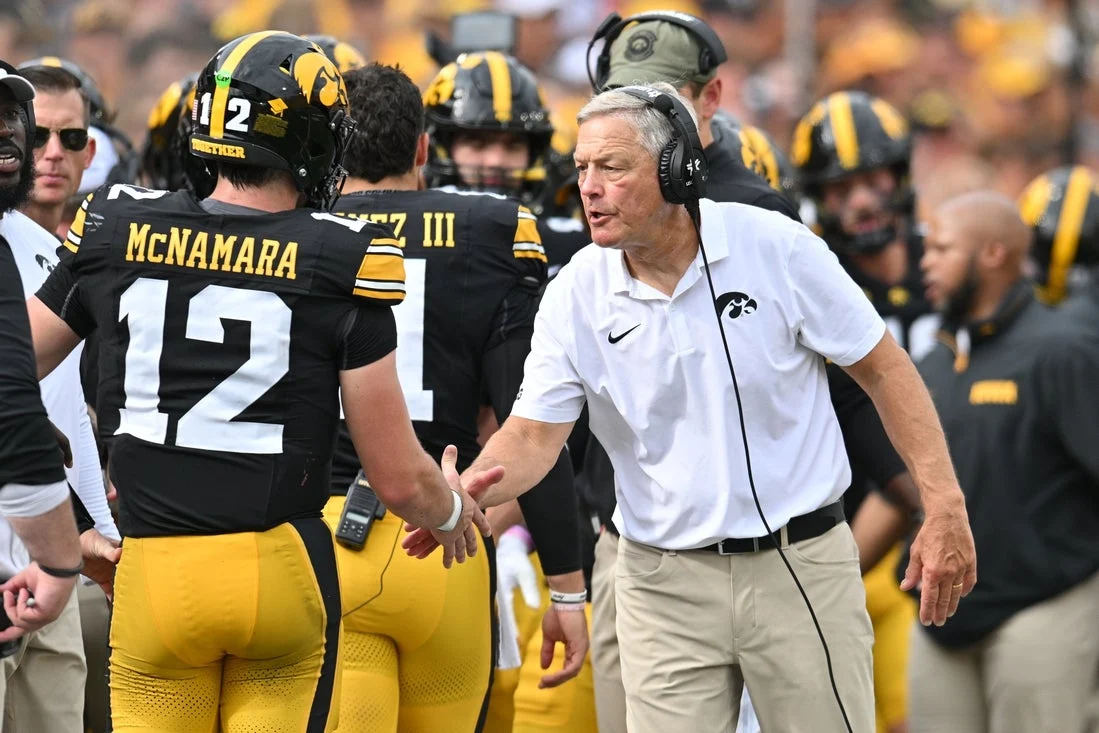
The NCAA has officially vacated victories from the 2023 Iowa Hawkeyes football season and adjusted head coach Kirk Ferentz’s career win total after ruling that the university committed tampering violations. The violations stemmed from impermissible contact made by Head Coach Kirk Ferentz and wide receivers coach Jon Budmayr with a prospective transfer student-athlete in November 2022, prior to the player officially entering the NCAA transfer portal. This ruling, delivered on Tuesday, concludes a protracted disciplinary process that saw the university appeal one of the penalties imposed by the NCAA.
Background of the NCAA Infractions Case
The core of the NCAA’s investigation centered on interactions that occurred in November 2022. At that time, Head Coach Kirk Ferentz and Assistant Coach Jon Budmayr engaged in direct communication with a student-athlete who was contemplating a transfer. The NCAA’s rules strictly prohibit such contact before a player has formally entered the transfer portal, aiming to ensure a fair and equitable recruiting landscape.
While Ferentz and Budmayr had previously reached resolutions regarding their individual violations, the University of Iowa continued to contest a specific penalty: the vacation of team records. Iowa argued that this particular consequence was outdated and no longer appropriate given the evolving nature of college athletics. This contention led to a formal hearing before the NCAA Division I Committee on Infractions (COI), necessitating a deeper examination of the penalty’s relevance and application.
The Committee on Infractions’ Ruling and Rationale
The hearing panel, in its Tuesday decision, upheld the vacation of records as a fitting penalty for the tampering violations. The committee acknowledged that the landscape of college sports is in constant flux, and that rules and their corresponding consequences require regular scrutiny and potential revision.
However, the COI emphasized that fundamental changes to established practices, particularly concerning what constitutes an infraction leading to student-athlete ineligibility and how such ineligible competition is penalized, should be initiated through the broader NCAA governance and legislative processes. "Changes to historical practice — particularly around what violations trigger student-athlete ineligibility and how ineligible competition is penalized — should be made by more traditional governance committees through the governance and legislative process," the panel stated. "The COI is open to reevaluating the violations that trigger ineligibility or how ineligible competition should be penalized, but it would be inappropriate to do so in the context of a single infractions case and outside of the legislative process." This statement suggests a willingness to consider rule adjustments but underscores the need for a structured, deliberative approach rather than ad-hoc modifications.
Prescribed Penalties and Iowa’s Self-Imposed Sanctions
The full slate of penalties levied against the University of Iowa includes the vacation of all team records in which the player in question competed, alongside a one-year period of probation for the Hawkeyes football program.
In addition to the NCAA’s mandated sanctions, Iowa had already implemented a series of self-imposed penalties that were subsequently accepted by the governing body. These included:
- One-game suspensions: Both Head Coach Kirk Ferentz and Assistant Coach Jon Budmayr served one-game suspensions during the 2024 season.
- Financial penalty: A $25,000 fine was imposed on the university.
- Recruiting restrictions: A reduction of 24 days in the football team’s recruiting calendar for 2025 was implemented.
- Communication ban: A two-week prohibition on all football recruiting communication was enacted for the 2026 calendar year.
The Committee on Infractions recognized the proactive measures taken by the university and its coaching staff. "When respected individuals identify their mistakes and take responsibility for them, it sets the standard for appropriate behavior within their programs, universities and, more importantly, across the broader industry," the panel remarked. "The panel appreciates the actions taken by Iowa and Ferentz to publicly address his and his staff member’s conduct." This acknowledgment suggests that the university’s cooperative approach and the coaches’ acceptance of responsibility were viewed favorably by the committee.
The Player and the Nature of the Contact
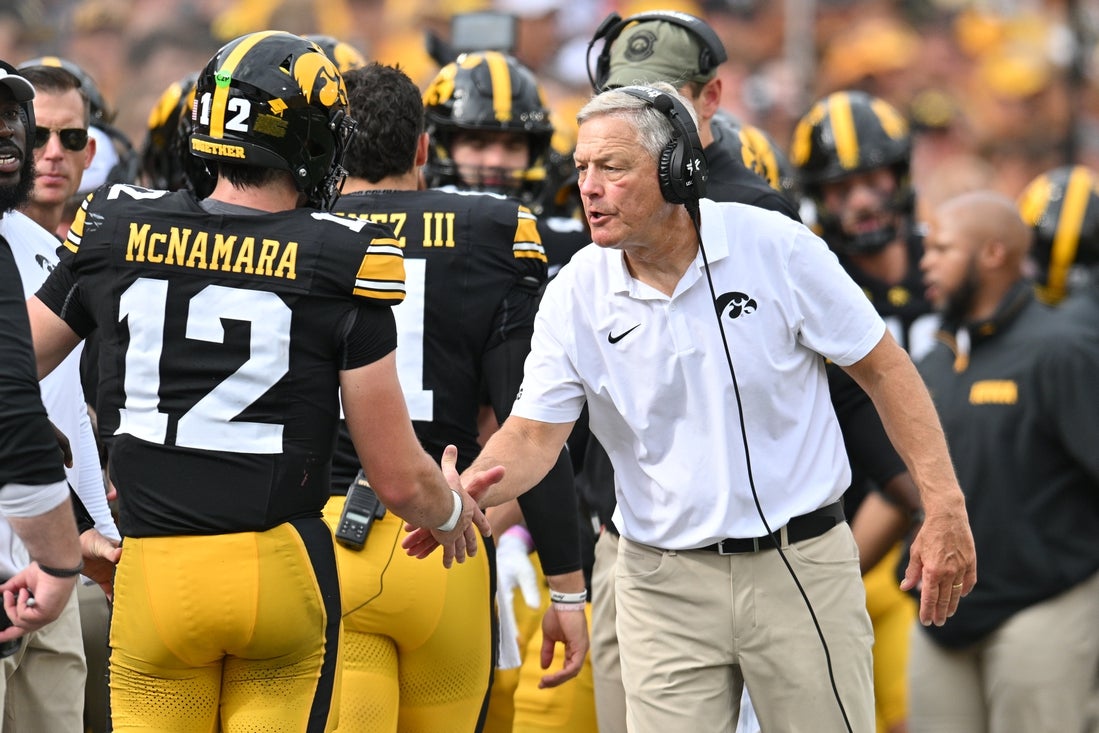
The NCAA intentionally withheld the name of the student-athlete involved in the violation. However, publicly available information and reports identified the player as quarterback Cade McNamara. McNamara, who transferred to Iowa from the University of Michigan, was a significant contributor to the Hawkeyes’ 2023 season.
According to the panel’s findings, Assistant Coach Jon Budmayr initiated the impermissible contact. Budmayr made a total of 13 phone calls and sent two text messages to McNamara and/or his father. Crucially, Budmayr also arranged for Head Coach Kirk Ferentz to speak with the prospective transfer. This direct involvement of the head coach escalated the severity of the violation, as it indicated a coordinated effort to recruit a player outside of established NCAA protocols.
Impact on the 2023 Season and Kirk Ferentz’s Record
The vacation of records directly affects the statistical outcomes of the 2023 Iowa Hawkeyes football season. Specifically, the victories achieved in games where Cade McNamara participated will be expunged from the record books. These include wins against Utah State, Iowa State, Western Michigan, and Michigan State.
During the 2023 season, McNamara played in five games for Iowa. In those contests, the Hawkeyes achieved a record of 4-1. The team ultimately finished the season with an overall record of 10-4. With the aforementioned victories vacated, Iowa’s official record for the 2023 season will be adjusted.
The most significant personal consequence of this ruling falls upon Head Coach Kirk Ferentz. As the head coach of the Iowa Hawkeyes since 1999, Ferentz has amassed a substantial career win total. With the vacation of four wins from the 2023 season, his career total will be reduced from 213 victories to 209. This adjustment marks a notable, albeit statistically driven, alteration to his long-standing coaching legacy.
Broader Implications and the Evolving NCAA Landscape
This ruling by the NCAA Committee on Infractions highlights several critical aspects of modern college athletics:
- The Complexity of the Transfer Portal: The advent of the transfer portal has dramatically reshaped college football recruiting. Rules designed for traditional recruiting cycles are continuously being tested and adapted to this new environment. The impermissible contact with McNamara occurred during a period when the transfer portal was still relatively new and its regulatory framework was solidifying.
- Enforcement of Tampering Rules: The NCAA’s commitment to enforcing tampering rules underscores the importance of maintaining a level playing field. While the spirit of competition is paramount, the integrity of the recruiting process relies on adherence to established guidelines.
- The Role of the Committee on Infractions: The COI’s decision to uphold the vacation of records, while acknowledging the need for rule review, demonstrates its adherence to precedent while also signaling an openness to future legislative action. The panel’s statement about legislative processes suggests that if changes are to be made to how violations are penalized, they should originate from broader NCAA committees rather than individual case rulings.
- Coach Accountability: The penalties, including the self-imposed suspensions and the reduction in Ferentz’s win total, underscore the principle of accountability for coaching staffs. The acknowledgment of Iowa’s and Ferentz’s proactive response to the violations suggests that transparency and a willingness to address mistakes are valued.
- Data Integrity in College Athletics: The vacation of records is a direct consequence for the integrity of historical athletic data. While the on-field results may have occurred, the NCAA’s ruling dictates that they will no longer be officially recognized due to the procedural violations that preceded them.
The case serves as a reminder for all NCAA member institutions and their athletic departments about the stringent adherence required for recruiting regulations, especially in the dynamic era of student-athlete transfers. As college sports continue to evolve, the NCAA faces the ongoing challenge of adapting its rules and enforcement mechanisms to maintain fairness and competitive balance. The Iowa Hawkeyes and Kirk Ferentz now navigate the consequences of a transgression that, while resolved, leaves a permanent mark on their program’s history and the coach’s career statistics.



 Yuyun Lusiyani
 Joko Widodo
 Eva Lovia
 Pevita Pearce
 admin
admin
 Lina Irawan