
 Yuyun Lusiyani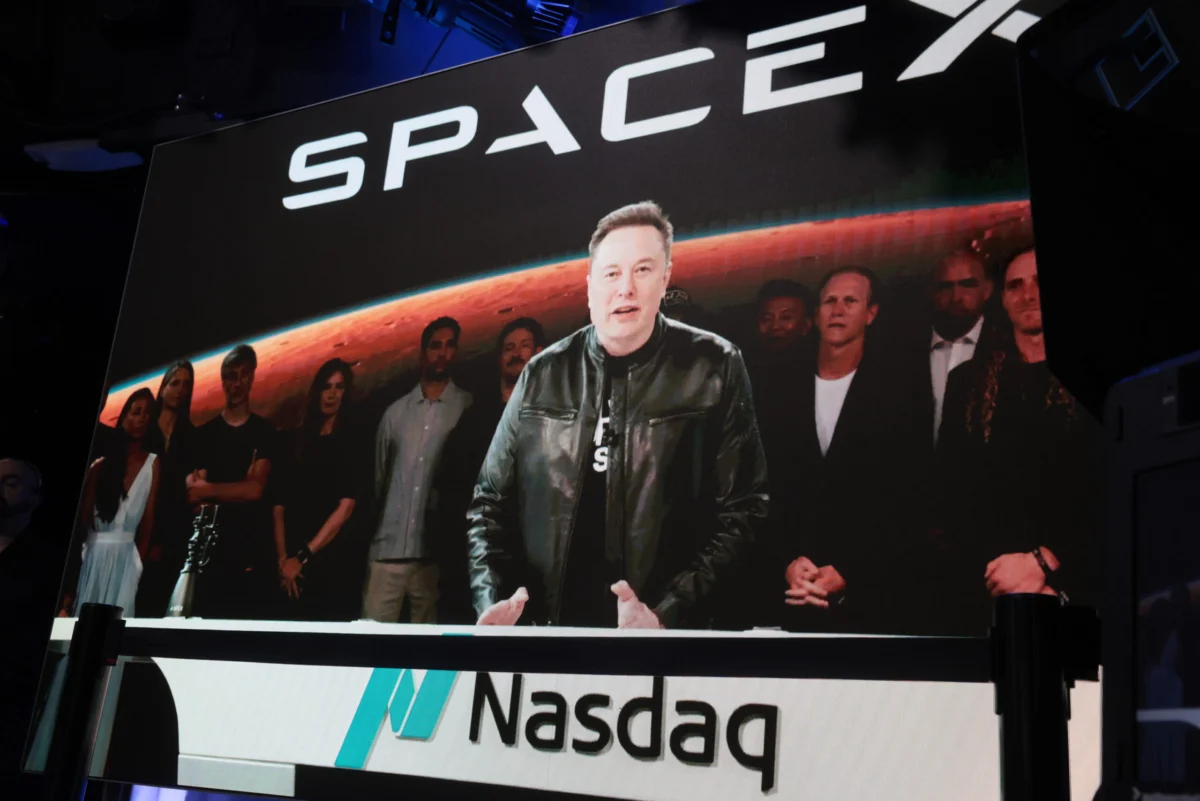
Revelations from a newly unsealed private investor list have brought to light the significant stakes acquired in Elon Musk’s aerospace giant, SpaceX, by a network of overseas investors, including a prominent businessman with documented ties to Chinese military contractors and an entity linked to the Qatari royal family, raising substantial national security questions for the United States government. The intricate web of foreign capital flowing into one of America’s most strategically vital companies underscores a delicate geopolitical balancing act, particularly given SpaceX’s foundational role in U.S. defense and intelligence operations, including the manufacture of sophisticated spy satellites for the Pentagon. The disclosure, stemming from court records obtained and successfully unsealed by ProPublica, offers an unprecedented glimpse into the previously opaque ownership structure of SpaceX before its recent initial public offering (IPO), a period during which its valuation soared exponentially.
SpaceX: A Dual-Use Giant and National Security Asset
SpaceX, founded by Elon Musk in 2002, has transcended its origins as a commercial rocket company to become an indispensable partner for the U.S. government. Its innovations in reusable rocket technology, its Starlink satellite internet constellation, and its contracts with NASA and the Department of Defense place it at the forefront of American technological and strategic advantage. The company is not merely a commercial enterprise; it is a critical component of the U.S. national security infrastructure, responsible for launching sensitive payloads, including spy satellites, and developing next-generation defense capabilities. This dual-use nature – pioneering commercial space exploration while simultaneously performing classified government work – inherently subjects SpaceX to intense scrutiny regarding its ownership and financial backing, especially when foreign entities are involved. While no outright ban exists on foreign investment in U.S. military contractors, such transactions are rigorously regulated by various federal bodies, most notably the Committee on Foreign Investment in the United States (CFIUS), which reviews foreign investments for potential national security risks. The U.S. government has consistently expressed concerns over state-sponsored industrial espionage and the acquisition of critical technologies by foreign adversaries through investment channels.
The ProPublica Investigation and the Unsealed Ledger
The detailed insights into SpaceX’s pre-IPO investor base emerged from a corporate dispute in Delaware involving Tomales Bay Capital, a U.S.-based middleman firm. ProPublica, supported by attorneys from the Reporters Committee for Freedom of the Press and the law firm Shaw Keller, successfully moved to make these court records public, a decision upheld by the Delaware Supreme Court. These unsealed documents, collectively referred to as the "Kahlon investor list" after Tomales Bay Capital’s principal, Iqbaljit Kahlon, provide granular details of hundreds of investors who acquired stakes in SpaceX years ago. The revelations are particularly significant because the identities of most of SpaceX’s private investors have historically been closely guarded. The list details investments made between 2018 and 2021 through various Tomales Bay Capital funds that acquired SpaceX stock.
Iqbaljit Kahlon, who runs Tomales Bay Capital, has a long-standing and unusually close relationship with SpaceX’s leadership. Bret Johnsen, SpaceX’s CFO for 15 years, testified that Kahlon "has been with the company in one form or fashion longer than I have," underscoring his deep integration into the company’s financial ecosystem. Kahlon leveraged this proximity to build a lucrative business as a middleman, acquiring SpaceX stock, packaging it into investment funds, and then charging fees to investors who bought into these funds. This model effectively allowed a broad array of investors, some with potentially problematic connections, to gain exposure to a sensitive U.S. defense contractor.
The Chinese Nexus: David Su and State-Linked Entities
Among the most concerning revelations is the involvement of at least a dozen investors with addresses in mainland China and Hong Kong. One particularly prominent investment came from an entity owned by David Su, co-founder of the influential Beijing venture capital firm MPCi. Su’s entity invested $15 million in a SpaceX fund in 2020. The implications of this investment are magnified by Su’s broader portfolio and MPCi’s operational context within China. MPCi has not only invested in SpaceX but has also been a high-profile backer of several of SpaceX’s direct competitors within China’s burgeoning space industry.
Furthermore, two satellite companies that Su’s firm invested in have faced severe U.S. government sanctions. One of these companies was sanctioned for allegedly assisting the Wagner Group, a notorious Russian mercenary organization implicated in conflicts across Africa and Ukraine. Last month, this same company was reportedly sanctioned again for allegedly providing assistance to Iran in attacks against U.S. military forces during the war, highlighting a direct link to entities deemed hostile to U.S. interests. Adding another layer of concern, MPCi has actively collaborated with Chinese government investment funds. In 2025, China’s Ministry of Science and Technology publicly named Su’s firm as a partner in a state-backed initiative specifically aimed at developing the country’s aerospace industry. This deep entanglement with Chinese state industrial policy and entities sanctioned for assisting U.S. adversaries raises red flags, particularly for a company like SpaceX.
From the U.S. government’s perspective, the primary concern is not necessarily the legality of the investment but the potential for access to nonpublic information regarding SpaceX’s cutting-edge technology, operational strategies, or sensitive government contracts. As Sarah Bauerle Danzman, an Indiana University professor and former State Department official specializing in foreign investments, stated, "If an investor has conflicts of interests with other companies in China — if they could feed that information to competitors — it could be a national security concern." The U.S. government has consistently alleged that China employs a strategy of using strategic investments in sensitive industries to facilitate espionage and gain access to advanced technologies, an allegation that underpins the heightened scrutiny of such dealings.
In response to these concerns, MPCi issued a statement asserting that David Su "has not received any nonpublic information of SpaceX." The statement also sought to clarify Su’s nationality and residency, describing him as "a Singapore citizen who resides in Singapore," and noting that "MPCi is a brand name with different teams and funds. Mr. Su is responsible for the US dollar funds." However, a 2024 profile of Su revealed that he "spent almost 100 per cent of his time in China over the last 20 years," complicating the assertion of primary Singaporean residency for the purpose of mitigating national security concerns. SpaceX, for its part, did not respond to inquiries regarding these revelations. One of the Chinese space companies sanctioned by the U.S. government, Spacety, had previously denied providing support to the Wagner Group.
The sensitivity surrounding Chinese investment in SpaceX was further underscored by the company’s decision to bar investors from China and Hong Kong from buying shares in its initial public offering last week. Bloomberg reported that this ban was implemented due to "regulatory and compliance risks," a clear acknowledgment of the heightened geopolitical tensions and the specific concerns articulated by U.S. authorities. This measure, however, does not retroactively address the investments made by Chinese entities in the years prior to the IPO, when the company was still private.
Musk’s Complex China Interests
Elon Musk himself faces a complex and potentially conflicting set of interests concerning China. While SpaceX is a U.S. national security linchpin, Musk’s other flagship company, Tesla, has extensive and critical business operations in China. The country is a massive market for Tesla, and its Shanghai Gigafactory plays a crucial role in the company’s global manufacturing strategy. This deep commercial reliance on China for Tesla creates a challenging dynamic for Musk, who must navigate the geopolitical currents impacting both his automotive and aerospace ventures. The U.S. government’s push to decouple critical supply chains and limit technological transfers to China directly clashes with the expansive global footprint of Musk’s enterprises.
Russian Connections and Opaque Ownership
The investor list also revealed linkages to Russia, further diversifying the array of potentially problematic foreign investors. The documents detail investments from entities with addresses in Russia, albeit relatively small, ranging from $800,000 to $40 million. One notable instance involves a Delaware LLC named HAL9001 Partners Fund I, which invested approximately $10 million in a SpaceX fund in 2020. The incorporation documents for HAL9001 were signed by venture capitalist Roman Sobachevskiy. Pertinently, the U.S. Treasury Department recently levied hundreds of millions of dollars in fines against a company co-owned by Sobachevskiy for managing a separate investment on behalf of a sanctioned Russian oligarch. While Sobachevskiy has not been personally accused of wrongdoing in this context, the association with an entity penalized for facilitating transactions for a sanctioned oligarch raises questions about the ultimate beneficial ownership and the provenance of the funds invested in SpaceX. A Tomales Bay Capital spokesperson stated that the oligarch "had no involvement with the investment," and Sobachevskiy declined to comment on the source of the funds for the SpaceX investment.
Qatari Stakes and Geopolitical Influence
Beyond China and Russia, the unsealed records illuminate significant connections between SpaceX and Qatar. Funds affiliated with Bracket Capital, an investment firm with offices in Los Angeles, London, and Qatar, invested approximately $48 million in SpaceX through a series of deals between 2017 and 2020. The extent of Qatari royal family involvement in these investments is explicitly noted in an email sent by Iqbaljit Kahlon to SpaceX’s CFO, which mentioned that Bracket Capital had money from the Qatari royal family. Additionally, the ledger lists Doha, Qatar, as the address for a mysterious entity called AM FIG Cayman Limited, which invested around $10 million in 2020.
The documents do not specify whether Bracket’s investments were made directly on behalf of the royal family or other clients. However, an intriguing exchange from 2021, when Kahlon was soliciting backers for another SpaceX deal, involved a text message to a Bracket employee: "At the end we can just send Yalda to talk to big guy. We need a bail out lol." (Yalda Aoukar is Bracket’s co-founder.) The identity of the "big guy" and the precise meaning of "a bail out" remain unclear, but the language suggests a level of access or influence with significant Qatari figures. Bracket Capital did not respond to requests for comment. While Qatar is a U.S. ally, its substantial sovereign wealth investments globally and its complex geopolitical role often draw scrutiny, especially concerning stakes in sensitive U.S. technology companies.
The Intermediary’s Promises and Denials
The role of Tomales Bay Capital and Iqbaljit Kahlon is central to understanding how these foreign investments were facilitated. In a 2021 pitch to a potential investor in China, Kahlon explicitly promised "special access" to SpaceX. This included quarterly updates on the company’s business development, "visits to SpaceX, and the opportunities to interview with Space X’s CFO," according to meeting minutes that later appeared in court records. This promise of "special access" stands in stark contrast to Tomales Bay Capital’s official statement. Ryan Stonerock, a lawyer for Tomales Bay Capital, stated that the firm "has not provided any non-public, sensitive information regarding SpaceX to investors." He emphasized that the investors are passive limited partners who, "Aside from fund financials that include quarterly valuations, Tomales Bay’s investors have not received any further information regarding SpaceX."
Stonerock also sought to downplay the presence of foreign adversary citizens, stating, "The vast majority, if not all, of the investors included on the unsealed Tomales Bay investor list are not citizens of any foreign adversary, including Russia or China, and certainly none of them are agents of Russia or China, or any other foreign adversary." He added that some investors "may have mailing addresses listed" in Russia or China but do not actually live there, being "citizens and residents of the United States or other countries that are not foreign adversaries." However, the discrepancy between Kahlon’s explicit promises of privileged access and his firm’s later denials raises questions about the nature of engagement with these foreign investors and the extent to which sensitive information could have been inadvertently or intentionally shared. ProPublica had previously reported on SpaceX’s unusual approach of allowing Chinese investors to buy stakes via offshore secrecy hubs like the Cayman Islands, further obscuring ultimate beneficial ownership and facilitating investments that might otherwise face greater scrutiny.
Broader Implications for National Security and Investment Scrutiny
These revelations underscore the persistent challenge of safeguarding national security interests in an increasingly globalized financial landscape, especially concerning dual-use technologies. The substantial appreciation of SpaceX’s valuation, skyrocketing from $33.3 billion in 2019 to an estimated $2.7 trillion currently, means these relatively small initial investments would have generated immense windfalls for the foreign stakeholders. This financial incentive further complicates the picture, as it drives demand for stakes in high-growth, strategically important companies.
The detailed investor list, while not providing direct evidence of impropriety, clearly demonstrates how sophisticated financial mechanisms, often involving intermediaries and offshore entities, can facilitate foreign investments into critical U.S. technology firms. This poses a significant regulatory challenge, as the U.S. government strives to balance open capital markets with the imperative to protect national security, intellectual property, and technological superiority against potential exploitation by state adversaries. The scrutiny on SpaceX’s past investment practices is likely to intensify, potentially prompting a re-evaluation of how private companies with vital government contracts manage their investor relations and ownership structures to prevent future national security risks. The incident serves as a stark reminder of the continuous need for vigilance and robust regulatory frameworks in an era where economic competition and national security are increasingly intertwined.



 Joko Widodo
 Eva Lovia
 Pevita Pearce
 admin
admin
 Lina Irawan