
 Nila Kartika Wati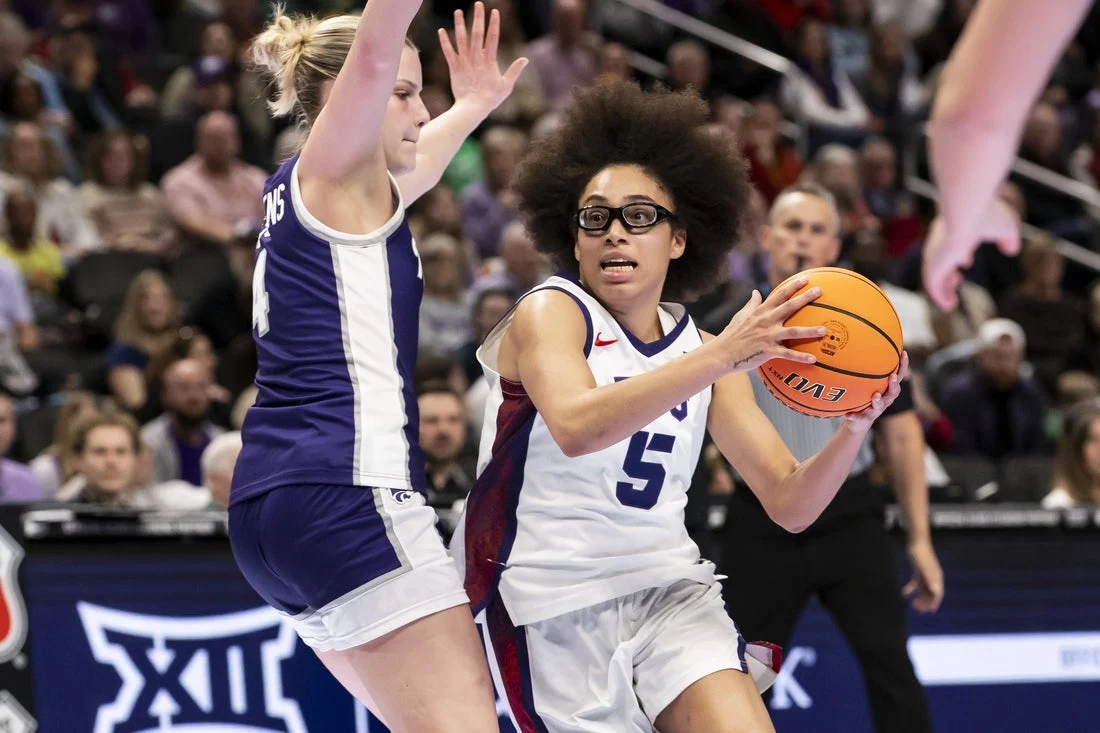
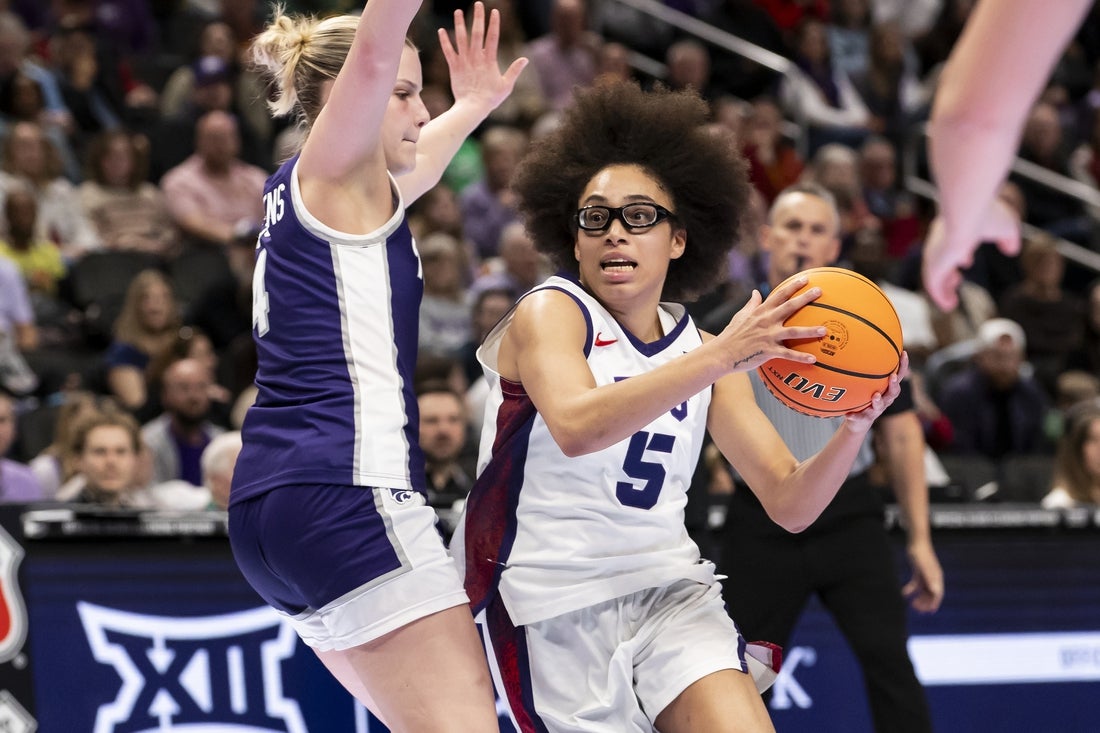
The TCU Horned Frogs, a No. 3 seed in the Sacramento 4 region, commenced their NCAA Women’s Basketball Tournament journey with a resounding 86-40 victory over the No. 14 seed UC San Diego Tritons. The dominant performance, held on March 7, 2026, in Fort Worth, Texas, was anchored by an extraordinary triple-double from guard Olivia Miles and a career-defining offensive output from forward Taylor Bigby. This decisive win propels TCU into the second round, where they are slated to host the No. 6 seed Washington Huskies.
Miles Achieves Sixth Triple-Double of the Season, Joins Elite NCAA Tournament Company
Olivia Miles, the linchpin of the TCU offense, etched her name further into the NCAA Tournament record books by recording her sixth triple-double of the current season. Her masterful stat line of 12 points, 16 rebounds, and 14 assists not only steered the Horned Frogs to victory but also placed her in an exclusive club of Division I women’s basketball players to achieve multiple triple-doubles in the NCAA Tournament. She now stands alongside legends such as Oregon’s Sabrina Ionescu and Stanford’s Nicole Powell, underscoring her significance as one of the nation’s premier talents.
The accomplishment is particularly noteworthy given the high stakes and intense pressure of tournament play. Achieving such a statistical feat requires a blend of individual brilliance, court vision, and sustained impact across multiple facets of the game. Miles’ ability to consistently contribute points, secure rebounds, and orchestrate the offense highlights her exceptional all-around game and her critical role in TCU’s success.
Bigby’s Career-High Powers TCU’s Offensive Barrage
Complementing Miles’ historic performance, Taylor Bigby delivered a career-best 27 points, providing a significant offensive spark for the Horned Frogs. Bigby’s scoring prowess was crucial in establishing TCU’s commanding lead, showcasing her ability to find the basket and consistently convert opportunities. Her career-high performance, achieved on the tournament’s grandest stage, signifies a significant step forward in her individual development and her contribution to the team’s aspirations.
The synergy between Miles’ playmaking and Bigby’s scoring was a hallmark of TCU’s offensive strategy against UC San Diego. Miles’ ability to create opportunities through assists opened up the floor for Bigby and her teammates, while Bigby’s offensive efficiency ensured that TCU capitalized on those chances.
TCU’s Dominance on Both Ends of the Court
The Horned Frogs’ victory was not solely reliant on individual heroics. TCU demonstrated a comprehensive team performance, outscoring UC San Diego by a staggering 46 points. Their offensive efficiency was evident in their 49.2% field goal percentage and a blistering 50% success rate from beyond the three-point arc. This balanced offensive attack prevented UC San Diego from keying in on any single threat.
Furthermore, TCU imposed its will on the boards, doubling UC San Diego’s rebounding total. This dominance on the glass limited the Tritons’ second-chance opportunities and allowed the Horned Frogs to control the tempo of the game. The disparity in rebounding statistics, with TCU collecting significantly more boards, is often a critical indicator of team physicality and defensive effort.
The defensive effort was equally impressive. TCU held UC San Diego to a mere 22.7% shooting from the field, a testament to their defensive intensity and execution. The Tritons’ inability to find consistent offensive rhythm, particularly in the second half where they managed only 15 points, underscores TCU’s suffocating defense. Erin Condron was the lone bright spot for UC San Diego, managing 12 points, but she lacked significant offensive support.
A Glimpse at the Season’s Narrative
The TCU Horned Frogs entered the NCAA Tournament with an impressive 30-5 record, a testament to their consistent performance throughout the regular season and their conference tournament run. Their seeding as the No. 3 seed in the Sacramento 4 region reflects their strong standing among the nation’s elite teams. The victory over UC San Diego further solidifies their status as a formidable contender in the bracket.
The Sacramento 4 region, like all NCAA Tournament brackets, is designed to pit teams against each other based on their season-long performance. The early rounds are often characterized by matchups between high-seeded teams and lower-seeded underdogs, providing opportunities for established programs to advance while also allowing Cinderella stories to emerge. TCU’s commanding victory over UC San Diego is a clear demonstration of the expected outcome when a highly-ranked team faces a significantly lower-seeded opponent.
Looking Ahead: A High-Profile Second-Round Clash
With their decisive first-round victory, TCU advances to face the No. 6 seed Washington Huskies in the second round. The game is scheduled to be held on Sunday in Fort Worth, with TCU enjoying the advantage of playing on their home court. This matchup promises to be a compelling contest, pitting two strong teams with different paths to this stage of the tournament. Washington’s own impressive victory over South Dakota State sets the stage for an intriguing battle.
Washington Edges South Dakota State in a Tense First-Round Encounter
In the day’s other contest within the Sacramento 4 region, the No. 6 seed Washington Huskies narrowly defeated the No. 11 seed South Dakota State Jackrabbits, 72-64. The Huskies’ victory was propelled by a stellar performance from Avery Howell, who poured in a game-high 30 points and grabbed nine rebounds, including seven successful three-pointers. Howell’s offensive explosion was critical in snapping the Jackrabbits’ impressive 10-game winning streak.
Brynn McGaughy provided valuable support for Washington with 14 points, while Sayvia Sellers orchestrated the offense with 10 assists and contributed three of the Huskies’ 12 steals. Washington’s defensive pressure was a significant factor, forcing 18 turnovers that translated into 16 points. Their 40-25 advantage on the glass further illustrates their control over the game’s tempo and flow.
South Dakota State’s Uphill Battle
Despite a valiant effort, the South Dakota State Jackrabbits ultimately fell short. Brooklyn Meyer was the standout performer for the Jackrabbits, scoring 29 points on an efficient 13-of-20 shooting. However, her scoring was largely isolated, as she accounted for more field goals than the rest of her teammates combined. Emilee Fox added 14 points and was responsible for four of South Dakota State’s five made three-pointers, highlighting the team’s reliance on a few key players.
The game was tightly contested through the first quarter, with both teams trading blows and ending the period tied at 15. However, Washington established control in the second quarter, outscoring South Dakota State 23-9. This decisive run, featuring contributions from Howell, McGaughy, and Yulia Grabovskaia, proved to be the turning point in the game.
Analysis of Implications
TCU’s dominant performance against UC San Diego sets a strong tone for their tournament aspirations. Their ability to execute on both ends of the floor, coupled with historic individual performances, positions them as a legitimate threat to advance deep into the tournament. The statistical disparities observed in the game—rebounding, shooting percentages, and scoring margin—are indicative of a team firing on all cylinders.
The second-round matchup against Washington presents a significant challenge. Washington, having secured a hard-fought victory against a streaking South Dakota State team, has proven their resilience and ability to perform under pressure. The Huskies’ offensive firepower, exemplified by Howell’s performance, and their defensive intensity suggest a competitive game. The contrast in styles—TCU’s balanced offensive attack and dominant rebounding versus Washington’s reliance on perimeter shooting and defensive pressure—will be a key storyline to watch.
The historical context of Olivia Miles’ triple-doubles adds another layer of intrigue. Her consistent ability to impact the game in multiple ways is a rare and valuable asset, especially in the high-stakes environment of the NCAA Tournament. Her presence on the court not only elevates TCU’s performance but also draws attention to the evolving landscape of women’s basketball and the increasing prominence of versatile, all-around players.
The early rounds of the NCAA Tournament often serve as a proving ground for teams, revealing their strengths, weaknesses, and their capacity to adapt to different opponents and playing styles. TCU’s commanding victory demonstrates their readiness for the challenges ahead, while Washington’s narrow win showcases their grit and determination. The stage is now set for a compelling second-round showdown that will determine which team advances further in pursuit of the national championship.
Key Statistics and Chronology
TCU vs. UC San Diego
- Date: March 7, 2026
- Location: Fort Worth, Texas
- Final Score: TCU 86, UC San Diego 40
- Key Performers (TCU):
- Olivia Miles: 12 points, 16 rebounds, 14 assists (Triple-Double)
- Taylor Bigby: 27 points (Career High)
- Clara Silva: 13 points, 11 rebounds (Double-Double)
- Marta Suarez: 11 points, 10 rebounds (Double-Double)
- Key Performers (UC San Diego):
- Erin Condron: 12 points
- Shooting Percentages:
- TCU: 49.2% FG, 50% 3FG
- UC San Diego: 22.7% FG
- Rebounding: TCU 48, UC San Diego 24
- Halftime Score: TCU led by a significant margin (exact score not provided, but implied dominance).
- Second Half Scoring: TCU outscored UC San Diego 46-15 in the second half.
Washington vs. South Dakota State
- Date: March 7, 2026
- Location: Fort Worth, Texas
- Final Score: Washington 72, South Dakota State 64
- Key Performers (Washington):
- Avery Howell: 30 points, 9 rebounds, 7 3-pointers
- Brynn McGaughy: 14 points
- Sayvia Sellers: 10 assists, 3 steals
- Key Performers (South Dakota State):
- Brooklyn Meyer: 29 points
- Emilee Fox: 14 points
- Quarter Scores:
- Q1: Tied 15-15
- Q2: Washington 23-9
- Halftime: Washington led by 14 points.
- Turnovers Forced: Washington 18, resulting in 16 points.
- Steals: Washington 12.
Context of the NCAA Women’s Basketball Tournament
The NCAA Women’s Basketball Tournament, often referred to as March Madness, is an annual knockout competition organized by the National Collegiate Athletic Association (NCAA) for women’s college basketball teams. The tournament culminates in the NCAA Women’s Basketball Championship Game. It features 64 teams, with 32 automatic bids awarded to conference champions and 32 at-large bids determined by the NCAA selection committee. The tournament is divided into four regions, with the winners of each region advancing to the Final Four. The event has grown exponentially in popularity and prestige, showcasing the nation’s top collegiate talent and providing a platform for emerging stars to gain national recognition. The 2026 tournament, like previous editions, is expected to generate significant media attention and fan engagement as teams battle for the ultimate prize in collegiate women’s basketball.




 Yuyun Lusiyani
 Joko Widodo
 Eva Lovia
 Pevita Pearce
 admin
admin
 Lina Irawan