
 Pevita Pearce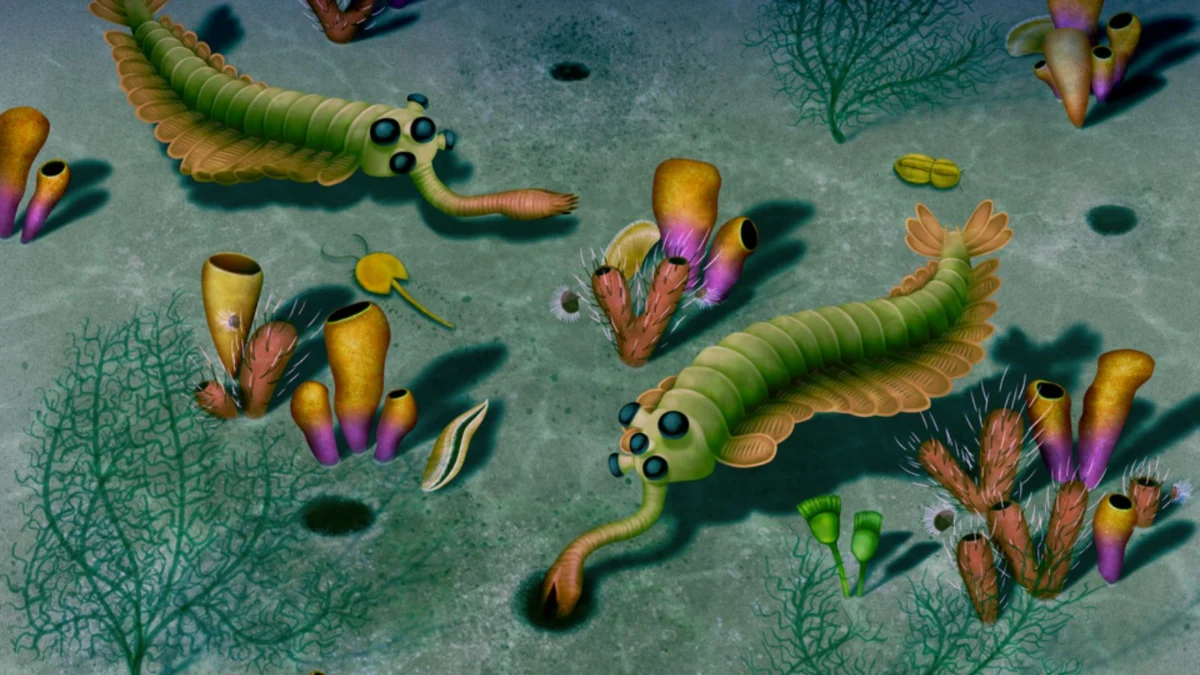
The origins of complex life on Earth have long been attributed to a cocktail of atmospheric and geological shifts, yet new research suggests that a fundamental biological innovation—the evolution of the anus—played a disproportionately large role in shaping the modern biosphere. An international team of scientists, led by Dr. Russell Bicknell of Flinders University, has presented evidence indicating that the emergence of "through-guts" and the subsequent massive release of fossilized animal feces, or coprolites, acted as a primary driver for the Cambrian Explosion. This period, occurring approximately 541 to 485 million years ago, represents a pivotal moment in Earth’s history when the majority of major animal phyla first appeared in the fossil record. By analyzing 35 distinct fossil deposits across the globe, the researchers have illustrated how the transition from simple, "blind" digestive systems to sophisticated through-guts revolutionized nutrient cycling in ancient oceans.
The Biological Revolution of the Through-Gut
For much of Earth’s early history, multicellular life was characterized by relatively simple body plans. During the Ediacaran period, which preceded the Cambrian, marine organisms often lacked specialized internal organs. Many of these creatures possessed a "blind gut," a single-opening system where food was ingested and waste was expelled through the same orifice. This physiological constraint necessitated a "stop-and-start" feeding cycle; an organism had to finish digesting and voiding its previous meal before it could consume more nutrients.
The evolution of the through-gut—a complete digestive tract with a mouth at one end and an anus at the other—changed the fundamental energy budget of animal life. This anatomical breakthrough allowed for continuous feeding and processing, enabling organisms to extract more energy from their environment. As Dr. Bicknell’s team noted, this efficiency was the precursor to more active lifestyles, including the development of predation and complex movement. The oldest confirmed fossilized feces date back to roughly 538.8 million years ago, a timeline that aligns precisely with the onset of the Cambrian Explosion, suggesting that the "poop revolution" was a catalyst for, rather than just a byproduct of, biological diversification.
Coprolites and the Deep-Sea Nutrient Pump
The significance of feces in this evolutionary context extends beyond the individual organism to the entire global ecosystem. Before the advent of the through-gut, organic waste was often expelled as loose, amorphous material that drifted slowly or dissolved in the upper layers of the ocean. The evolution of the through-gut allowed early arthropods and worms to package waste into dense, sinking fecal pellets.
These pellets functioned as a biological "express elevator," transporting critical nutrients such as organic carbon, nitrogen, phosphorus, and iron from the sunlit surface waters down to the dark, nutrient-starved depths of the seafloor. This process, known in modern ecology as the "biological pump," effectively fertilized the ocean floor for the first time. The influx of concentrated organic matter created new niches for bottom-dwelling organisms, fostering the development of complex benthic ecosystems. By enriching the sediment, these ancient "fecal rains" provided the fuel necessary for animals to grow larger, develop skeletons, and engage in more sophisticated ecological interactions.
Analyzing the Chronology of the Fossil Record
The research conducted by Dr. Bicknell and his colleagues from Australia and Germany involved an exhaustive analysis of 35 fossil deposits spanning the transition from the Ediacaran to the Cambrian (approximately 600 million to 500 million years ago). This period marks the shift from the "Garden of Ediacara"—a world of static, soft-bodied organisms—to the dynamic, competitive world of the Cambrian.
Prior to 538.8 million years ago, the fossil record is devoid of confirmed coprolites. The absence of fossilized feces in earlier strata supports the theory that through-guts had not yet become a dominant biological feature. However, as the Cambrian began, the appearance of coprolites in the fossil record skyrocketed. The team’s data shows a clear correlation between the diversification of animal body plans and the increasing abundance and variety of fossilized waste. This suggests that as animals evolved more complex diets and digestive systems, they simultaneously began to alter the chemistry of the oceans on a global scale.
Integrating Feces into the "Big Bang" of Biology
For decades, the scientific community has debated the primary cause of the Cambrian Explosion. Traditional theories have focused on three main abiotic factors:

- Rising Oxygen Levels: A surge in atmospheric and oceanic oxygen that allowed for higher metabolic rates.
- The Ozone Layer: The formation of a protective shield against ultraviolet radiation, making the shallow seas more habitable.
- Continental Erosion: The weathering of landmasses that washed essential minerals and calcium into the oceans, providing the raw materials for shells and skeletons.
While Dr. Bicknell acknowledges these factors, his team argues that the role of feces has been unfairly overlooked. "Next to rising oxygen levels and other contributing factors, the importance of feces in ancient ecosystems is often overlooked," Bicknell stated. The study suggests that while oxygen provided the potential for complex life, the "fecal pump" provided the infrastructure for nutrient distribution. Without an efficient way to cycle carbon and nitrogen through the water column, the Cambrian oceans might have remained stratified and less productive, regardless of oxygen levels.
Trophic Interactions and the Rise of Predation
The evolution of the through-gut also signaled a shift in trophic interactions—the way energy moves through a food web. With the ability to process a wider range of food more efficiently, early arthropods and other Cambrian pioneers could move away from simple filter-feeding or grazing on microbial mats. This led to the rise of specialized feeding strategies, including scavenging and, eventually, active predation.
The coprolites analyzed in the study provide a "snapshot" of ancient diets. By examining the contents of fossilized feces, paleontologists can determine what these early animals were eating, whether it was trilobite fragments, algae, or other organic detritus. This evidence confirms that the Cambrian was a period of intense ecological competition. The production of nutrient-rich waste further fueled this competition by supporting a larger biomass, which in turn supported more predators, creating a feedback loop of evolutionary innovation.
Scientific Perspectives and Future Research
The publication of this research in Trends in Ecology & Evolution has prompted a re-evaluation of how paleontologists approach the study of "trace fossils." Coprolites have historically been treated as curiosities rather than central pieces of the evolutionary puzzle. However, this study demonstrates that they are essential for understanding the transition of the Earth’s oceans into their modern state.
"It becomes clear in the fossil record that the evolution of feeding strategies aligns with the production and distribution of organic carbon and nutrients," Bicknell explained. He further noted that the conditions created by these ancient organisms laid the groundwork for the modern oceans and eventually for life on land. The use of fertilizer in modern agriculture to produce food is, in a sense, a continuation of the nutrient-cycling process that began in the Cambrian seas.
Other experts in the field have reacted with interest, noting that the study helps bridge the gap between geochemistry and biology. By showing how a biological "waste product" could drive geochemical changes in the ocean, the research provides a more holistic view of how life and the planet evolve together.
Broader Implications for Earth’s History
The findings of Dr. Bicknell’s team have implications that extend beyond the Cambrian period. Understanding how nutrient cycles were established can help scientists predict how modern ecosystems might respond to current environmental changes, such as ocean deoxygenation or shifts in marine biodiversity. The "biological pump" remains a critical component of Earth’s carbon cycle today, helping to regulate the global climate by sequestering carbon in the deep ocean.
Furthermore, this research highlights the importance of "hidden" evolutionary milestones. While the development of eyes, limbs, and shells are often celebrated as the hallmarks of the Cambrian Explosion, the internal architecture of the digestive system was equally transformative. The ability to efficiently process food and export waste was the engine that powered the diversification of life.
In conclusion, the evolution of the anus and the subsequent "poop explosion" represents a fundamental turning point in the history of life. By transforming the ocean from a stagnant environment into a dynamic, nutrient-rich system, early animals essentially "engineered" the world they lived in. As Dr. Bicknell’s international team has shown, the story of life on Earth is not just written in the bones and shells of the past, but also in the humble, fossilized remains of its first complex meals. The transition from a "one-hole" world to a "through-gut" world was the essential spark that allowed the fire of biological diversity to spread across the globe, creating the complex and interconnected ecosystems that we see today.



 Joko Widodo
 admin
admin
 Nila Kartika Wati
 Lina Irawan
 Nana Wu