
 Lina Irawan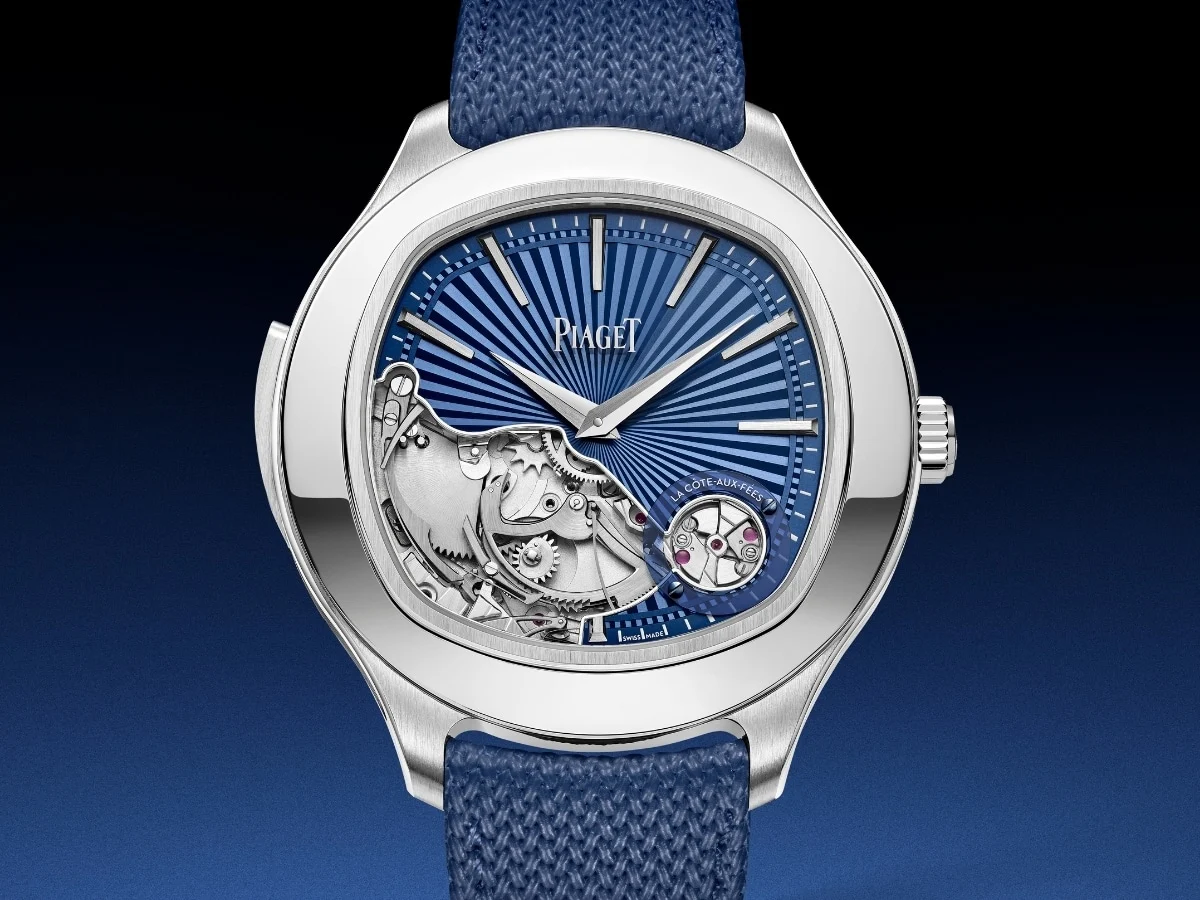
Technical Architecture of the Calibre 1290P
At the heart of the Piaget Polo Minute Repeater lies the Calibre 1290P, a movement that first made headlines in 2013 when it was introduced within the Emperador Coussin collection. More than a decade later, it remains one of the most sophisticated examples of ultra-thin watchmaking in the industry. The movement is composed of 407 individual components, each meticulously finished to meet the standards of "Haute Horlogerie."
The challenge of creating an automatic minute repeater within a 4.8 mm frame is multifaceted. Traditional automatic movements require a large oscillating weight (rotor) that typically sits atop the bridges, adding significant thickness. Piaget’s solution is the integration of a micro-rotor made of high-density platinum. By embedding the rotor within the plane of the movement rather than stacking it on top, the engineers maintained a slim profile while ensuring the platinum’s mass provided sufficient inertia for efficient winding.
Furthermore, the minute repeater complication itself requires a complex system of racks, snails, and hammers. In the 1290P, these components are arranged with spatial efficiency that allows for the chiming mechanism to be partially visible through the dial side. The movement operates at a frequency of 21,600 vibrations per hour (3Hz) and offers a power reserve of approximately 40 hours.
Acoustic Engineering and the Sound of Excellence
In the world of horology, a minute repeater is judged primarily by the quality of its "voice." Piaget’s development team focused on four specific pillars of sound: intensity, pitch, duration, and timbre. The Polo Minute Repeater achieves an intensity of 64 decibels, a volume comparable to a standard human conversation. Achieving this level of projection in a watch less than 10 mm thick is a considerable engineering hurdle, as thin cases often lack the internal air volume necessary for sound to resonate.
The acoustic profile is further defined by three harmonic partials. In musical terms, partials are the frequencies that accompany the fundamental note, providing richness and character to the sound. Without these harmonics, a chime can sound "tinny" or flat. To ensure clarity, Piaget focused on a damping factor of 2,600. This metric refers to the rate at which the sound energy dissipates; a high damping factor ensures that each strike of the hammer against the gong is crisp, preventing the notes from bleeding into one another.
The musical tuning of the watch is specific: the hours are struck at G-sharp and the minutes at A-sharp, both situated in the fifth octave. This deliberate choice of pitch ensures the watch has a distinct "signature" that differentiates it from other repeaters on the market. The regulator, which controls the speed of the chiming sequence to ensure a steady rhythm, is visible at the four o’clock position, protected by a smoked blue sapphire ring.
Design and Aesthetic Refinement
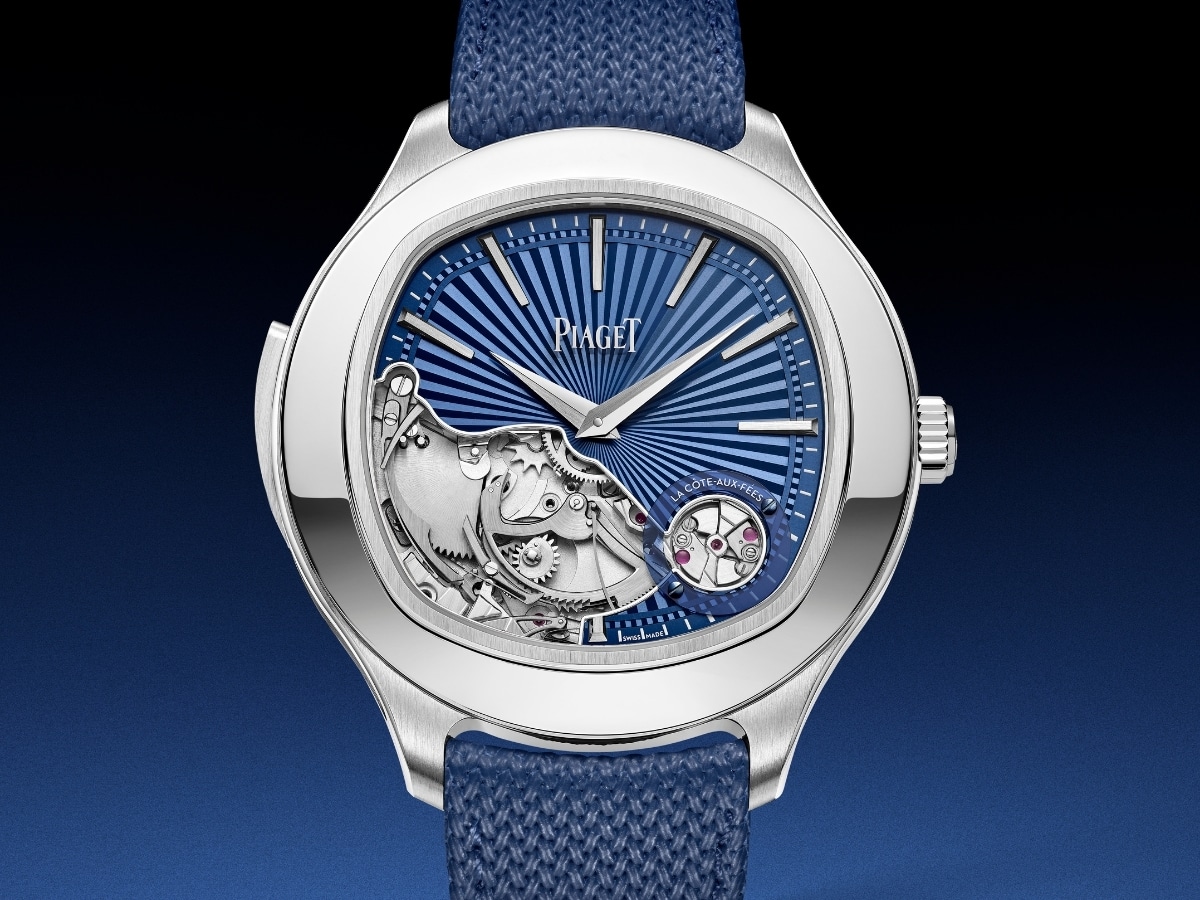
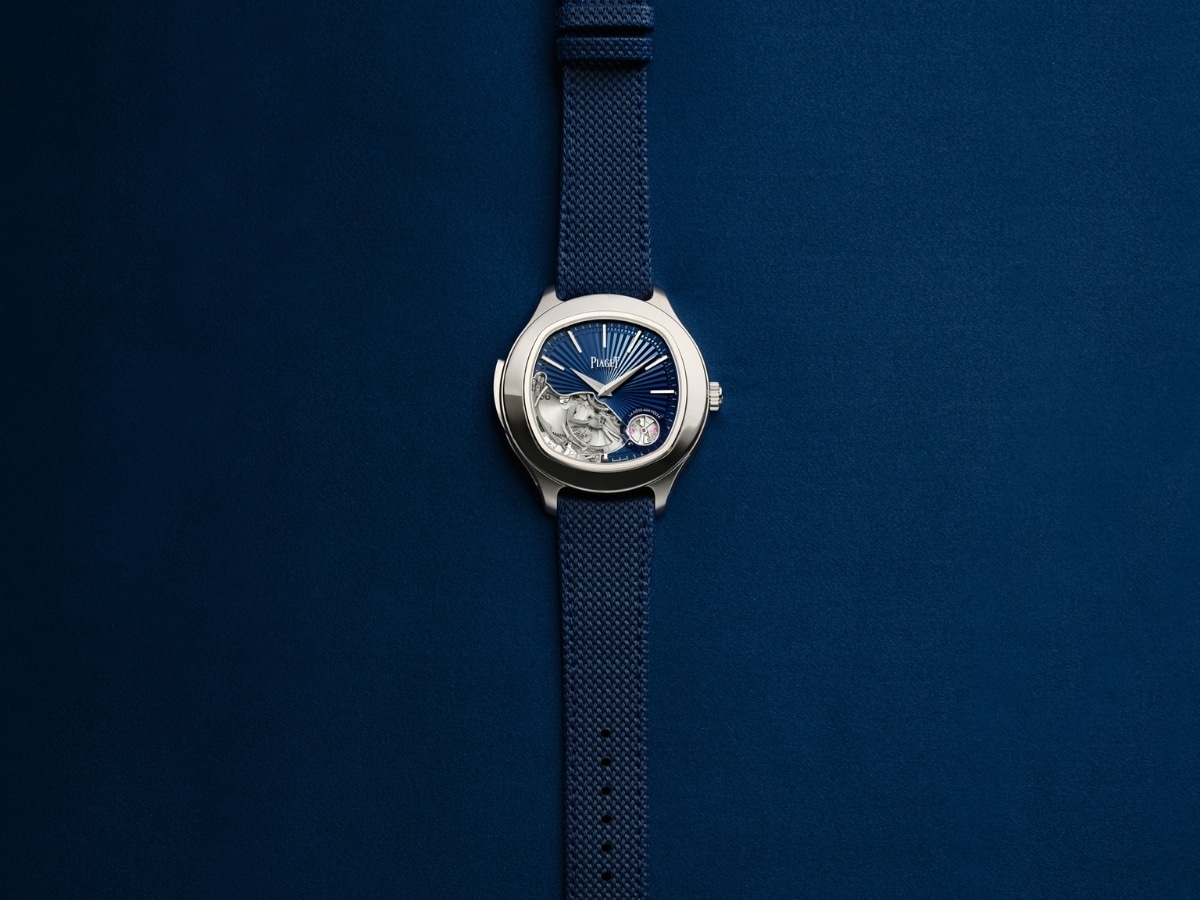
The Piaget Polo Minute Repeater is encased in 18-karat white gold, measuring 48 mm in diameter. While the diameter is substantial, the 9.3 mm thickness allows the watch to maintain a sleek, "cuff-friendly" profile that aligns with the Polo’s heritage as a luxury sports-chic timepiece. The case design incorporates a sliding trigger on the left-hand side (at the 9 o’clock position) to activate the chiming mechanism.
The dial is a masterclass in decorative craft. It features hand-guilloché work in a "soleillé" (sunray) pattern, emanating from the center. Strategic sections of the dial are openworked, providing a view of the hammers and gongs as they perform their mechanical ballet. This transparency allows the wearer to witness the physical movement of the racks and snails that translate the current time into a series of audible strikes.
Attention to detail extends to the finishing of the movement, which can be viewed through the sapphire crystal caseback. The bridges are hand-bevelled, the wheels are sunburst-brushed, and the steel components are polished to a mirror finish. According to Piaget, the development of the dial alone required over 150 hours of research and development, while the hand-finishing of each individual watch requires an additional 50 hours of labor by master artisans.

Chronology of Piaget’s Ultra-Thin Innovation
The release of the Polo Minute Repeater is the latest chapter in a history of ultra-thin watchmaking that spans nearly 70 years.
- 1957: Piaget introduces the Calibre 9P, a hand-wound movement only 2 mm thick, which revolutionized the industry’s perception of elegant men’s watches.
- 1960: The brand launches the Calibre 12P, the world’s thinnest automatic movement at the time (2.3 mm), utilizing a micro-rotor.
- 1979: The original Piaget Polo is released. Originally crafted entirely in gold, it became the quintessential "jet set" watch of the 1980s.
- 2013: The Calibre 1290P is unveiled, marking Piaget’s first ultra-thin automatic minute repeater.
- 2024: The integration of the 1290P into the Polo collection signifies a shift toward combining "Grand Complications" with more contemporary, versatile case designs.
This timeline illustrates a consistent dedication to the "Altiplano" philosophy of thinness, even when applied to the brand’s more robust "Polo" line.
Production Limits and Manufacturing Realities
Due to the extreme complexity of the assembly and the delicate nature of the acoustic tuning, Piaget has announced that production of the Polo Minute Repeater will be strictly limited. The manufacture plans to produce only five numbered pieces per year.
This scarcity is a direct result of the specialized labor required at the Piaget Manufacture in La Côte-aux-Fées. Unlike standard complications, a minute repeater cannot be purely mass-produced; each watch must be "voiced" by a master watchmaker who manually adjusts the gongs to ensure the pitch and resonance meet the brand’s specifications. This process is as much an art as it is a science, requiring a quiet environment and a trained ear to perfect the 64dB output and the specific fifth-octave tuning.
Broader Implications for the Luxury Watch Market
The introduction of the Polo Minute Repeater reflects a broader trend in the luxury watch industry: the "sport-ification" of high horology. For decades, grand complications like minute repeaters and perpetual calendars were reserved for delicate, formal dress watches. However, modern collectors increasingly demand that these high-level mechanics be housed in cases that reflect a more active lifestyle.
By placing the 1290P movement in the Polo case, Piaget is competing in a high-stakes arena alongside brands like Bvlgari, whose Octo Finissimo Minute Repeater has also pushed the limits of thinness. This "thinness war" is not just about bragging rights; it represents a peak of mechanical engineering where every tenth of a millimeter counts toward the comfort and wearability of the timepiece.
Furthermore, the emphasis on acoustic data—such as damping factors and decibel levels—indicates a shift in how luxury brands market their products. Collectors are becoming more technically savvy, looking for objective performance metrics alongside traditional craftsmanship. Piaget’s transparency regarding the 150 hours of dial development and 50 hours of finishing serves to justify the exclusivity and the likely multi-six-figure price point of such a machine.
As the industry moves forward, the Piaget Polo Minute Repeater stands as a testament to the idea that a watch can be a precision instrument, a piece of jewelry, and a musical instrument all at once. It reinforces Piaget’s position not just as a jeweler to the stars, but as a serious contender in the highest tiers of mechanical watchmaking. For the five individuals who acquire this timepiece annually, it offers a rare combination of 20th-century heritage and 21st-century acoustic science, all contained within a profile less than one centimeter thick.



 Yuyun Lusiyani
 Pevita Pearce
 Eva Lovia
 Nana Wu
 Joko Widodo