
 Lina Irawan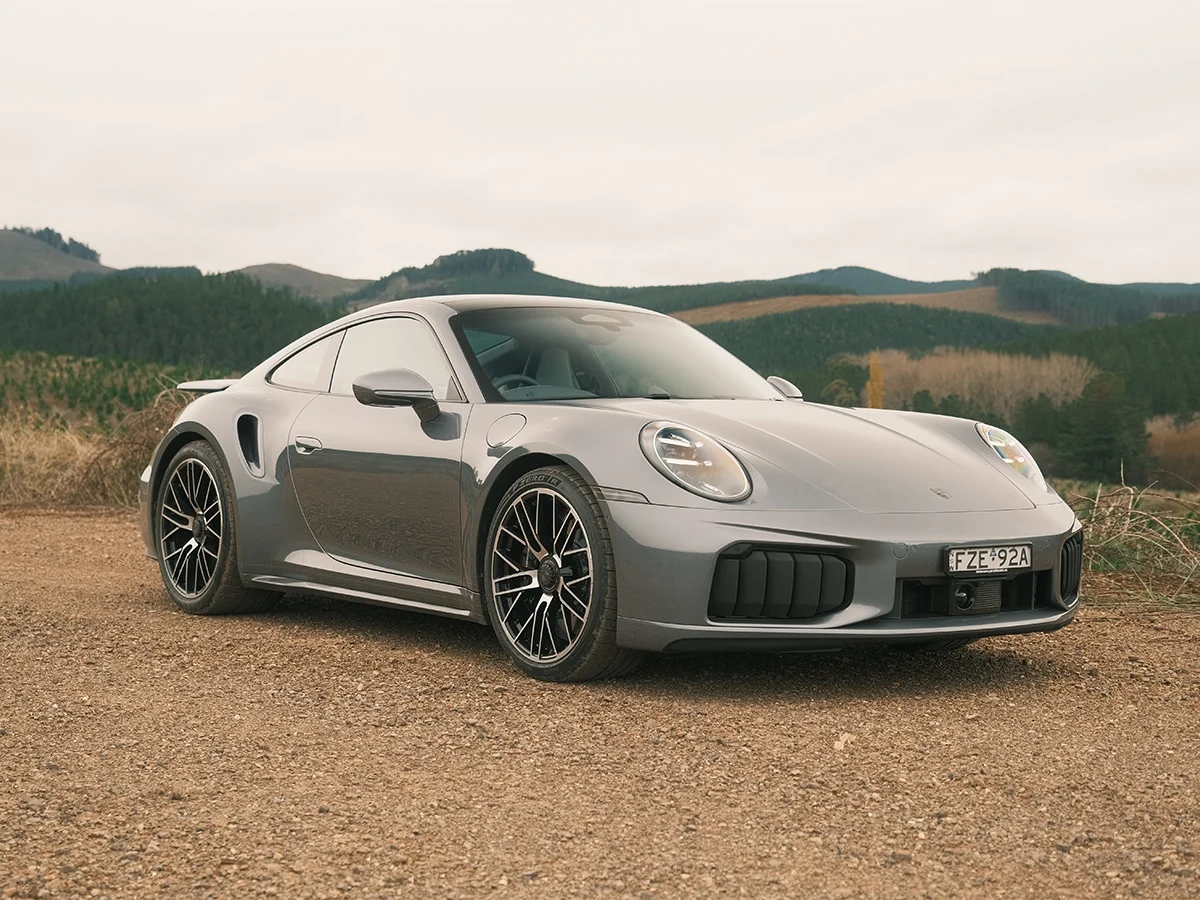
The automotive industry is currently navigating a transformative period as stringent European emissions regulations necessitate a shift toward electrification, prompting legacy manufacturers to redefine their performance identities. For Porsche, the introduction of the 992.2-generation 2026 911 Turbo S represents a pivotal moment in this transition. By integrating a sophisticated 400V T-Hybrid architecture with a revised 3.6-litre flat-six engine, the Zuffenhausen-based manufacturer has attempted to marry high-voltage efficiency with the visceral driving dynamics that have defined the 911 badge for six decades. This latest iteration produces a combined output of 523 kW (711 PS) and 800 Nm of torque, propelling the all-wheel-drive flagship from 0 to 100 km/h in 2.5 seconds. However, with a starting price of AUD$577,300 in the Australian market, the 911 Turbo S now finds itself competing directly with mid-engine exotics from Ferrari and Lamborghini, raising questions about its traditional value proposition as the "attainable" supercar slayer.
Technical Innovation: The T-Hybrid Architecture and Bi-eTurbo Technology
At the heart of the 992.2 Turbo S is a fundamental shift in powertrain engineering. Unlike previous generations that relied solely on exhaust gas pressure to drive turbochargers, the new model utilizes a "Bi-eTurbo" system. This setup integrates two electric motors directly between the compressor and turbine wheels of the turbochargers. Drawing power from a front-mounted 1.9 kWh 400V lithium-ion battery, these motors can spin the compressors instantaneously, effectively eliminating the mechanical delay known as turbo lag.
The hybrid system is further bolstered by a permanent magnet synchronous electric motor integrated into the eight-speed Porsche Doppelkupplung (PDK) transmission. This motor contributes an additional 60 kW and 188 Nm of torque, providing immediate low-end thrust. During deceleration and light load phases, the eTurbos function as generators, harvesting up to 28 kW of energy from the exhaust stream to replenish the high-voltage battery. This closed-loop system is designed for high-rate power delivery rather than extended electric-only range, emphasizing performance optimization over traditional plug-in hybrid utility.

The transition to a 3.6-litre displacement—up from the previous 3.7-litre unit in the 992.1—allows for a more compact engine layout despite the added hybrid hardware. This engineering choice helps mitigate the weight penalty of the battery and motors; the new Turbo S weighs 1,725 kg, an increase of 85 kg over its predecessor. To maintain the signature Porsche sound profile, engineers implemented asymmetrical valve timing and a lightweight titanium sports exhaust system, which sheds 6.8 kg from the rear of the vehicle.
The Evolution of the 911 Turbo: A Historical Context
The 911 Turbo has long served as the technological vanguard for Porsche. Since the original 930 Turbo debuted in the mid-1970s, the model has evolved from a challenging, rear-wheel-drive "widowmaker" into a sophisticated, all-weather grand tourer. The introduction of all-wheel drive in the 993 generation and water-cooling in the 996 generation marked previous major shifts in the model’s lineage.
The 992.2 generation’s embrace of hybridization is perhaps the most significant departure since the move away from air-cooling. Historically, Porsche reserved its most radical updates for entirely new chassis codes. However, the rapid pace of global emissions standards—specifically the Euro 7 requirements—forced the acceleration of hybrid technology into the mid-cycle refresh of the 992 platform. This move ensures that the Turbo S remains compliant in key markets while delivering performance figures that surpass the previous, purely internal combustion versions.
Market Positioning and the "Value Inversion" Challenge
For decades, the 911 Turbo S occupied a unique niche: it offered performance that could humiliate Ferraris and Lamborghinis at a significantly lower price point. In 2026, that market dynamic has shifted. With a base price of AUD$577,300, the Turbo S is now more expensive than several of its mid-engine rivals.
A comparative analysis of the current high-performance landscape reveals the following:
- Ferrari 296 GTB: Priced from AUD$568,300, the Ferrari offers a 610 kW plug-in hybrid V6 powertrain.
- McLaren Artura: Starting at AUD$477,310, the British rival provides a lighter, carbon-fibre tub architecture.
- Aston Martin Vantage S: Priced from AUD$420,000, it remains a traditional front-engine alternative.
- Lamborghini Temerario: The successor to the Huracán enters the market with a 677 kW V8 hybrid system and a price tag of AUD$613,885.
In the Australian market, the "as tested" price of a 911 Turbo S often exceeds AUD$620,000 once essential options like the front-axle lifter (AUD$4,950) and ventilated seats (AUD$2,220) are added. This pricing strategy places Porsche in a position where it can no longer claim the "value" high ground, instead relying on its reputation for reliability, daily usability, and "stealth wealth" aesthetics to attract buyers.
Aesthetic Identity: Functional Aerodynamics and "Turbonite"
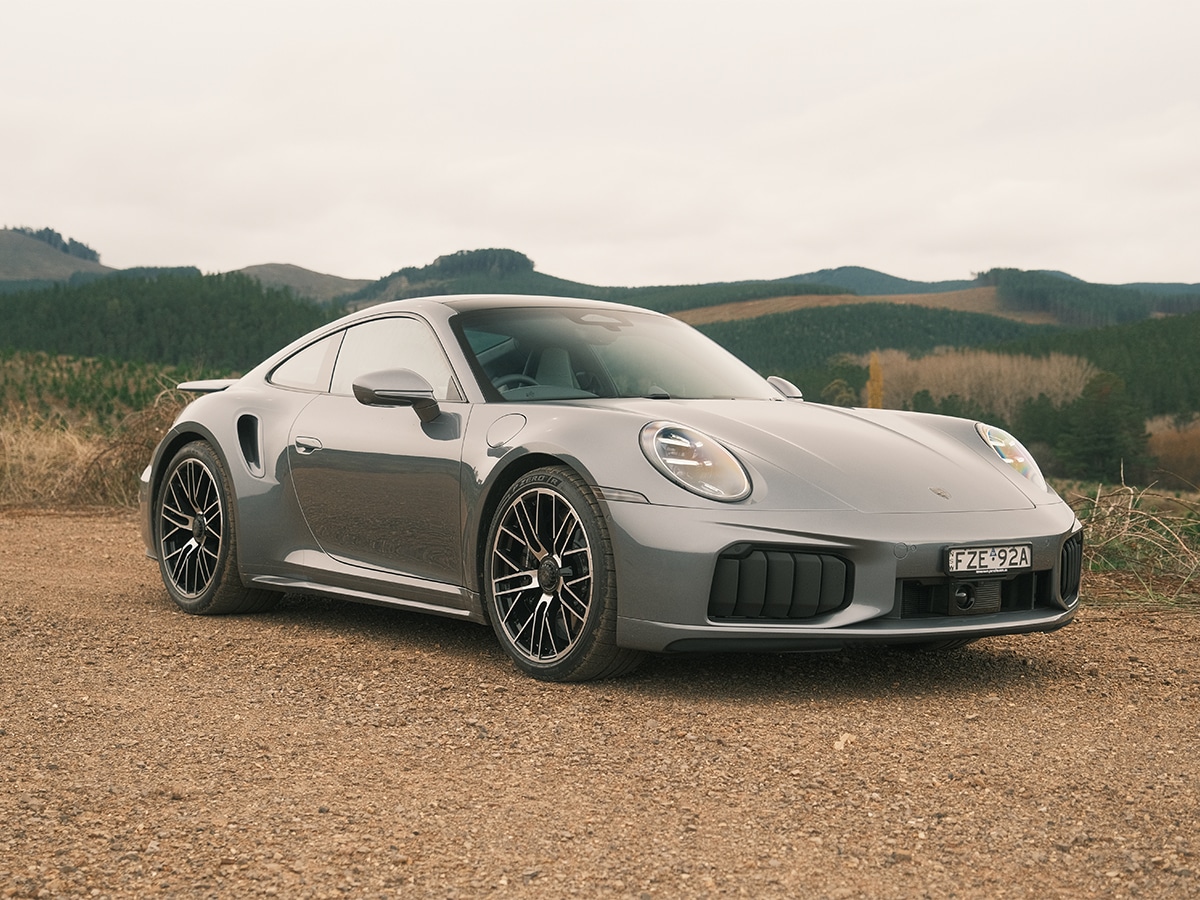
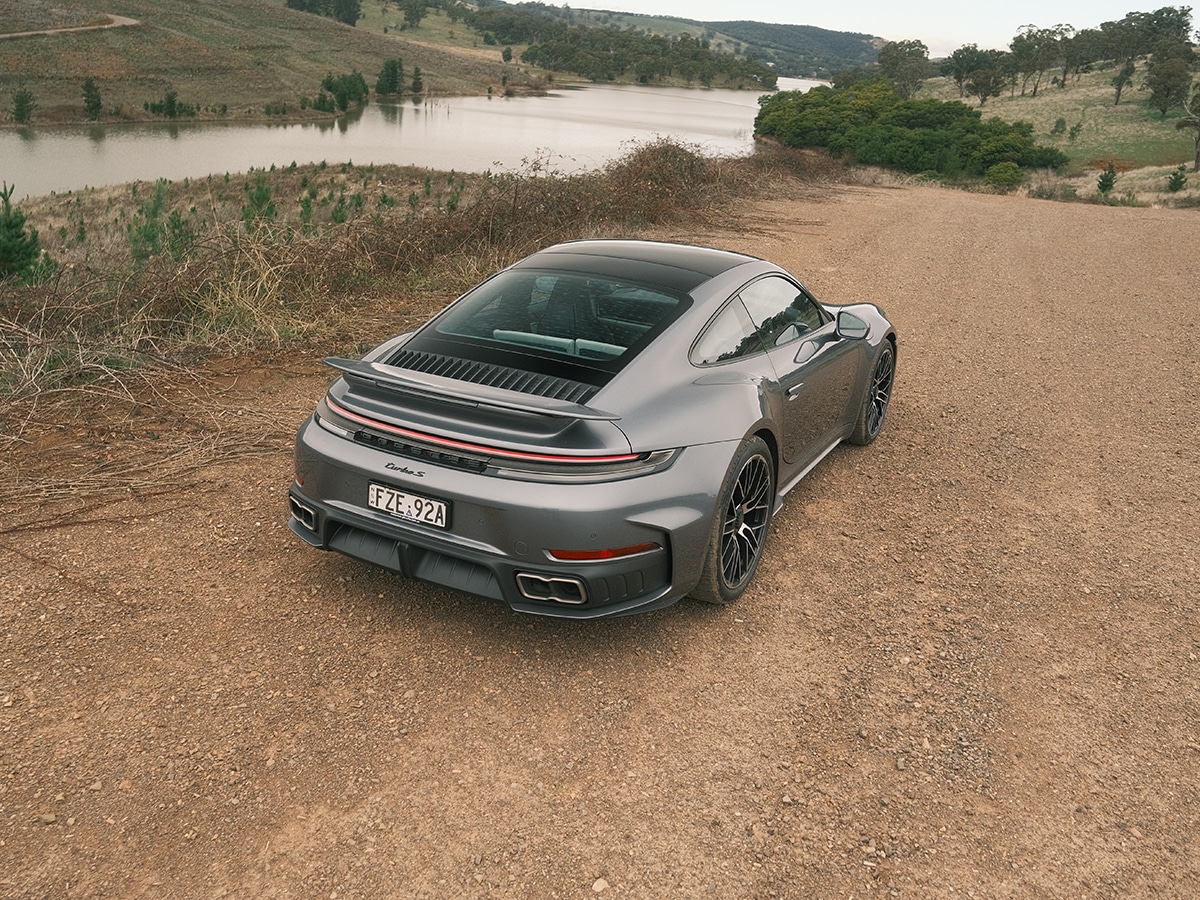
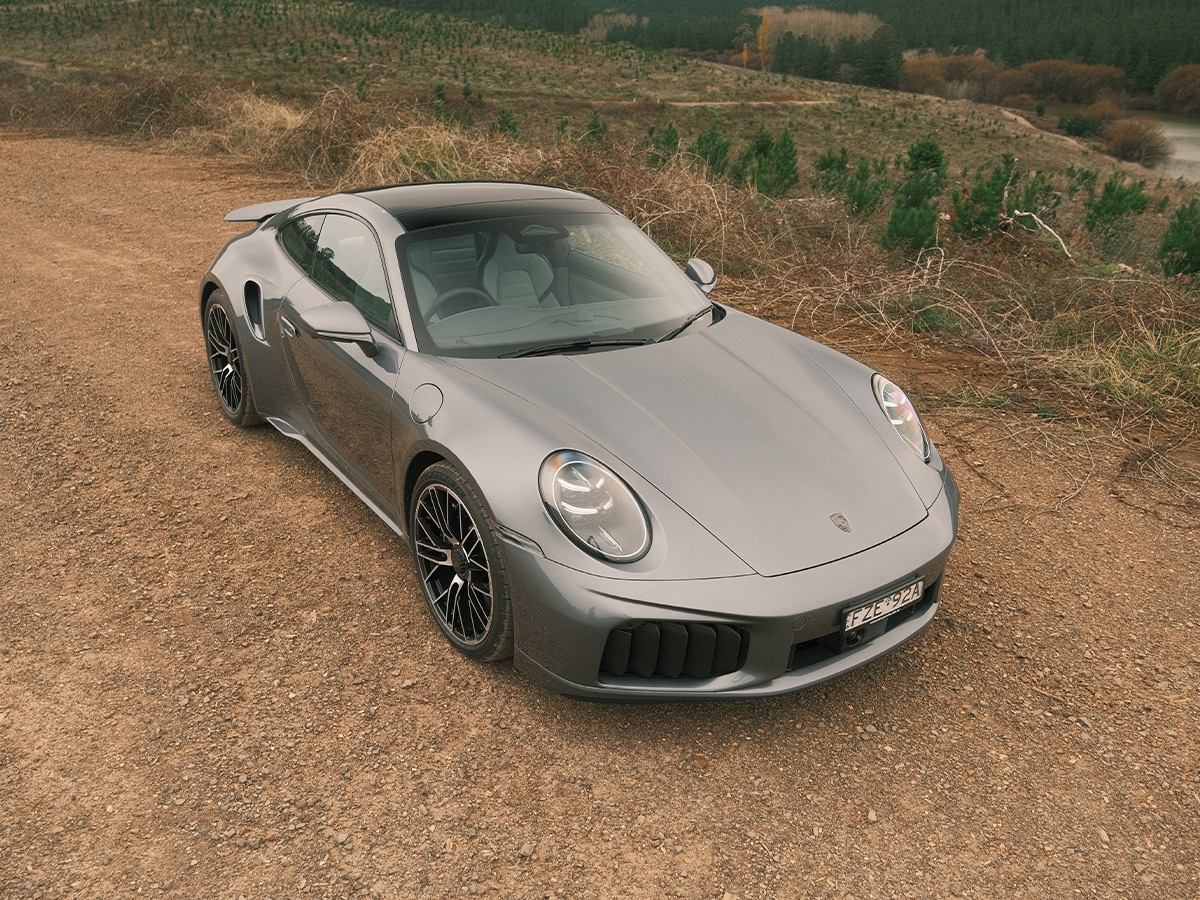
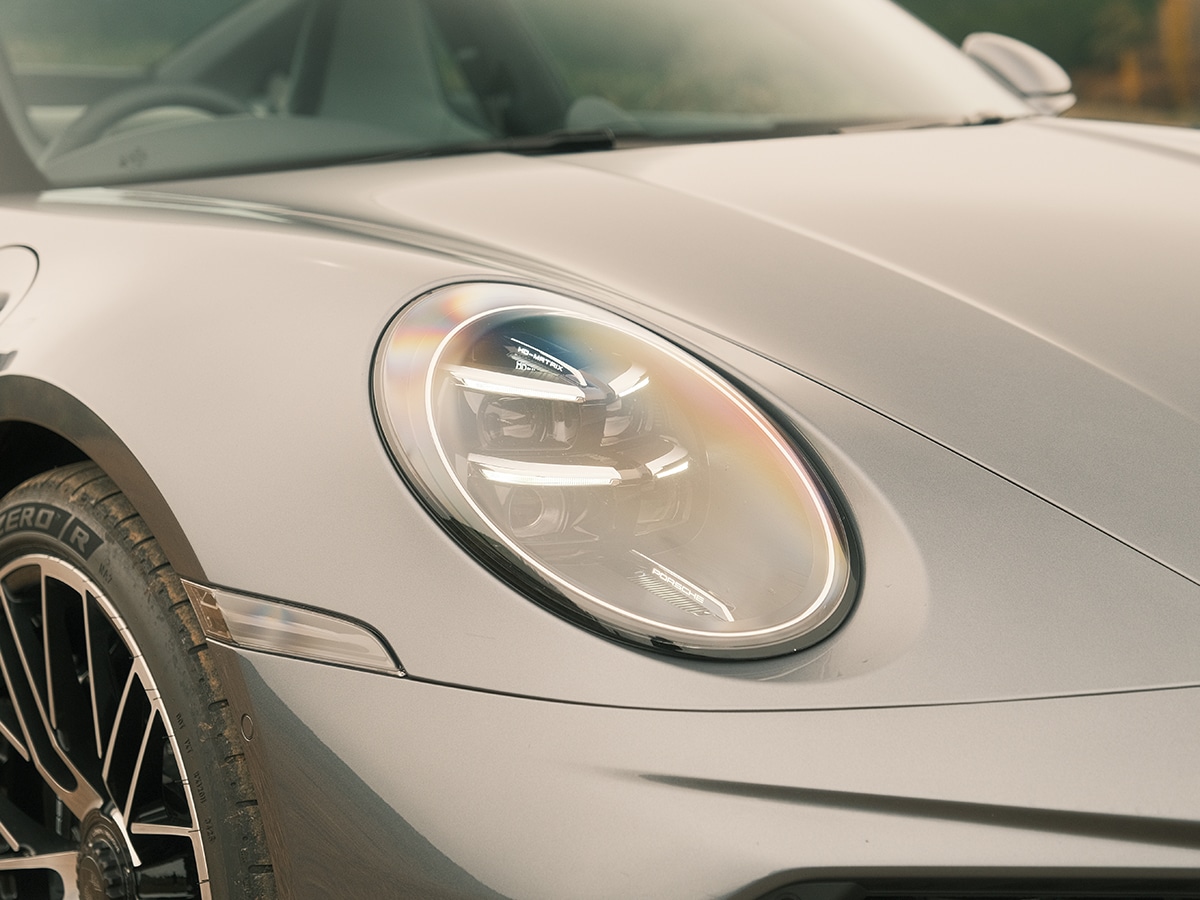
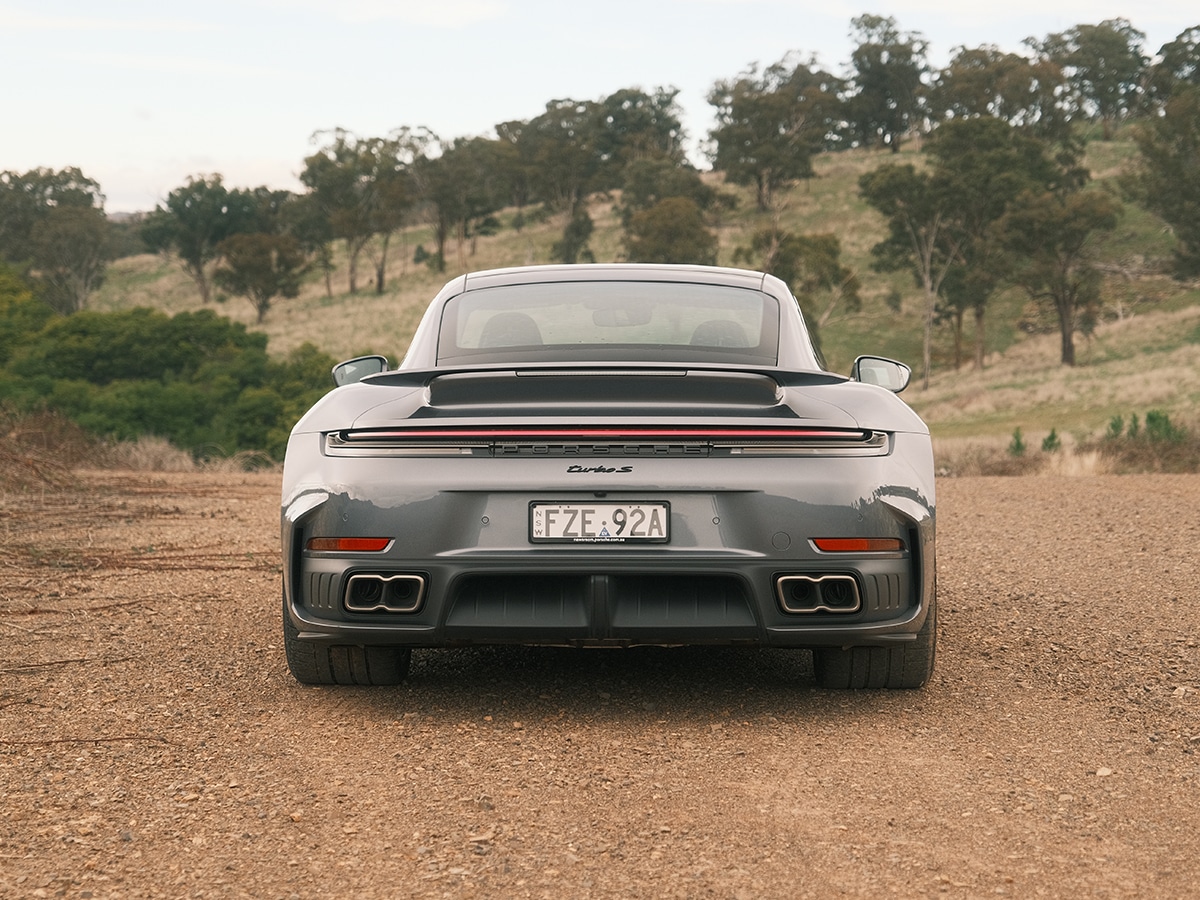
Visually, the 2026 911 Turbo S maintains the classic 911 silhouette while introducing the "Turbonite" design theme—a dark metallic grey accent used for crests, lettering, and trim to distinguish the Turbo models from the rest of the 911 range. The vehicle’s dimensions remain imposing, with a width exceeding two metres, making it broader than many mid-size family SUVs.
The design is heavily dictated by Porsche’s Active Aerodynamics (PAA) suite. The front fascia features five vertically arranged active cooling air flaps that adjust based on thermal requirements and speed. These work in tandem with an active front diffuser and an extendable, tilting rear wing. In its most efficient setting, the system reduces drag by 10 per cent. Furthermore, the car features a "Wet Mode" that closes the front diffusers to protect the massive 420mm carbon-ceramic brake discs from road spray, ensuring consistent braking performance in adverse conditions.
Interior Refinement and Technological Integration
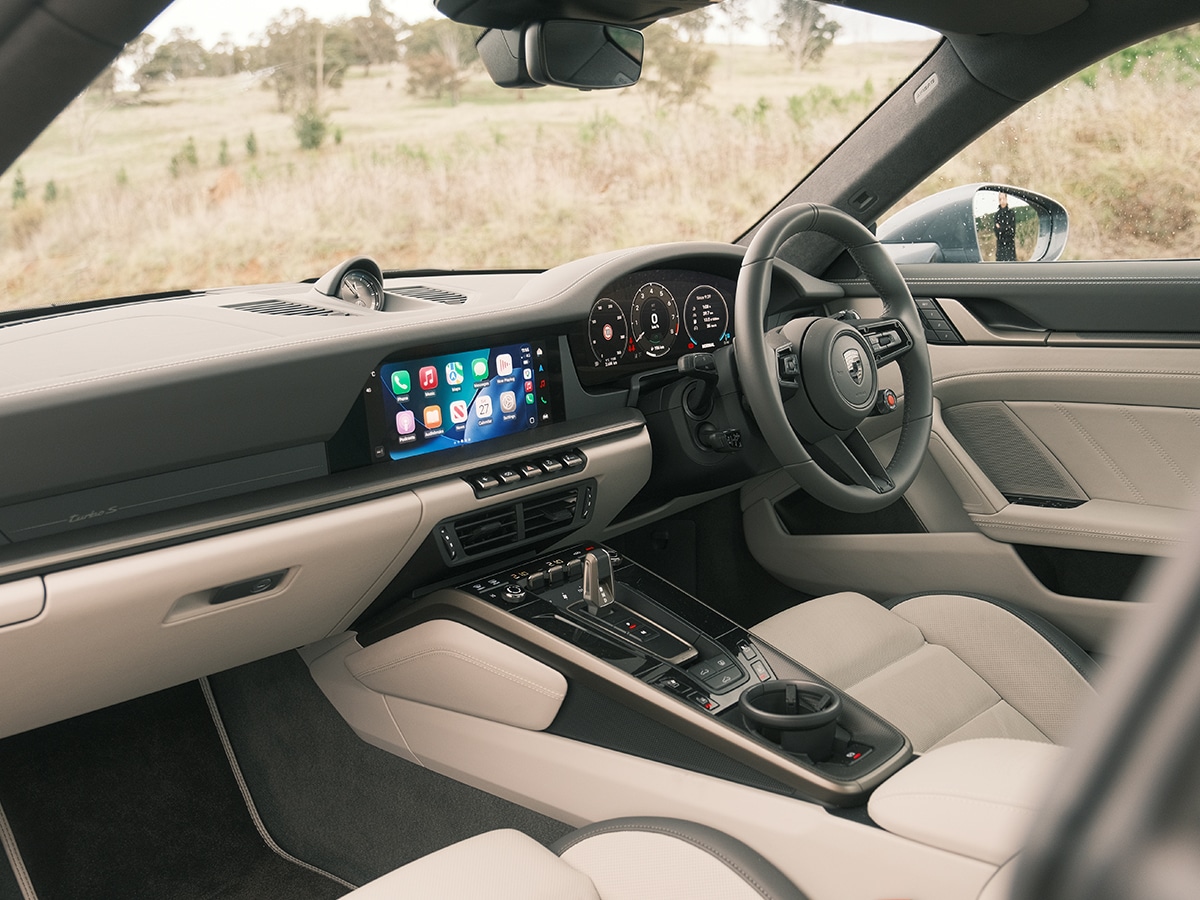
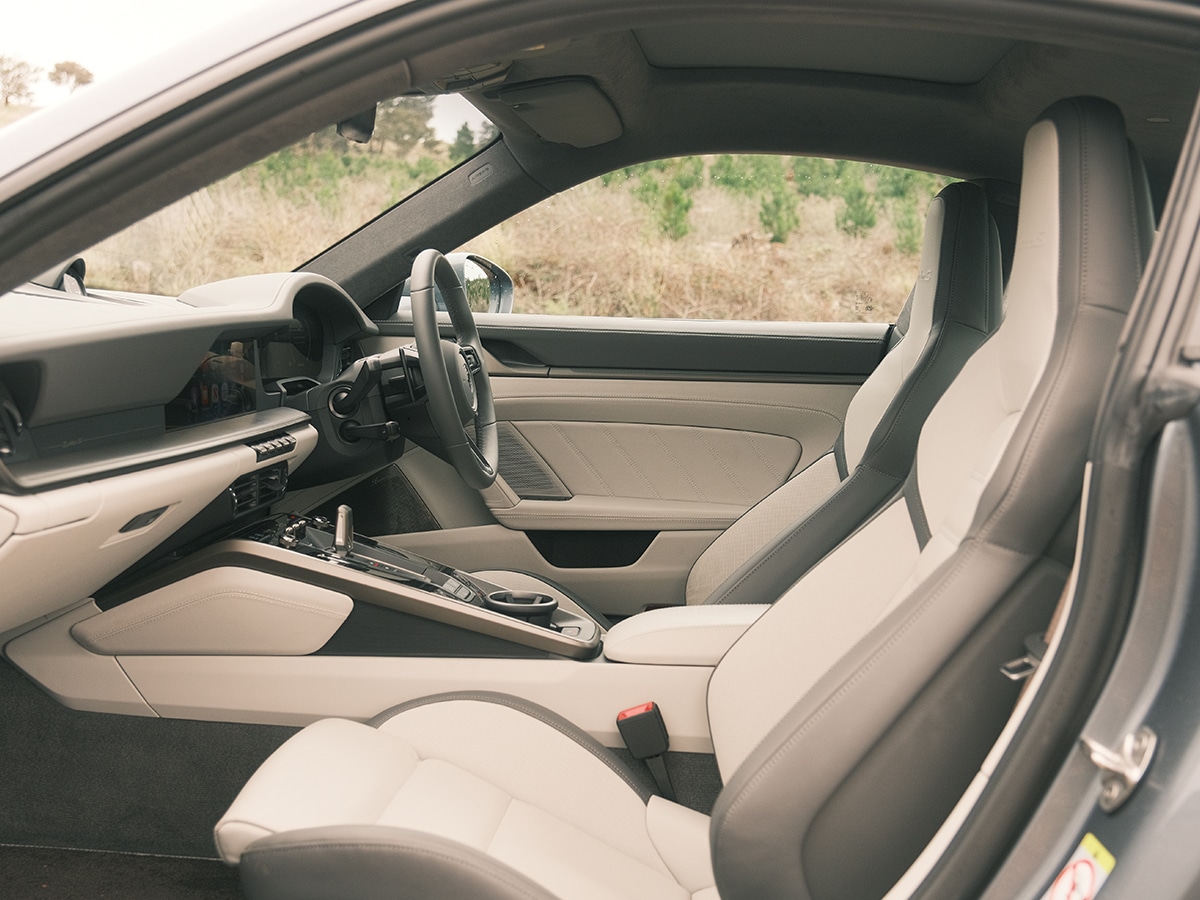
The cabin of the 992.2 Turbo S reflects a balance between digital modernization and ergonomic tradition. The driver is greeted by a 12.0-inch curved digital instrument cluster that replaces the traditional five-dial analog setup, though the central tachometer remains a visual focal point. A 10.9-inch touchscreen manages the Porsche Communication Management (PCM) system, yet Porsche has resisted the industry trend of removing physical buttons. Key performance toggles for the exhaust, suspension, and stability control remain tactile metallic switches located on the centre console.
Practicality remains a cornerstone of the 911 experience. The "frunk" provides 128 litres of storage, and the rear seats—while tight for passengers—fold flat to accommodate additional luggage. However, some critics note that the interior refinement faces challenges from the vehicle’s massive 325-section rear tyres, which generate significant road noise on coarse-chip surfaces, a common characteristic of Australian rural roads.
Performance Metrics and Real-World Driving Dynamics
In real-world testing across the varied terrain of New South Wales, the 911 Turbo S demonstrates a dual-personality capability. The Porsche Active Suspension Management (PASM) and electro-hydraulic active roll-stabilization (ehPDCC) provide a level of ride compliance that is rare in the supercar segment. When driven conservatively, the vehicle can achieve fuel consumption figures under 10L/100km, a testament to the efficiency of the T-Hybrid system during highway cruising.
However, the primary objective of the Bi-eTurbo system is immediate response. In technical driving scenarios, the elimination of turbo lag allows the driver to apply power mid-corner with absolute precision. The all-wheel-drive system, bolstered by rear-axle steering, provides immense traction, allowing the car to rotate into corners with agility that belies its 1,725 kg mass.
The vehicle’s performance is not merely subjective. During pre-production testing, factory driver Jörg Bergmeister recorded a lap time of 7:03.92 minutes at the Nürburgring Nordschleife. This time is approximately 14 seconds faster than the previous 992.1 Turbo S, placing the new hybrid model ahead of track-focused machines like the McLaren 600LT and Mercedes-AMG GT R Pro. This benchmark confirms that the hybrid integration has successfully translated into superior track performance despite the weight increase.
Strategic Implications for the Global Automotive Landscape
The launch of the 2026 911 Turbo S serves as a blueprint for how high-performance brands may navigate the end of the pure internal combustion era. By utilizing a 400V architecture rather than a heavy plug-in hybrid (PHEV) setup with a large battery, Porsche has prioritized the "driver’s car" experience over electric-only range metrics.
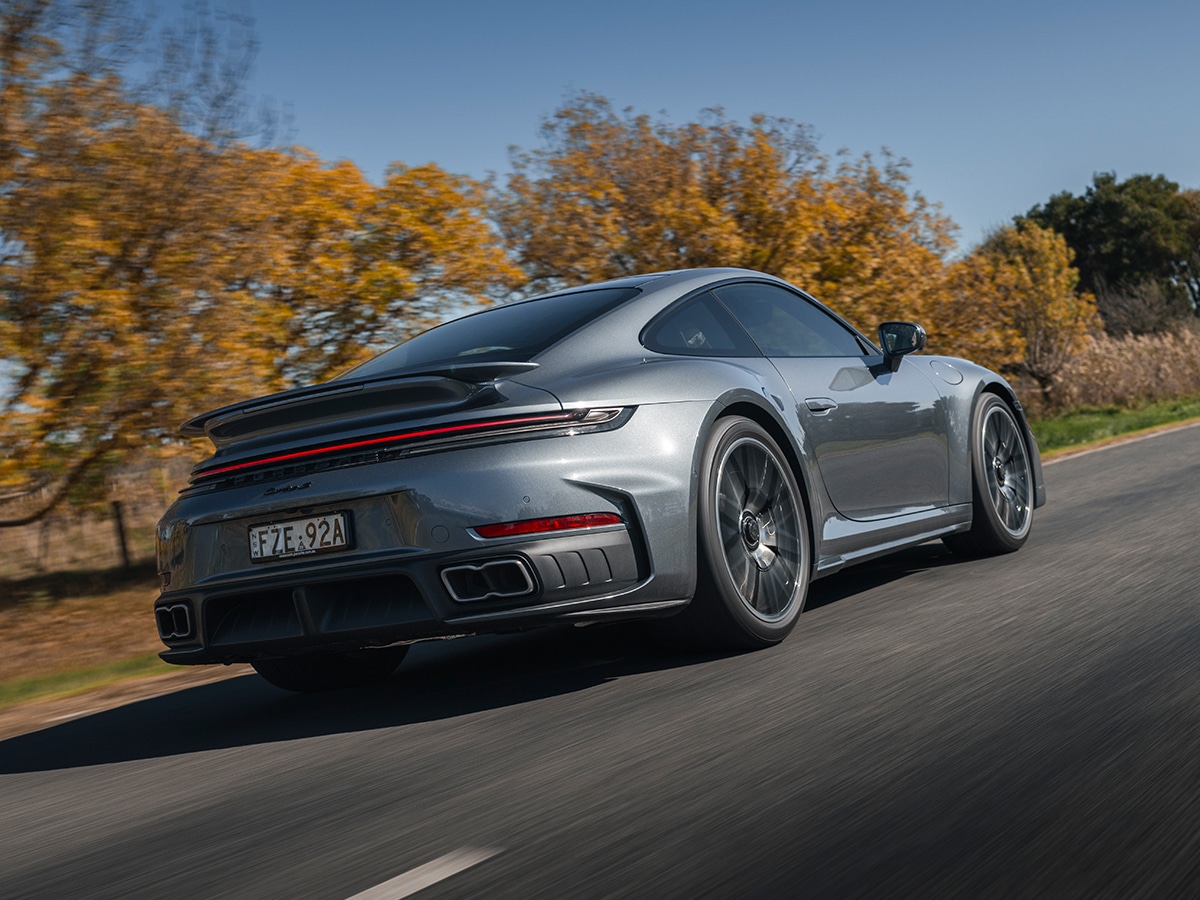
The strategic shift in pricing also indicates that Porsche is confident in the 911’s status as a luxury icon. No longer content to be the "budget" supercar, the Turbo S now sits at the top of the pyramid, appealing to a demographic that values the ability to drive to the office during the week and a race circuit on the weekend without changing vehicles.
As other manufacturers like Lamborghini and Ferrari move toward similar hybridized V8 and V6 platforms, the 911 Turbo S remains unique for its rear-engine layout and flat-six configuration. While it may lack the operatic exhaust note of its Italian rivals, its mechanical efficiency and relentless acceleration ensure that it remains the benchmark for the "everyday supercar" category. The success of the 992.2 will likely determine the trajectory for the eventual fully electrified 911, proving that high-voltage technology can indeed enhance, rather than dilute, the soul of a performance legend.



 Yuyun Lusiyani
 Joko Widodo
 Jia Lissa
 Pevita Pearce
 admin
admin
